As 2013 draws to a close, I want to look back and remember some of the wonderful jazz artists we lost this year. Some had long, illustrious careers, others were cut down in their musical primes. In either case we are so grateful that they were here long enough to share some of their art with us. We are grateful to live in an age where video makes it possible to always have great memories of how their music touched us.
Charlie “Bird” Parker, Dinah Washington and Michael Jackson were all born on August 29th. That they were all extremely influential musical talents who died way too young, is obvious. All I want to do today is post a clip from each of them in performance which will attest to their greatness.
Charlie Parker (1920 – 1955) / With Coleman Hawkins “Improvisation”
There aren’t too many film clips of Bird playing live. This one with Coleman Hawkins is pretty good. Even on an off day, Charlie Parker was better than most cats on their best day.
Dinah Washington (1924 – 1963) – “Send Me to the Electric Chair”
Like Bird, there aren’t a lot of Dinah Washington clips out there. Also like Bird, she never made it to 40. She should have been a bigger star. Born Ruth Jones, she has always held a special place in my heart because my mom was one of her biggest fans.
Michael Jackson (1958 – 2009) – “Who’s Loving You” / “Remember The Time”
And of course, there’s Michael Joseph Jackson. He called himself “The King of Pop”. I was never fond of that moniker but I always admired his brilliance. He gets two clips; one from the beginning and the other from later in his career, of a song (and video) that I always liked.
I mean how can you not love Eddie , Iman, Magic and Michael in the same video!
I’ve written posts here before about Dr. Martin Luther King, Jr. and how he and his life and work meant so much directly to my parents and indirectly to me as I was not quite eight years old when he was assassinated. I’ve studied him at length over the years and I’ve grown to admire him greatly.
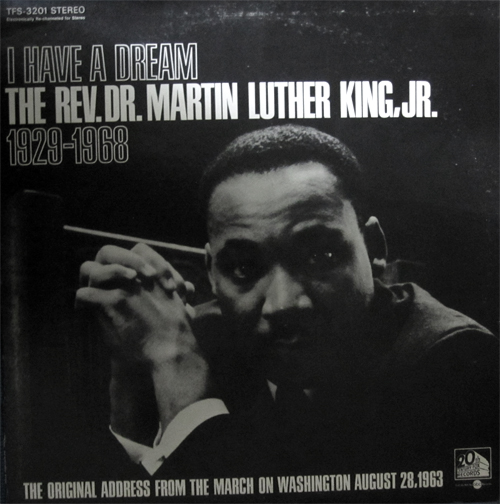
I recall that a few weeks after Dr. King’s murder, my parents bought the album that you see pictured here, which included Dr. King and many other speakers from the day, including Roy Wilkins, A. Phillip Randolph and John Lewis. The liner notes by the way, were written by the great jazz writer and 1st amendment advocate Nat Hentoff.
That album was on heavy rotation in my home for at least a year, maybe more. In that time I became extremely familiar with Dr. King’s words from that day and the majesty of his oratory. In addition, I was exposed to the stentorian tones of Mr. Randolph and the youthful passion of Mr. Lewis both of which have stuck with me to this day.
As I got older and did a little acting, I was asked on many occasions to recreate Dr. King’s word from that day in 1963. As I took on the daunting task of memorizing the entire 16 minute plus speech, the words grew in meaning for me exponentially. I always felt that the public was cheated each year during January and February when television would truncate everything down to the words “I have a dream” and “Free at last, Free at last…”. To me it was if you had reduced the entire Holy Bible to “Jesus Wept” (John 11:35).
In most cases, I was asked in performance to “skip to the good part”, beginning with “I say to you today my friends, so even though we face the difficulties of today and tomorrow, I still have a dream…”. (This is the first mention of the immortal words, which occurs about 11 minutes in, when King decided to abandon his prepared text and decided to “preach”, using words he first had used in a speech in Detroit two months earlier.) As a performer, I understood why folks asked me to do this. There’s still a little over five minutes left in the speech and all of it is highly memorable.
But it was still frustrating as even five minutes was too much for some. I remember the youth pastor of a church that I was attending, begging me to come out to Jones Beach one Sunday evening to deliver “the good part” at a summertime concert. He asked me to come in full suit and tie, which made me feel ridiculous while everyone else, this pastor included, was in t-shirt and shorts. He then took a few minutes to apologize to the audience before I came on, because I was going to deliver “the whole speech” as he called this 5 minute segment and he then begged them not to leave while I performed.
Having been set up for failure, I nevertheless went on, in spite of being now mocked by some drunks who felt empowered by this man’s apology. The final insult came when this youth pastor returned as I finish to literally hold me in place on the stage while he told people “you see, that wasn’t so bad, was it?” While a loud, bad Christian rock band played behind us and he screamed about “Freedom” and “Brotherhood”, while hoisting my hand in the air with his. I’d never been a theatrical hostage before. It was a new experience. And I left feeling totally used and extremely angry.
Anyway I told that story because I had to finally get it off my chest after twenty years. I can now put it to rest. The main reason I write today is to post this video of the entire 16 minutes of Dr. Martin Luther King’s “I Have a Dream” speech, which was once titled “A Cancelled Check” during earlier drafts. If you watch this you may figure out why. I’ve also included a clip of Dr. Billy Taylor’s beautiful King tribute “His Name Was Martin” featuring Dr. Taylor on the piano and the wonderful Ingrid Jensen on trumpet. And a fascinating piece by the great Max Roach, featuring his drum solo against some of the famous quotations from the speech. I hope that you’ll enjoy that as well.
Until the next time, the struggle (and the jazz) continues…
Though I knew of his wife’s passing, I had no idea that Mr. Duke was also very ill. Therefore his passing came as a great shock. I’m posting this review exactly as I originally wrote it, as a tribute to an incredibly creative and influential musician. Rest In Peace, George Duke.
George Duke
DREAMWEAVER – Heads Up Records HUI-34170-02 www.concordmusicgroup.comDreamweaver; Stones of Orion; Trippin’; Ashtray; Missing You; Transition 1; Change The World; Jazzmatazz; Round The Way Girl; Transition 2; Brown Sneakers; You Never Know; Ball and Chain; Burnt Sausage Jam; Happy Trails
PERSONNEL: George Duke, piano, Rhodes, synths, drum programming, arp odyssey, mini moog, Wurlitzer electric piano, castlebar clavinet, vocals; Stanley Clarke, upright bass; Gorden Campbell, drums; Daniel Higgins, tenor sax, flute; Everette Harp, alto sax; Kamasi Washington, tenor sax; Gary Grant, trumpet; Michael Patches Stewart, trumpet; Terry Dexter, background vocals; Shannon Pearson, background vocals; Lamont VanHook, background vocals; Rashid Duke, Ahoom; Erik Zobler, Ahoom; Paul Jackson, Jr., guitar; Chris Clarke, words and thangs; Rose Geddes, lady with a question; Rachelle Ferrell, vocals; Jef Lee Johnson, guitar; Larry Kimpel, bass; Jim Gilstrap, background vocals; Lalah Hathaway, vocals; Jeffrey Osborne, vocals; Lori Perry, vocals; BeBeWinans, vocals; Freddie Jackson, vocals; Dira Sugandi, vocals; Terry Dexter, vocals; Howard Hewett, vocals; Kennedy Fuselier, kid vocals; Josie James, background vocals; Michael Landau, guitar; Chill, rap; Ramon Flores, trumpet solo; Allen Kaplan, trombone; Lisa Chamblee-Hampton, round the way girl; Lenny Castro, percussion; Michael Manson, bass; Teena Marie, vocals; John Roberts, drums; Christian McBride, bass
By Curtis Davenport
The human spirit is a funny thing; when we are feeling our greatest pain, is often when we rise to the occasion and deliver greatness. We often feel that kind of pain when we lose a loved one. Legendary keyboardist George Duke’s wife of 40 years, Corine, passed away in 2012 after a long battle with cancer. For quite a while Mr. Duke, a renowned workaholic, was understandably devastated. He did not write or perform any music, something he had often sought solace in, in times of trouble. Then, while attending a music cruise and listening some of his colleagues play for the first few days, the inspiration returned. Duke began to write while still at sea and began to record when he returned to his studio. The result is DreamWeaver, an R & B and Funk driven Contemporary Jazz album, which is the best thing that I’ve heard from Duke at least a decade.
Duke cut his musical teeth in the bands of Frank Zappa and Cannonball Adderley and Jean-Luc Ponty, in addition to his chart topping work with bassist Stanley Clarke in the eighties. I say that to remind everyone that eclecticism has been Mr. Duke’s calling card throughout his five decade career. And DreamWeaver touches on most of Duke’s musical stops. The best news is that each one of these is invariably satisfying. The album was recorded over multiple sessions, which allowed Duke to bring on board an all-star lineup of guests; Mr. Clarke, Christian McBride, Everette Harp, Rachelle Ferrell, Paul Jackson, Jr., Jeffrey Osborne and Lalah Hathaway are among the “big names” that appear on various tracks. There are also two other guests who make contributions that turn out now to be extremely poignant; more on them in a moment.
Though there are a couple of obvious and very moving tributes to his late wife here (“Missing You” which features Ms. Ferrell as a wordless vocal counterpart to Mr. Duke’s lead and “Happy Trails”, the old Roy Rogers sign-off, turned into a laid back piece of jazz-funk), don’t think that DreamWeaveris some kind of sad jazz requiem. There are many tracks that will get your head nodding, your toes tapping and put a smile on your face as you reach for the “repeat” button. There’s “Stones of Orion”, a nice piece of straight ahead jazz, with a touch of R & B; Duke’s piano and Clarke’s bass shine. “Trippin’” is a nice autobiographical slice of modern soul. “Ashtray” is hard driving funk out of the Bootsy Collins school. “Change The World” is a “We are The World” style call for social change, complete with an all-star choir of vocalists. “You Never Know” is a nice laid back Latin groove with Duke’s falsetto singing about the impermanence of life. And “Burnt Sausage Jam” is a loose 15 minute improvisation, with Duke, McBride and many others clearly having a ball as they groove through multiple musical styles.
Then there’s the appearance on many of the tracks of Jef Lee Johnson, the Philly based guitar wizard who was a longtime musical partner of Duke’s. Johnson died suddenly last January, not too long after the sessions for this album were completed. He is a strong presence throughout. And there’s the unforgettable appearance on “Ball and Chain” of Teena Marie. At the time of her death in December 2010, Ms. Marie and Mr. Duke had just begun work on Ms. Marie’s long-discussed jazz album. The vocals for “Ball and Chain” were some of the only things completed. After her death, Mr. Duke offered the track to Marie’s estate for release on her posthumous album Beautiful. They declined but gave Duke permission to complete the track, which appears on DreamWeaver. Ms. Marie sounds wonderful and the entire track is first-rate, rivaling “Tune in Tomorrow” and “Casanova Brown”, two of the jazzier tracks on Ms. Marie’s classic R & B albums. Thinking of what this album might have been caused a lump in my throat.
Though the circumstances surrounding its creation were less than ideal, George Duke has created a musical gem in DreamWeaver. We hope that his creativity continues for many more years.
As most jazz fans know by now, Mulgrew Miller passed away on May 29 at 57, due to complications from a massive stroke he had suffered a few days before.
Though casual jazz fans may not have known his name, he was considered by many (myself included) to be one of the outstanding pianists of his generation.
Much has been written in the last few days about the man and his art by those far more knowledgeable than I, so I will let their words suffice as many of those who have written knew “Grew” personally.
Instead I would like to pay tribute by posting three of the many fine performances that he delivered over the years and a few sage words of wisdom from the man himself, that he shared with some young musicians. I’ve also listed a few of his best recordings as a leader, for those with some catching up to do.
Rest in Peace, Brother Mulgrew. The musical world that was so enhanced by your presence is diminished incalculably by your departure.
Recommended Recordings
Work (Landmark) – One of his earliest dates as a leader with Charnett Moffett on bass and Terri Lyne Carrington on drums. Out of Print and expensive. Grab it if you see a reasonably priced copy.
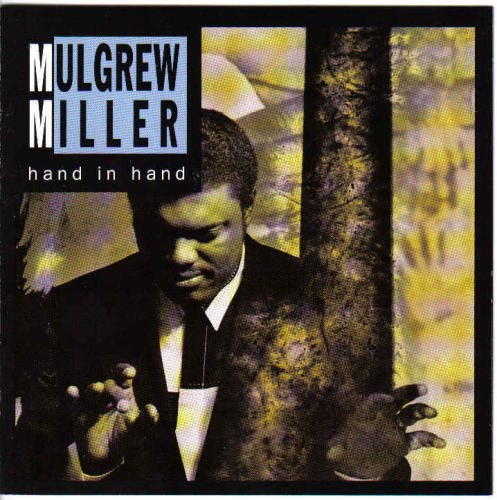
Hand in Hand (Novus) – My personal favorite. Eddie and Joe Henderson, Steve Nelson on vibes, Lewis Nash on drums, a young Christian McBride and Mulgrew’s compositions and amazing solos. One of the best jazz albums of the ’90’s. Also Out of Print.
The Sequel (MaxJazz) – This was a 2002 revival of Wingspan, a formidable quintet that Miller had originally formed in 1987. This time around they were a sextet with the addition of Duane Eubanks on trumpet. Though the membership is mostly different, they hadn’t skipped a beat in 15 years, due mostly to Mr. Miller’s strong guiding hand. CD is OOP but it’s currently available on mp3 at a very reasonable price.
Live at Yoshi’s – Volume Two (MaxJazz) – This was the second of two excellent volumes that Miller and his trio recorded at the famed Bay Area jazz club in a 2003 session. The reason that I give this set the nod over number one is simple; Volume Two is still available on mp3 for those who want it.
Dave Brubeck passed away today, one day before his 92nd Birthday.
For a time, Mr Brubeck was one of the most popular jazz musicians in the world. At the same time, he was one of the most critically reviled jazz musicians around. Time heals all wounds and by the time of his death today, love and admiration was pouring in from serious and casual jazz fans alike.
A great deal of his fame stems from “Take Five”, a song first performed in 1959 by his legendary quartet (Paul Desmond, Eugene Wright, Joe Morello and Brubeck). The 45 was the first jazz single to sell a million copies. Though Brubeck was a prolific composer, he did not in fact, write “Take Five”. It was written by Mr. Desmond.
Many critics sniffed back then, at Mr. Brubeck’s music, saying that it was stiff, bombastic and worst of all, unswinging. Though the criticisms rankled at Brubeck, he kept on going, achieving great public popularity, especially on college campuses, in the late ’50’s and early ’60’s.
I admit that when I was new to jazz, I let the opinions of others keep me from digging Brubeck’s music for a while. However, as I became a big fan of Paul Desmond’s solo work, I made my way back to the source.
I grew to like Brubeck the musician and love Brubeck the composer. His compositions, such as “The Duke”, In Your Own Sweet Way” and “Blue Rondo a la Turk” are stunning in not only for their beauty, but for the complexities that they reveal upon repeated listenings.
Those unfamiliar with Mr. Brubeck’s work should start with the most famous album, Time Out. It’s a virtual greatest hits package and it captures the essence of the famous Brubeck sound. At Carnegie Hall includes some of the same selections as Time Out, but they are so much better in the live setting. A personal favorite is The Real Ambassadors, Brubeck’s “protest opera”, which was only performed once, at the 1962 Monterrey Jazz Festival. The music was by Mr. Brubeck and the lyrics by Brubeck and his wife, Iola. The studio album was recorded in 1961 with a “cast” of Louis Armstrong, Lambert, Hendricks & Ross and Carmen McRae and Brubeck. There are several moments of sheer brilliance including Satchmo’s still haunting vocal on “They Say I Look Like God” and his duet with McRae on “You Swing Baby”, which is “The Duke” with added lyrics. And finally an album that I just remembered since I started writing this post; Brubeck and Rushing a meeting of the Brubeck Quartet and the legendary Basie vocalist. It sounds like a train wreck on paper, but I’ll be damned if they don’t all find common ground and pull it off beautifully!
I wrote more than I intended to here. I wanted to let the videos speak for themselves, as I’m sure they will when you watch them. In any case, Rest In Peace to a true jazz giant – Dave Brubeck.
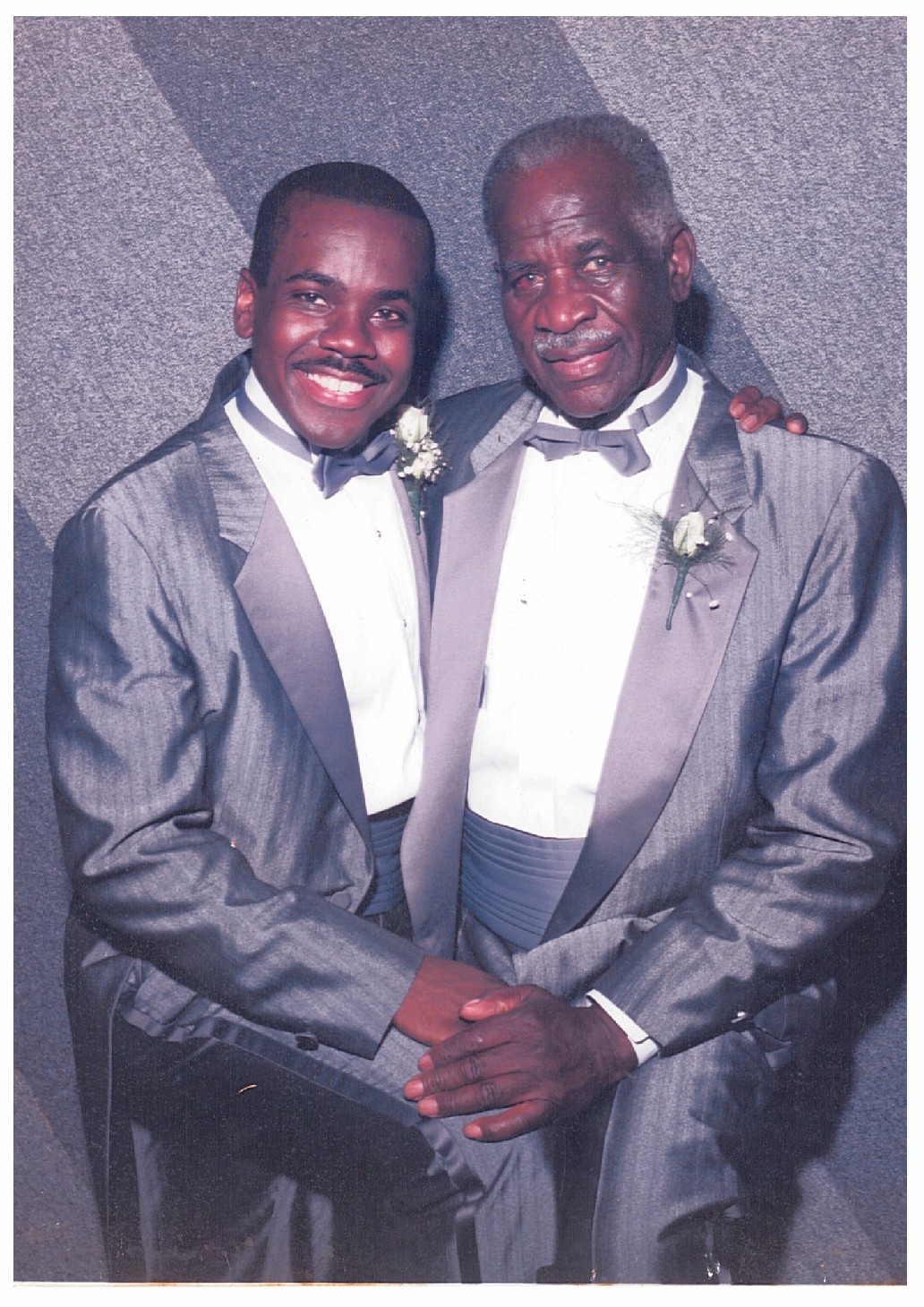
My Dad was the wisest man that I’ve ever known and that I probably will ever know.
He lived 96 years and though his formal education only lasted until the sixth grade, his perpetual thirst for knowledge and insatiable curiosity earned him the life equivalent of a PhD. And as I came into adulthood, I tried to sop up that wisdom like molasses on my Mom’s homemade biscuits.
Dad always kept pen and paper handy, so that if something caught his curiosity that he didn’t know about, he would write it down, so that he could then research it. And this was before the internet age, folks. This continued right up until the end of his life – when I was gathering his effects from his hospice room hours after his death, I found another of those scraps of paper with the name “Jennifer Lopez” scrawled on it in his handwriting (Dad also had good taste in women).
Anyway, though my father was not a big jazz fan, he had an interest in a wide variety of music. It wouldn’t be odd to hear him break out in a bit of a Beatles tune, Stevie Wonder or even Fleetwood Mac (“Don’t Stop”). When I started to love music in my preteen years, I would constantly play the album from “The Archies” TV show. The song “Truck Driver” became his favorite.
But as far as John Davenport was concerned, the great Louis Jordan was THE MAN. My dad was a generally reserved man, so I would always get a kick out of seeing him, out of nowhere, burst into “Caldonia” or “Is You Is or Is You Ain’t My Baby”. He always marveled at the big sound of Jordan’s Tympany Five, which he said could sound bigger than an entire big band.
My dad was born in Mississippi in 1911. It goes without saying that he grew up in a time that legal segregation had a tight grip on his home state. He then moved to St. Louis (where segregation was more institutional than legal) in his twenties and then to New York just after World War II. Not too long after arriving in NYC, he heard that Louis Jordan was going to be appearing at the old Paramount Theater on 43rd & Broadway. Of course he bought a ticket and went to the show.
Keep in mind that my Dad had never experienced integrated seating before, so he was going through a bit of a culture shock. The shock turned to overload when a few minutes after he took his seat, a trio of young white girls in bobby socks and poodle skirts bounded into his row and took their seats right next to him. They said “Hi!” and then went about their business, gabbing amongst themselves with excitement about seeing Mr. Jordan.
Dad was a bit nervous at first. Where he came from, something a simple as this was unheard of…White folks, let alone young white women, would never have taken an open seat next to a black man. And if they did, trouble was sure to come for that black man. He remained in seat, albeit apprehensively, almost waiting for some sort of trouble to come. But it never did. The girls never said another word to him after “hello”. They were utterly unfazed by his presence. Which, to Dad, was the most amazing thing of all.
A few minutes later the lights went down and Jordan hit the stage “Caldonia…Caldonia…What makes yo’ big head so hard!!!” As my Dad, the bobby soxers and the rest of the throng responded to Mr. Jordan, in unison, he finally began to relax and feel at home. Within an hour, people of all races had become one, through their love of “Ain’t Nobody Here But Us Chickens”.
Hey, maybe New York was going to be okay…
Thanks for staying in New York Dad; and thanks for sharing all of that wisdom with me.
On hearing of the passing of vibraphonist Teddy Charles a few days ago, I thought back to the late ’90’s, when I worked for WPBX-FM (now WLIU), on Long Island’s East End; back in the days when it was an all-jazz station.
I was a few months into my tenure, hanging out with some of the other members of the on-air staff, when the discussion turned to difficult callers, some of whom were older jazz musicians who had settled out in the Hamptons. They could be a tough bunch, who didn’t suffer fools gladly, especially when it came to the music that they loved and had played for much of their lives. The veteran guys agreed that the toughest of these cats was Teddy Charles.
The stories bounced around the table about Mr. Charles’ calls to our listener line, each story more frightening than the last about Teddy’s profane criticisms of the musical selections, the on-air staff and the sanity of everyone involved with the station. When I confess that I hadn’t encountered Charles yet, I was told, with a knowing grin, “Oh don’t worry, your turn will come”
A few months later, I was doing my Saturday night show. I was closing out a three song set at the top of the hour with Dizzy’s Big Band version of Horace Silver’s “Doodlin’“, when the white light that signaled a phone call, lit up. I answered; and a gravelly voice began this memorable exchange:
CALLER: ” I just wanna tell ya, that you’re playing some great shit tonight. I try to tell the rest of those idiots there what the music is all about, but they don’t listen to me, they’ve all got their heads up their asses, but you get it kid, so I wanna tell you to keep on doing what you do”
ME: “Well, thank you, sir; I’m glad that you like what you hear. What’s your name, friend?”
CALLER: Teddy Charles
ME (trying unsuccessfully to hide my surprise): “The Teddy Charles?”
CHARLES: “That’s right”
ME: “Well, sir; now I’m really honored to hear from you, I hear that you’re a fan of the station…”
CHARLES: “Well, I wouldn’t say I was a fan, most of you guys over there are idiots, but you and [another station personality] , are about the only ones who have a clue. I know I beat you guys up a lot, so I wanted to let you know when you get it right.
ME: “Well, Mr. Charles I really appreciate your call and the support…”
CHARLES: “No problem, now play some Mingus, will ya?” [Hangs up]
I had almost three hours to go in my shift at that point, but nothing else mattered. I had faced the most ferocious lion in our listening audience and instead of biting my head off, he had purred. During long sets throughout that night, I called some of my colleagues and the Program Director to tell them about my encounter. To a man, they were impressed. In fact, I seemed to go from “rookie” to “big dog”, in a few eyes, from that moment on.
I worked at the station for another three years. Though others spoke of their continuing encounters with the “Wrath of Ted”, I never heard from him again, though I heard from those who did speak with him, that he would occasionally hold my work up as an example, while berating them.
Not all of my conversations went as well during my tenure and I admit that time has washed away the details of many of them. But that one stuck and caused a smile to come to my face whenever I heard Teddy Charles’ name or some of his music.
Rest in Peace, Mr. Charles. You played some “great shit” too.
As a DJ on NYC’s WKTU (92.3), he was part of the crew in the late ’70’s, who helped bring disco out of the clubs and into being a cultural phenomenon. WKTU rode wave all the way to becoming the number one radio station in the country’s biggest market, with De Jesus’ gregarious on-air personality as a major part of the lineup. He also had a keen ear for the music of the urban streets, which led to him becoming WKTU’s program director.
He wasn’t afraid to take a chance either – in 1979, he took a gamble by playing a record by a then unknown group called The Sugarhill Gang on his show. That record was “Rapper’s Delight”. The phone lines lit up and Carlos knew that this was no ordinary track. What he didn’t know then, was that he had become one of the first DJ’s to play a rap record on a major commercial radio station; Carlos De Jesus had helped birth hip-hop on the radio. But days as a pioneer were not yet over…
Though it may be hard to believe now, there was a time at the dawn of the video age, when it was very difficult for black artists to get video airplay. MTV, in its early days, might as well have hung out a “Whites Only” sign. Artists of color were summarily excluded due to the station’s arbitrary format limit, which favored AOR (Album Oriented Rock). So in the early 80’s, R & B and hip-hop artists had to scramble for other outlets that would bring their videos before the public. BET was on the air, but still searching for direction. It wouldn’t become an influential video outlet until the late ’80’s.
In the summer of 1983, WABC-TV in New York began providing an oasis, in the form of New York Hot Tracks, a show focused on music by R & B, Disco and Rap Artists; in other words, those who couldn’t get seen on MTV. When the producers went looking for a host, they found Carlos De Jesus.
The show was different from anything on MTV, not only for the type of music played but for the setting as well. Carlos was usually set up in one of the more popular dance clubs in the NY Metro Area, giving the show a live feel and boundless energy. Mr. De Jesus would intro each clip and often have some major artists in the club with him for live interviews. The production wasn’t polished, but it was real. People there were having fun and you wanted to be a part of it.
Within a year of its premiere New York Hot Tracks had become must see urban viewing, even in its tough time slot (Friday nights 11:30 pm – 12:30 am). The show went from being shown on one station to being syndicated on 110. “NYHT” became the show to be on for artists who were visiting New York and as the host, Carlos was the man to be seen with. Not bad for a kid who got his start hosting a show called Alma Latina on Columbia University’s WKCR in 1971.
Carlos left NYHT in 1986. The show continued until 1989 with celebrity hosts, but without De Jesus, it lost its charm and New York energy. For my money those last three seasons might as well been produced on some farm in North Dakota.
I had lost track of Carlos De Jesus until about three years ago, when I began to use Twitter regularly. Through a retweet he appeared in my timeline, attached to one of the mixes of classic 70’s / 80’s tracks that he was fond of dropping. I tweeted my admiration of the mix and was pleasantly surprised to get a response. Thus began our friendship.
We never met in person, but we found that we shared a common goofy sense of humor and of course, a love of that music that kept us in touch. I was blown away when he used his new Flip video camera to make a promo for my web radio station and send it to his followers. He always supported me – “The Jazzman of Twitterland”, as he used to call me.
I got the feeling that as much as he had done in the industry, he had been somewhat forgotten in the speed and “don’t look back” attitude of this century, so I made sure that I would regularly give him shoutouts, reminding of what a legend he was. He would always respond “You Crazy, Man”, but I know that he appreciated it.
When I heard of his passing today, I went to his timeline to see what his final tweets were about. I see that right until the end, he was doing his thing – sending out hot mixes, good wishes and pictures of beautiful ladies that he had met over the years. In his honor, I’m sharing links to some of his last posted mixes below.
Posted in In Memoriam on January 26, 2012 by curtjazz
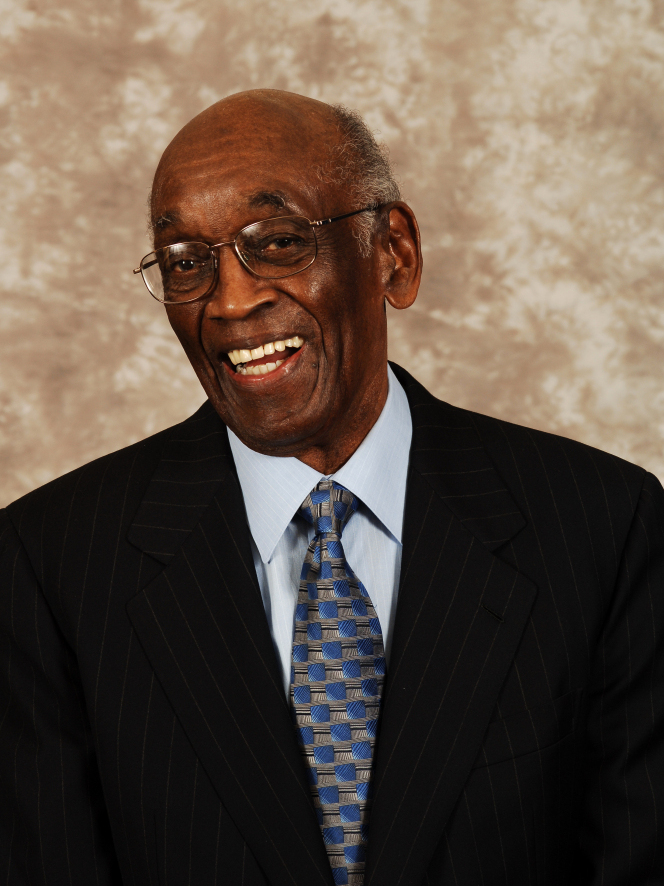
John Levy – A Different Kind of Jazz Pioneer
The music world lost a pioneer last week with the passing of John Levy. Though his name was not well-known to many outside of the jazz world, Mr. Levy was one of those who broke the ground for others; however, it was not because of his music. For though John Levy was a musician, he made his mark not so much with his bass as with his leadership. For in an era rife with racism, segregation, shady dealings and mistreatment of musicians, especially those of color. John Levy chose to put down his instrument and put his business skills to use as one of the first African-Americans to work as a personal manager for jazz musicians.
Mr. Levy was born in New Orleans on April 11. 1912. He was raised in Chicago. A high school dropout, he played piano, then switched to the bass; supporting his musical income with jobs as a postal worker and hotel porter. He became proficient enough as a bassist to work regularly, first in Chicago backing violinist Stuff Smith and then an array of jazz notables, including Ben Webster, Erroll Garner and Billie Holiday. In fact, Levy was the bassist during Lady Day’s legendary Carnegie Hall comeback concert in 1948.
In 1949, John Levy became the first bassist in the new George Shearing Quintet, giving that soon to be famous “Shearing Sound” its bouncy bottom. While working for Shearing he transitioned into the role of road manager for the group which led to the start of his management group, John Levy Enterprises, in 1951. The rest as they say, is history.
During his career as a manager, which spanned an incredible eight decades Levy guided the careers of artists such as Cannonball Adderley, Betty Carter, Herbie Hancock, Wes Montgomery, Freddie Hubbard, George Shearing, Joe Williams and Nancy Wilson. Ms. Wilson’s management association with Mr. Levy lasted from 1959 until his death.
Such was the respect for John Levy in the jazz world that the National Endowment for the Arts recognized him as a Jazz Master in 2006, for his contributions as a manager and mentor to artists, especially during a time when so few were standing up for them.
John Levy is survived by his wife Devra Hall Levy (daughter of guitar great Jim Hall), a son, three daughters, 15 grandchildren and many great-grandchildren. He is also fondly remembered by many clients, friends and admirers in and out of the jazz world.
In our video tribute below, we’ve used the music of guitarist Henry Johnson, who was also a John Levy client. The tune is called “75th and Levy”, which Johnson wrote in honor of Mr. Levy for his 75th birthday, almost 25 years ago. The recording is on Henry’s album Future Excursions, on Impulse! Records.


 Curt's Jazz Cafe