Though John Coltrane gets most of the birthday ink today, Ray Charles Robinson was also born on this day, in 1930; four years after Trane.
Both were born in the South, both spent seminal portions of their careers recording for Atlantic Records and both were major influences on countless numbers of artists.
Just think; wouldn’t a Coltrane – Ray Charles record date have been something?
Happy 81st birth anniversary to “The Genius”, Ray Charles.
Here are some great video clips of Brother Ray in his prime, “makin’ it do what it do, baby!”
“I Believe to My Soul” – performed live at the 1960 Newport Jazz Festival
“Let The Good Times Roll” – also from Newport 1960
“What’d I Say” – from the mid ’60’s
Ray blows the alto sax on this clip from a 1963 Brazilian Concert!
“In the Evening, When the Sun Goes Down” – Ray stretches out a bit on the 88’s…
Today, John William Coltrane would have been 85 years old.
His face is on my personal “Mount Rushmore of Jazz”, so I admit to zero objectivity about him.
Like Miles, much has been written about him, but limited video footage exists. So here are a few fine examples of the art of “The Greatest of All Time”. I hope that you dig them as much as I do.
“Afro Blue” from Ralph J. Gleason’s legendary ‘Jazz Casual’ TV series
From the same program, the still haunting “Alabama”
“Impressions”
“My Favorite Things” – 1965 on a cold August night in Belgium
Though I knew that Gil Scott-Heron had been battling various health problems the last few years, hearing of his death a few minutes ago still was a shock. It hit like a ton of bricks.
I first heard Gil Scott-Heron in my early teens as “The Revolution Will Not Be Televised” burst into my darkened room as I listened to WBLS overnight. His words have occupied rent-free space in my brain ever since.
He was once of the most memorable, creative, stunning and misunderstood artists I ever heard.
Here are five of his works of art that meant the most to me.
You are free at last!
The Revolution Will Not Be Televised
The Bottle
Johannesburg
Whitey on the Moon
Pieces of a Man
Plus there was “B-Movie” a Reagan-era classic. I couldn’t embed it, but see it on YouTube by clicking below:
Today is the 85th Anniversary of Miles Dewey Davis’ birth.
People who are far more learned than I claim to be, have spilled much ink over this man and his influence on jazz, on music and on our society as a whole. So I won’t spill much more.
I’ll just say that Miles was/is THE greatest of all time. You can argue about that if you want, but you’ll do it by yourself. My mind is made up.
Here are a few video clips to celebrate by. I hope you dig ’em!
(The music starts at around 00:58. Stay with it. It’s 100 times hipper than anything on TV today!)
My mother loved life and lived it joyously. She loved to be around people, she loved to laugh and though she didn’t do it very well, she loved to sing. I still remember the sound of Mom’s singing voice as she was in the kitchen or at her sewing machine. However, even when I was a child, her singing sounded unusual to me. It was a bit affected and nasal. It sounded nothing like her speaking voice. I often wondered, but never asked, where in the world did it come from?
I also knew from an early age that my mom was a fan of Dinah Washington. Though Mom was not a big LP buyer, I noticed that there were three Dinah Washington albums in the storage side of the stereo console; more than any other artist. Mom also spoke often of hearing Dinah live back when she lived in Chicago. I never bothered to listen to those records – they belonged to my parents, so they had to be corny. Besides, one of them was a “Memorial Album”, so this Dinah lady was dead. Why should I listen?
Mom died of breast cancer when I was 28. I was a nascent jazz fan by then, but I was yet to develop the love for the classic female vocalists (Sarah, Ella, Billie, Anita, etc.), that I now possess. Not too long after Mom’s death, I was on a therapeutic Tower Records run, with a good friend, Mike, who was/is a big fan of vocalists. One of the things he picked up was a 2-LP Dinah Verve Collection.
We got back to his place to have a few beers and listen to our spoils. The first thing he dropped on the turntable was the Dinah album. After the brief swinging horn line she began to sing:
“If they asked me; I could write a book…”
I stopped talking and I listened intently. All at once it hit me. That was the sound that Mom was looking for, but never quite achieved. Consciously, or not, each time my mother sang, she was paying tribute to her favorite vocalist: “Miss D”.
From that night on, Dinah Washington became my favorite jazz vocalist. The others are all great in their own way, but Dinah – well, she’s special…
I heard earlier today that Melvin Sparks had passed away from heart failure, just days before his 65th birthday.
Sparks was not well-known, even in jazz circles, so I figured that I would tell y’all a little bit about him.
Sparks was a good guitarist who was most active during the soul-jazz heyday of the late ‘60’s and early ‘70’s. He was on many of the Prestige Records albums of that time and even on few Blue Note dates. If you dug Lou Donaldson’s Hot Dog, Lonnie Smith’s Think!, Charles Earland’s Black Talk!or Rusty Bryant’s Soul Liberation,then you’ve probably heard Sparks’ bluesy Grant Green influenced playing.
He dropped a few projects under his own name during the early ‘70’s as well; all very much within the groovy soul-jazz vein of the era. The best of these were his debut Sparks!with Houston Person and Spark Plug, which featured a young Grover Washington, Jr. on tenor.
Here’s “The Stinker” from Sparks!
In the so-called “Acid Jazz” era of the ‘90’s, Sparks underwent a bit of a career renaissance. Sparks!andSpark Plug were compiled on one CD as a part of Prestige’s Legends of Acid Jazzseries, which got him some new attention.
Sparks then recorded his first sides as a leader in almost two decades (most for Savant Records) and as the work came again for the other old soul-jazz cats, they gave Sparks a call. During the ‘90’s and early 2000’s he backed Donaldson and Earland again; as well as Jimmy McGriff, Hank Crawford and relative newcomer Joey DeFrancesco.
He was still going strong until recently, bringing joy to multiple generations with his still nimble playing, as you can see in the clip below. He was a part of an era of jazz that many people unfortunately, try to forget. But Melvin Sparks should be remembered.
 Though John Coltrane gets most of the birthday ink today, Ray Charles Robinson was also born on this day, in 1930; four years after Trane.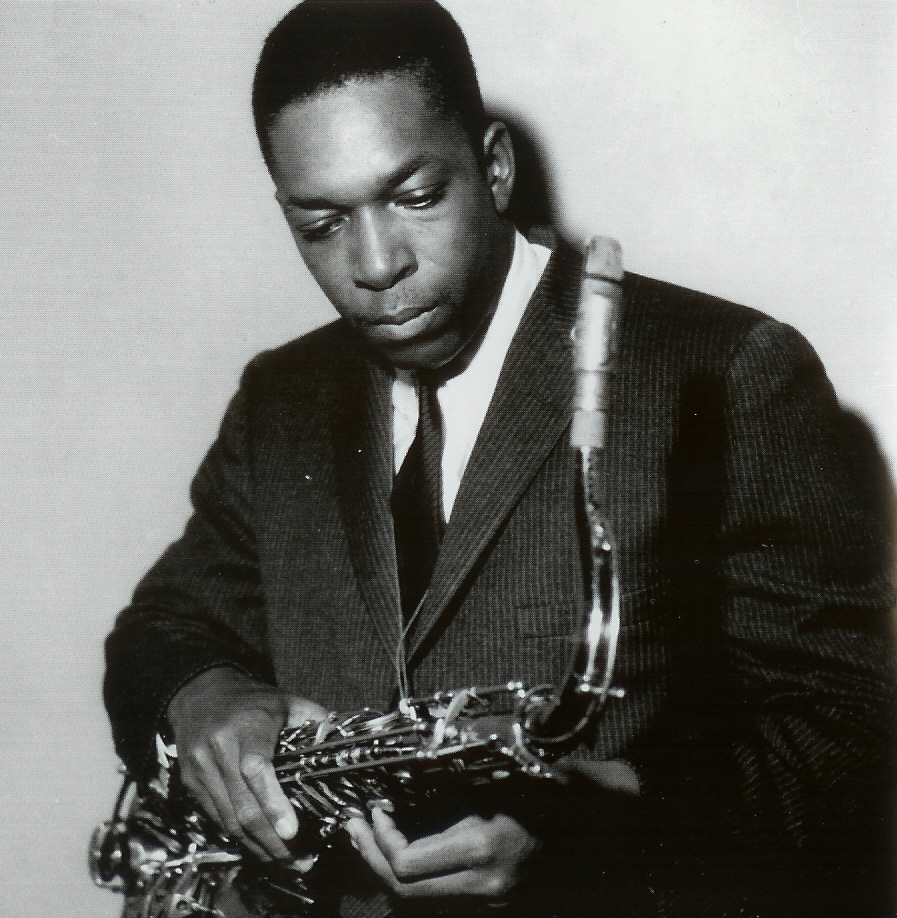


 Curt's Jazz Cafe