Okay Jazz Peeps, the Grammys do feel a bit empty this year, after the purge of many categories, including jazz.
However, there are still some fine artists, who did great work over the past year, and whose work has been nominated. These people had nothing to do with the shortsighted decision-making of the NARAS, so I want to take a few posts to recognize them, with a track from their nominated work. I’ll also include a few brief thoughts about each work.
IMO this is not Ms. Allyson’s best work, but she is still one of the best around today. It’s well sung, as always but the Only The Lonely vibe wore thin after a while.
My hands down favorite among the nominated albums, it’s a mostly vocal effort by Ms. Carrington and a number of other ladies. One of our picks for Best Jazz Albums of 2011.
Mr. Elling is a perennial nominee in this category, who finally won on his prior nomination for his strong Coltrane/Hartman tribute Dedicated To You. Though The Gate had some fine moments, I found it overall, to be just “okay”.
This album was a big favorite among the critics and it just may take home the prize on Sunday. Excellent musicianship; I just wished that it swung a little harder.
This is another personal favorite in this category. I’ve long been a fan of Randy Newman’s sardonic wit and wondered when a jazz vocalist would mine the Newman songbook to great extent. Ms. Vitro seemed at first like an unlikely choice, but she sings the songs as if they were written for her and the arrangements are first-rate. She is a longshot in this category but it would not be at all disappointing to see her win.
Even if you don’t know his name, you’ve probably heard Curtis Amy. If you listened to pop music and pop radio from the mid-’60’s through the late ’70’s, then you heard Amy’s tenor, soprano or flute backing artists from Carole King, to Ray Charles to the Doors. But as a solo artist, Curtis Amy toiled in virtual obscurity.
Born in Houston, TX, in 1927, Amy’s first instrument was the clarinet at the young age of four. He was drafted and during his stint in the Army, he started to play the tenor sax. When his time in the Army was up, Amy decided to pursue formal musical training at Kentucky State College (now University), from which he graduated in the early ’50’s. He then taught school in Tennessee and knocked around playing gigs throughout the midwest for a couple of years, before landing in Los Angeles around 1955. Once in L.A., he recorded a session with Dizzy Gillespie and continued to pay his dues on the club scene.
While playing at a club called “Dynamite Jackson’s”, in the Crenshaw District, Curtis Amy caught the ear of Dick Bock, the now legendary head of Pacific Jazz Records. Bock dug the bluesy sound of Amy’s tenor and signed him to the label. Amy’s first date for Pacific Jazz was The Blues Message, which he co-led with organist Paul Bryant, another L.A. club regular. The sound on that session is what you would expect – greasy organ and gritty tenor, augmented by Roy Brewster’s valve trombone. The music would have easily fit into any smoky joint in Crenshaw, Watts or even Harlem. Though Bock had brought Amy, Brewster, Bryant and the others in the quintet together for the recording, the cats apparently dug their sound and decided to remain together as a group for a while, taking up residence as the house band at “Dynamite Jackson’s” and cutting one more album, Meetin’ Here, in 1961.
Curtis Amy and Paul Bryant on the title track from ‘Meetin’ Here’
Between 1960 and 1963, Bock and Pacific Records kept Mr. Amy busy as he recorded a total of six albums as a leader or co-leader. All but one included Brewster as a sideman. They are also notable for containing some of the early efforts of two vibraphonists who are now anything but obscure, Bobby Hutcherson (on Groovin’ Blue) and Roy Ayers (on Way Downand Tippin’ on Through). The unquestionable standout of Amy’s Pacific Jazz Recordings (and of his overall catalog) is his final album for the label, 1963’s Katanga!. It was originally credited to the co-leadership of Amy and Dupree Bolton, a trumpet player who was as gifted as he was enigmatic. On Katanga!, the overt blues base of most of Amy’s earlier works has been replaced by a sound that is closer to hard bop. Amy, Bolton, pianist Jack Wilson, guitarist Ray Crawford, bassist Victor Gaskin and drummer Doug Sides, burst forth with a power that is still as arresting today as it was almost half a century ago. Nevertheless, Katanga! was lost in the surfeit of jazz releases at that time. It all but vanished from the scene, along with the musicians who led the session.
Curtis Amy, Dupree Bolton and Ray Crawford lead a live version of “Katanga” on the old Frankly Jazz television program
Curtis Amy would lead just three more sessions after 1963; a totally forgettable pop album Sounds of Hollywoodin 1965, a date that Amy later dismissed as “syrup”; Mustang; a Joel Dorn produced album for Verve, which drew some attention from acid jazzers in the ’90’s, due to the funky title track and Peace For Lovea very good album that marked Amy’s return to straight-ahead jazz, as well as his recorded swan song. Though Peace For Love was recorded in 1994, it was not released in the U.S. until 2004, two years after Amy’s death.
In the years between the mid-60’s and the start of this century, Amy, though invisible to the jazz scene, was anything but idle. He married Merry Clayton, a fine and extremely underrated vocalist in her own right (she is the female singer who gives Mick Jagger a run for his money on “Gimme Shelter”). Together and separately, they worked constantly in Hollywood. When Merry joined Ray Charles’ Raelettes, Curtis signed on for a three-year stint as Brother Ray’s musical director. When The Doors went for an orchestral sound on 1969’s The Soft Parade, they called on Amy as one of the saxes. It’s Mr. Amy that you hear soloing on the hit “Touch Me”. Mr. and Mrs. Amy are also heard all over Carole King’s immortal album Tapestry, Merry as a background vocalist and Curtis on reeds – that’s his soprano sax on the break on “It’s Too Late” and his flute that rides out “So Far Away”.
From The Smothers Brothers show, here’s “Touch Me” by The Doors, with Curtis Amy on tenor
Curtis Amy died of pancreatic cancer in 2002. Though he was reluctant to be called a “Texas Tenor” or a “West Coast Jazz” player, he left a fine body of work that is worth exploring by fans of any niche or genre of Black American Music. I recommend that you start with Katanga! and work your way in. You’ll find much to like.
Peace for Love(Fresh Sounds Spain) – CD available as import – hard to find
Mosaic Select 7 – Curtis Amy(Mosaic Records) [a 3-CD compilation of all of Amy’s work for Pacific Jazz, including Katanga!] – OOP but it can be found, at a price, from Amazon and eBay
Posted in In Memoriam on January 26, 2012 by curtjazz
John Levy – A Different Kind of Jazz Pioneer
The music world lost a pioneer last week with the passing of John Levy. Though his name was not well-known to many outside of the jazz world, Mr. Levy was one of those who broke the ground for others; however, it was not because of his music. For though John Levy was a musician, he made his mark not so much with his bass as with his leadership. For in an era rife with racism, segregation, shady dealings and mistreatment of musicians, especially those of color. John Levy chose to put down his instrument and put his business skills to use as one of the first African-Americans to work as a personal manager for jazz musicians.
Mr. Levy was born in New Orleans on April 11. 1912. He was raised in Chicago. A high school dropout, he played piano, then switched to the bass; supporting his musical income with jobs as a postal worker and hotel porter. He became proficient enough as a bassist to work regularly, first in Chicago backing violinist Stuff Smith and then an array of jazz notables, including Ben Webster, Erroll Garner and Billie Holiday. In fact, Levy was the bassist during Lady Day’s legendary Carnegie Hall comeback concert in 1948.
In 1949, John Levy became the first bassist in the new George Shearing Quintet, giving that soon to be famous “Shearing Sound” its bouncy bottom. While working for Shearing he transitioned into the role of road manager for the group which led to the start of his management group, John Levy Enterprises, in 1951. The rest as they say, is history.
During his career as a manager, which spanned an incredible eight decades Levy guided the careers of artists such as Cannonball Adderley, Betty Carter, Herbie Hancock, Wes Montgomery, Freddie Hubbard, George Shearing, Joe Williams and Nancy Wilson. Ms. Wilson’s management association with Mr. Levy lasted from 1959 until his death.
Such was the respect for John Levy in the jazz world that the National Endowment for the Arts recognized him as a Jazz Master in 2006, for his contributions as a manager and mentor to artists, especially during a time when so few were standing up for them.
John Levy is survived by his wife Devra Hall Levy (daughter of guitar great Jim Hall), a son, three daughters, 15 grandchildren and many great-grandchildren. He is also fondly remembered by many clients, friends and admirers in and out of the jazz world.
In our video tribute below, we’ve used the music of guitarist Henry Johnson, who was also a John Levy client. The tune is called “75th and Levy”, which Johnson wrote in honor of Mr. Levy for his 75th birthday, almost 25 years ago. The recording is on Henry’s album Future Excursions, on Impulse! Records.
John Coltrane, Wayne Shorter, Zoot Sims, Cannonball Adderley, Sonny Rollins, Jackie McLean, Stan Getz, Branford Marsalis, Gerry Mulligan, Charlie Parker… those are just the first ten names off the top of my head, but the list of well-known jazz saxophonists could go on for quite a while.
Because to many out there, the saxophone is jazz – its sounds and those who made them are the fuel of many a glorious legend. But for every Dexter Gordon or Johnny Hodges, there are dozens more whose names can fuel another romantic legend – that of the talented, but obscure saxophonist. Someone who had the chops to stand with those in the upper echelon, but who for some reason, was missed by the spotlight.
Our first series of 2012 will touch briefly on the music, careers and lives of some of those less-heard cats. Though you may have heard some of their names, we hope that we can whet your appetite enough to send you out in search of their art. We’ll try, wherever possible to list a few available CDs, LPs and mp3s by each artist, to start you in the right direction.
Again, our mission is not to stump the scholars but to open the eyes of the masses.
They will appear in alphabetical order, unless someone comes along after I’ve passed that letter, to totally mess up my plans.
We’ll start later this week with Curtis Amy. Who comes after that…well, you’ll just have to wait and see.
We’ve dropped in a few clips by some of the legends to whet your appetite until the series starts.
Until then, the jazz continues and the BAM flows on!
About six months ago, I posted a halftime list of my favorite 2011 jazz recordings heard between January and July. I promised to be back around now to fill out the list with what I experienced over the last six months. My original intent was to pare that list down to a final dozen or so, spanning the entire year…
Well, I changed my mind y’all. Instead, we’re going to add another ten to that first list, making it a Top 20. And, like last year, there was an excellent 2010 disc that I completely missed until 2011. It will be included as well.
As a reminder, here are albums from the July post. You can see/read the entire July post HERE.
Unsung Heroes– Brian Lynch (Hollistic Music Works) [A 2011 CD release]
So here they are, in alpha order by album title – my favorite jazz discs from the second half of this year:
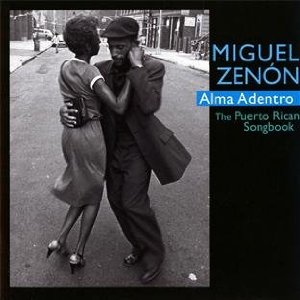
Alma Adentro: The Puerto Rican Songbook – Miguel Zenón (Marsalis Music) – He’s not prone to ostentatious self promotion, but this Guggenheim and MacArthur fellow has quietly become one of the most important saxophonists in jazz today. Each of his albums has topped the previous one; taking his artistry to a new place and keeping us, the audience, on the edge of our seats. Alma Adentro, is the exploration of the music of five composers, who are unknown in the U.S. but very important in Puerto Rican musical lore. It’s not “Latin Jazz” in the sense that we’ve come to know it, but is outstanding music that broadened my horizons.
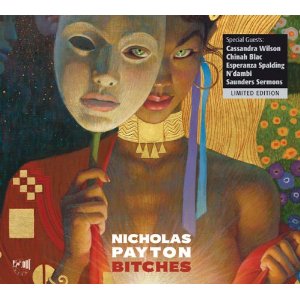
Bitches – Nicholas Payton(In + Out Records) – Yes, the title did make me wince a little, but the music made me smile, a lot. This has been an interesting year for Mr. Payton, as his blunt, insightful and often profane musings have made him one of the more controversial and compelling figures in the world of jazz social media. Not surprisingly, this album has also caused its share of controversy, raising eyebrows in the same way that In a Silent Way, another album with a dream-like vibe, did in 1969. Payton composed every song, played every instrument and sings on many of the tracks (quite well, I might add), more than holding his own with some top-drawer guests, like Esperanza Spalding and Cassandra Wilson. If you’re looking for “jazz” of the type that Payton played on his early Verve albums, you won’t find it here. Bitches has more in common with mid-70’s ballad driven R & B and with neo-soul. But as someone who grew up with the former and has developed a keen appreciation for the latter, I really dug this album.
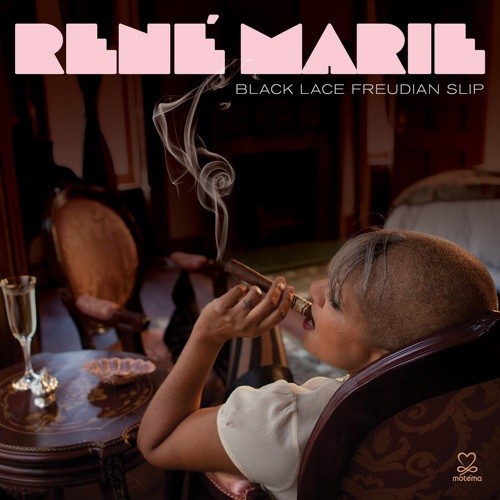
René Marie was very quiet for a while after her 2008 controversies, but she is back with a vengeance; releasing not one but two outstanding albums in 2011. The first; Voice of My Beautiful Country, (which was on our first “Best of” list) was a tribute to patriotic and traditional standards. Black Lace Freudian Slip is mostly comprised of Marie originals, including the title track, which is every bit as sly and sexy as the title suggests. The two discs may be lyrical opposites but the music on both is outstanding. Don’t try to choose between them, get them both.
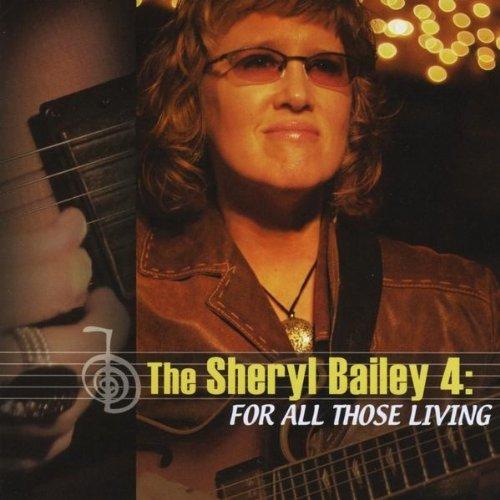
Guitarist Sheryl Bailey gets better with every recording. She follows up last year’s impressive big band outing, A New Promise, with a terrific quartet disc that displays her impressive chops and full-bodied swing to great advantage. The Emily Remler comparisons are easy to make, but I think that that’s too limiting. Sheryl Bailey has the potential to outshine her role model, whose untimely death halted her artistic growth. Bump the gender limitations; Ms. Bailey is one of the best jazz guitarists working today, period. This disc also has its heart in the right place as 20% of the proceeds from all sales will be donated to Ronald McDonald House.
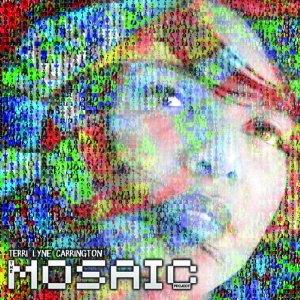
As I stated in my earlier review of this album, The Mosaic Project is Terri Lyne Carrington’s most completely realized project, by a mile. It also is one of the best jazz works of the year by any artist. Click HERE to see my full post about it.
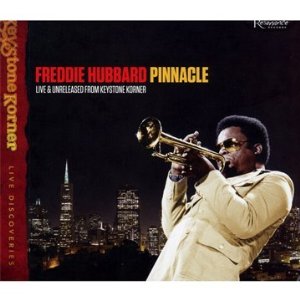
What a find this was by Resonance Records! Hubbard, at the top of his game in 1980 on performances compiled from summer and fall appearances at the legendary San Francisco club. The version of “The Intrepid Fox” that opens the album, is jaw dropping. What follows is just as good, including the only known recording of Hub playing “Giant Steps”. The title says it all.
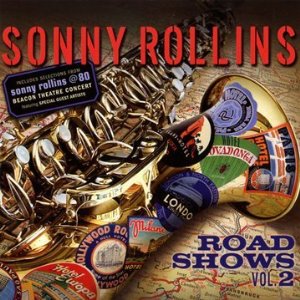
I was one of the few who liked, but didn’t love Road Shows Volume 1; mostly because of the unevenness of the 30 years worth of performances. Volume 2’s tracks by contrast, were all recorded during 2010, most of them during Newk’s already legendary 80th birthday concert, the remaining two a month later in Japan. Sonny is in very fine form and the guest stars, including Roy Haynes, Roy Hargrove, Jim Hall, Christian McBride and Ornette Coleman, in his first ever public performance with Rollins, all rise to the occasion. Sonny Rollins proves once again, that age ain’t nothin’ but a number.
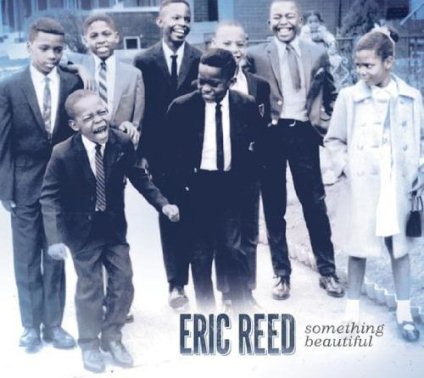
Something Beautiful is Eric Reed doing what he does best; playing in a trio setting. It’s hard to believe that it’s been over twenty years since Reed first debuted with Wynton, but in those years he has grown from teenaged prodigy to one of the best pianists of his generation, with an impeccable melodic sense that accompanies his gospel influenced chord structure. Something Beautiful consists mostly of songs by others, from Berlin to Brubeck to Billy Joel; all of them sounding as unsullied as if they were being played for the first time.
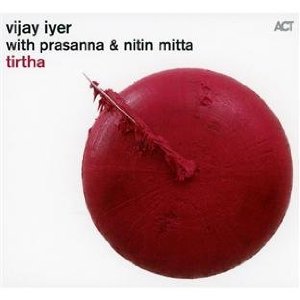
Tirtha is the self titled debut of pianist Vijay Iyer’s latest trio, which also includes tabla player Nitin Mitta and guitarist Prasanna. As expected, the album has a strong South Asian influence, but I feel that slapping a term such as “Indian Jazz” on this music is almost insulting in its limitations. Their sound is alive and its intricacies grow with every hearing. Iyer has never been afraid to challenge conventions and he usually creates something fresh in the process. He and his Tirtha band mates have done so here. In a genre often chided for being stale, Tirtha is a welcome breath of fresh air.
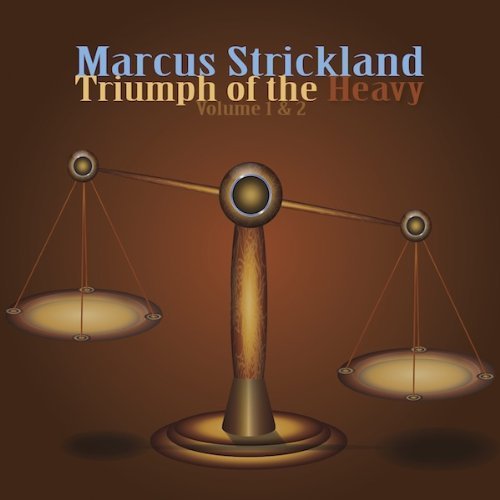
Strickland is another of those young saxophonists who give me hope for the future whenever I hear him blow. On this two disc set (gutsy for a relatively unknown artist), he brings the goods on tenor, alto, soprano and clarinet. Disc 2 is a live trio set with Marcus’ twin brother E.J. on drums and up and coming bassist Ben Williams. They push the boundaries of convention to the limits, with a hard-driving sound that is spare, but never thin. On Disc 1, recorded eight months later, they add David Bryant, a young Tyner influenced pianist with mad promise, to the mix. Bryant’s angular harmonies are the main reason I have a slight preference for the studio set but it doesn’t really matter, because neither disc has left heavy rotation in my iPod since I bought them.
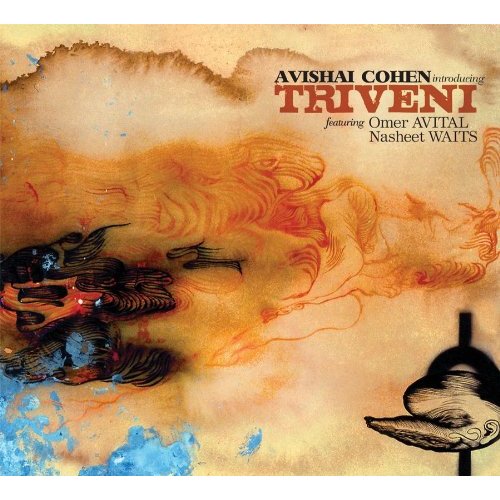
I’m continuing the tradition that I started last year of recognizing an outstanding disc released in the previous year that managed to escape my ears until the current one. Triveni was released in September 2010. It’s a trio session led by the trumpet playing brother of Anat Cohen, who has garnered renown for her work on sax and clarinet. Avishai Cohen is one of two Israeli jazzmen working today who share the same name (the other plays bass) and as of now, he’s the lesser known of the two. This strong outing should do something to change that. Trumpet/bass/drums trio sessions are rare but Cohen is more than up to the task, collaborating with bassist Omer Avital and drummer Nasheet Waits on originals and standards that mine the depths of hard bop, swing, funk with a nice dose of avant-garde as well. Cohen is not going to bowl you over with flights into the upper register but the impressiveness of his facility and inventiveness in the mid range is worth a dozen high notes. Many thanks to Canadian journalist/pianist Peter Hum for pulling my coat about this one.
Notable Mentions
Here are a few more fine discs from 2011 that are worth a listen or ten. Don’t pass them up if you have a chance:
A Boy’s Journey – Peter Hum Quintet(self-released) –The knowledgeable and witty jazz journalist is also a very fine pianist. An impressive debut recording.
Parallel Lives – Andrea Wolper (Jazzed Media) – This vocalist grows more impressive with each album. Her coolly inviting mix of originals with rarely heard standards are a perfect tonic for a tough world.
State of Art– Ben Williams (Concord Jazz) – The Monk Competition winner drops a formidable blend of the new and the traditional on his first disc. It’s fresh, it’s exciting and I want to hear more.
Sweet Thunder (Duke & Shak) – Delfeayo Marsalis (Troubador Jass) – Delfeayo does The Duke proud on this hard-swinging octet version of Such Sweet Thunder. It’s the year’s best album from someone named Marsalis (Read the full review post HERE)
When the Heart Emerges Glistening – Ambrose Akinmusire (Blue Note) – A rare case of a much-hyped major label debut living up to expectations. Akinmusire is the real deal; and the greatest thing is that he’s nobody’s clone.
And that’s how things looked this year from my “plush” Charlotte studio/mancave. Tracks from these albums and more will be heard on Curt’s Café WebJazz Radio, starting on December 27 and continuing on through the month of January. Your thoughts, comments and criticisms are always welcome and your spam is always deleted.
Thanks for taking the time to read my thoughts this year. I don’t take your support for granted. I hope you’ll stick around for what I expect will be an interesting 2012.
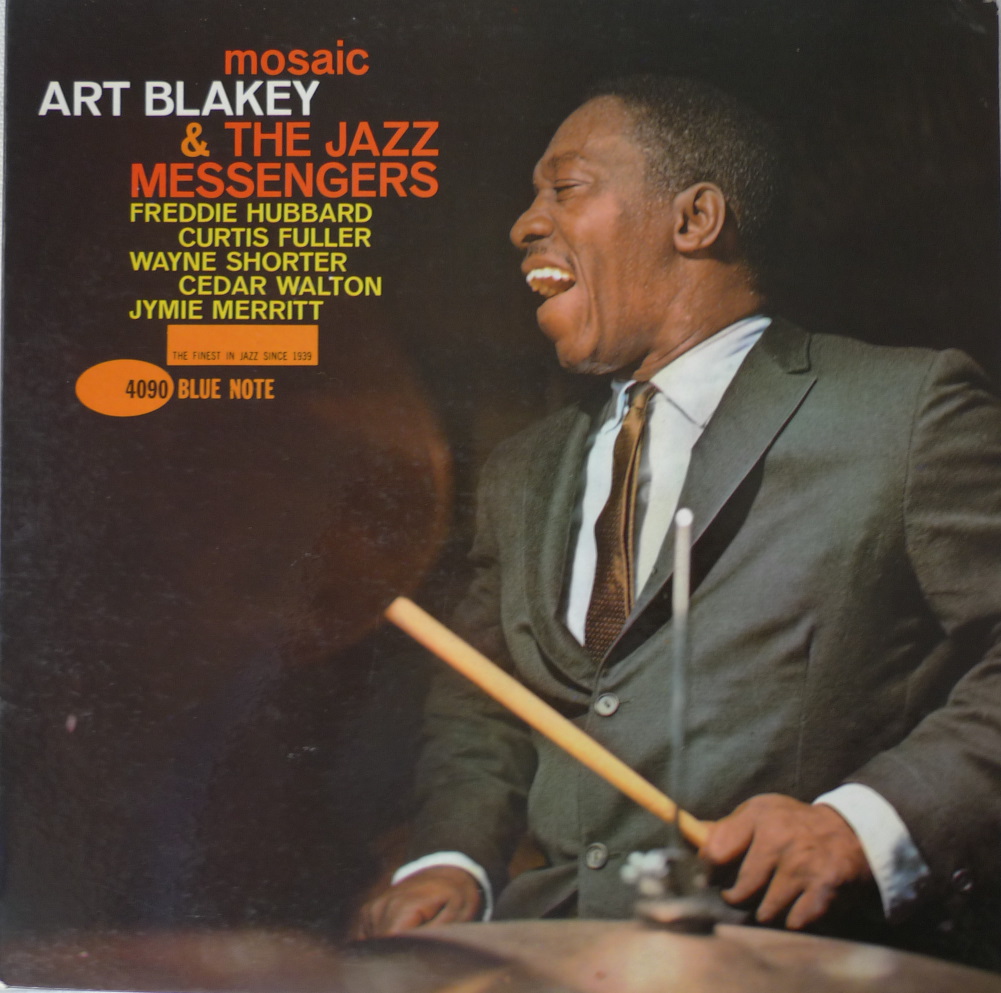
Art Blakey of course, will be forever known as “headmaster” of jazz’s greatest finishing school, the legendary Jazz Messengers. He was also for a time, the unofficial house drummer for Blue Note Records. The list of jazz legends who’ve logged time with the Messengers is stunning. Just the trumpet players alone could fill their own wing in the Jazz Hall of Fame (Brownie, Morgan, Hubbard, Wynton and even Chuck Mangione!).
Blakey and the Messengers have been well documented, so instead of repeating any more of their history, I’m going to repeat one of my favorite fables about Blakey, who was known for never missing an opportunity to be an advocate for music he loved:
“Art was driving to an out-of-town job and passed through a village where traffic was completely tied up because of a funeral procession. Since he couldn’t get past the cemetery until the service was over, he got out and listened to the eulogy. The minister spoke at length about the virtues of the deceased, and then asked if anyone had anything else to add. After a silence during which nobody spoke up, Art said, ‘If nobody has anything to say about the deceased, I’d like to say a few words about jazz!”
So here are “Bu” and the boys with a few “words” to say about jazz!
With the incredible 1961 Messengers, on “Moanin”
The same group on Bobby Timmons’ “Dat Dere”
From the ’80’s, with the Marsalis Brothers on “Ms. B.C.”
And one of the final editions of the Messengers does it right on “Along Came Betty”
This piece was originally intended as a birthday tribute to Oscar Brown, Jr. I couldn’t move fast enough to get it out last month, but the tracks were too good to languish in the draft file, so here it is a month later.
Many know Mr. Brown for “But I Was Cool”, one of his lighter pieces, which achieved some fame when a deodorant company used it (with Brown’s vocals) to advertise their product.
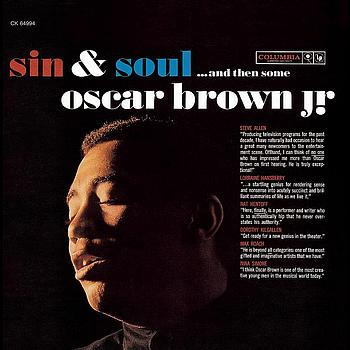
Oscar Brown was the natural predecessor to Gil Scott-Heron and other spoken word music poets. He composed over 1,000 songs, at least a dozen plays and recorded 12 albums, including the classic “Sin and Soul”; during his lifetime. He was also a political activist, who ran for the Illinois State Legislature and Congress.
I usually keep the text to a minimum during these video tribute posts and this one will be no exception, so here now are some great performances by a legendary griot.
Let’s start with this terrific overview:
Here he adds a heartfelt touch to Bobby Timmons’ “Dat Dere”
“A recording Pollard made around this time with…Dorothy Ashby caused one jazz critic to rate her as ‘one of the best in the country on piano’. Her hard swinging, witty, soulful piano stylings would doubtless have made her a name artist had she not chosen to stay in the Motor City.” – Stormy Weather: The Music and Lives of a Century of Jazz Women by Linda Dahl
“Where have I been? How is it that I never knew about Terry Pollard? I’ve researched jazz women. Hell, I was on the board of directors…of International Women in Jazz. Yet I remained clueless.” – Andrea Wolper
Let me echo the words of my friend (and TDWR in her own right) vocalist Andrea Wolper. I cannot believe that I have missed Terry Pollard all these years. I wish that I could even say that I learned of Ms. Pollard through Andrea but I even missed her then. Sorry Andrea, I promise to read your blog regularly from now on!
I first heard of this gifted pianist/vibraphonist a few weeks ago, when putting together the post on Mary Osborne; as Ms. Pollard was the pianist who “battled” Horace Silver on “Anything You Can Do…” from Cats vs. Chicks. A Google search on her name led me to the remarkable piece of footage below, from Steve Allen’s Tonight Show in 1956.
At the time of the appearance, Ms. Pollard was at the point of her jazz career that brought her the most renown, as the pianist and 2nd vibist in Terry Gibbs quartet. She played and recorded with Gibbs from 1953 – 1957, when she returned home to her native Detroit to raise a family. Gibbs had “discovered” her (though I hate that phraseology) in 1952, when she was working with saxophonist Billy Mitchell at Detroit’s famed Baker’s Keyboard Lounge. Ms. Pollard recorded a number of albums with Gibbs; with her hard-driving swing moving Gibbs’ group decidedly out of the “MJQ” territory that many with similar instrumentation inhabited.
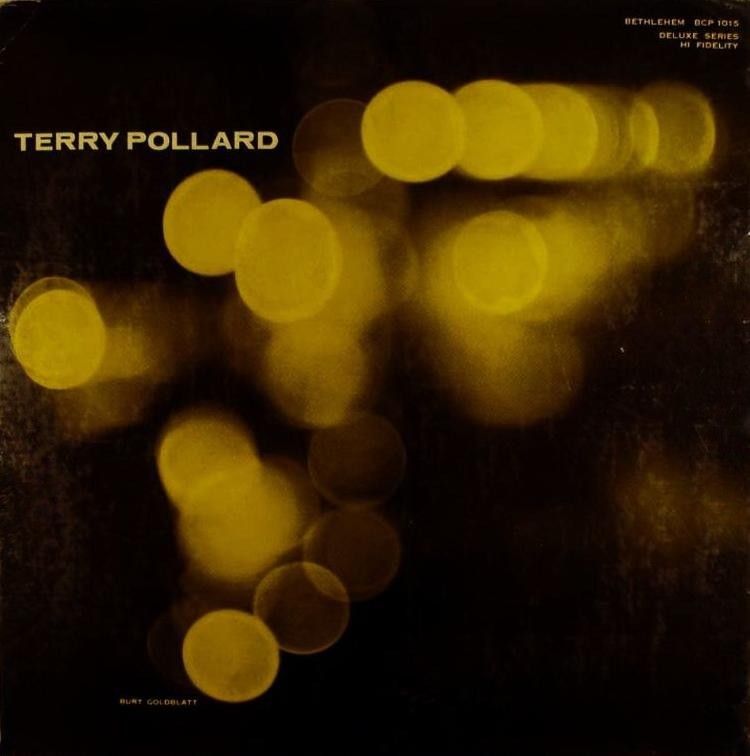
During that fertile period, Terry Pollard also recorded her sole album as a leader, for Bethlehem Records, in 1955. Though Gibbs was not featured, there were impressive turns by guitarist Howard Roberts and on trumpet, Don Fagerquist, another name that is new to me, but definitely worth further research. I listen to her on this album and I’m floored by the creativity in her solos and the sheer joy in her sound. I shake my head repeatedly, as I wonder how the hell did we let all this talent go to waste! Others took notice at the time, for in 1956, Terry was a recipient of DownBeat’s New Artist Award.
Ms. Pollard did not retire completely after leaving Gibbs. She was in the Motor City, after all, which in the ’50’s, housed perhaps the most jazz scene in the U.S., outside of NYC and New Orleans. She recorded with Yusef Lateef [Angel Eyes] and Dorothy Ashby (Soft Winds– I have got to get that album!) and she backed many a headliner passing through town, including George Benson, Earl Klugh and even Diana Ross and the Supremes.
Terry Pollard died in 2009, at a nursing home in the Bronx, following a long illness. Like many of the artists in this series, she left us in the world of jazz with a lot of catching up to do.
As this first part of the Unsung Women of Jazz series concludes, I’m again grateful for and humbled by the support that it has received from around the world. I only hope that we were able to pique your interest about some of these great ladies, who have been until now missed by the spotlight. Hear their music and wherever possible, buy it. Especially if the artist is still living.
Recommended Recordings:
Terry Pollard (Bethlehem) – LP only – OOP and Very Rare – try eBay
Though I admit to not being a big Halloween person, our friends at NPR’s A Blog Supreme, inspired me with a great post yesterday on Halloween Jazz.
I thought of four more tracks that I’ve always had a fondness for that fit well with the season. Some have an obvious connection and some are a bit of a stretch, but I hope that you’ll dig ’em all.
Happy Halloween!!!
It’s the Great Pumpkin Charlie Brownis number two in my book of Charlie Brown specials, behind A Charlie Brown Christmas. However Vince Guaraldi’s score for …Pumpkin is as good as his immortal work on the Christmas special, though it doesn’t get as much ink. “The Great Pumpkin Waltz” is as warm and inviting as hot cider on a chilly fall evening.
Lambert, Hendricks and Ross were making an obvious grab for a seasonal single with “Halloween Spooks”. It’s not the best of their work, but it still swings and includes some of their trademark wit. The clip created by TurnipGirl13, includes some great shots of seasonal pumpkin carving.
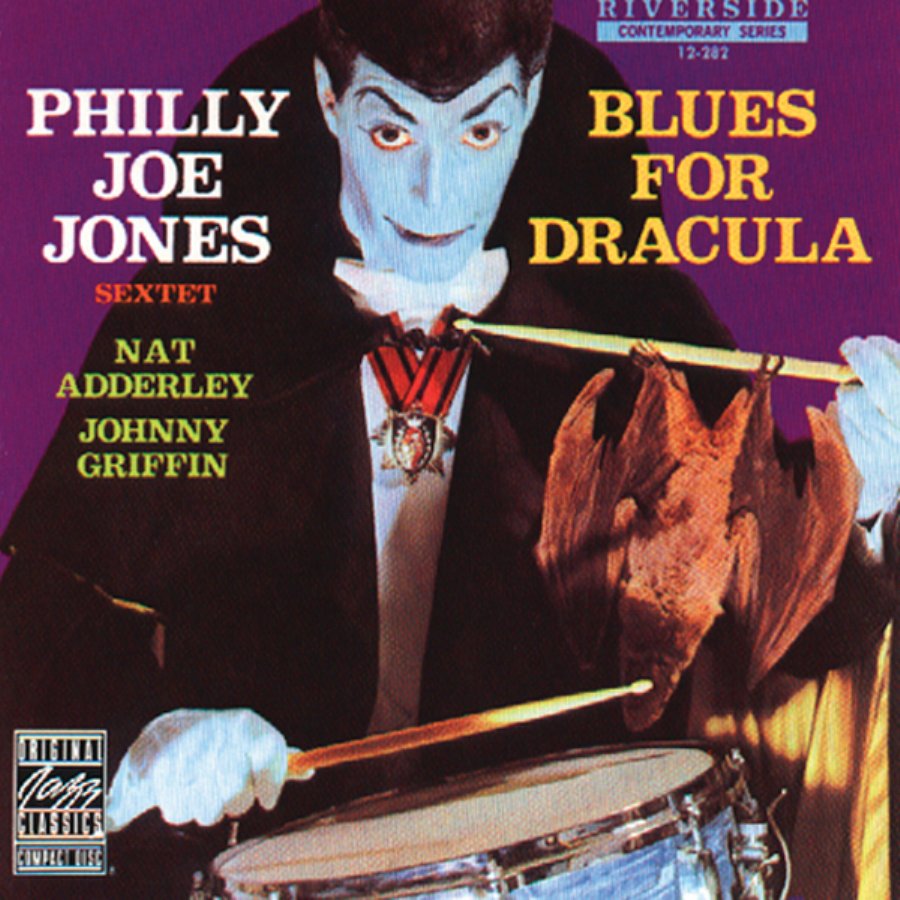
I was quite surprised to find that there was no clip already on YouTube for Philly Joe Jones’ “Blues for Dracula”, so I made my own. Philly Joe does a great Bela Lugosi impersonation standing in for his friend Lenny Bruce, whose standup routine inspired the monologue. Bruce was also supposed to do the monologue on the song, but schedules didn’t work out. Nice solo work by Julian Priester on trombone, Johnny Griffin on tenor and Tommy Flanagan on piano are additional highlights.
Our last track is “Spooky” by Stanley Turrentine. An instrumental version of the old pop hit for Classics IV. It was a filler track on a late ’60’s Turrentine date for Blue Note. This kind of groove was right in Stan’s wheelhouse and he is all over it.
“It was a Sunday afternoon…They were trying to get Charlie [Parker] to play at the club next door, the Lighthouse, but no one could get him to sit in. Then he came over to where I was playing, borrowed a new Selmer tenor from somebody, and said, ‘Well, what do you want to play Clora?’ And I said, ‘Now’s the Time.’ So I set the tempo… and everybody got really swinging.” – Clora Bryant recalls playing with Charlie Parker
She has played with Bird, Diz and Satchmo. She is a legend of L.A.’s Central Avenue Jazz Scene. Yet, Clora Bryant is barely known outside of Southern California.
Clora Bryant was a “trumpetiste” (her preferred term) for over half a century. Women trumpet player/leaders are still fairly rare today. In the ’40’s and ’50’s, they were virtually unheard of. But that didn’t stop Ms. Bryant.
Born in Texas in 1927, Clora Bryant’s originally played the piano and sang. She did not pick up a trumpet until her junior year in high school, after her brother was drafted and went off to serve in WWII. She wanted to be in the marching band and the trumpet was her way in. Clora was a fast learner. So fast that she earned trumpet scholarships to Bennett College and Oberlin, only a year later. She turned down both scholarships, opting instead to attend Prairie View College in Houston, which was closer to home.
When Clora’s father landed a job in Los Angeles, Clora transferred to UCLA. It was there that she heard the sound of bebop, coming from the clubs on Central Avenue, the center of African-American life in L.A. at the time. Clora was drawn to that sound like a moth to a flame. She began sitting in during late night jam sessions, where she played with other West Coast jazz players, like Howard McGhee, Frank Morgan and Teddy Edwards. She was a good enough player to get invited to sit in when some cats would come from the east, like Bird and Diz. The bond with Dizzy was so strong that he became Clora’s mentor, starting a friendship that would endure until Dizzy’s death.
Clora Bryant has always been resourceful. In addition to being a trumpet player and vocalist, she also learned to paly the drums. She was proficient enough on the skins to land a job with the Queens of Swing and tour with them for several years. In the early ’50’s Ms. Bryant returned to playing the trumpet. She backed Billie Holiday and Josephine Baker during that time. She also married and gave birth to her first two children.
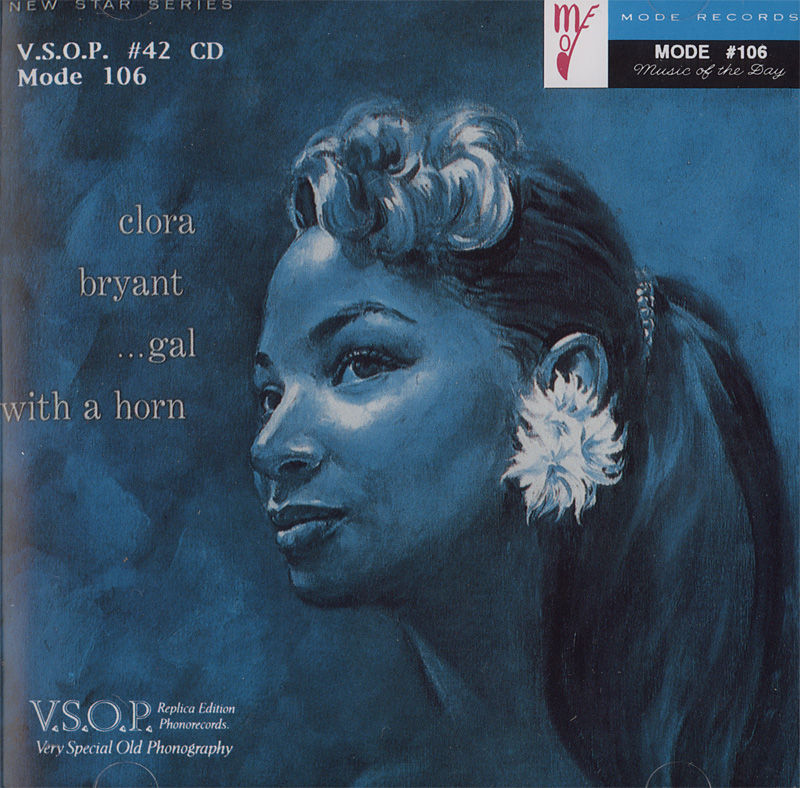
In 1957 Clora Bryant recorded and released her first and only album as a leader; …Gal With a Horn, for Mode Records. It’s an infectious, mostly uptempo affair, with Clora singing as well as blowing on all eight tracks. She gets solid support from a strong group that includes veteran bassist Ben Tucker and tenor saxophonist Walter Benton.
Ms. Bryant spent most of the remainder of the fifties on the road, playing the hot spots in Chicago, Denver and Vegas. During the sixties, she teamed with her vocalist brother, Mel, to create a successful song and dance act, even hosting their own TV show in Australia for a while. Clora made international headlines in 1989, when she accepted then Soviet leader Mikhail Gorbachev’s invitation to play in U.S.S.R.; becoming the first female jazz musician to do so.
A 1996 heart attack forced Clora to put down her trumpet, but she barely skipped a beat. She continues to sing and lecture across the country about her rich life experiences and what it was like to be a pioneering woman in jazz. Within the past decade, Clora Byrant has begun to receive some long overdue recognition. She was Honored by Washington, D.C.’s Kennedy Center for the Performing Arts with its 2002 Mary Lou Williams Women in Jazz Festival Award, in 2002. And in 2007 a long-planned documentary Trumpetisically, Clora Byant, was released.
As you can see in these recent clips, Clora Bryant is still going strong. May she continue to do so for many more years!


 Curt's Jazz Cafe