Archive for jazz

April 4, 1968 – A Personal Recollection

Posted in The Jazz Continues..., Uncategorized with tags , , , , , on April 4, 2011 by curtjazz

“It is no wonder that so much of the search for identity among American Negroes was championed by Jazz musicians. Long before the modern essayists and scholars wrote of racial identity as a problem for a multiracial world, musicians were returning to their roots to affirm that which was stirring within their souls.” – Dr. Martin Luther King, Jr.

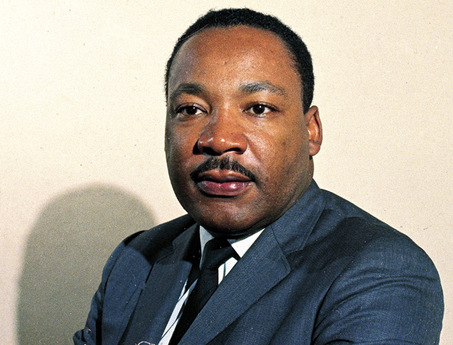
Martin Luther King, Jr. was assassinated 43 years ago today in Memphis, TN. 

Though I was not quite eight years old at the time, my recollection of some things about that day are still quite vivid.

My parents were tailors who ran their business out of the basement of our Long Island home. I remember them working that evening at their sewing machines, which sat at right angles to each other. I sat with one of my coloring books and my Crayolas at the massive cutting table in the center of the room, working on my latest masterpiece.

WGLI, the local top 40 radio station, was playing on the AM table radio on top of the fabric shelf, when the deejay broke in with the news that Dr. King had been shot in Memphis.

Both of my parents stopped what they were doing. My mother spoke first, saying to my dad “John, did you hear that?”. My father immediately went to the radio and switched it to WINS, the all news station. By the time he got the New York City signal, the news had gotten worse. Dr. King was now dead.

My dad was a  stoic man. In his era, men did not display great emotion. Though he laughed easily, tears were just not an option. So, as my mother cried out “Jesus!”, my father quietly uttered what for him, was a wail of grief: “Ummf, Ummf, Ummf…”, each one with increasing emphasis.

We had no TV in the basement workshop. But neither of my parents moved yet to go upstairs and turn the TV on. They seemed to be hoping that if they remained in the basement long enough, somehow when they did go upstairs, Walter Cronkite would make the radio out to be a liar. 

By now, my mother was working the phone, calling friends, neighbors and relatives and checking to see if they had heard the news. My dad had sat back down at his sewing machine and he tried to return to work. I saw a little tear form in the corner of his eye and make its way silently down his cheek.

I knew of Dr. King. I knew he was a great man, because my parents had told me so; but at this point, he was still years from having a profound affect on my life.  I was seven; all I really knew is that I had never seen my father cry. So, I asked my dad what was wrong. He just responded gently “Nothing…I’m alright, Curtis…” and his voice trailed off. A few minutes later he shut off his machine, went upstairs and turned on the television.  He would not return to the basement that night. Dad generally worked seven days a week, from 7 a.m. until the end of the 10 O’Clock News; this was major indeed.

By the time of Dr. King’s funeral a few days later, the small black and white TV had been moved to the basement. My dad had gone to great lengths to set up the antenna to get reception. I don’t know if it was Easter Recess or not, but I remember being off from school that day. My parents tried to work but couldn’t, as they watched the scene play out in Atlanta.

My mom cried throughout the service. My dad maintained quiet composure until the portion where they played the excerpt from Dr. King’s final Ebenezer sermon (“The Drum Major Instinct”). At that point, he began to weep openly.

Over the years, I’ve become a student of Dr. King. I’ve read and researched copious amounts of information concerning his life, his ministry and his work.  I did this because I wanted to know about the man, warts and all; not the deity that our society has created.  Frankly, the more I’ve gotten to know about his successes and his shortcomings, the more my admiration for Dr. King has grown.  

One thing I did not learn until a few years ago was that Dr. King had a great respect for jazz. When asked by an acquaintance, he penned some eloquent and profound words that were used as the foreword to the program from the 1964 Berlin Jazz Festival. 

We end this remembrance with those words and with a musical tribute by the late, great Dr. Billy Taylor:

God has wrought many things out of oppression. He has endowed his creatures with the capacity to create—and from this capacity has flowed the sweet songs of sorrow and joy that have allowed man to cope with his environment and many different situations.

Jazz speaks for life. The Blues tell the story of life’s difficulties, and if you think for a moment, you will realize that they take the hardest realities of life and put them into music, only to come out with some new hope or sense of triumph.

This is triumphant music.

Modern jazz has continued in this tradition, singing the songs of a more complicated urban existence. When life itself offers no order and meaning, the musician creates an order and meaning from the sounds of the earth which flow through his instrument.

It is no wonder that so much of the search for identity among American Negroes was championed by Jazz musicians. Long before the modern essayists and scholars wrote of racial identity as a problem for a multiracial world, musicians were returning to their roots to affirm that which was stirring within their souls.

Much of the power of our Freedom Movement in the United States has come from this music. It has strengthened us with its sweet rhythms when courage began to fail. It has calmed us with its rich harmonies when spirits were down.

And now, Jazz is exported to the world. For in the particular struggle of the Negro in America there is something akin to the universal struggle of modern man. Everybody has the Blues. Everybody longs for meaning. Everybody needs to love and be loved. Everybody needs to clap hands and be happy. Everybody longs for faith.

In music, especially this broad category called Jazz, there is a stepping stone towards all of these.Dr. Martin Luther King, Jr. (September, 1964)


Obscure Trumpet Masters #7 – Bobby Shew

Posted in Obscure Trumpet Masters with tags , , , , on March 5, 2011 by curtjazz

Bobby Shew

Don’t be afraid TO TRY!! Better to explore and discover than to keep your head and mind buried in the sand of tradition (and misinformation). – Bobby Shew

The first time I ever heard a CD, Bobby Shew was playing.

I was working at Macy’s in the early 80’s, selling rugs. We were located right next to electronics. The audio guys loved to demonstrate this new “digital technology”. What better way to do it than with Bobby Shew and Chuck Findley’s then new release, Trumpets No End. The stunningly clear sound and the musician’s technical mastery made me a fan of Shew (and CDs) for life.

Bobby Shew is a musician’s musician. Cats on the scene speak highly of him; his name is listed in the trumpet section of countless recordings; he’s still a first call sideman, he is a universally respected clinician and he has also recorded some very impressive work as a leader. But outside of musicians and true jazz cognoscenti, he is unknown.

Born Robert Joratz in Albuquerque, NM in 1941, Bobby Shew began playing the guitar at the age of eight and switched to the trumpet at ten. Paradoxically, for such a renowned educator, Shew is for the most part, self-taught. By the time he was thirteen he was playing at local dances with a number of bands and by fifteen he had put together his own group to play at dances, occasional concerts and in jazz coffee houses. Shew’s professional career began when he was in high school; playing as many as six nights a week in a dinner club.

(In the clip below, Bobby Shew trades licks with himself, using a creation he calls the “Shewhorn”)

A few years later, Shew joined the Tommy Dorsey ghost band, which led to him being asked to play with Woody Herman in 1965.  When Buddy Rich formed his big band the next year, Shew got a call. Many other similar situations followed and Bobby played lead trumpet for a number of pop stars. This brought him to Las Vegas where he became prominent in various hotels and casinos. By this time Bobby was widely known for his strong lead playing rather than as a jazz soloist. So late in 1972 he decided to make a move to the Los Angeles area in order to get re-involved in developing as a jazz player.

Once in LA, Bobby quickly found what he was looking for.  In the years to come he spent time with the groups of Art Pepper, Bud Shank, and Horace Silver, plus numerous big bands such as Louis Bellson, Toshiko Akiyoshi-Lew Tabackin, Oliver Nelson, Terry Gibbs, Benny Goodman and Maynard Ferguson.

Telepathy, Bobby’s 1978 debut as a leader (at the tender age of 37), happened by accident; a quintet album was to be recorded that day and had to be cancelled, due to scheduling conflicts. Shew and pianist Bill Mays suddenly found themselves alone in the studio with the booked time available.  Without a lot of discussion, they chose six standards and created two on the spot improvisations.  The result was a fine duet album. Telepathy has never been released on CD, but if you stumble across a copy of the LP, it is worth picking up.

Having just turned 70 on March 4, Bobby Shew (http://www.bobbyshew.com/) is still very active, mostly on the West Coast jazz scene. If you get a chance to hear him live, check him out; or pick up one of the excellent discs below. You’ll be glad you did.
Recommended Recordings:

“So…What do you serve in your Cafe?”

Posted in The Jazz Continues... with tags , , , , on November 2, 2009 by curtjazz

Hi Y’all!

Thank you for coming this far with me.  Perhaps you’ve heard my web radio station “Curt’s Café” and wanted more information about what you heard there.  Or, maybe you’ve read my reviews or my column “Browsing the Bins” in Jazz Inside Magazine (formerly JazzImprov). Whatever brought you here, I’m grateful for your time and attention and I’ll try to make it worth your while. 

 The title of this first post comes from a question I’ve been asked by people online, who hear the music and then assume that my “café” has four walls and a kitchen.  Though I do know my way around a stove, the plan is for my café to remain a virtual one.

I’m not fond of talking about myself, but I know that a little exposition is needed in any story, even a blog, so here goes.  I’m a native New Yorker (Bronx and Long Island), who has lived in Charlotte, NC since 2000.  I’m married, for almost 20 years, to a beautiful, brilliant and creative woman, who is still yet to realize how remarkable she is.  We have one son, age nine, who is already a jazz fan and keeps us both on our toes. 

My love for jazz started also before I was ten, as curiosity about my older brother’s record collection. It blossomed during my college years, as I worked in the campus music library. It came to fruition in the late ‘90’s as I worked in terrestrial jazz radio and began to write.

Curt’s Café Noir (or Curt’s Café) has been on the air since November 2004. I’d listened to a few Web based radio stations for about a year before that and finally decided to try it myself.  It was originally a mix of jazz, soul, classic R & B and Gospel Music.  We found the jazz segments to be the most popular, so we went all jazz in 2006.

That’s enough about the past.  We “jazz people” spend more time than we should there, which is one of the myriad reasons that jazz is in the fix that it’s in now; but that’s a rant for a future post.  Curt’s Café the blog and the web radio station, will devote a major portion of airtime and blog space to the present and future of jazz.  Please understand that I love the history of this music and I have a deep, abiding respect for those from the past, who created much of what we still listen to regularly.  You will hear much of their work on the station.  However, there’s a lot of great music being made today, by artists who deserve to be heard and must be supported by the jazz loving public, if jazz is to have even the hope of a viable future.  So half of our prime listening hours are devoted to playing music made solely by living and working jazz artists, and not just those named Marsalis, Burrell and Rollins.  I hope that you will listen to these musicians and then support them, by buying their CDs or their legal music downloads.  I then hope you will take the next step and go out to see these artists in a live, paying performance.  While free concerts are nice for the public, they generally don’t pay the artists enough to even cover expenses.  So let’s dig a little bit into our pockets jazz fans, and pay to see the artists that we say we love, so they might see playing jazz as more than just a wallet draining avocation.

For those of you new to the station, we stream 24/7 through Live365.com.  In addition to the living artists, we play a good deal of the classics and rare tracks.  We also stream programs devoted to special interests, like the catalogs of Blue Note, Verve and Original Jazz Classics records.  We have two streams; a commercial stream, for which there is no charge, but like terrestrial radio, does include ads.  We also broadcast an ad-free stream, for which listeners pay Live365.com a monthly fee and in return, they hear programming without commercial interruption.  The choice is yours. Either way, I promise to bring you great jazz. Our programming is traditional for the most part, but not to the point where you can’t hear the young innovators who are the art form’s future, like Esperanza Spalding, Robert Glasper and Christian Scott.  You can listen right now, by clicking on the link on my homepage www.curtscafejazz.com or direct, through Live365 at http://www.live365.com/stations/curtjazz?play 

This blog will be an extension of the station.  I will post a new article at least once a week. Sometimes freeing my “mind” so “the rest” can follow; sometimes posting an interview or discussion with some of the cool jazz peeps who I think you’ll find interesting. Additionally, I’ll post short, but useful CD reviews, that will always be candid but never cruel.  Several times a week I will keep you up to date on new tracks that have been added to the playlists and, in a nod to my pop radio origins, a list of the most popular tracks currently heard on Curt’s Café.  Where possible, I’ll also provide links to my past reviews and articles in JazzImprov and Jazz Inside.

Well, now that we’ve met, I hope you won’t be a stranger and that you’ll visit often.  Believe me, I’ve got a lot on my mind about jazz and I plan to share a lot of it with you in this forum.  I don’t promise that you’ll always agree with me, but I hope that you’ll find it interesting enough to keep reading.  I also hope that this won’t be a one way conversation and that you’ll share your thoughts and opinions with me as well.  Feel free to leave your “comments” after each post.  Many of us met on Twitter, so let’s all feel liberated by having more than 140 characters to express ourselves. 

                Thanks for stopping by.  I’ll see you next time, until then, as always, the jazz continues…

If they post blogs in Heaven, Mom and Dad, I love you and I hope you liked this. Say “hi” to “Dr.” Woods for me.