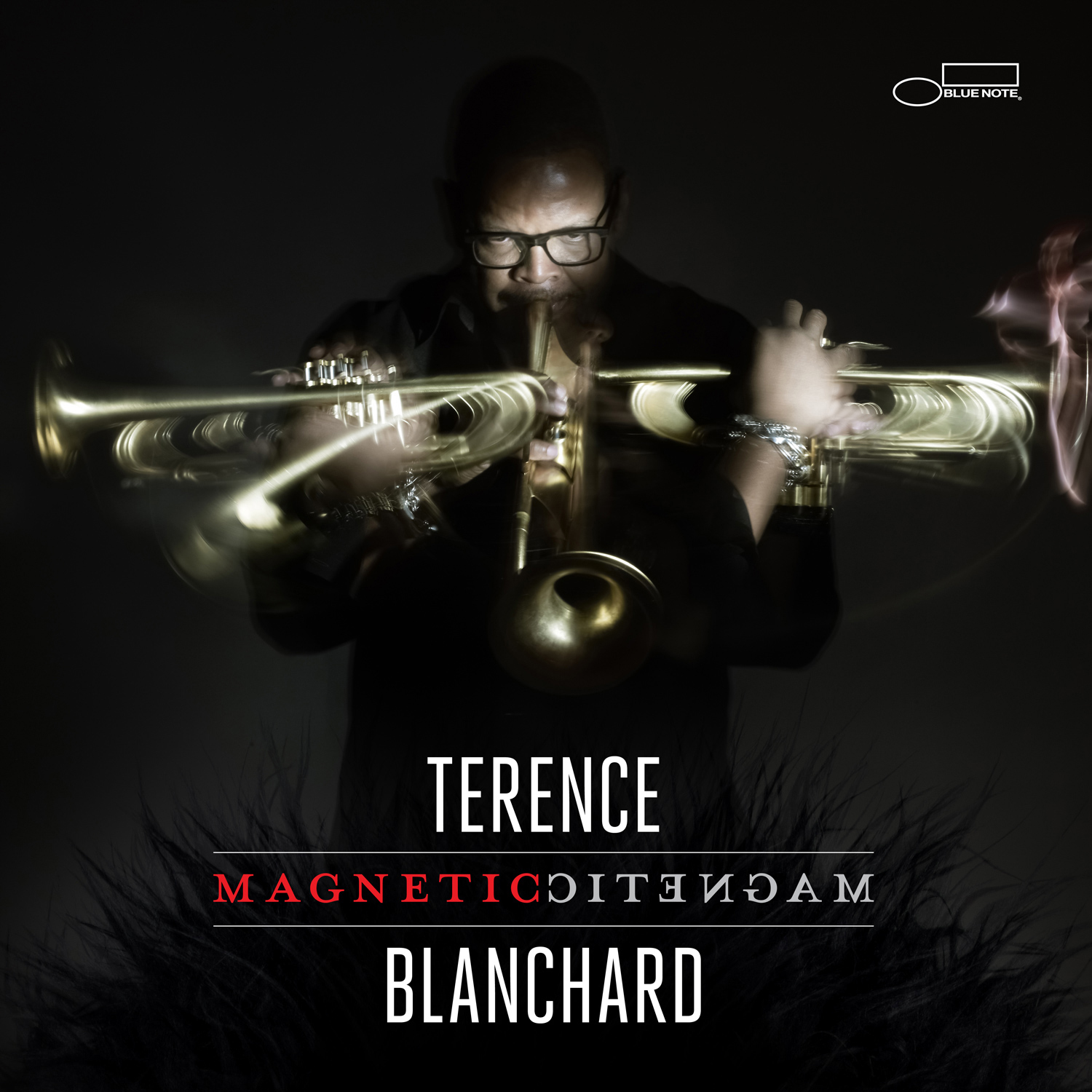
It has been thirty years since Terence Blanchard first hit the jazz scene as Wynton Marsalis’ handpicked replacement in Art Blakey’s Jazz Messengers and then lead a memorable “young lions” quintet with saxophonist Donald Harrison. Since then, Mr. Blanchard has scored over 40 films, including all of Spike Lee’s since Mo’ Better Blues; been nominated for eleven Grammys® (and won five); served as artistic director of the Thelonious Monk Institute of Jazz; been a first call sideman and led his own group that has recorded twenty albums. In addition, Mr. Blanchard’s first “Opera in Jazz”, Champion, about the life of the late boxer Emile Griffith, recently premiered in St. Louis. Suffice to say that Terence Blanchard has been quite busy. His twentieth album also marks his return to Blue Note Records for which he last recorded 2007’s A Tale of God’s Will (A Requiem for Katrina) for which he won the Best Large Jazz Ensemble Grammy.
His new album, titled Magnetic, features ten original compositions, all by Mr. Blanchard or the members of his latest quintet; Brice Winston on saxophone, Fabian Almazan on piano, Kendrick Scott on drums and 21-year-old newcomer Joshua Crumbly on bass. In addition, there are guest appearances by bass legend Ron Carter, saxophonist Ravi Coltrane (son of a legend) and guitarist Lionel Loueke (likely to be a legend). Blanchard has been experimenting with a number of styles, from classical to Latin to hip-hop on some of his recent recordings. Though those experiments were always interesting and often successful, it’s great to find him on Magnetic, back at his base in what is essentially a first-rate post-bop blowing session.
The title track kicks things off. It’s a knotty mid-tempo piece, peppered with staccato horn blasts and various electronics including Blanchard’s use electronics which at times give his trumpet a guitar like sound. “Pet Step Sitter’s Theme Song” has a mellow funk rhythm over which the group lays down some exploratory solos with Ravi Coltrane’s tenor runs being the highlight, Blanchard’s electronic trumpet sounding like a keyboard and Loueke’s guitar comping in the background. Lionel’s vocalizing and chord runs are subtle at first, then grow in prominence to give the piece a shift in direction. Drummer Scott contributed the hard-driving “No Borders, Just Horizons”, which opens with a powerful two-minute drum solo and then moves surprisingly into a Latin swing over which Blanchard blows one of his best solos on the album before turning things over to Winston’s tenor, which is also in fine form. “Central Focus”, which Blanchard originally recorded on his Simply Statedalbum twenty years ago and it makes welcome return here with Blanchard showing what he has learned in the ensuing two decades and Scott setting a beat that is impossible to ignore. Winston’s “Time to Spare”, which he originally recorded on his debut solo album three years ago, appears here in an improved version. Winston is more confident and his tenor runs, which show the influence of Joe Henderson, are more self-assured.
The highlight of highlights is “Don’t Run” which features the great Ron Carter on bass and Ravi Coltrane on soprano sax. The tune takes its title from a joking admonition that Carter made to Blanchard to “Stop running from me, man”, when the trumpeter would suggest that they work together. “Don’t Run” is 7 ½ minutes of jazz awesome, with Blanchard, Coltrane, Carter and Scott, just blowing their brains out. Coltrane starts it; with one of his best solos on soprano that I’ve heard to date. Blanchard comes behind him, clearly intending to not be outdone and Carter, is his usual Hall of Fame self.
Magnetic is a mature and winning artistic statement from Terence Blanchard and his quintet. He demonstrates that in spite of the film work, the operas, the Broadway scores and the other things that divide his attention, he remains one of the best jazz trumpet players working today and that he has the recordings to back it up.
QUARTETTE HUMAINE – OKeh Records 88765 48471 2 www.okeh-records.com You Better Not Go To College; Geste Humain; Sofia; Follow Me; My Old Flame; Another Time, Another Place; Montezuma; Genevieve; Deep in the Weeds
PERSONNEL: Bob James, piano; David Sanborn, alto saxophone, soprano saxophone, sopranino saxophone; Steve Gadd, drums; James Genus, bass; Javier Díaz, percussion (track 9)
By Curtis Davenport
If the music that we once referred to as “Smooth Jazz” had its own Mount Rushmore, surely one of the albums on it would be Double Vision; Bob James and David Sanborn’s classic. It represented what was good about that oft maligned genre – yes the tunes were hook-laden but because of who was involved the musicianship was first rate. Double Vision still has a place in the collection of many people who would not be considered Smooth Jazz aficionados.
Believe it or not, it’s now been 27 years since Double Vision. Though James and Sanborn have occasionally crossed musical paths on other people’s projects, they had not recorded a follow up to that first extremely lucrative album. That changed when in December 2012, the duo got together again in New York to record the sessions that comprise Quartette Humaine.
Let’s get right to the point, those expecting this essentially to be Double Vision II, will be in for a surprise. To be honest, the musical landscape has changed considerably in three decades; Smooth Jazz is no longer the commercial titan that it was in the ‘80’s, which in many ways has freed musicians to pursue diverse creative pathways, as James and Sanborn have here. First: gone are the keyboards, synthesizers and guitars that were so popular 30 years ago. This is an all acoustic set – James on piano; Sanborn on sax, mostly his trademark alto; Steve Gadd has returned on drums and James Genus, of SNL Band fame, plays the acoustic bass. Second: due in large part to the instrumentation, the sound of Quartette Humaine is decidedly less slick than its predecessor, successfully walking a fine line between classic and contemporary jazz.
James and Sanborn said that they had in mind the work of Dave Brubeck (who ironically, passed away a week before these sessions) and Paul Desmond with their classic quartet, when they conceived this album. I think that it’s a very apt comparison. The sound they have achieved I liken to a present-day version of that great group – serious enough to attract many straight-ahead jazz fans but still accessible enough for much of the general public.
The album kicks off with a selection penned by James, which may have been intended as an overt tribute to Brubeck, “You Better Not Go to College”, a possible allusion to the fact that much of Brubeck’s early fame came from his numerous appearances on campuses around the country. This tune is my favorite on the album, with its light Brubeckian swing, propelled by Gadd’s brushwork and Genus’ insistent bottom. Over this bed we get James’ block chords and Sanborn’s alto, which in its trademark plaintive wail is completely different from Desmond’s “dry martini” sound, nevertheless, Sanborn manages to capture Desmond’s overarching humor. “Geste Humain” gives James a chance to remind us how great he is at playing a gorgeous melody. It sounds like an excellent outtake from a Fourplay album. “My Old Flame” is the only standard on the album; it’s taken at an easy shuffle tempo which fits the song and the musicians well. “Deep in the Weeds” is the most Double Vision-like track on the disc, a mid-tempo funk workout, with Sanborn blowing a hot solo over Genus and Gadd’s insistent beat. In fact, the unsung heroes of this album just may be the rhythm team. They set unique and consistently interesting frameworks that inspire the pianist and saxophonist towards doing something more inventive than conventional Smooth Jazz licks.
Quartette Humaine is a fine follow-up to James and Sanborn’s classic first meeting. It’s one of the best efforts by both leaders in a while and a great way to help revive the legendary OKeh Record Label.
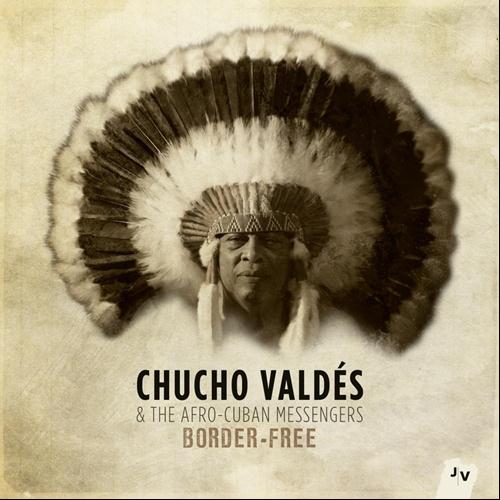
BORDER-FREE – Jazz Village Records JV570016 http://worldvillagemusic.tumblr.com Congadanza; Caridad Amaro; Tabú; Bebo; Afro-Comanche; Pilar; Santa Cruz; Abdel
One of my biggest musical regrets is that I missed being able to experience the music of many great Cuban artists during some of their prime years, due solely to politics. One of those artists is Chucho Valdés. However, even though we’ll never get to really hear what Irakere was like in their prime, we can be thankful that Chucho is still very active at 71 and creating great music. His latest album, Border-Free(with a group that he calls The Afro-Cuban Messengers, in a nod to the jazz finishing school that was Art Blakey and the Jazz Messengers), is a deeply personal statement, filled with tributes to his family members and others who have influenced his musical direction. But you never forget that this is a Chucho Valdés album, so these tributes are carried out in the midst of killer Afro-Cuban rhythms and piano statements of astonishing brilliance.
Like Blakey’s Messengers, Valdés’ Messengers are comprised of impressive young musicians who are making a name for themselves, in this case in the Afro-Cuban jazz idiom. This is another reason that I hope that the climate between the U.S. and Cuba continues to thaw, so that we can hear more from these five brilliant Cuban youngsters. In addition, Valdés adds a “ringer”, as Branford Marsalis guest stars on three tracks.
The album’s title is a reference to the fact that Mr. Valdés made a conscious effort to make this more than just an Afro-Cuban album. The idea was to find rhythms that could be fused with those of Cuba to create something fresh and intriguing. One of the best examples of this effort led to the most impressive track on the album, “Afro-Comanche”. In the 19th century, a group of about 700 Comanche were taken prisoner during fighting with the Spanish Army, in what we now know as Texas. These Comanche were relocated to Mexico, then Spain and eventually Cuba. Many died from the conditions and the unfamiliar climate. Many of those who survived mixed with the Afro-Cubans and started families. Their children were known as “Afro-Comanches”. On this cut, Valdes begins with an opening on piano that employs traditional Native American musical elements. He then continues to state the theme, while Afro-Cuban rhythms are added. After a strong solo by bassist Ángel Gastón Joya Perellada, Valdés returns in 4/4 with a hard bop statement, raising the tension to the breaking point before he drops out, giving way a purely African drum solo by Dreiser Durruthy Bombalé on the batás, which leads to a call and response chant, wrapping up as Valdés blends in again to restate the theme. “Afro-Comanche” is twelve of the most exciting musical minutes that I’ve heard this year. I have to admit that I could not (and still cannot) stop listening to it.
“Tabú” is another standout. A tribute to Margarita Lecuona, the composer of “Babalú Ayé” and other Cuban classics, this mid-tempo track is notable for Marsalis’ cool tenor work and the impressive trumpet solo of Reinaldo Melián Alvarez. “Bebo”, in honor of Chucho’s late great father, who was also an outstanding pianist, has an insistent melody line that stuck in my head immediately. It also featured more excellent trumpet from Alvarez and tenor by Branford. What’s most impressive though is Valdés’ solo. On the spot, he decided to play a tumbao in his father’s style with his left hand, while soloing with his right hand in his own style, resulting in something that sounded a bit like Chucho and Bebo playing together. It was nicely done and very moving. “Pilar” was written by Valdés for his mother, who loved Bach’s preludes and fugues and Miles’ “Blue in Green”, so Chucho gives us a bit of both in this introspective piece, which kicks off with a striking bit of bowed bass work by Perellada and follows with Valdés reaching deep into his Bill Evans bag.
Border-Free is another triumph for Chucho Valdés, from concept to execution and all points in-between. Though it sounds clichéd, I can’t think of a better way to say it; Chucho just keeps getting better with age.
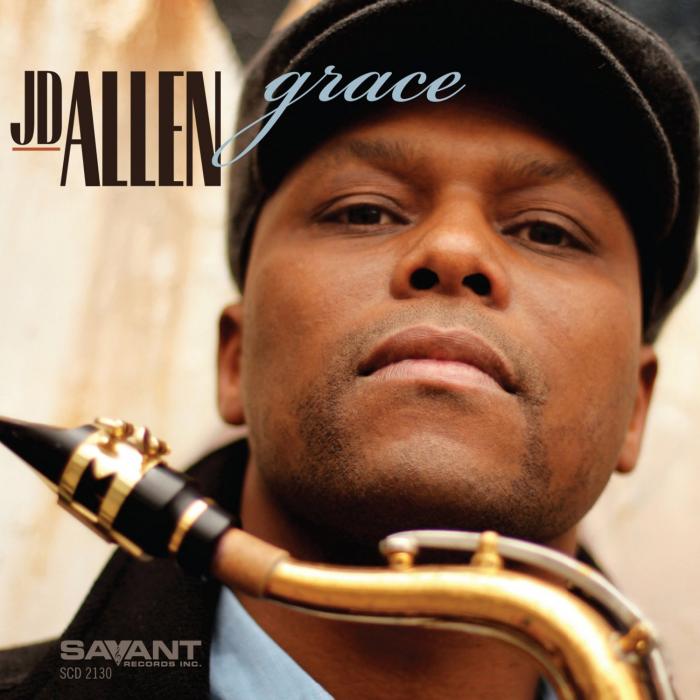
GRACE – Savant Records SCD 2130 www.jazzdepot.comMass; Load Star; Chagall; Luke Sky Walker; Grace; Detroit; Cross Damon; Pole Star; Papillion 1973; Selah (My Refuge); The Little Dipper
PERSONNEL: JD Allen, tenor saxophone; Eldar Djangirov, piano; Dezron Douglas, bass; Jonathan Barber, drums
By Curtis Davenport
On Grace, his seventh album as a leader, saxophonist J.D. Allen has made a few changes. He has a new bassist and drummer with Dezron Douglas and Jonathan Barber replacing longtime cohorts Gregg August and Rudy Royston. He also has expanded the group from a trio to a quartet with the addition of the celebrated young Russian-born pianist Eldar Djangirov. What thankfully, has not happened is a change in the quality and style of the music. Douglas and Barber have fallen right into place as if they had been playing alongside Allen for years. And Djangirov has done something that many pianists cannot, that is, blended with the group’s musical style rather than alter it.
Allen has been recording without a pianist since 2008. His output over that time period has been consistently good; marked by his inventive bursts on the tenor on tunes that averaged about 3 ½ minutes. His discs were high energy affairs that stretched the boundaries of tradition to their breaking point without bursting them. I find him to be the best sax player in the trio format since Sonny Rollins. But if you’ve got to add a pianist, young Mr. Djangirov proves to be the one for the job. I had my doubts since in his own recordings, Djangirov has so far shown a proclivity for playing long albeit technically impressive solos designed to display his speed and dexterity. Fortunately, he has brought those tendencies under control here. He gets where Allen is going and he then enhances what is happening. Djangirov solos are relatively brief and pointed but no less striking than those in his solo work. The pianist appreciates that less is often more and when he is not soloing, he is as likely to lay out as he is to comp behind Allen. The result is an exciting young group with a sound that recalls the Classic Coltrane Quartet circa 1965, just before their breakup. Allen, like Trane, is at times almost begging to go “out”. Djangirov, like Tyner, is helping to keep the saxman grounded and Douglas and Barber create incredible rhythms. The result is exhilarating for the listener, with very little excess. Tracks still clock in at an average of 5:30. There has been a little expansion for the additional instrument but Allen and company still manage to avoid the self-absorbed meandering that plagues many of today’s recordings.
The selections, all Allen originals, are divided into two “acts”, as if a play or musical. Though the liner notes explain the significance of each composition to the overall “narrative”, I never got the feeling that this “story” was essential to the performance or the subsequent enjoyment of the music. Grace is a fine piece of modern jazz, whatever the back story.
I did have a number of favorite tracks; “Chagall”, a piece which moves around skittishly as if it is one of its namesake’s paintings come to life. I love Djangirov’s comping here, which recalls McCoy behind Coltrane on “My Favorite Things”. “Luke Sky Walker” featuring some energetic playing from Allen as he is being “chased” by Djangirov is also strong. “Cross Damon” which with its mournful beginning, suggests Coltrane’s “Alabama”, before Barber kicks it into high gear and Allen joyfully follows his lead; as if to say “the time for mourning is over, let’s celebrate”. Barber is a terrific young drummer. I had never heard him before this album but I will pay attention from now on. “Papillion 1973” is a favorite for two reasons: Djangirov’s solo which is one of his strongest on the album and also that it evoked memories of one of Steve McQueen’s finest performance on film. Finally, “Selah (My Refuge)”, is the most traditional piece on the album. Allen’s tenor is bluesy is gorgeous and Djangirov provides appropriately understated counterpoint. It’s a calming place to come and reflect after being taken on an exhilarating ride.
About six months ago, I posted a halftime list of my favorite 2011 jazz recordings heard between January and July. I promised to be back around now to fill out the list with what I experienced over the last six months. My original intent was to pare that list down to a final dozen or so, spanning the entire year…
Well, I changed my mind y’all. Instead, we’re going to add another ten to that first list, making it a Top 20. And, like last year, there was an excellent 2010 disc that I completely missed until 2011. It will be included as well.
As a reminder, here are albums from the July post. You can see/read the entire July post HERE.
Unsung Heroes– Brian Lynch (Hollistic Music Works) [A 2011 CD release]
So here they are, in alpha order by album title – my favorite jazz discs from the second half of this year:
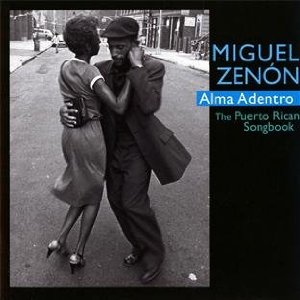
Alma Adentro: The Puerto Rican Songbook – Miguel Zenón (Marsalis Music) – He’s not prone to ostentatious self promotion, but this Guggenheim and MacArthur fellow has quietly become one of the most important saxophonists in jazz today. Each of his albums has topped the previous one; taking his artistry to a new place and keeping us, the audience, on the edge of our seats. Alma Adentro, is the exploration of the music of five composers, who are unknown in the U.S. but very important in Puerto Rican musical lore. It’s not “Latin Jazz” in the sense that we’ve come to know it, but is outstanding music that broadened my horizons.
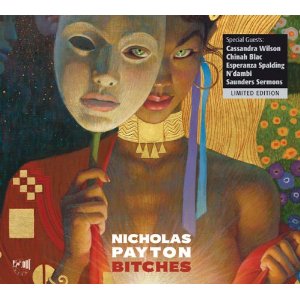
Bitches – Nicholas Payton(In + Out Records) – Yes, the title did make me wince a little, but the music made me smile, a lot. This has been an interesting year for Mr. Payton, as his blunt, insightful and often profane musings have made him one of the more controversial and compelling figures in the world of jazz social media. Not surprisingly, this album has also caused its share of controversy, raising eyebrows in the same way that In a Silent Way, another album with a dream-like vibe, did in 1969. Payton composed every song, played every instrument and sings on many of the tracks (quite well, I might add), more than holding his own with some top-drawer guests, like Esperanza Spalding and Cassandra Wilson. If you’re looking for “jazz” of the type that Payton played on his early Verve albums, you won’t find it here. Bitches has more in common with mid-70’s ballad driven R & B and with neo-soul. But as someone who grew up with the former and has developed a keen appreciation for the latter, I really dug this album.
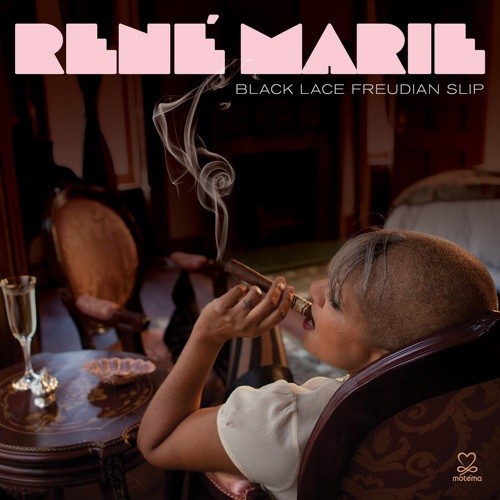
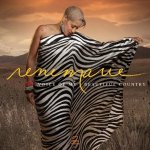
René Marie was very quiet for a while after her 2008 controversies, but she is back with a vengeance; releasing not one but two outstanding albums in 2011. The first; Voice of My Beautiful Country, (which was on our first “Best of” list) was a tribute to patriotic and traditional standards. Black Lace Freudian Slip is mostly comprised of Marie originals, including the title track, which is every bit as sly and sexy as the title suggests. The two discs may be lyrical opposites but the music on both is outstanding. Don’t try to choose between them, get them both.
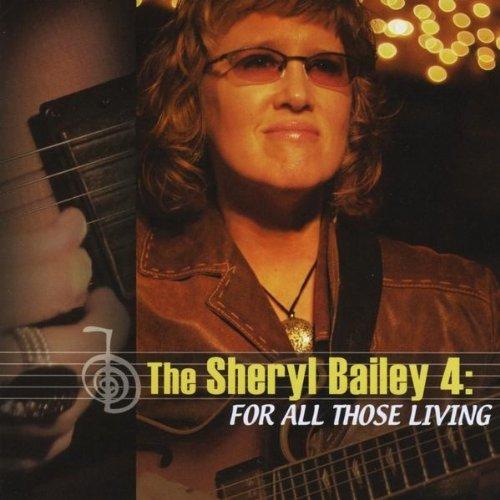
Guitarist Sheryl Bailey gets better with every recording. She follows up last year’s impressive big band outing, A New Promise, with a terrific quartet disc that displays her impressive chops and full-bodied swing to great advantage. The Emily Remler comparisons are easy to make, but I think that that’s too limiting. Sheryl Bailey has the potential to outshine her role model, whose untimely death halted her artistic growth. Bump the gender limitations; Ms. Bailey is one of the best jazz guitarists working today, period. This disc also has its heart in the right place as 20% of the proceeds from all sales will be donated to Ronald McDonald House.
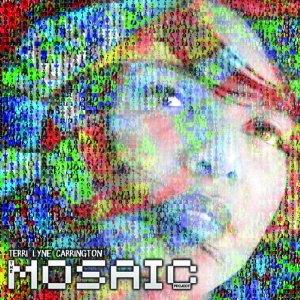
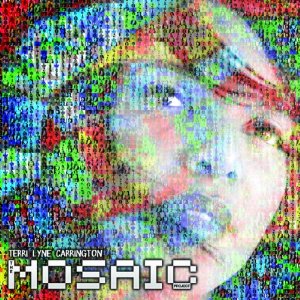
As I stated in my earlier review of this album, The Mosaic Project is Terri Lyne Carrington’s most completely realized project, by a mile. It also is one of the best jazz works of the year by any artist. Click HERE to see my full post about it.
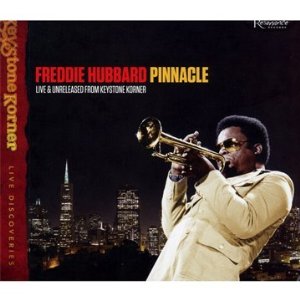
What a find this was by Resonance Records! Hubbard, at the top of his game in 1980 on performances compiled from summer and fall appearances at the legendary San Francisco club. The version of “The Intrepid Fox” that opens the album, is jaw dropping. What follows is just as good, including the only known recording of Hub playing “Giant Steps”. The title says it all.
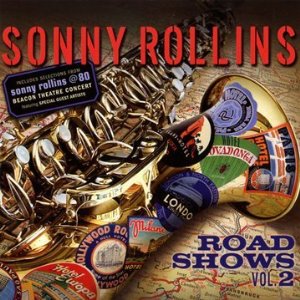
I was one of the few who liked, but didn’t love Road Shows Volume 1; mostly because of the unevenness of the 30 years worth of performances. Volume 2’s tracks by contrast, were all recorded during 2010, most of them during Newk’s already legendary 80th birthday concert, the remaining two a month later in Japan. Sonny is in very fine form and the guest stars, including Roy Haynes, Roy Hargrove, Jim Hall, Christian McBride and Ornette Coleman, in his first ever public performance with Rollins, all rise to the occasion. Sonny Rollins proves once again, that age ain’t nothin’ but a number.
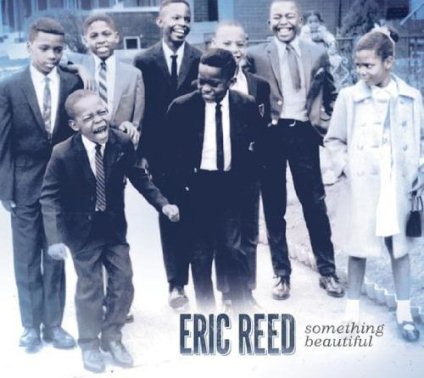
Something Beautiful is Eric Reed doing what he does best; playing in a trio setting. It’s hard to believe that it’s been over twenty years since Reed first debuted with Wynton, but in those years he has grown from teenaged prodigy to one of the best pianists of his generation, with an impeccable melodic sense that accompanies his gospel influenced chord structure. Something Beautiful consists mostly of songs by others, from Berlin to Brubeck to Billy Joel; all of them sounding as unsullied as if they were being played for the first time.
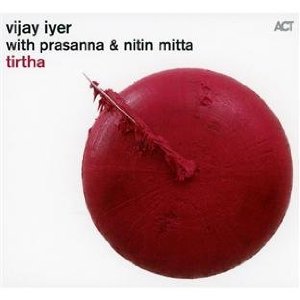
Tirtha is the self titled debut of pianist Vijay Iyer’s latest trio, which also includes tabla player Nitin Mitta and guitarist Prasanna. As expected, the album has a strong South Asian influence, but I feel that slapping a term such as “Indian Jazz” on this music is almost insulting in its limitations. Their sound is alive and its intricacies grow with every hearing. Iyer has never been afraid to challenge conventions and he usually creates something fresh in the process. He and his Tirtha band mates have done so here. In a genre often chided for being stale, Tirtha is a welcome breath of fresh air.
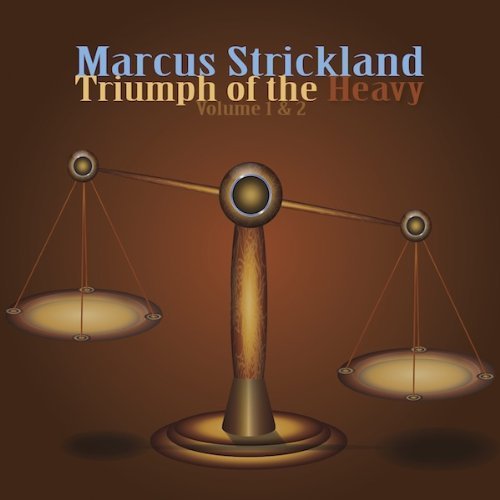
Strickland is another of those young saxophonists who give me hope for the future whenever I hear him blow. On this two disc set (gutsy for a relatively unknown artist), he brings the goods on tenor, alto, soprano and clarinet. Disc 2 is a live trio set with Marcus’ twin brother E.J. on drums and up and coming bassist Ben Williams. They push the boundaries of convention to the limits, with a hard-driving sound that is spare, but never thin. On Disc 1, recorded eight months later, they add David Bryant, a young Tyner influenced pianist with mad promise, to the mix. Bryant’s angular harmonies are the main reason I have a slight preference for the studio set but it doesn’t really matter, because neither disc has left heavy rotation in my iPod since I bought them.
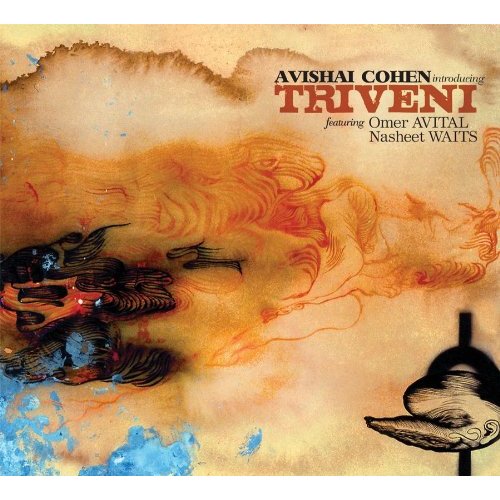
I’m continuing the tradition that I started last year of recognizing an outstanding disc released in the previous year that managed to escape my ears until the current one. Triveni was released in September 2010. It’s a trio session led by the trumpet playing brother of Anat Cohen, who has garnered renown for her work on sax and clarinet. Avishai Cohen is one of two Israeli jazzmen working today who share the same name (the other plays bass) and as of now, he’s the lesser known of the two. This strong outing should do something to change that. Trumpet/bass/drums trio sessions are rare but Cohen is more than up to the task, collaborating with bassist Omer Avital and drummer Nasheet Waits on originals and standards that mine the depths of hard bop, swing, funk with a nice dose of avant-garde as well. Cohen is not going to bowl you over with flights into the upper register but the impressiveness of his facility and inventiveness in the mid range is worth a dozen high notes. Many thanks to Canadian journalist/pianist Peter Hum for pulling my coat about this one.
Notable Mentions
Here are a few more fine discs from 2011 that are worth a listen or ten. Don’t pass them up if you have a chance:
A Boy’s Journey – Peter Hum Quintet(self-released) –The knowledgeable and witty jazz journalist is also a very fine pianist. An impressive debut recording.
Parallel Lives – Andrea Wolper (Jazzed Media) – This vocalist grows more impressive with each album. Her coolly inviting mix of originals with rarely heard standards are a perfect tonic for a tough world.
State of Art– Ben Williams (Concord Jazz) – The Monk Competition winner drops a formidable blend of the new and the traditional on his first disc. It’s fresh, it’s exciting and I want to hear more.
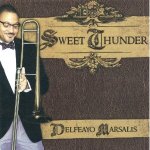
Sweet Thunder (Duke & Shak) – Delfeayo Marsalis (Troubador Jass) – Delfeayo does The Duke proud on this hard-swinging octet version of Such Sweet Thunder. It’s the year’s best album from someone named Marsalis (Read the full review post HERE)
When the Heart Emerges Glistening – Ambrose Akinmusire (Blue Note) – A rare case of a much-hyped major label debut living up to expectations. Akinmusire is the real deal; and the greatest thing is that he’s nobody’s clone.
And that’s how things looked this year from my “plush” Charlotte studio/mancave. Tracks from these albums and more will be heard on Curt’s Café WebJazz Radio, starting on December 27 and continuing on through the month of January. Your thoughts, comments and criticisms are always welcome and your spam is always deleted.
Thanks for taking the time to read my thoughts this year. I don’t take your support for granted. I hope you’ll stick around for what I expect will be an interesting 2012.
As we’re in the midst of our “Unsung Women of Jazz” series, a post about drummer/composer/producer Terri Lyne Carrington’s new album, The Mosaic Project, feels rather timely. Not because Ms. Carrington is obscure (with an over two decade career that has included gigs with Herbie Hancock, Stan Getz, Wayne Shorter and most visibly, on Arsenio Hall’s late night TV show in the ’90’s, she’s anything but unknown), but because the jazz on this disc is performed by women only.
And what a powerful group of women this is: Dianne Reeves, Dee Dee Bridgewater, Nona Hendryx, Cassandra Wilson, Esperanza Spalding, Helen Sung, Tineke Postma, Geri Allen, Patrice Rushen, Ingrid Jensen, Sheila E. and Gretchen Parlato all make beautiful musical contributions. Though I’ve always enjoyed Ms. Carrington’s work on the drums, I’ve found her albums as a leader to be frustratingly uneven. That is, until now. The Mosaic Project is Terri Lyne Carrington’s strongest album, by a mile. Ms. Carrington’s driving, soulful rhythms are always a perfect fit with the diverse contributions of her guests.
For me the most memorable tracks were “I Got Lost in His Arms”, the Irving Berlin classic, which gains new life wrapped in an R & B groove and Ms. Parlato’s sensuously ethereal vocals; Bernice Johnson Reagon’s “Echo” with a powerful spoken introduction by Angela Davis, Abbey Lincolnesque vocals by Ms. Reeves and a muted trumpet solo from Ms. Jensen; Geri Allen’s “Unconditional Love”, with haunting solos by the composer on piano, Ms.Postma on soprano sax and Ms. Spalding’s wordless vocal line, floating over the top; “Michelle”, the Beatles’ classic, sounds terrific in a post-bop reworking; and “Magic and Music”, a touching tribute written by Ms. Carrington, to the singer Teena Marie, who passed away suddenly last December.
Check out the accompanying videos for a sampling of more. You’ll dig Terri Lyne Carrington and the ladies of her gorgeous “Mosaic”.
Since I was shamefully late with my best of list for 2010, I figured why wait ‘til the last minute this year…
But seriously, there has been some fine jazz released so far in 2011. We’ve had some great releases from reliable veterans as well as some surprises from relative newcomers. Here are a few of the discs that have caught my ear during between January and June. They are listed in alphabetical order, by album title:
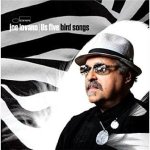
Bird Songs – Joe Lovano & Us Five (Blue Note)– Released in early January, this disc got the year off to a strong start. Yes, there are many Charlie Parker tribute albums, but Lovano and the band (James Weidman, Esperanza Spalding, Otis Brown III and Francisco Mela), have managed to find something fresh, new and exciting in these tunes that we have heard more times that we can count. In addition, in the two years since their last disc, their sound has grown more cohesive. If Joe Lovano isn’t the best tenor player of his generation, then he’s definitely in the top two.
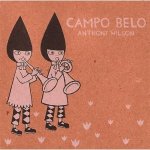
Campo Belo– Anthony Wilson (Goat Hill)Recorded in Sao Paulo, Brazil, last September, with three very gifted young Brazilian musicians; Campo Belo counts as one of the most pleasant surprises of the first half of the year. It’s not a Brazilian record in the sense that we have come to know it, and therein lays a great deal of its charm. It never sounds forced or self-conscious; it’s just a bunch of cats that dig each other’s style, sitting down to play. It’s a heady vibe that will grow on you with each listen.
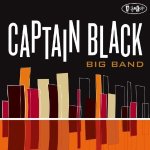
Captain Black Big Band – Orrin Evans (Posi-Tone) – Hold on to your hats on this one. Evans, the Philly bred pianist has dropped on us a band that’s as big, brash and badass as it wants to be. It was born out of Evans’ regular gigging at Chris’ Jazz Café in Philadelphia. The glorious result is 38 musicians, from The Big Apple and The City of Brotherly Love, in various configurations; blowing their hearts out on seven tracks. Soloists include Wayne Escoffery, Tim Warfield, Jaleel Shaw and the great trombonist Frank Lacy. It may not be your father’s big band, but it should be yours.
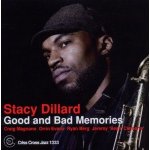
Good and Bad Memories –Stacy Dillard (Criss Cross) – Though people have pulled my coat about him in the past, I’d somehow managed to sleep on this Michigan native until this album, his fifth as a frontman. It’s definitely my loss. His sound on tenor and soprano is restless, powerful and exciting as all hell. With support from a band that includes Orrin Evans, and guitarist Craig Magnano anchoring a non-traditional front line, Stacy Dillard proves to be a force to be reckoned with, as a player and as a composer. When speaking of Mr. Dillard, Wynton Marsalis eloquently exclaims “This MF can PLAY!” I couldn’t have said it better myself.
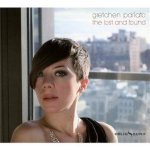
The Lost and Found –Gretchen Parlato (ObliqSound) – Ms. Parlato is another artist who gets better with each successive release. This album is a dreamy mix of gorgeous originals like “Winter Wind”, with inventive takes on jazz classics, like “Juju” and “Blue in Green”, with totally unexpected and effective uses of more recent works, including Mary J. Blige’s “All That I Can Say”. Not everyone digs her style, but I sure do. Gretchen Parlato is one of jazz singing’s best hopes for the future.
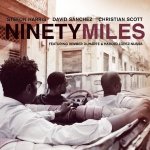
Ninety Miles – Stefon Harris; David Sanchez and Christian Scott (Concord Picante) – One of the most anticipated jazz releases of the first half of the year, lives up to the hype. Harris, Sanchez, Scott and their Cuban sidemen have bridged the political nonsense to create some powerful and enduring music. They are a true collective, as all support each other as powerfully as they solo. Grammys be damned, Ninety Miles is some award worthy Latin Jazz.
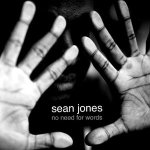
No Need for Words – Sean Jones (Mack Avenue)Trumpeter Sean Jones’ latest, is an album of love songs; not in the traditional romantic sense, but rather it’s about all of the different emotional aspects that visit us when we love, in any way. So, there are songs about a mother’s love, forgiveness for an absent father, spiritual love, physical passion, unhealthy obsession and yes, romance. His writing is very strong and his band is rock solid. On No Need for Words, Jones makes a statement that is personal, powerful and compelling.
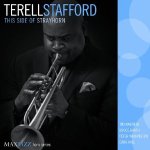
This Side of Strayhorn – Terell Stafford (MaxJazz) – The veteran trumpet man flat-out cooks from start to finish on this tribute to the works of one of jazz’s greatest composers. He tackles the well-known (“Lush Life”) and the obscure (“Lana Turner”) parts of the Strayhorn catalog with creativity and gusto. His tone is as good as it has ever been as Stafford flutters, sings and growls his around Strayhorn’s music as if the songs were written just for him. With stalwarts like Tim Warfield and Bruce Barth joining him, they manage to make great tunes even greater.
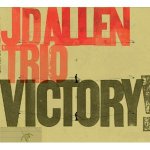
Victory –J.D. Allen (Sunnyside) – In general, I have not been a big fan of sax trios, outside of Sonny Rollins and Joe Henderson. J.D. Allen is one of handful of relative newcomers who are causing me to reconsider. Here’s what made me fall in love: first – Victory is stocked with short, powerful statements. No one track exceeds five minutes in length, leaving less room for the self-indulgent rambling that often plagues trio projects. Second – J.D. Allen is a prodigiously gifted musician; adept at flirting outrageously with the avant-garde without going all the way. Third – a delightful rendition of “Stairway to the Stars”, that appears out of nowhere. Kudos to Gregg August on bass and Rudy Royston on drums, who are just as important to this album’s success.
Voice of My Beautiful Country –René Marie (Motema) – By now, most jazz fans are familiar with the incident that birthed the concept for this album. Invited to sing the National Anthem at a 2008 Denver political event, Ms. Marie instead chose to sing the words of “The Star Spangled Banner”, to the melody of “Lift Ev’ry Voice and Sing” (aka “The Black National Anthem”). Though the rendition was stunning, the fallout was immediate and harsh, on all sides of the political and racial spectrum. It nearly derailed Ms. Marie’s promising career. Now in her first full album release since the incident, René Marie proves that she’s back with a vengeance. Voice of My Beautiful Countryis a flat-out artistic triumph; as it covers the spectrum of great American songwriting, from homespun Americana, like “John Henry” to rock classics (“White Rabbit”) to a surprisingly effective medley of “Imagination” and “Just My Imagination” to the unforgettable “Voice of My Beautiful Country Suite”, which includes another “Star Spangled Banner”/”Lift Ev’ry Voice…” mashup. René Marie has been called the natural successor to Nina Simone, Abbey Lincoln and other socially conscious jazz singers. The comparison is fitting.
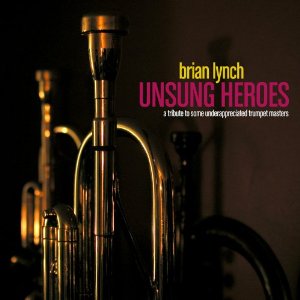
Honorable Mention must go to Brian Lynch’s Unsung Heroes, an album released on CD in 2011, which would be at the top of this list, except for the fact that it appeared on the 2010 year-end list, after it was released late last year in digital form only. Nevertheless, it’s so good that we’ve got to at least mention it again, just in case you’ve missed it.
I also need to remind everyone that this list represents releases that I’ve heard during the first six month of this year. All, some or none of these albums may be on the year-end list, as I hear newer releases, catch up with stuff from the first six months that I haven’t heard yet (such as Branford Marsalis & Joey Calderazzo’s Songs of Mirth and Melancholy, Ben Williams’ State of Artand Vijay Iyer’s Tirtha, all of which are at the top of my very long “to get to” list), or simply change my mind, which is a jazz geek’s prerogative.
I hope that you’ll use this list as an excuse to check out something that you haven’t heard. Agreements, disagreements and additional suggestions are always welcomed.
As I write this brief post, I’m digging The Lost and Found, the latest CD from the wonderful young jazz singer Gretchen Parlato, which hits the streets a week from today (Tuesday, 4/5). I’m hearing it courtesy of NPR’s terrific “First Listen”, which allows listeners to stream selected works in their entirety prior to their release.
I’ll resist the temptation to review the album, since I’m still in the process of listening to it. But I will say that I was a fan Ms. Parlato’s first two CD’s and six tracks into this one, which was co-produced by Robert Glasper, I’ve found nothing to disappoint me. In fact, I’m sitting here typing and listening with a beatific smile on my face, so I’d say that we’re off to a good start.
But don’t take my word for it, listen for yourself by clicking on the link below.
As I’ve reached the halfway mark in my “Obscure Trumpet Masters” series, I felt it was time to talk about the project and the artist that served as part of the inspiration for those posts: Brian Lynch’s Unsung Heroes.
Mr. Lynch has been a part of the mainstream jazz scene for the better part of three decades. He has won acclaim for his work with jazz giants from Horace Silver to Phil Woods to Eddie Palmieri. He was the last in a long and storied line of trumpet players in Art Blakey’s Jazz Messengers. And he is not only a world-class musician, but a keen student of the history of jazz, especially those who came before him on his instrument. His recordings as a leader have often included lesser known compositions by trumpet giants and some by those whom the spotlight missed. His 2000 Sharp 9 Records releaseTribute to the Trumpet Masterspaid homage to greats ranging from Dizzy Gillespie to Lee Morgan to Lynch’s idol, Kenny Dorham. Unsung Heroes is a natural progression, as respect is paid to, as the title suggests, many jazz trumpet players who have not gotten the recognition that they deserve.
On this two-disc collection (three, if you include the set of alternate takes), Lynch spotlights the playing and/or writing of Kamau Adilifu (Charles Sullivan), Donald Byrd, Joe Gordon, Howard McGhee, Claudio Roditi, Louis Smith, Idrees Sulieman, Ira Sullivan, Charles Tolliver and Tommy Turrentine [brother of tenor great Stanley]. Unsung Heroes is an impressive effort in every way, from the breadth of jazz trumpet history that it covers, to masterful compositions (especially the never recorded works by Turrentine and Sulieman) to the outstanding musicianship of Mr. Lynch and his band: Vincent Herring on alto; Alex Hoffman on tenor; Rob Schneiderman, piano; David Wong, bass; Pete Van Nostrand, drums and Vicente Rivero on congas.
Lynch’s liner notes provide a great deal of background on the artists and the compositions. I had been aware of Turrentine and Sulieman’s stellar work as sidemen and their limited discographies as leaders, but I was unaware that each had left a rich body of music; written in their later years, but never performed. All of it had been under the care of trumpeter/ producer Don Sickler. Eight of these tunes, four by each man, make their recorded debut on this project. All of the performances of these new works are at minimum, very good. Three of them (Turrentine’s “Big Red”; “I Could Never Forget You” and Sulieman’s “Short Steps”) are excellent; as are “Terra Firma Irma”, “Household of Saud” and Lynch’s own “Further Arrivals” and “Marissa’s Mood”.
Unsung Heroes is Brian Lynch’s finest work as a leader. The music is pure mainstream jazz, executed by pros performing at their highest level. Lynch and the other musicians are completely up to the task at hand and they deliver strong ensemble performances and consistently creative solos.
As of this writing, Unsung Heroes is only available as a high quality digital download, with a fully downloadable booklet, at http://brianlynch.bandcamp.com/ ($9.99 each for Vols. 1 & 2; Vol. 3 [Alt. Takes] is Name Your Price). The CD version is expected sometime in 2011. Fans of straight-ahead jazz will want this project in your collection, regardless of the format.
With this album, trombonist (and 2011 NEA Jazz Master) Delfeayo Marsalis breaks free of the formidable shadow cast by his more famous older siblings, Branford and Wynton; and he does it in a bold way, by reimagining Duke Ellington’s famed 1957 Shakespearean tribute, Such Sweet Thunder. As a scholar of the Bard and the Duke and having written a master’s thesis on the connection between Ellington and Shakespeare, Delfeayo has a profound understanding of both legends and it shows in this work.
Again, this is not a moldy regurgitation of the original. Instead of working with a full Ellington sized big band, Mr. Marsalis employs an octet; resulting in a sound that is leaner, but tighter. Delfeayo’s band swings as hard (or I daresay, even harder than the Ellington band, in some instances) but loses nothing in the richness of the sound, which is a testament to Marsalis’ judicious arrangements, which retain an Ellington flavor but consistently avoid slavish recreation.
The difference grabs you right away on the opener/title track, which is a bit more infectious and up-tempo than the original; riding atop Reginald Veal’s walking bass and a backbeat set by one of the baddest drummers working today, Winard Harper. Big brother Branford contributes a lyrical soprano sax turn that sets up Delfeayo’s muscular Al Grey influenced ‘bone solo and Mulgrew Miller’s piano statement.
The most impressive tracks are the ones where Marsalis expounds on the sections that in Ellington’s original recording were virtual interludes; such as “Sonnet to Hank Cinq”. Marsalis’ version is faithful in spirit to Ellington’s original, but gives a lot more room for the soloists to play, which is great news for us, as Delfeayo, and the saxophone trio of Mark Shim, Mark Gross and Jason Marshall are on fire.
“Sonnet in Search of a Moor” is transformed from a melancholy bass feature into a boppish burnout. It’s led by Delfeayo’s Fuller-esque trombone, Victor “Red” Atkins electrifying piano, Victor Goines red-hot tenor and Jason (little brother) Marsalis’ explosive time keeping.
The best track, hands down, is “Circle of Fourths”. Originally a brief Paul Gonsalves throwaway, it has been reborn as over nine minutes of breathless modern jazz. Meters and keys change on a dime as the tension between the rhythm section and Delfeayo’s and Shim’s solos, builds. The horn players want to break “free” but Charnett Moffett (bass) and Jason Marsalis are keeping them with one foot barely on the ground. Good Stuff!
If you are a staunch keeper of the Ellington tradition, this will probably not be your cup of tea. If you like your Duke with a little spice, you’ll like Delfeayo Marsalis’ Sweet Thunder. We get great Ellington & Strayhorn compositions, played by some of today’s most creative jazzmen, who present many fresh ideas. It’s a triumph for Delfeayo Marsalis, who is an inventive arranger, an extremely gifted trombone player and an artist with vision.
JAZZ LIVES ALERT!
Delfeayo Marsalis is now on tour to 36 American cities, with Sweet Thunder: Duke & Shak; a theatrical stage production, featuring actor Kenneth Brown, Jr., the Delfeayo Marsalis Octet (w/ Don Bryon and Winard Harper), plus full stage set and costuming. The show is directed by John Grimsley with a script by Charles E. Gerber.
02.20.11 – Plaza Theater – Orlando, FL • Buy Tickets
02.21.11 – Gusman Center – Miami, FL • Buy Tickets
Other stops on the tour include Mobile, AL; St. Louis; Chicago; Boston, New Haven; Detroit; Pittsburgh; New York City; Philadelphia and Baltimore. For information about when the tour is coming to your area, visit the artist website: www.dmarsalis.com
 It has been thirty years since Terence Blanchard first hit the jazz scene as Wynton Marsalis’ handpicked replacement in Art Blakey’s Jazz Messengers and then lead a memorable “young lions” quintet with saxophonist Donald Harrison. Since then, Mr. Blanchard has scored over 40 films, including all of Spike Lee’s since Mo’ Better Blues; been nominated for eleven Grammys® (and won five); served as artistic director of the Thelonious Monk Institute of Jazz; been a first call sideman and led his own group that has recorded twenty albums. In addition, Mr. Blanchard’s first “Opera in Jazz”, Champion, about the life of the late boxer Emile Griffith, recently premiered in St. Louis. Suffice to say that Terence Blanchard has been quite busy. His twentieth album also marks his return to Blue Note Records for which he last recorded 2007’s A Tale of God’s Will (A Requiem for Katrina) for which he won the Best Large Jazz Ensemble Grammy.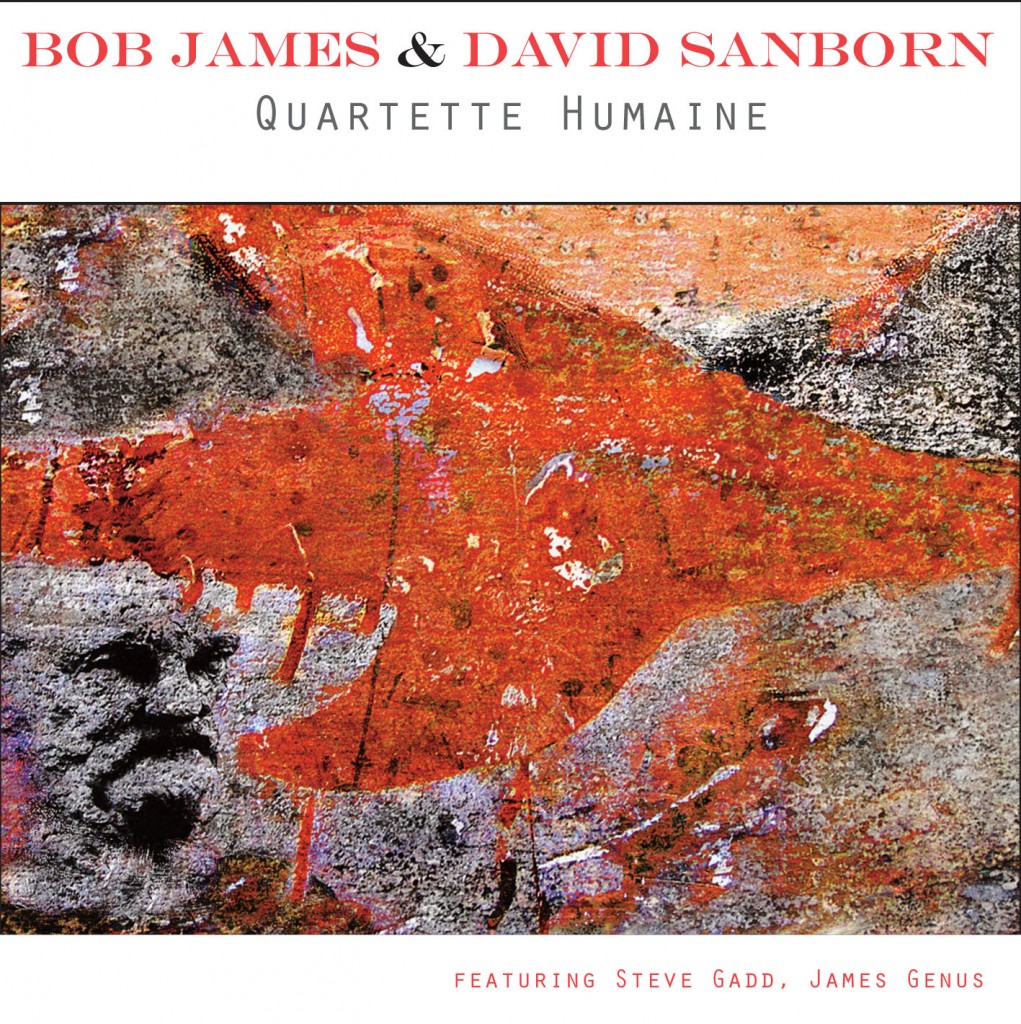


 Curt's Jazz Cafe