We all have those tunes that can lift us out of the darkest doldrums; a performance that helps to put the “pep back in our step” and gets us through that rough patch.
There are a few songs like that for me. One is the old Kern/Fields tune “Pick Yourself Up” as performed by the wonderful jazz singer Elli Fordyce. “Pick Yourself Up” is lyrically upbeat to begin with and I’ve heard many, many versions of it over the years; but there’s something about Ms. Fordyce’s performance and the finger snapping arrangement led by pianist Jeremy Manasia, that makes me almost giddy.
For those who are unfamiliar with her, Elli Fordyce is a NYC native who has only recently returned to singing after a hiatus of many years. In fact, Songs Spun of Gold, the critically acclaimed album (see our review HERE) that includes “Pick Yourself Up”, was recorded and released in 2009 when Elli was 72. It is her second album, following on the heels of her excellent 2007 recorded debut Something Still Cool(yes, June Christy is a strong influence).
Elli is still coaching aspiring vocalists and performing today, at age 76. If you get a chance to hear her live, you should not pass up the opportunity.
I listened to “Pick Yourself Up” a number of times while preparing this post. I feel better than I have all day.
I’ve done a bunch of these birthday video tributes over the years but I somehow missed Birks. Well, let’s rectify that now.
People who know nothing about jazz know his name, his signature bent trumpet and his iconic “puffy cheeks” when blowing his trumpet. He influenced so many who came behind him. There would be no Miles, Hub, Morgan, Shaw, Wynton or Hargrove without Dizzy.
Born on October 21, 1917 in Cheraw, SC, today marks the 96th Anniversary of his birth.
But you didn’t come here for the history lesson, you came for the clips, so here are a few choice ones of the legend at various stages of his illustrious career.
WHY STOP NOW…UBUNTU – GroundBlue Records GB0001 www.michaelpedicin.comWhy Stop Now; Tunji; Downtown Found; Then I Saw You; Trane Stop; 27 Up; Newtown; Song of The Underground Railroad; Ubuntu
PERSONNEL: Michael Pedicin, tenor saxophone; Johnnie Valentino, guitar; Andy Lalasis, acoustic bass; Rick Germanson, acoustic piano, fender rhodes piano; Vic Stevens, drums
By Curtis Davenport
For every “star” that the jazz media gets excited about, there are ten cats like Michael Pedicin.
Guys who are strong technicians, who day in and day out can play just about anything, who make a living in the studios and on the big name tours but whose names are forgotten by the public as soon as they are mentioned by the star when/if they introduce the band. Michael Pedicin’s name was new to me when I received this disc for review but there was something naggingly familiar about it. I had heard of him before but I couldn’t recall where. Then I started doing a bit of research and it all came together. I cut my musical teeth on the albums in the ‘70’s that came out of Kenny Gamble and Leon Huff’s Philadelphia International Records. Geek that I was/am, I also read the liner notes of these albums voraciously. Michael Pedicin (or Michael Pedicin, Jr. as he was known then) appeared in the sax section of a countless number of these records. In addition to his time over at Sigma Sound Studios, Pedicin spent two years in Dave Brubeck’s group, founded Temple University’s jazz studies program and earned a doctorate in psychology. Now Michael Pedicin is finally playing the music that he wants to play. Why Stop Now…Ubuntuis the latest in a series of strong, personal musical statements that Pedicin has made over the last six years.
Pedicin freely admits to having two major musical influences, Michael Brecker and John Coltrane. The two covers on the album are Coltrane tunes. However even on the other selections, which were composed by Pedicin or members of his band, the spirit of the two mentors is quite strong. “Tunji”, a rarely covered tune from the 1962 Coltrane album, is majestic with a searching statement from Pedicin’s sax, which cascades through multiple choruses and a swinging 4/4 solo by pianist Rick Germanson. The doubling of the tenor and Johnnie Valentino’s guitar on the melody line adds a nice touch. “Song of the Underground Railroad”, fromThe Complete Africa/Brass Sessions, is given a quasi hip hop update, which works only because of Pedicin’s hard grooving solo.
Mr. Pedicin is also an outstanding interpreter of ballads, which is evidenced on “Then I Saw You”, written by Valentino, on which the tenorman lets his passion flow as he caresses each note, making an articulate, romantic statement before turning things over to Mr. Valentino for a tasty single line solo. “Newtown” is a heartbreaking tribute to the victims of the infamous mass murder at the Connecticut elementary school, also written by Valentino. Here Pedicin is more like Brecker than Trane as he conveys the despair that we all felt on that day last December, before changing tempo in the mid-section as he looks for hope in the midst of the bleakness. “Why Stop Now” crackles with energy as Pedcin alternates staccato and legato passages in front of Rick Germanson’s rolling piano and Valentino’s guitar. Valentino, a noted L.A. session cat, is a strong composer and has a bit of Grant Green in his guitar, which for me is never a bad thing. Milwaukee native Germanson is a veteran of many recordings, including four good records as a leader. His skittish solo on “Trane Stop” is a highlight.
For me, the difference between an “artist” and a “performer” is the finding of one’s voice. It can come at an early age, it can come late or it can never come. Michael Pedicin apparently found his sometime around age 60 and Why Stop Now…Ubuntu is one of the sweet fruits.
SWINGFULLY YOURS – Magenta Label Group LHM-CD-101 www.lostonharris.comKiss and Run; Nice Work If You Can Get It; I’m Old Fashioned; Hey You With The Crazy Eyes; How About You; I’ve Got The World On A String; 9:26 Special; The Lamp Is Low; You Can’t Love ‘Em All
PERSONNEL: Loston Harris, piano, vocals; Ian Hendrickson-Smith, tenor saxophone; Gianluca Renzi, bass; Carmen Intorre, Jr, drums
By Curtis Davenport
I was very pleased to see this CD from Loston Harris come across my desk. I had first enjoyed the work of this Virginia native in the late’90’s, when his Comes LoveCD was on the playlist of the radio station I was then working for. His recordings in the ensuing 15 years have been sporadic but always enjoyable. Swingfully Yours, his fifth disc, is no exception.
Many New Yorkers are already familiar with Mr. Harris from his decade as a headliner in Bemelmans Bar at the Carlyle Hotel, a role previously held by Bobby Short. Those in Los Angeles know him from his regular gigs at The Whisper. However on his recordings Harris has consistently shed his cabaret conventions in favor of a hard swinging, somewhat percussive piano style that betray his musical beginnings as a drummer. When you find out a little about Mr. Harris’ background, you understand his sound. He’s a protégé of Ellis Marsalis, who he met through Harry Connick, Jr. Harris also has studied with Geri Allen and the late Dr. Billy Taylor. With all those folks around him, how could Loston keep from swinging? And like his piano pal Connick, Harris also sings rather well.
On Swingfully Yours, Mr. Harris sticks to the formula that has worked so well for him in the past; well-known standards mixed with a few rarities from the great composers. Harris himself describes the album quite succinctly on the inside cover: “This recording is all about swing. No torch songs or ballads, just tunes with tempos that make you wanna tap your toes.” He is accompanied by his new working group, a simpatico trio of young New York based pros; bassist Gianluca Renzi, drummer Carmen Intorre, Jr. and Ian Hendrickson-Smith on tenor sax. They all get where the leader wants to go and they take him there in high style.
Harris’ early albums concentrated on instrumentals with a few vocals thrown in. Now, perhaps due to the expectations of his cabaret audience, that balance has reversed. Swingfully Yourshas only two instrumental tracks but both are choice. The disc springs to life with one of them, “Kiss and Run”, the minor classic, performed memorably in the past by Johnny Hartman and Bill Henderson, among others. Here Harris and company romp joyously through it as if opening their nightly set. You can hear one of Harris’ teachers, Dr. Taylor, all over Loston’s festive solo, as Renzi and Intorre keep perfect time. He is followed by Hendrickson-Smith, a very versatile and creative saxman who deserves much wider recognition and brief statements from Renzi and Intorre before the out chorus. It’s classy without sacrificing an ounce of swing. The other instrumental is “9:26 Special”, Harris’ arrangement of “9:20 Special” the swing chestnut by longtime Basie saxophonist Earle Warren. This arrangement was so infectious that I listened at least three times before moving on. Harris is not only a fine soloist but a good accompanist as well. I loved the intricate figures he was playing in support of Hendrickson-Smith on this track and throughout the album. Among the vocal tracks the most notable were “The Lamp is Low” taken at bop speed with a Petersonesque solo by the leader and the saxophonist matching him step for speedy step; “Nice Work if You Can Get It” has an inventive mid-tempo boogie rhythm with a real strong left hand from Harris and “How About You”, is taken at a mid-tempo burn that makes it the closest thing to a ballad on this set. Harris’ vocal put this old warhorse over in a delightful manner that says “I’ve sung this a hundred times and I’m still finding new things in it”. Because he does, we do too.
Swingfully Yours is another fine album from Loston Harris, who has grown by leaps and bounds as a pianist and as a singer over his two decade career. There was only a two-year gap between this album and its predecessor. That’s encouraging. Perhaps it’s a sign that those of us outside of NYC and LA will hear from Mr. Harris a bit more often.
THE VIGIL – Stretch Records CJA-34578-02 www.concordmusicgroup.com Galaxy 32 Star 4; Planet Chia; Portals to Forever; Royalty; Outside of Space; Pledge for Peace; Legacy
PERSONNEL: Chick Corea, piano, Motif XF8, Moog Voyager; Tim Garland, tenor saxophone, soprano saxophone, bass clarinet, flute; Charles Altura, electric guitar, acoustic guitar; Harien Feraud, bass; Marcus Gilmore, drums; Pernell Saturnino, percussion; Gayle Moran Corea, vocals; Stanley Clarke, bass; Ravi Coltrane, saxophone
At 72, an age when many are looking to take things a bit easier, Armando Anthony Corea is busier than ever. For the past decade, the 20 time Grammy Winner has been releasing new albums at the rate of a little over one per year. There have been trio dates, duos with Gary Burton and a couple of Return to Forever reunion tours. I think that those RTF reunions had an effect on Chick because his new album The Vigilhas a decidedly RTF flavor.
Don’t misunderstand; The Vigilis not a Return to Forever album. Mr. Corea spends about half the time playing acoustic piano and he even drops a traditional 4/4 swing on a couple of tracks but after the last few projects with Burton, Eddie Gomez, the late Paul Motian, et al, I thought that perhaps Mr. Corea had said goodbye to his electric self after RTF played their last live sets in 2011. Thankfully, he had not. The album cover, with its decidedly L. Ron Hubbard-esque artwork, should tell you right away that the ‘Electric Chick’ is still with us.
This seven song set is Corea’s first album of all original tunes in over a decade. ‘Electric Chick’ throws the first punch on “Galaxy 32 Star 4”; a driving sharp-edged track with Chick burning up his synthesizers with glee and ample support from French bassist Hadrien Feraud and Marcus Gilmore, a world-class drummer whose work I’ve enjoyed for a while before finding out just today that he is the grandson of the legendary Roy Haynes (which explains a lot). Chick is shredding, Gilmore is throwing bombs and Feraud and percussionist Pernell Saturnino are setting a rock solid bottom. It’s a really powerful start. “Planet Chia” brings us ‘Acoustic Chick’ playing those rock infused Spanish rhythms that have been his trademark for decades. British saxophonist Tim Garland does some terrific work on soprano as Chick and Feraud egg him on. A Corea number like this would not be complete without a guitarist. Charles Altura, a name that is new to me does some impressive work here. “Portals to Forever” is an overt nod to RTF with Corea taking us on a 16 minute tour of the group’s signature styles both electric and acoustic. “Royalty” is a tribute to the great Mr. Haynes, Corea’s “hero, mentor and friend”, whom he met when they both played with Stan Getz in the mid 60’s. It’s a beautiful swinger in three with Corea setting down a relaxed line over which Garland blows a Getz-like tenor and Gilmore steps into his grandfather’s shoes; ably moving the tune forward while keeping impeccable time.
The album’s masterpiece however is “Pledge for Peace”; a seventeen minute tribute to the music and spirit of John Coltrane. This work unfurls in sections, like a symphonic movement. The dissonant intro gives way to an up-tempo mid section with Corea, Gilmore and special guest Stanley Clarke feeding off of each other as if they play together every night. After an epic bass solo by Clarke in the middle, it only seems natural to have a Coltrane tenor solo; and so we get one, from Ravi Coltrane, who seems to have fully come into his own over the last two or three years. His solo is one of his most impressive and fully realized that I’ve ever heard from him. There are still slight elements of his dad’s work in it but more than anything else I felt that this was his own style. Ravi may never be able to fully escape his father’s formidable shadow but he has finally carved out his own space. It’s an amazing track.
The core group that plays with Chick Corea on The Vigilis part of a new band that he has put together. That’s very good news. It’s also good news that he has written some very compelling music for this album. Because what it tells me is that we can expect a lot more great performances from a legend who is not going to be content to rest on his laurels.
Today, September 23, 2013, marks another birth anniversary of John Coltrane (87, if you’re keeping track). I noticed that ALL of the videos in my prior birthday tribute to Trane have been deleted by copyright owners; anxious to protect whatever profits that they feel would be irreparably harmed by allowing the public to see the clips, without lining their pockets first.
So here I am again with another tribute to the Greatest Of All Time. Please enjoy these clips for as long as they are available.
Let’s start with a powerful albeit truncated live version of “Resolution” from A Love Supreme
“Equinox” from Coltrane’s Soundis one of my all time favorite Tranes. It was recorded in 1960 and remained in the Atlantic Records vaults until 1964.
UPPITY – Origin Records 82635 http://originarts.comLet’s Conversate; Dance Like No One is Watching; Three Gifts (from a Nigerian Mother to God); Across the Divide; Uppity; Ballad for Trayvon Martin
PERSONNEL: Ralph Bowen, tenor saxophone; Andy Hunter, trombone, keyboards; Eli Asher, trumpet, flugelhorn; Jim Ridl, piano, Fender Rhodes; Kenny Davis, acoustic bass, electric bass; Donald Edwards, drums; Charmaine Lee, vocals; Anthony Branker, composer, musical director
By Curtis Davenport
With a large percentage of jazz musicians being African-American, racial justice has long been a point of contention and frustration for them (us). This frustration has manifested itself in different ways. Many in the 50’s and 60’s aligned themselves with religious groups such as the Nation of Islam, which preached black self-reliance and encouraged members to discard their “slave names” in favor of names that they felt were closer to their original selves. Others left the U.S. altogether and moved to Europe, where they believed the sting of prejudice to be less prevalent. Others remained and turned their frustration into musical expression; albums such as Max Roach’s We Insist! were part of a subgenre that continued to thrive through the 60’s into the 70’s. Though individual compositions dealing with racism and social justice continued to crop up in certain situations (Branford Marsalis’ “Breakfast @ Denny’s” comes to mind), the jazz social protest album had become pretty much a thing of the past.
Recent well publicized events have begun to awaken the sleeping giant; from decisions by the Supreme Court, to controversial decisions by juries in high-profile racially charged cases. President Obama even recently commented on his experiences with being profiled. Jazz musicians do not live in a vacuum. Many are all too personally and painfully aware of the scourge of racism and they express their feelings about it, musically. Dr. Anthony Branker, chairman of the Jazz department at Princeton University has recently created a beautiful and eloquent musical statement about his frustrations, titled Uppity.
Dr. Branker began his career as a trumpeter, including a stint with the Spirit of Life Ensemble, which enjoyed a lengthy stint as the Monday night band at the legendary NYC jazz club, Sweet Basil. His interest in jazz education led Branker to Hunter College and subsequently to Princeton, where he helped to build the ivy-league school’s moribund jazz program. Around 1999, medical problems stemming from a brain aneurysm led him to put down his trumpet and concentrate on composing, arranging and conducting. Dr. Branker has founded two collectives at Princeton, one called Ascent and the other Word Play, each of which has made several previous recordings. It is Word Play that joins him on Uppity, featuring a few well-known NYC jazz musicians such as Ralph Bowen on tenor, Jim Ridl on piano and Donald Edwards on drums. Dr. Branker chose the album title as an acknowledgement of the word that is often used to describe blacks who “don’t know their place” in society as some view it. He cites several high-profile cases where recently young black men who were thought by others not to belong in certain places, paid with their lives for other’s assumptions. And each of the album’s six compositions has something to do with some of these circumstances.
This is not to say that Uppity is a totally dark or angry album. There are joyous moments as well, such as “Let’s Conversate”, a piece of jazz infused with a bit of funk, all riding on Ridl’s skittishly joyous Fender Rhodes, Kenny Davis’ popping electric bass and a sax/’bone duel between Bowen and Andy Hunter. “Dance Like No One is Watching” is in that same vein. “Three Gifts (from a Nigerian Mother to God)” is based on the heartbreaking story of a mother who lost her three children as they returned home from school during a 2005 plane crash. It’s stunningly beautiful music, with a mournful flugelhorn solo by Eli Asher with counterpoint by Bowen and a softly mournful vocal line by Charmaine Lee going on underneath. You will feel the tug at your heartstrings. “Across the Divide” is a plea for us all to take the first step in bridging the gap of understanding. The African rhythms that drive the piece give it a “world music” tinge. The title track, is the most dissonant number on the album, announcing itself with the horns wailing and Edwards bashing out his frustration on the drums. You can almost hear the epithets being hurled. Things settle down a bit in the middle as if there’s an attempt to reach détente with Ridl’s piano acting as mediator. The “peace talks” fall apart and we return to the shouting horns at the end, now joined by Ridl as the frustrated mediator. “Ballad for Trayvon Martin”, written obviously in honor of the Florida teen who went out for snacks last year and somehow ended up dead, closes the album. It is lushly orchestrated with two lengthy and beautiful tenor solos by Mr. Bowen telling the story, in some of his finest recorded work. These solos are broken up by Mr. Ridl’s piano statement which is also quite good.
Anthony Branker’s Uppityis thought-provoking jazz that is still quite accessible for most listeners. I pray that one day it won’t be necessary for artists to write music about such situations but as long as they do, I also hope that they continue to express themselves so powerfully.
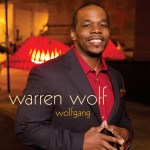
WOLFGANG – Mack Avenue Records MAC 1077 www.mackavenue.comSunrise; Frankie and Johnny; Grand Central; Wolfgang; Annoyance; Lake Nerraw Flow; Things Were Done Yesterday; Setembro; Le Carnaval de Venise
PERSONNEL: Warren Wolf, vibes, marimba; Benny Green, piano; Christian McBride, bass; Lewis Nash, drums; Aaron Goldberg, piano; Kris Funn, bass; Billy Williams, Jr., drums; Aaron Diehl, piano; Darryl Tookes, vocals
By Curtis Davenport
It seems that Warren Wolf appeared out of nowhere a couple of years ago and immediately became the hottest young vibraphonist in jazz. In addition to his work as a leader he is a member of Christian McBride’s terrific quintet, Inside Straight. He also plays with pianist Aaron Diehl who has grabbed a lot of attention with his debut album; and he recently took over the vibes chair in the SF Jazz Collective, following in the formidable footsteps of Stefon Harris and Bobby Hutcherson. Though he also is proficient on drums and piano, Mr. Wolf has done most of his recording on the vibes, with Wolfgang being his second album for Mack Avenue and sixth overall. I found his eponymous prior Mack Avenue release to be promising but uneven. On Wolfgang, those rough spots have been filed away, leaving an artistic statement that is strong, cohesive and musically diverse.
Wolf employs two different groups on this album, each one helping to push his sound in a different direction. The first features a younger generation of musicians – pianist Aaron Goldberg, bassist Kris Funn and drummer Billy Williams, Jr. The second trio is comprised of better known veterans, Mr. McBride on bass, Lewis Nash on drums and pianist Benny Green. The younger cats employ a lighter touch which fit nicely with Wolf originals such as “Sunrise”, a sprightly waltz tempoed number that gives Wolf plenty of room to stretch out and display his virtuosity. McBride’s influence (and bass) is all over the three tracks anchored by the veteran trio. The tempos are more defined and the sound is decidedly more soulful. On “Frankie & Johnny” they pay an obvious tribute to the version of this tune that was performed by Ray Brown and Milt Jackson on their late ‘60’s live album That’s the Way It Is. Wolf and company kick off with a repeat of the unforgettably nasty bass and low-end piano vamp that Brown and Monty Alexander patented on the original. McBride even repeats Brown’s shout of “yeah” at just the right moment. Wolf then jumps in, swinging like “Bags” and they are off to the races. If you aren’t at least bobbing your head by the end of this one, check your pulse. “Grand Central” featuring the “youngsters”, is a hard-driving post-bop exploration, with Wolf spraying line after line over Goldberg’s block chords, building the tension until it explodes into a joyous 4/4 sprint. “Things Were Done Yesterday” sounds like an outtake from one of the Inside Straight albums, with its extremely catchy melody line, Mc Bride’s bass almost forcing your fingers to snap and Benny Green showing his Bobby Timmons influence on his piano solo.
Most striking are the two selections performed as duets with Mr. Diehl. Like Diehl, Wolf cut his teeth on classical music and has a great appreciation for the music of Bach, Beethoven, Mozart and other classical composers, in addition to a love of jazz. Together they display this love and their striking technical proficiency on the title track, an obvious nod to Amadeus, in name as well as style. Through most of the album, Wolf sounds a little like the post MJQ Milt Jackson. Here, it is Jackson and John Lewis and absolutely beautiful.
Wolfgang is the most mature album of Warren Wolf’s brief career. His growth as a musician, composer and arranger are all evident from first note to last. Wolf is someone to keep your eyes on, as his future looks extremely bright.
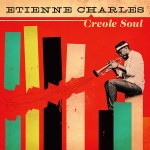
CREOLE SOUL – Culture Shock Music EC004 www.etiennecharles.comCreole (intro); Creole; The Folks; You Don’t Love Me; Roots; Memories; Green Chimneys; Turn Your Lights Down Low; Midnight; Close Your Eyes; Doin’ The Thing
PERSONNEL: Etienne Charles, trumpet, flugelhorn, percussion; Brian Hogans, alto saxophone; Obed Calvaire, drums; Jacques Schwarz-Bart, tenor saxophone; Kris Bowers, piano, fender rhodes; Ben Williams, bass; Erol Josué, vocals; Daniel Sadownick, percussion, vocals; D’Achee, percussion, vocals; Alex Wintz, guitar
By Curtis Davenport
One of the reasons that jazz is struggling with the public lately, is a lack of fresh voices. Whether it’s intentional or not, so many artists have a sound that is extremely derivative of someone who came before them. We who write about the music often aren’t much help as we rush to crown “the next Miles”, “the next Hubbard”, “the next Wynton”. So when I hear someone who doesn’t sound like everyone else, I sit up and take notice. Etienne Charles, a 30 year-old trumpet player, originally from Trinidad, has caught my attention.
What differentiates Mr. Charles from some of his contemporaries is his use of rhythm. This is not something that has happened overnight, at least on his recordings. This is Charles fourth album. In the same way that Robert Glasper has evolved into what is now his signature sound; Mr. Charles developed what we hear on Creole Soulover the course of his previous discs. A graduate of Julliard and of Florida State University where he was mentored by pianist Marcus Roberts, Mr. Charles not surprisingly, evinced no small amount of Marsalis family influence in his early work. That is, much of it was rooted in the hard-driving post bop of the ‘60’s. The music was well-played and demonstrated Mr. Charles considerable prowess on his instrument but it did get lost in the straight-ahead shuffle. But there were always these moments on Culture Shock, Folklore and Kaiso, where Charles would delve deeply into the music of his Caribbean roots. I found those to be the most interesting tracks on those albums. On this new album Etienne Charles takes the next step and he has created a sound that while still firmly rooted in jazz, is also deeply infused with the music of Trinidad, Martinique, New Orleans and a few other stops in between.
You know that you’re in for something different from the opening track “Creole”, which features a brief introduction by voodoo priest Erol Josué delivering a chant in the Haitian Creole language, Kweyol. The main part of track then jumps off, riding on Alex Wintz’s guitar lines and a driving kongo groove. Charles then joins in with a trumpet statement that is equal parts rhythmic and majestic. Brian Hogans picks up the same line on the alto sax and takes it to the next level. Then Kris Bowers’ Fender Rhodes settles the proceedings just enough to keep them from boiling over too quickly. All the while Josué’s vocals, Wintz’s guitar and the beat keep are making the song captivating and refreshingly different. “The Folks”, is a soulful groove, mellower than the opener but still memorable, due again to Mr. Charles’ trumpet, Jacques Schwarz-Bart’s tenor and Bowers’ burbling Rhodes, which quietly sets the background throughout much of the album. Then there’s “You Don’t Love Me (No, No, No), a Bo Diddley tune that became a rocksteady hit in the ‘60’s. Charles keeps the infectious beat, adds a full horn line and gives this tune perhaps its third life. I could easily see a hip club DJ throwing it in the mix, even though it is still very much a jazz tune. Mr. Charles also has roots in Martinique, which he pays tribute to on “Roots” an up-tempo jazz tune with a touch of the bel-air beat that Martinique is known for and a vocal chant break in the middle. Also among the cover tunes is Monk’s “Green Chimneys” imagined here with a very subtle calypso beat which sounds very interesting against Bowers dancing piano chords. And Bob Marley’s “Turn Your Lights Down Low” interpreted as reggae-jazz, with Charles soothing flugelhorn leading the way.
Creole Soulis a rousing success because Etienne Charles doesn’t try to force the marriage of jazz and other musical genres. He lets it happen naturally, employing other young musicians who are completely on board with his vision. They have created something that is different and exciting. Creole Soulis jazz that takes the two words of its title seriously and that’s what makes it distinctive.
Charlie “Bird” Parker, Dinah Washington and Michael Jackson were all born on August 29th. That they were all extremely influential musical talents who died way too young, is obvious. All I want to do today is post a clip from each of them in performance which will attest to their greatness.
Charlie Parker (1920 – 1955) / With Coleman Hawkins “Improvisation”
There aren’t too many film clips of Bird playing live. This one with Coleman Hawkins is pretty good. Even on an off day, Charlie Parker was better than most cats on their best day.
Dinah Washington (1924 – 1963) – “Send Me to the Electric Chair”
Like Bird, there aren’t a lot of Dinah Washington clips out there. Also like Bird, she never made it to 40. She should have been a bigger star. Born Ruth Jones, she has always held a special place in my heart because my mom was one of her biggest fans.
Michael Jackson (1958 – 2009) – “Who’s Loving You” / “Remember The Time”
And of course, there’s Michael Joseph Jackson. He called himself “The King of Pop”. I was never fond of that moniker but I always admired his brilliance. He gets two clips; one from the beginning and the other from later in his career, of a song (and video) that I always liked.
I mean how can you not love Eddie , Iman, Magic and Michael in the same video!
 We all have those tunes that can lift us out of the darkest doldrums; a performance that helps to put the “pep back in our step” and gets us through that rough patch.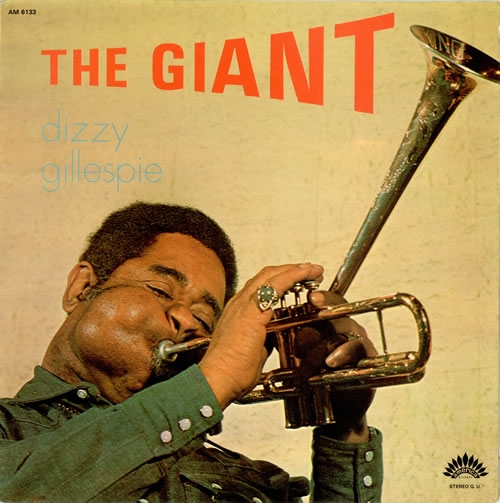



 Curt's Jazz Cafe