I Have A Dream – The Entire Speech

Posted in In Memoriam, The Jazz Continues... with tags , , , , on August 28, 2013 by curtjazz

Martin Luther King - LPI’ve written posts here before about Dr. Martin Luther King, Jr. and how he and his life and work meant so much directly to my parents and indirectly to me as I was not quite eight years old when he was assassinated. I’ve studied him at length over the years and I’ve grown to admire him greatly.

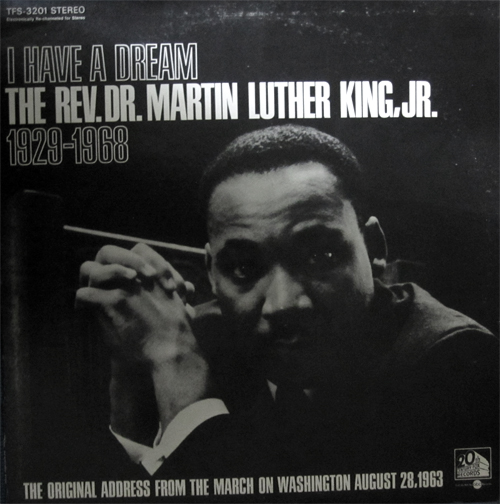
I recall that a few weeks after Dr. King’s murder, my parents bought the album that you see pictured here, which included Dr. King and many other speakers from the day, including Roy Wilkins, A. Phillip Randolph and John Lewis. The liner notes by the way, were written by the great jazz writer and 1st amendment advocate Nat Hentoff.

That album was on heavy rotation in my home for at least a year, maybe more. In that time I became extremely familiar with Dr. King’s words from that day and the majesty of his oratory. In addition, I was exposed to the stentorian tones  of Mr. Randolph and the youthful passion of Mr. Lewis both of which have stuck with me to this day.

As I got older and did a little acting, I was asked on many occasions to recreate Dr. King’s word from that day in 1963. As I took on the daunting task of memorizing the entire 16 minute plus speech, the words grew in meaning for me exponentially. I always felt that the public was cheated each year during January and February when television would truncate everything down to the words “I have a dream” and “Free at last, Free at last…”. To me it was if you had reduced the entire Holy Bible to “Jesus Wept” (John 11:35).

In most cases, I was asked in performance to “skip to the good part”, beginning with “I say to you today my friends, so even though we face the difficulties of today and tomorrow, I still have a dream…”. (This is the first mention of the immortal words, which occurs about 11 minutes in, when King decided to abandon his prepared text and decided to “preach”, using words he first had used in a speech in Detroit two months earlier.)   As a performer,  I understood why folks asked me to do this. There’s still a little over five minutes left in the speech and all of it is highly memorable.

But it was still frustrating as even five minutes was too much for some. I remember the youth pastor of a church that I was attending, begging me to come out to Jones Beach one Sunday evening to deliver “the good part” at a summertime concert. He asked me to come in full suit and tie, which made me feel ridiculous while everyone else, this pastor included, was in t-shirt and shorts. He then took a few minutes to apologize to the audience before I came on, because I was going to deliver “the whole speech” as he called this 5 minute segment and he then begged them not to leave while I performed.

Having been set up for failure, I nevertheless went on, in spite of being now mocked by some drunks who felt empowered by this man’s apology. The final insult came when this youth pastor returned as I finish to literally hold me in place on the stage while he told people “you see, that wasn’t so bad, was it?” While a loud, bad Christian rock band played behind us and he screamed about “Freedom” and “Brotherhood”, while hoisting my hand in the air with his. I’d never been a theatrical hostage before. It was a new experience. And I left feeling totally used and extremely angry.

Anyway I told that story because I had to finally get it off my chest after twenty years. I can now put it to rest. The main reason I write today is to post this video of the entire 16 minutes of Dr. Martin Luther King’s “I Have a Dream” speech, which was once titled “A Cancelled Check” during earlier drafts. If you watch this you may figure out why. I’ve also included a clip of Dr. Billy Taylor’s beautiful King tribute “His Name Was Martin” featuring  Dr. Taylor on the piano and the wonderful Ingrid Jensen on trumpet. And a fascinating piece by the great Max Roach, featuring his drum solo against some of the famous quotations from the speech.  I hope that you’ll enjoy that as well.

Until the next time, the struggle (and the jazz) continues…

Album Review – Michel Camilo – What’s Up?

Posted in CD Reviews with tags , , , , on August 15, 2013 by curtjazz

The following review first appeared in the August 2013 issue of Eric Nemeyer’s Jazz Inside Magazine

Michel Camilo

Michel Camilo - What's Up?

WHAT’S UP? – OKeh Records 88883703992 http://www.okeh-records.com What’s Up?; A Place in Time; Take Five; Sandra’s Serenade; Island Beat; Alone Together; Paprika; Love For Sale; Chan Chan; On Fire; At Dawn

PERSONNEL: Michel Camilo, piano

By Curtis Davenport

The biggest surprise to me when I began researching to review this disc was that I discovered that this is only Michel Camilo’s second solo piano album. I had assumed that someone with Mr. Camilo’s technical prowess would have gone solo a few more times over the course of his 25-plus year career. But in fact, What’s Up? is number two, the other being 2005’s appropriately titled, Solo. Solo, though technically striking, was perhaps overly reverential and introspective; so much so that parts of the album took on a certain sameness. The same cannot be said of What’s Up? which crackles with percussive energy and invention from beginning to end.

The Dominican pianist is determined to show all sides of his musical personality on this album from Latin to Bop to Classical with many stops in between. Though he is known mostly for his trio work, he seems a bit freer in this setting. The fact that there is no bassist to clash with has loosed him to do more creative things with his left hand and much of it is very impressive.

The album kicks off with a bit of a surprise – the title track, a lively boogie-woogie/stride tune written by Mr. Camilo. His left is rock solid, the melody is infectious and he sounds right at home in this idiom. Equally exciting is his version of Paul Desmond’s “Take Five”, which he plays straight and very impressively, keeping that timeless 5/4 rhythm while flowing with loads of creative ideas from his right hand. The quasi-classical “A Place in Time” is just begging to be scored for strings, I can hear in my mind an orchestra caressing the quiet passages and exploding on the crescendos. As beautiful as that composition is, the best moments on the album come when Mr. Camilo gets to show off his rhythmic prowess, whether it’s an original or a cover. “Island Beat” is more Cuba than Jamaica with Camilo managing to make us feel the missing timbales. “Alone Together” manages to be grandiose and intimately bluesy all at once. “Paprika” is a powerful joy with rumbling left hand voicings that virtually leap from the piano. He takes “Love for Sale” to places that it has probably never been, with knotty, shifting time signatures and once again, stunning left hand work.

Then there’s “Chan Chan”, originally composed and performed by the incomparable Cuban guitarist/vocalist Compay Segundo and made famous by its appearance in the film Buena Vista Social Club. It’s a stunningly beautiful song to begin with and Camilo treats it with the grandeur that it deserves, starting subtly and letting the performance grow in power, chorus after chorus, while pulling jazz elements that the song didn’t have before, in with his right hand improvisations. It’s a towering performance that improves on an already great composition. The album comes to a fitting conclusion with the evocative “At Dawn”, which features Camilo at his most lyrical.

I’m usually not a fan of solo piano but Michel Camilo’s work on What’s Up? has made me reconsider. As much as I enjoy his duo and trio work, I would relish hearing more solo piano from him if it continues to be of this caliber.

Album Review: Wayne Wallace – Latin Jazz/Jazz Latin

Posted in CD Reviews with tags , , on August 12, 2013 by curtjazz

The following review first appeared in the August 2013 issue of Eric Nemeyer’s Jazz Inside Magazine

Wayne Wallace Latin Jazz Quintet

Wayne Wallace

LATIN JAZZ – JAZZ LATIN – Patois Records PRCD014 www.patoisrecords.com  ¡A Ti Te Gusta!; Things Ain’t What They Used to Be; ¡Estamos Aqui!; Giant Steps; La Habana; I Mean You; Prelude to a Kiss; Melambo; Puertas y Caminos; Pasando El Tiempo

PERSONNEL: Wayne Wallace, trombone; Murray Low, piano; David Belove, bass; Colin Douglas, trap drums; Michael Spiro, percussion; John Worley, trumpet; Masura Koga, tenor saxophone; Mary Fettig, flute; Elena Pinderhughes, flute; Jeremy Cohen, violin; Tregar Otton, violin; Mads Tolling, violin; Pete Escovedo, timbales; John Santos, vocals; Orlando Torriente, vocals; Jesus Díaz, vocals; Mike Mixtacki, vocals

By Curtis Davenport

“Latin Jazz” is a term that has become extremely overused. You’ll find it slapped on virtually every style of instrumental music that employs even a hint of Latin Rhythms, which makes for a great deal of marketplace confusion. It’s no wonder that Mario Bauzá, the celebrated Cuban composer and bandleader would bristle when the term was applied to his art, insisting that it be called “Afro-Cuban Music” instead.

In my opinion, there are a scant few musicians working today who are able to fuse great jazz improvisation with great Afro-Cuban/Latin Rhythms the way that Bauzá, Machito, Puente, Tjader and Dizzy did. Those who can do it successfully are the ones who have earned the right to have their music called “Latin Jazz” or “Afro-Cuban Music”.  San Francisco based trombonist Wayne Wallace had the cojones to call his latest album Latin Jazz – Jazz Latin. That’s okay, because Wallace has the musical talent to back it up.

Though he is relatively unknown in the East, Wallace is one of the most important names in Latin Jazz in the Bay Area. He has released a string of Latin Jazz discs over the last few years that have been consistently first-rate, including To Hear From There, ¡Bien Bien!, and Infinity. What sets his work apart from many of his contemporaries is that there is always something new and fresh in Wallace’s arrangements, making each disc a kind of concept album.

On Latin Jazz-Jazz Latin, Wallace makes liberal use of a trio of violinists, not just as background “sweeteners” but as frontline part of the arrangement usually doubling a pair of flutes. The resulting sound caught my ear immediately on the album opener “¡A Ti Te Gusta!” a terrific descarga that leaves plenty of solo room for violinist Mads Tolling, flutist Elena Pinderhughes and Mr. Wallace. When was the last time you heard a “horn section” of flute, violin and trombone? They manage to pull it off quite effectively, as pianist Murray Low keeps the clave rolling under them. “¡Estamos Aqui!” a songo that features counterpoint between the string trio and a trombone choir is another winner; it will stimulate your feet as well as your mind, especially when vocalists Mike Mixtacki and Jesus Diaz join in. Speaking of the trombone choir, they really get a chance to shine on “La Habana” a cool mid-tempo cha-cha/danzon that also features a guest spot from Pete Escovedo on timbales. There are shades of the great Barry Rogers all over this piece and Murray Low once again has a brief but memorable solo. Mr. Low is new to me but I have to point out that he is marvelous throughout this disc.

The four cover tunes are all effective, which is a feat in itself. Often when Latin artists cover a jazz tune, the results end up a bit messy as the rhythm clashes with any attempt to maintain the integrity of the original music. I never felt that strain in this session; a tribute to the creative arranging.  Best of these is “I Mean You”, the Monk tune which is turned into a very effective bomba, with Wallace showing off his trombone prowess to great effect. “Giant Steps”, which I’ve heard some well-known Latin groups fall flat on, thrives in a mix of merengue and Afro-Cuban beats in 12/8 time. There are nice solo spots by Wallace and trumpeter John Worley but who really steals the show here is Masaru Koga, who sets an already hot performance on fire with his gritty tenor sax solo. I’d never heard Mr. Koga before this performance. I’ve got some homework to do.

Latin Jazz-Jazz Latin is another strong album from Wayne Wallace. I think that Mario Bauzá would be pleased.

The Best Jazz Albums of 2013 (So Far)

Posted in Best Jazz Albums of 2013 with tags , , , , , , , , , , on August 7, 2013 by curtjazz

cecile mclorin salvantOver the last couple of years, I’ve noticed a small but insistent wave in jazz. We’re seeing artists in their twenties and thirties playing music that does nod to the traditions but also shows the influences of what a lot of these younger musicians grew up listening to; hip-hop; crunk and other related styles. This style has evolved from the confused mess that some of the early cross genre attempts were, into something that is fresh and stands on its own, apart from either of its main musical parents.  As a result, I’ve begun to see a number of today’s jazz writers (and a few musicians as well) rise up and take arms against the “interlopers”. They have written page after page on why what the young musicians are doing “isn’t jazz”.

Whatever else it is, “jazz” will always be about evolution, improvisation and change. What the young cats are now trying to do, could represent the first really new thing in jazz in 50 years. I may not like everything that’s a part of it but I embrace the fact that someone is doing something new.

You’ll see a couple of those albums among my mid-term favorites. Disagreements and agreements are always welcome but spam is not. The albums are in alphabetical order by title.

The Bespoke Man’s Narrative – Aaron Diehl (Mack Avenue)

This was the first album this year to “wow” me. Mr. Diehl’s third album is an unabashed tribute to the Modern Jazz Quartet, which was the first jazz group to “wow” me, over thirty years ago. Mr. Diehl is an outstanding pianist with a strong sense of swing, yet a light touch, reminiscent of course, of John Lewis. And when label mate Warren Wolf sits in on vibes, the transformation becomes complete.

Border Free – Chucho Valdes and the Afro-Cuban Messengers (Jazz Village)

The great Cuban pianist just gets better with age. This album  is a deeply personal statement, filled with tributes to his family members and others who have influenced his musical direction. But you never forget that this is a Chucho Valdés album, so these tributes are carried out in the midst of killer Afro-Cuban rhythms and piano statements of astonishing brilliance. You can read my full review HERE.

Grace – J.D. Allen (Savant)

After recording in the sax, bass, drums trio format for five years, J.D. brings a pianist back into the group on Grace. Not just any pianist but Russian-born wunderkind Eldar Djangirov. Instead of altering the group’s style, Djangirov blends in nicely adding a rich texture to Allen’s group that was missing in some of the previous outings. The pianist has made a good thing even better. You can read my full review HERE.

In A World of Mallets – Jason Marsalis (Basin Street Records)

The youngest of the musical Marsalis brothers, Jason made a committment to playing the vibes full-time a few years ago. While he was a world-class drummer, Marsalis struggled a bit on his first album after making the switch four years ago.  He seems to have put those troubles behind him on this album, which is a rich, quirky and mature musical statement. It also takes my award for the punniest album title so far this year,

Live Today – Derrick Hodge (Blue Note Records)

Derrick Hodge, who was a major presence on Robert Glasper’s Grammy Winning Black Radio in 2012, has made an even stronger musical statement on his debut as a leader. The big name guest stars are not here but the music is denser and more complex than Black Radio’s. Finally, an artist has nailed it in the search for a hip-hop/jazz hybrid. This is “Real Jazz” for the 21st Century. You can read my full review HERE.

Magnetic – Terence Blanchard (Blue Note Records)

Hard to believe that Terence Blanchard has been on the jazz scene for over thirty years. While he has done everything from score films, to write operas, when you get right down to it, he is never better than he is when he fronting a group and reminding everyone that before all of the Hollywood accolades, Blanchard was one of the best jazz trumpet players around; period. He reminds us again here, with his working group and stellar guest spots from Ravi Coltrane, Lionel Loueke and the incomparable Ron Carter. You can read my full review HERE.

No Beginning, No End – Jose James (Blue Note Records)

The vocal love child of Al Green and Bill Henderson, Jose James struck pay dirt on this album, his Blue Note debut. It’s not as straight ahead jazzy as his Impulse! album from a couple of years back nor is it as club ready as some of his first efforts. It’s a blend of jazz, hip-hop and R&B that fits like a glove around James’ unique voice.  It is absolutely irresistible. No Beginning No End hasn’t left my CD Jukebox since its release and there’s a good chance that it will remain there until the end of the year.

Songs From This Season – Tim Green (True Melody Music)

This Baltimore native first drew attention with his second place finish in the 2008 Monk Saxophone Competition. He has recorded with a litany of jazz and Gospel artists from Warren Wolf to Andrae Crouch. But it’s Songs From This Season which has brought Mr. Green to the attention of most of the jazz world. It’s easy to see why. The album’s selections are mostly traditional post bop and Green is on fire throughout; be it on introspective ballads such as “Psalm 1” or burners such as his trio take on “Pinocchio”. This young man has musical ideas to spare. Something tells me that he will be on this list numerous times in the future.

That Nepenthetic Place – Dayna Stephens (Sunnyside Records)

A “nepenthe” is a fictional medicine for sorrow, a “drug of forgetfulness” mentioned in ancient Greek literature and Greek mythology. That ancient word is an apt description for the music performed by tenor saxophonist Dayna Stephens and his quartet on this album. Though the selections are not decidedly upbeat, when taken as a whole, they leave you feeling terrific when they are done. Add in contributions from Gretchen Parlato, trumpeter Ambrose Akinmusire and alto saxophonist Jaleel Shaw and the third album proves to be the charm for Mr. Stephens. This is his best and most well-rounded recording to date.

Cecile McLorin Salvant – WomanChild (Mack Avenue Records)

This is the most talked about album from a female jazz singer this year. Why? Because it is also the best album by a jazz vocalist so far this year, hands down.  The requisite comparisons to Billie Holiday, Carmen McRae and a number of other vocal greats have already begun. Ignore them. For though this is only the second album from this Miami native, she has established enough of her own style already to make most of those comparisons unfair and fairly irrelevant. Cecile won the Monk vocal competition in 2010 and if you want to know why, listen to this album. It’s not the work of a neophyte finding herself but of an established vocalist who knows exactly where she is going.

Again, this list represents my favorites among the jazz albums released this year that I’ve heard to this point. There’s much more that I will hear, including the stack of new recordings on my desk now. In December we will post the final list for 2013, which will include these albums plus the ones that I will be privileged to hear over the next four months. Until then, The Jazz Continues…

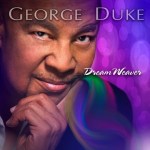
Album Review: George Duke – DreamWeaver

Posted in CD Reviews, In Memoriam with tags , , on August 6, 2013 by curtjazz

This review appears in the August 2013 issue of Eric Nemeyer’s JazzInside Magazine.

Though I knew of his wife’s passing, I had no idea that Mr. Duke was also very ill. Therefore his passing came as a great shock. I’m posting this review exactly as I originally wrote it, as a tribute to an incredibly creative and influential musician.  Rest In Peace, George Duke.

George Duke

george duke

DREAMWEAVER – Heads Up Records HUI-34170-02 www.concordmusicgroup.com  Dreamweaver; Stones of Orion; Trippin’; Ashtray; Missing You; Transition 1; Change The World; Jazzmatazz; Round The Way Girl; Transition 2; Brown Sneakers; You Never Know; Ball and Chain; Burnt Sausage Jam; Happy Trails

PERSONNEL: George Duke, piano, Rhodes, synths, drum programming, arp odyssey, mini moog, Wurlitzer electric piano, castlebar clavinet, vocals; Stanley Clarke, upright bass; Gorden Campbell, drums; Daniel Higgins, tenor sax, flute; Everette Harp, alto sax; Kamasi Washington, tenor sax; Gary Grant, trumpet; Michael Patches Stewart, trumpet; Terry Dexter, background vocals; Shannon Pearson, background vocals; Lamont VanHook, background vocals; Rashid Duke, Ahoom; Erik Zobler, Ahoom; Paul Jackson, Jr., guitar; Chris Clarke, words and thangs; Rose Geddes, lady with a question; Rachelle Ferrell, vocals; Jef Lee Johnson, guitar; Larry Kimpel, bass; Jim Gilstrap, background vocals; Lalah Hathaway, vocals; Jeffrey Osborne, vocals; Lori Perry, vocals; BeBeWinans, vocals; Freddie Jackson, vocals; Dira Sugandi, vocals; Terry Dexter, vocals; Howard Hewett, vocals; Kennedy Fuselier, kid vocals; Josie James, background vocals; Michael Landau, guitar; Chill, rap; Ramon Flores, trumpet solo; Allen Kaplan, trombone; Lisa Chamblee-Hampton, round the way girl; Lenny Castro, percussion; Michael Manson, bass; Teena Marie, vocals; John Roberts, drums; Christian McBride, bass

By Curtis Davenport

The human spirit is a funny thing; when we are feeling our greatest pain, is often when we rise to the occasion and deliver greatness. We often feel that kind of pain when we lose a loved one. Legendary keyboardist George Duke’s wife of 40 years, Corine, passed away in 2012 after a long battle with cancer. For quite a while Mr. Duke, a renowned workaholic, was understandably devastated. He did not write or perform any music, something he had often sought solace in, in times of trouble. Then, while attending a music cruise and listening some of his colleagues play for the first few days, the inspiration returned. Duke began to write while still at sea and began to record when he returned to his studio. The result is DreamWeaver, an R & B and Funk driven Contemporary Jazz album, which is the best thing that I’ve heard from Duke at least a decade.

Duke cut his musical teeth in the bands of Frank Zappa and Cannonball Adderley and Jean-Luc Ponty, in addition to his chart topping work with bassist Stanley Clarke in the eighties. I say that to remind everyone that eclecticism has been Mr. Duke’s calling card throughout his five decade career. And DreamWeaver touches on most of Duke’s musical stops. The best news is that each one of these is invariably satisfying.  The album was recorded over multiple sessions, which allowed Duke to bring on board an all-star lineup of guests; Mr. Clarke, Christian McBride, Everette Harp, Rachelle Ferrell, Paul Jackson, Jr., Jeffrey Osborne and Lalah Hathaway are among the “big names” that appear on various tracks. There are also two other guests who make contributions that turn out now to be extremely poignant; more on them in a moment.

Though there are a couple of obvious and very moving tributes to his late wife here (“Missing You” which features Ms. Ferrell as a wordless vocal counterpart to Mr. Duke’s lead and “Happy Trails”, the old Roy Rogers sign-off, turned into a laid back piece of jazz-funk), don’t think that DreamWeaver is some kind of sad jazz requiem. There are many tracks that will get your head nodding, your toes tapping and put a smile on your face as you reach for the “repeat” button.  There’s “Stones of Orion”, a nice piece of straight ahead jazz, with a touch of R & B; Duke’s piano and Clarke’s bass shine.  “Trippin’” is a nice autobiographical slice of modern soul. “Ashtray” is hard driving funk out of the Bootsy Collins school. “Change The World” is a “We are The World” style call for social change, complete with an all-star choir of vocalists. “You Never Know” is a nice laid back Latin groove with Duke’s falsetto singing about the impermanence of life. And “Burnt Sausage Jam” is a loose 15 minute improvisation, with Duke, McBride and many others clearly having a ball as they groove through multiple musical styles.

Then there’s the appearance on many of the tracks of Jef Lee Johnson, the Philly based guitar wizard who was a longtime musical partner of Duke’s. Johnson died suddenly last January, not too long after the sessions for this album were completed. He is a strong presence throughout.  And there’s the unforgettable appearance on “Ball and Chain” of Teena Marie.  At the time of her death in December 2010, Ms. Marie and Mr. Duke had just begun work on Ms. Marie’s long-discussed jazz album. The vocals for “Ball and Chain” were some of the only things completed. After her death, Mr. Duke offered the track to Marie’s estate for release on her posthumous album Beautiful. They declined but gave Duke permission to complete the track, which appears on DreamWeaver. Ms. Marie sounds wonderful and the entire track is first-rate, rivaling “Tune in Tomorrow” and “Casanova Brown”, two of the jazzier tracks on Ms. Marie’s classic R & B albums.  Thinking of what this album might have been caused a lump in my throat.

Though the circumstances surrounding its creation were less than ideal, George Duke has created a musical gem in DreamWeaver. We hope that his creativity continues for many more years.

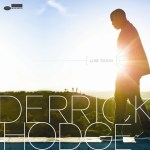
Album Review: Derrick Hodge – Live Today

Posted in Best Jazz Albums of 2013, CD Reviews with tags , , , on August 3, 2013 by curtjazz

The following review first appeared in the August 2013 issue of Eric Nemeyer’s Jazz Inside Magazine

Derrick Hodge

derrick hodge - live today

LIVE TODAY – Blue Note Records B 001847702 www.bluenote.com  The Real; Table Jawn; Message of Hope; Boro March; Live Today; Dances With Ancestors; Anthem in 7; Still The One; Holding Onto You; Solitude; Rubberband; Gritty Folk; Doxology (I Remember)

PERSONNEL: Derrick Hodge, acoustic and electric bass, keyboards, percussion, table beats, synthesizers, lead bass distortion, fretless bass, synth bass, vocals; Common, vocals; Chris Dave, drums, percussion, table beats; James Poyser, keyboards; Travis Sayles, synthesizers, keyboards, Hammond B3 Organ; Jahi Sundance, turntables; Keyon Harrold, trumpets, flugelhorn; Marcus Strickland, tenor saxophone, soprano saxophone; Corey King, trombone; Robert Glasper, keyboards, acoustic piano, Fender Rhodes, table beats; Mark Colenburg, drums, percussion, snare drums, quads; Aaron Parks, acoustic piano, Fender Rhodes; Casey Benjamin, vocoder; Alan Hampton, vocals, acoustic guitar; Martha Caplin, violin; Sophia Kessinger, violin; Sarah Adams, viola; Mark Shuman, cello;

By Curtis Davenport

If jazz has a future, then this is it.

Though many of my generation and older may not like to hear that and some will even almost fight to the death to deny it, let’s face facts.  Young cats like Robert Glasper, Marcus Strickland, Derrick Hodge, Keyon Harrold and their contemporaries are playing music today that is influenced as much by hip-hop as it is by bebop; which is not a bad thing.  They didn’t grow up with the Great American Songbook in their ears so why do so many “jazz people” get apoplectic when these young guys play to their influences? Granted, early marriages of jazz and hip-hop were often clumsy and downright awful, but these guys and others have learned from the earlier mistakes and refined these stylistic mergers into something that is new, fresh and respectful of all of their musical influences. And most important, it works. The sound is compelling and exciting.  Hip young people are beginning to listen and even a few “old heads” such as this writer have come around. This is the sound of “Real Jazz” in the 21st Century.

Bassist Derrick Hodge is known mostly for his work as a member of Robert Glasper’s forward-looking group. He was a major contributor to Glasper’s 2012 breakthrough album Black Radio.  However, he has worked across multiple genres over the last decade supporting a wide range of artists from Gretchen Parlato and Mulgrew Miller to rapper Common and gospel singer Marvin Sapp. Live Today is his debut as a leader. Though it is cut from much of the same cloth as Glasper’s album, Hodge doesn’t have as many big name guest stars and he eschews cover versions of familiar pop tunes. What he does have are songs and arrangements that are complex, challenging and fresh.

The direction of this album is announced right away on “The Real”, a busy amalgam of horn blasts, synthesizers, turntable scratches and sampled voices making statements all held together by Hodges powerful bassline. It’s as close as I’ve heard to nailing the essence what those seeking the hip-hop jazz fusion have probably been looking for. Things really kick into high gear a few songs later on the title track. Glasper opens it by sounding a subtle “alarm” with a repeated piano figure. He is then joined by guest star Common, whose tone here summoned memories of the late Gil Scott-Heron in his prime. The track is spare, only Glasper, Hodge and drummer Chris Dave back Common; yet it feels remarkably dense, as Common coolly brings forth rhyme after rhyme. I could easily listen to a whole album of these cats flowing like that. The great vibe continues with the next track “Dances with Ancestors”, which features Harrold’s muted trumpet and Hodge on both acoustic and electric bass, while Aaron Parks on piano and Travis Sayles on the B3 play off of each other as they improvise the background. It’s mysteriously beautiful. “Anthem in 7” allows the leader to come to the forefront and remind us that he is one of the best young bassists around as he riffs over the complex time signature. On “Solitude” Parks and Hodge trade intricate solo statements, backed by a lush string quartet; the presence of Parks and Glasper throughout the album helps Hodge to put all aspects of his musical personality on display. The disc closes with a nice bow to Mr. Hodge’s upbringing in the church, “Doxology (I Remember)”, anyone with a similar background (such as this writer) will feel a smile of homecoming creep over their face as Hodge bows the familiar theme (“Praise God From Whom All Blessings Flow…”) followed by Sayles organ. It’s a fitting end to this fine effort.

According to Hodge’s recent statements, he did not enter the studio with intricate parts written out for each musician. The compositions were purposefully left in a basic sketch state so that arrangements would occur organically; thus the title of the album. Miles Davis famously employed a similar strategy over fifty years ago on the sessions that created Kind of Blue. We all know now the influence that that album had on jazz. I’m not saying that Live Today will be as memorable in the long run but it’s certainly bold enough to inspire other young musicians who will follow.

Please, Your Highness! Let Us See It!

Posted in The Jazz Continues... with tags , , , on July 31, 2013 by curtjazz

aretha amazing graceI’m a longtime fan of Aretha Franklin. I think that hers is a vocal gift that comes along once every century or so. I believe that one of her greatest musical achievements is Amazing Grace, her 1972 masterpiece, in which she “returned to the church” to record some songs from her youth as well as some modern gospel tunes. I don’t care how bad a day is, hearing Aretha sing “How I Got Over” will bring me out of the deepest funk.

I only recently learned that there was film footage of that concert. Not only that, it was shot by the late Syndey Pollack; an Oscar-winning director who happens to have made some of my favorite films (They Shoot Horses, Don’t They? and Tootsie to name two). This was almost too good to be true – one of my favorite singers, in one of her greatest recorded live performances on a film directed by one of my favorite directors!

My ecstasy was dashed minutes later when I learned that the film has never been released and may never be released. The holdup is reportedly because of a disagreement of some kind between “The Queen of Soul” and the film’s producers. In order to use Ms. Franklin’s likeness in the film, the producers must have her permission and as of now, Her Majesty isn’t giving it.

I discovered this trailer on YouTube, the only part of the footage that we have seen so far. This looks like this could be one incredible documentary film. It’s seems a crime to allow it to languish in a vault somewhere. The release of it could only serve to enhance Ms. Franklin’s already impressive legacy and serve as a fitting memorial to a great director.

I know that I have no pull with “The Queen”, but if she somehow should see this post, I would ask her: “Please Your Highness, Let us see Amazing Grace as it was meant to be, where we could see you in your astonishing prime, as well as Rev. James Cleveland; your father, the great Rev. C.L. Franklin and others who were there then but not with us now.”

Your loyal subjects are waiting, please don’t disappoint us!

“Under The Radar” Jazz Guitarists – Part I

Posted in Under The Radar with tags , , , , , , on July 30, 2013 by curtjazz

Ed CherryIt’s been a few weeks since our last “Under The Radar” post, for various reasons, none of which really matter to most people. So let’s fire it up again with a quartet of great jazz guitarists that deserve more recognition than they get. There will be a Part 2 as there are quite a few guitarists that I want to pull your coat about. As always, they are in alphabetical order:

Ron Affif

Born in Pittsburgh, Mr. Affif was a student of the great Joe Pass and the son of a well-respected middleweight boxer, who passed along to his son his love of jazz. Mr. Affif, who now calls Brooklyn home, released five strong albums for Pablo Records during the ’90’s. My personal favorites are Ringside and 52nd Street. Most times he works in the trio (guitar, bass, drums) format, which leaves ample room for his creativity.  He still presides over Monday nights at the Zinc Bar in Greenwich Village; as good a reason as any to check it out.

Sheryl Bailey

Another Pittsburgh native (there must be something in the water there that produces great jazz guitarists), Ms. Bailey constantly finds herself being compared to Emily Remler, the patron saint of female jazz guitarists. To take nothing away from the late Ms. Remler, of whom I’m also a fan (as is Ms. Bailey), I think that Ms. Bailey is better. For my money Sheryl has a slightly better sense of swing and a warmer tone but why quibble, just love them both. Her last two albums A New Promise and For All Those Living have been on Curt’s Cafe’s Best Jazz Albums lists in their respective release years.  According to her website, Ms. Bailey has a new trio album coming out soon. Be on the lookout!

Roni Ben-Hur

Born in Israel and now based in New Jersey, Roni Ben-Hur fell in love with the recordings of Wes Montgomery, Grant Green Kenny Burrell and Jim Hall at a young age. He was also a fan of the great classical guitarist Andres Segovia. After moving to New York in the mid ’80’s, Mr. Ben-Hur was exposed to the music of Baden Powell, the great Brazilian guitarist. Having all of those influences turned Ben-Hur into a musician with a sound that is strikingly lyrical, yet he swings as hard as anyone on the scene today. In New York Ben-Hur came under the tutelage of the great bop pianist Barry Harris, learning many priceless musical lessons during his time in Harris’ band. He is passing on what he has learned through jazz camps that Ben-Hur and his wife, vocalist Amy London, conduct around the world. Though his recorded work has been uniformly excellent, I recommend 2007’s Keepin’ It Open and 2012’s Our Thing, with Duduka Da Fonseca and Santi Debriano as the best of the best.

Ed Cherry

Musicians dig Ed Cherry. It’s time for the public to join in on the praise. This New Haven native first garnered attention during the decade-plus that he spent with Dizzy Gillespie, performing in the legend’s small group and big bands. Mr. Cherry then struck out on his own releasing his first recoding as leader, First Take in 1993. Over the last twenty years, Cherry has lent his blues drenched sound to albums by Big John Patton, Henry Threadgill, Paquito D’Rivera, Hamiet Bluiett and many others. Whatever he plays, Cherry’s lines are clean and soulful, with a sound that makes you give up that audible “Yeah!”.  HIs third date as a leader, 2001’s The Spirits Speak, on Justin Time and his most recent, 2012’s It’s All Good on Posi-Tone are still in print and available. Get them while you can.

As always, we encourage you to support the music of any of the artists that you like in this post by buying their CDs or legal digital downloads.  Or even better if they come to your area, go out and see them live and then buy their music.

More to come soon. Until then, the jazz continues…

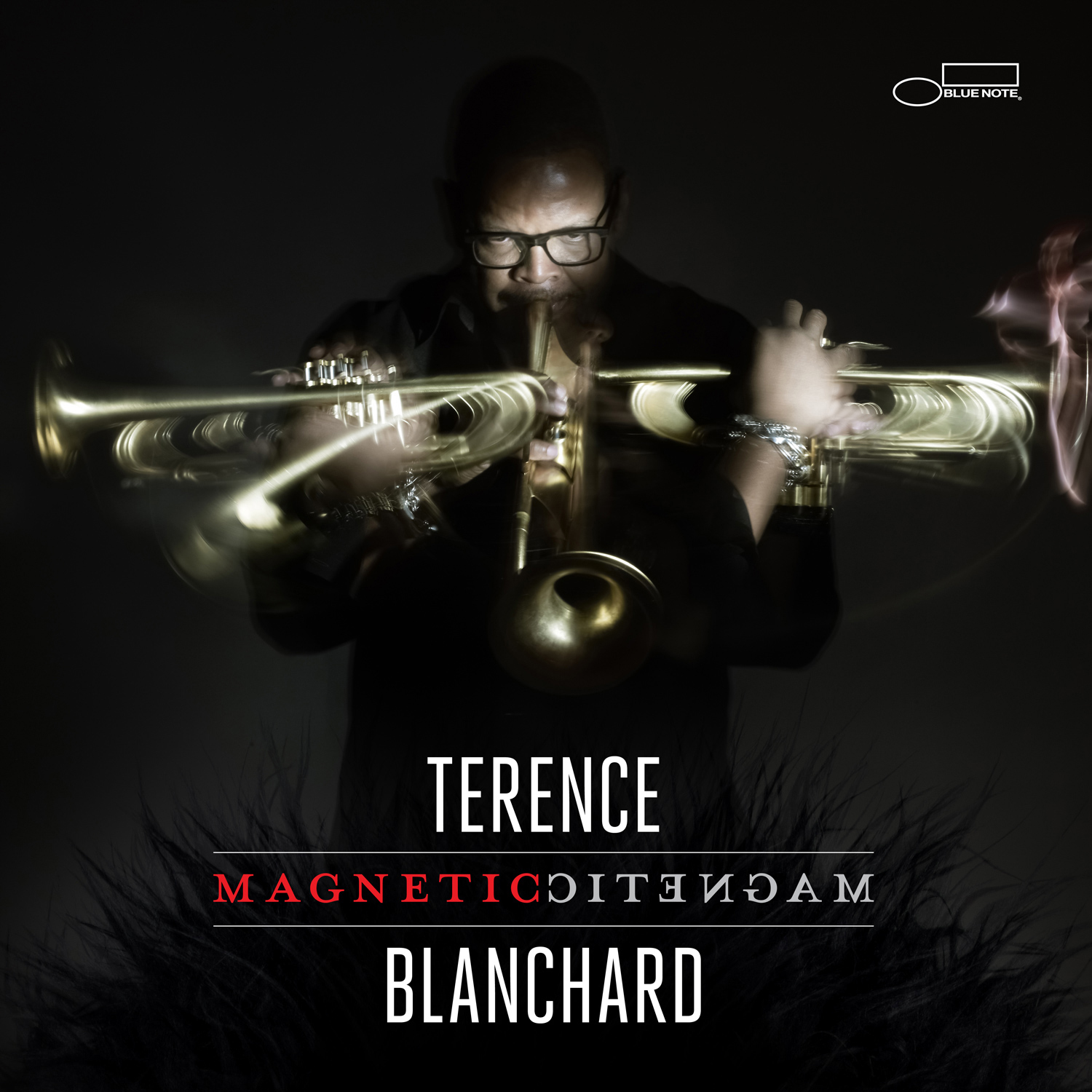
Album Review – Blanchard’s “Magnetic” Attracts Positive Attention

Posted in CD Reviews with tags , , , , , on July 28, 2013 by curtjazz

Magnetic coverIt has been thirty years since Terence Blanchard first hit the jazz scene as Wynton Marsalis’ handpicked replacement in Art Blakey’s Jazz Messengers and then lead a memorable “young lions” quintet with saxophonist Donald Harrison. Since then, Mr. Blanchard has scored over 40 films, including all of Spike Lee’s since Mo’ Better Blues; been nominated for eleven Grammys® (and won five); served as artistic director of the Thelonious Monk Institute of Jazz; been a first call sideman and led his own group that has recorded twenty albums. In addition, Mr. Blanchard’s first “Opera in Jazz”, Champion, about the life of the late boxer Emile Griffith, recently premiered in St. Louis.  Suffice to say that Terence Blanchard has been quite busy. His twentieth album also marks his return to Blue Note Records for which he last recorded 2007’s A Tale of God’s Will (A Requiem for Katrina) for which he won the Best Large Jazz Ensemble Grammy.

His new album, titled Magnetic, features ten original compositions, all by Mr. Blanchard or the members of his latest quintet; Brice Winston on saxophone, Fabian Almazan on piano, Kendrick Scott on drums and 21-year-old newcomer Joshua Crumbly on bass. In addition, there are guest appearances by bass legend Ron Carter, saxophonist Ravi Coltrane (son of a legend) and guitarist Lionel Loueke (likely to be a legend). Blanchard has been experimenting with a number of styles, from classical to Latin to hip-hop on some of his recent recordings. Though those experiments were always interesting and often successful, it’s great to find him on Magnetic, back at his base in what is essentially a first-rate post-bop blowing session.

The title track kicks things off. It’s a knotty mid-tempo piece, peppered with staccato horn blasts and various electronics including Blanchard’s use electronics which at times give his trumpet a guitar like sound. “Pet Step Sitter’s Theme Song” has a mellow funk rhythm over which the group lays down some exploratory solos with Ravi Coltrane’s tenor runs being the highlight, Blanchard’s electronic trumpet sounding like a keyboard and Loueke’s guitar comping in the background. Lionel’s vocalizing and chord runs are subtle at first, then grow in prominence to give the piece a shift in direction. Drummer Scott contributed the hard-driving “No Borders, Just Horizons”, which opens with a powerful two-minute drum solo and then moves surprisingly into a Latin swing over which Blanchard blows one of his best solos on the album before turning things over to Winston’s tenor, which is also in fine form. “Central Focus”, which Blanchard originally recorded on his Simply Stated album twenty years ago and it makes welcome return here with Blanchard showing what he has learned in the ensuing two decades and Scott setting a beat that is impossible to ignore. Winston’s “Time to Spare”, which he originally recorded on his debut solo album three years ago, appears here in an improved version. Winston is more confident and his tenor runs, which show the influence of Joe Henderson, are more self-assured.

The highlight of highlights is “Don’t Run” which features the great Ron Carter on bass and Ravi Coltrane on soprano sax. The tune takes its title from a joking admonition that Carter made to Blanchard to “Stop running from me, man”, when the trumpeter would suggest that they work together. “Don’t Run” is 7 ½ minutes of jazz awesome, with Blanchard, Coltrane, Carter and Scott, just blowing their brains out. Coltrane starts it; with one of his best solos on soprano that I’ve heard to date. Blanchard comes behind him, clearly intending to not be outdone and Carter, is his usual Hall of Fame self.

Magnetic is a mature and winning artistic statement from Terence Blanchard and his quintet. He demonstrates that in spite of the film work, the operas, the Broadway scores and the other things that divide his attention, he remains one of the best jazz trumpet players working today and that he has the recordings to back it up.

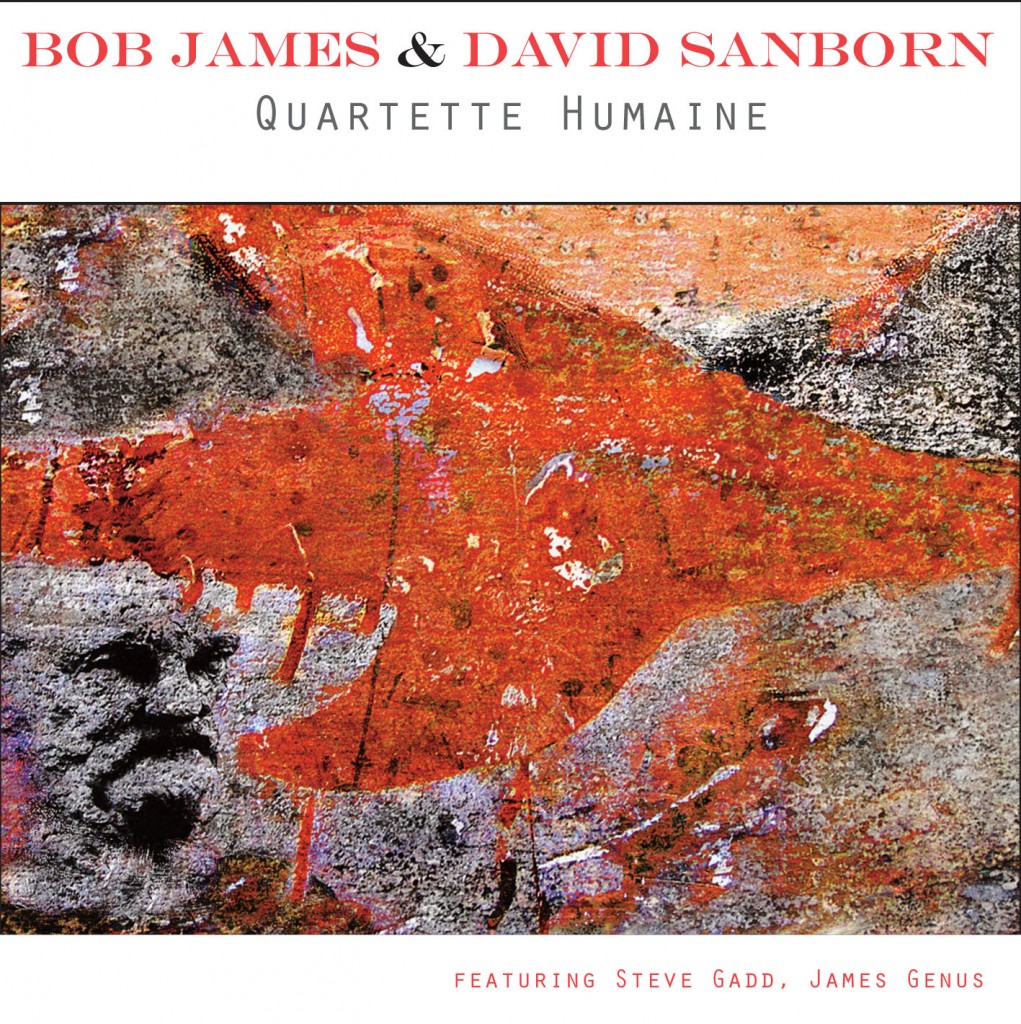
Album Review: Bob James and David Sanborn – Quartette Humaine

Posted in CD Reviews with tags , , , on July 10, 2013 by curtjazz

The following review first appeared in the July 2013 issue of Eric Nemeyer’s Jazz Inside Magazine

Bob James and David Sanborn

quartette humaine

QUARTETTE HUMAINE – OKeh Records 88765 48471 2 www.okeh-records.com You Better Not Go To College; Geste Humain; Sofia; Follow Me; My Old Flame; Another Time, Another Place; Montezuma; Genevieve; Deep in the Weeds

PERSONNEL: Bob James, piano; David Sanborn, alto saxophone, soprano saxophone, sopranino saxophone; Steve Gadd, drums; James Genus, bass; Javier Díaz, percussion (track 9)

By Curtis Davenport

If the music that we once referred to as “Smooth Jazz” had its own Mount Rushmore, surely one of the albums on it would be Double Vision; Bob James and David Sanborn’s classic. It represented what was good about that oft maligned genre – yes the tunes were hook-laden but because of who was involved the musicianship was first rate. Double Vision still has a place in the collection of many people who would not be considered Smooth Jazz aficionados.

Believe it or not, it’s now been 27 years since Double Vision. Though James and Sanborn have occasionally crossed musical paths on other people’s projects, they had not recorded a follow up to that first extremely lucrative album. That changed when in December 2012, the duo got together again in New York to record the sessions that comprise Quartette Humaine.


Let’s get right to the point, those expecting this essentially to be Double Vision II, will be in for a surprise. To be honest, the musical landscape has changed considerably in three decades; Smooth Jazz is no longer the commercial titan that it was in the ‘80’s, which in many ways has freed musicians to pursue diverse creative pathways, as James and Sanborn have here. First: gone are the keyboards, synthesizers and guitars that were so popular 30 years ago. This is an all acoustic set – James on piano; Sanborn on sax, mostly his trademark alto; Steve Gadd has returned on drums and James Genus, of SNL Band fame, plays the acoustic bass. Second: due in large part to the instrumentation, the sound of Quartette Humaine is decidedly less slick than its predecessor, successfully walking a fine line between classic and contemporary jazz.
James and Sanborn said that they had in mind the work of Dave Brubeck (who ironically, passed away a week before these sessions) and Paul Desmond with their classic quartet, when they conceived this album. I think that it’s a very apt comparison. The sound they have achieved I liken to a present-day version of that great group – serious enough to attract many straight-ahead jazz fans but still accessible enough for much of the general public.


The album kicks off with a selection penned by James, which may have been intended as an overt tribute to Brubeck, “You Better Not Go to College”, a possible allusion to the fact that much of Brubeck’s early fame came from his numerous appearances on campuses around the country. This tune is my favorite on the album, with its light Brubeckian swing, propelled by Gadd’s brushwork and Genus’ insistent bottom. Over this bed we get James’ block chords and Sanborn’s alto, which in its trademark plaintive wail is completely different from Desmond’s “dry martini” sound, nevertheless, Sanborn manages to capture Desmond’s overarching humor. “Geste Humain” gives James a chance to remind us how great he is at playing a gorgeous melody. It sounds like an excellent outtake from a Fourplay album. “My Old Flame” is the only standard on the album; it’s taken at an easy shuffle tempo which fits the song and the musicians well. “Deep in the Weeds” is the most Double Vision-like track on the disc, a mid-tempo funk workout, with Sanborn blowing a hot solo over Genus and Gadd’s insistent beat. In fact, the unsung heroes of this album just may be the rhythm team. They set unique and consistently interesting frameworks that inspire the pianist and saxophonist towards doing something more inventive than conventional Smooth Jazz licks.

Quartette Humaine is a fine follow-up to James and Sanborn’s classic first meeting. It’s one of the best efforts by both leaders in a while and a great way to help revive the legendary OKeh Record Label.