My Dinner with Delfeayo (with “Jam” for Dessert)

Posted in JazzLives! on February 21, 2011 by curtjazz

I sat at my day job desk last Wednesday morning doing, as Prince would say, “Something close to nothing, but different than the day before”, when my cell phone rang. I didn’t immediately recognize the number but I decided to answer anyway.

“Brother Davenport” the pleasant voice on the other end said. “This is Delfeayo Marsalis”.

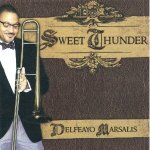
I was pleasantly surprised. 2011 NEA Jazz Master Delfeayo Marsalis and I had made a Twitter connection a few weeks earlier, in connection with his fine new album Sweet Thunder (Duke and Shak). We had exchanged numbers and chatted about getting together when his tour and stage show made a stop in Charlotte.  I had sincerely welcomed his invitation, but because I’ve been around this business long enough to know how quickly plans can change, I hadn’t been waiting by the phone. 

Delfeayo asked if was available to join him and his band at dinner that evening; and if I could recommend a place to have the meal. At that very moment, the BlackBerry on my hip began to buzz, reminding me of a meeting that I had on the other side of the office, starting in 5 minutes.  I had to quickly take my leave of Mr. Marsalis with a promise to text him back in about an hour with a suggestion for a restaurant that would seat all 15 of us and have some good vegetarian meal options; at 7 pm that evening.

My brain did double duty during that meeting; partly concentrating on the business at hand and partly thinking of a restaurant for tonight’s meal. I settled on Cantina 1511; a trendy, but slightly funky Mexican place. I texted Delfeayo; he confirmed and we were all set, or we were, until about 4:00 when plans changed unavoidably. We then reset for Thursday night at 8:00.
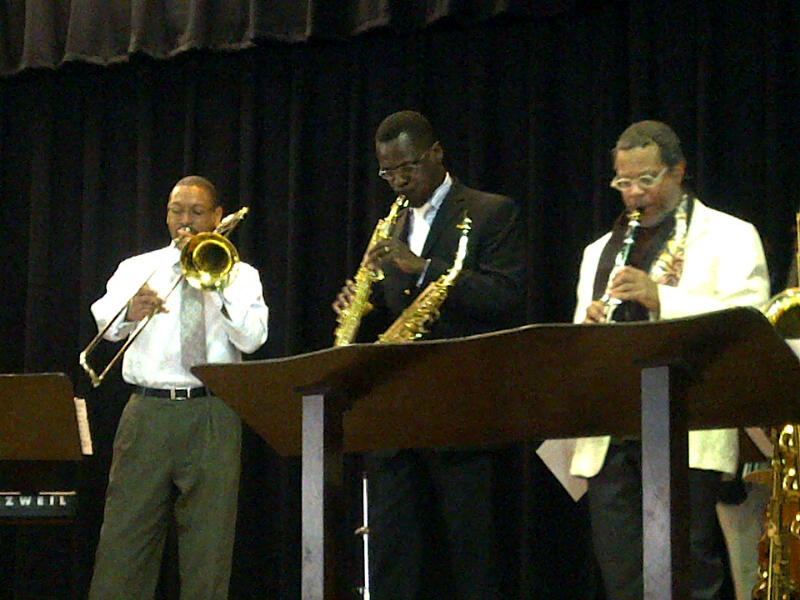
L to R : Delfeayo Marsalis, Mark Gross, Don Byron, during a performance of "Sweet Thunder (Duke and Shak)" - Photo by Michele R. White

Thursday night came and everyone met. Our party consisted of Delfeayo and most of the company of Sweet Thunder, plus two lovely ladies who loved jazz: Michele White of the Jazz Institute of Houston and her cousin Nicole.  Delfeayo greeted me warmly and thanked me for my efforts in support of the tour. We then sat down for a good meal and even better conversation about topics ranging from food, to families to chivalry (or the lack thereof, especially when it comes to a family style meal) and of course, jazz. There were many laughs, a few thought-provoking moments and one  communal groan, when saxophonist Mark “Preacherman” Gross stood up and told a long story, before leading us in a heartfelt toast. 

I thought the evening would end after dinner, but to my pleasant surprise, I was wrong. Delfeayo told me that a friend of one of the band members was playing as part of a piano trio at Sullivan’s Steakhouse, in Charlotte’s South End; and that they were heading over there to jam. Since world-class jazz musicians playing in Charlotte happens about as often as we get snowstorms, I jumped at the invitation to join them.
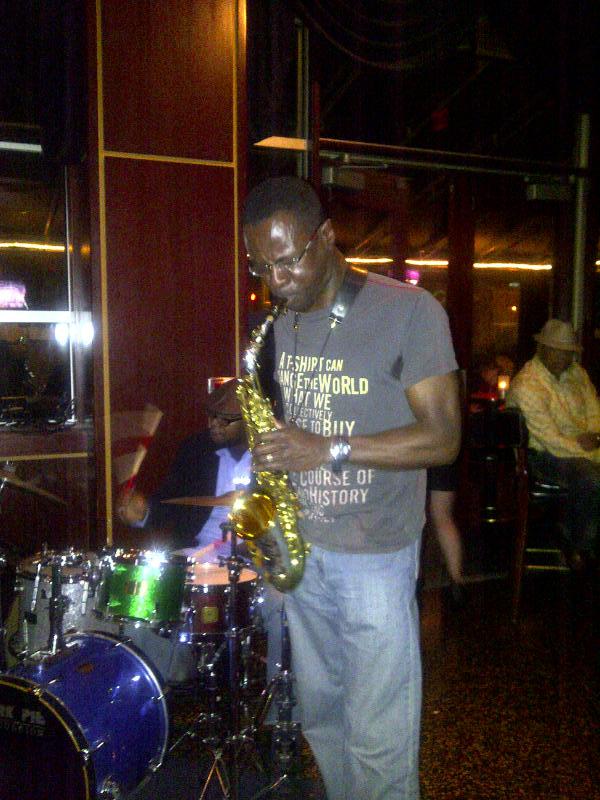
Mark "Preacherman" Gross at Sullivan's in Charlotte, NC 2/17/11 - Photo by Michele R. White

The trio was nestled in a corner of the steakhouse’s floor, by the bar, being ignored by almost every patron, as people sipped their cocktails and made conversation. Delfeayo and company exchanged a few pleasantries with the other musicians as they came in and began to inconspicuously unpack their horns. Only a few took notice as David Bryant slid on to the piano bench, replacing the house pianist.

Quietly, Marsalis counted off and he and Gross broke into the head of “Blue ‘n Boogie”. Soon, they were joined by trumpeter Lynn Grissett (remember that name jazz fans), in a formidable front line. The jaded bar customers and those on the adjacent outside patio began to take note. They were used to a jazz trio here and even an occasional horn player sitting in, but this was different. These cats were clearly not from around here. Delfeayo swung through a lively triple tongued solo, followed by a Bird-like statement from the “Preacherman”.

Nicole and Michele

The buzz was beginning to grow throughout the bar. I saw patrons ask the bustling wait staff about the identity of the guests, only to be answered with polite shrugs. By the time Grissett had finished cutting the air with his bell clear tones, and they wrapped up the number, things had become a bit more crowded.    

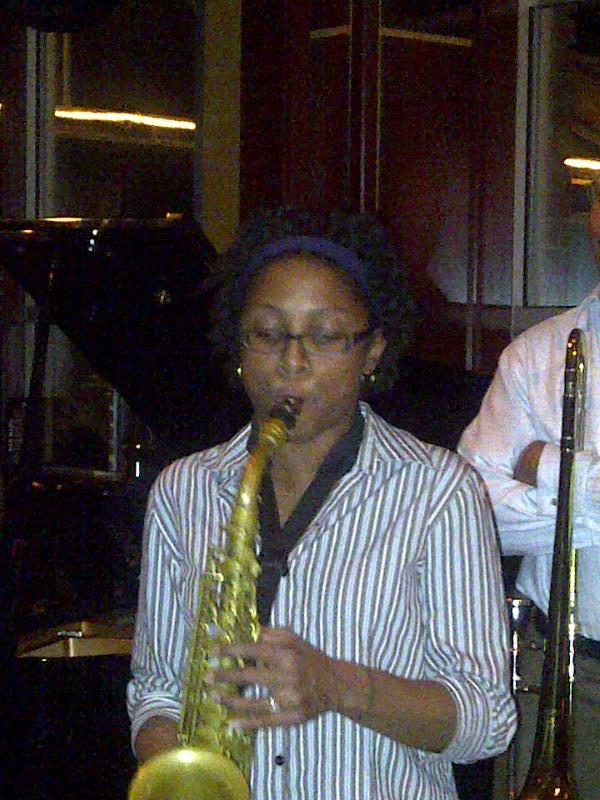
By now, bassist Dezron Douglas and Shaena Ryan, a gifted young Duke University grad, who usually plays baritone sax with Delfeayo, but tonight had brought her alto along, were ready for action. The rhythm section struck a few familiar chords and the horns broke into “Watermelon Man”, which brought a few “yeahs” from the growing throng. A few iPhones and other similar devices began to materialize in the hands of those on the perimeter. People knew that whoever these cats were, this was worth recording. I heard one person say to another, “I think that’s Wynton Marsalis” another then corrected him, saying “No. That’s his brother”.

Shaena Ryan at Sullivan’s in Charlotte, NC 2/17/11 – Photo by Michele R. White
Michele, Nicole and I soon found ourselves defending our ground; holding on to the spot of prime viewing space that we had staked out. As “Watermelon Man” came to a rousing conclusion, one satisfied patron shut off his iPhone video and declared “Boy! That was worth the price of admission, by itself!”

Before the crowd died down, Delfeayo’s trombone broke through with a burnished chorus of “It Never Entered My Mind”.  At this point, nothing else going on in Sullivan’s seemed to matter; a full-fledged jazz jam-session had broken out, on a Thursday night, in this upscale steakhouse.

As Delfeayo finished his solo, a well dressed, slightly inebriated gentleman walked right up to Marsalis on the “stage” placed his hand on Delfeayo’s shoulder and began a conversation, as Ms. Ryan soloed a few feet away. The ladies and I chuckled at this “breach of etiquette”, but it was so good to see relaxed jazz like this in Charlotte that for the moment, it seemed entirely appropriate…

Delfeayo Marsalis brings Sweet Thunder a theatrical jazz production featuring actor Kenneth Brown, Jr. and a jazz octet-Marsalis on trombone, Lynn Grissett on trumpet, Shaena Ryan on bari sax, Mark Gross on alto sax, Don Byron on tenor sax, David Bryant on piano, Dezron Douglas on bass, and Winard Harper on drums; plus full stage set and costuming to 36 American cities and towns from January through May, 2011. The show is directed by John Grimsley with a script by Charles E. Gerber. For further information about upcoming dates and locations, visit Mr. Marsalis’ website: http:\\dmarsalis.com

Very sincere thanks to Michele White for the pictures that accompany this article. I realized early that we were witnessing Charlotte jazz history that night, but my camera couldn’t care less and died on me at the start of the jam session. Without Michele’s kindness, I would have no pictures to back up my words.

Review: Unsung Heroes – Brian Lynch

Posted in CD Reviews, The Jazz Continues... on February 19, 2011 by curtjazz

Brian Lynch – Unsung Heroes (Hollistic MusicWorks)

Available From: http://brianlynch.bandcamp.com/cdbaby.com; iTunes; Amazon.com  

Artist Website: http://brianlynchjazz.com

As I’ve reached the halfway mark in my “Obscure Trumpet Masters” series, I felt it was time to talk about the project and the artist that served as part of the inspiration for those posts: Brian Lynch’s Unsung Heroes.

Mr. Lynch has been a part of the mainstream jazz scene for the better part of three decades. He has won acclaim for his work with jazz giants from Horace Silver to Phil Woods to Eddie Palmieri. He was the last in a long and storied line of trumpet players in Art Blakey’s Jazz Messengers.  And he is not only a world-class musician, but a keen student of the history of jazz, especially those who came before him on his instrument. His recordings as a leader have often included lesser known compositions by trumpet giants and some by those whom the spotlight missed.  His 2000 Sharp 9 Records release Tribute to the Trumpet Masters paid homage to greats ranging from Dizzy Gillespie to Lee Morgan to Lynch’s idol, Kenny Dorham.  Unsung Heroes is a natural progression, as respect is paid to, as the title suggests, many jazz trumpet players who have not gotten the recognition that they deserve. 

On this two-disc collection (three, if you include the set of alternate takes), Lynch spotlights the playing and/or writing of Kamau Adilifu (Charles Sullivan), Donald Byrd, Joe Gordon, Howard McGhee, Claudio Roditi, Louis Smith, Idrees Sulieman, Ira Sullivan, Charles Tolliver and Tommy Turrentine [brother of tenor great Stanley].  Unsung Heroes is an impressive effort in every way, from the breadth of jazz trumpet history that it covers, to masterful compositions (especially the never recorded works by Turrentine and Sulieman) to the outstanding musicianship of Mr. Lynch and his band: Vincent Herring on alto; Alex Hoffman on tenor; Rob Schneiderman, piano; David Wong, bass; Pete Van Nostrand, drums and Vicente Rivero on congas.

Lynch’s liner notes provide a great deal of background on the artists and the compositions.  I had been aware of Turrentine and Sulieman’s stellar work as sidemen and their limited discographies as leaders, but I was unaware that each had left a rich body of music; written in their later years, but never performed.  All of it had been under the care of trumpeter/ producer Don Sickler. Eight of these tunes, four by each man, make their recorded debut on this project. All of the performances of these new works are at minimum, very good. Three of them (Turrentine’s “Big Red”; “I Could Never Forget You” and Sulieman’s “Short Steps”) are excellent; as are “Terra Firma Irma”, “Household of Saud” and Lynch’s own “Further Arrivals” and “Marissa’s Mood”.

Unsung Heroes is Brian Lynch’s finest work as a leader. The music is pure mainstream jazz, executed by pros performing at their highest level. Lynch and the other musicians are completely up to the task at hand and they deliver strong ensemble performances and consistently creative solos. 

As of this writing, Unsung Heroes is only available as a high quality digital download, with a fully downloadable booklet, at http://brianlynch.bandcamp.com/ ($9.99 each for Vols. 1 & 2; Vol. 3 [Alt. Takes] is Name Your Price). The CD version is expected sometime in 2011.  Fans of straight-ahead jazz will want this project in your collection, regardless of the format.

Obscure Trumpet Masters #5 – Benny Bailey

Posted in Obscure Trumpet Masters with tags on February 12, 2011 by curtjazz

 Benny Bailey (1925 – 2005)

“His sound is very personal and he completely avoids clichés. Above all, he is thrillingly himself. He is totally uninhibited and will get all kinds of sounds out of his horn to get his message across. He combines fantastic breath control, remarkable range and a flawless technique…” – Quincy Jones on Benny Bailey

I’m breaking the alpha order rule that I set when I started, but what the hell. Benny Bailey deserved to be on this list.

Born in Cleveland in 1925, Benny Bailey started out a pianist and flutist before switching permanently to the trumpet.  Early in his career he gigged with Scatman Crothers (Chico and the Man, The Shining and a bunch of other stuff) before landing a gig in 1947 with Dizzy Gillespie’s legendary bop based big band.  Bailey stayed with Diz for a couple of years before moving on to Lionel Hampton.

In the Hampton band, he met another young trumpet player/composer/arranger named Quincy Jones. “Q” so dug young Bailey’s chops that he was moved to write a bouncy show piece for him. The title was “Meet Benny Bailey”.  It became a staple in Q’s band book (and the books of many others) long after his time with Hampton. Years later Jon Hendricks put lyrics to the tune; the Manhattan Transfer recorded it on their legendary Vocalese album and “Meet Benny Bailey” became a minor classic. Ironically, people know more about the tune than they do about the man in the title (Truth – I’ve met folks who didn’t know that “Benny Bailey” was a real person).

When the Hampton band was passing through Sweden on tour in 1953, Bailey abruptly quit the band and decided to remain in Stockholm. He immediately found work there and spent the next few years shuttling back and forth between Europe and the U.S., before settling in Europe permanently in 1961.

Bailey worked steadily through the years, recording mostly with European groups including notably, the Kenny Clarke/Francy Boland Big Band. He was well-known in Europe, but hardly registered on the American jazz scene, with two notable exceptions.

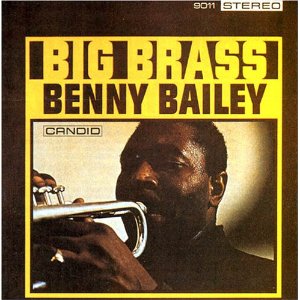
The first was an album he recorded for Candid in 1960, on a trip to the U.S. after finishing a tour with Quincy. It was called Big Brass. Aided by a septet that included Phil Woods, Julius Watkins, Tommy Flanagan and Art Taylor; playing charts by Jones and Oliver Nelson among others, this group laid down some tracks that epitomized cool bop-swing.  Though he would record for another 40+ years, Big Brass is arguably the best date that Bailey recorded under his own name.

The other exception was one of those jazz festival “accidents” that took place in July 1969, at Montreux. Pianist Les McCann was there to perform with his trio and a couple of horn players sat in with them: saxophonist Eddie Harris, who was a regular McCann partner and Benny Bailey, who had never played with McCann before.  Said Bailey: “I didn’t know any of the tunes, and there was no rehearsal: they had to call out the changes for me.” The results, as we now know, were electrifying; as Bailey’s soaring, stabbing and growling solos are indelible parts of that set, the live album that resulted from it: Swiss Movement and of course, two anthems of the soul-jazz canon “Compared to What” and “Cold Duck Time”.

Years later, Bailey admitted that he did not much care for the funky, R&B laced music that they played that night but like it or not, he is known more for that slice of “shotgun wedding” jazz, than he is for anything else he did before or after it.

Bailey kept up his active performing and recording schedule into the 21st Century, putting together a nice Louis Armstrong tribute disc (The Satchmo Legacy) in 2000.

The circumstances surrounding Bailey’s April 2005 death are bizarre, confusing and undeservedly sad.  He died, apparently alone, in his Amsterdam apartment.  He was found on April 14th. He had been dead for as many as ten days. Neighbors knew nothing about him and musician friends had assumed that he was somewhere on tour.  His body lay in a local morgue for another two weeks before a death announcement was placed in a local paper. A Dutch drummer who had remembered Bailey once mentioning a sister in Cleveland, contacted a Cleveland based jazz journalist, who then was able to contact Bailey’s family in the U.S., who saw to it that Bailey received a proper funeral; almost a month after his death.

Would Benny Bailey have received greater acclaim if he had remained in the States? Who knows. What we do know is that he was a master of his instrument who left us some brilliant music to remember him by. Every serious jazz fan should take the opportunity to “Meet Benny Bailey”

Recommended Recordings:

  • Big Brass (Candid) – CD in print; mp3 also available 
  • Grand Slam (Storyville) – w/ Charlie Rouse, Richard Wyands, Sam Jones CD OOP, but available; mp3 also available 
  • I Thought About You (Laika) – CD in print (on demand); mp3 also available
  • The Satchmo Legacy (Enja) – CD in print, mp3 also available;

Obscure Trumpet Masters #4 – Carmell Jones

Posted in Obscure Trumpet Masters with tags on February 8, 2011 by curtjazz

Carmell Jones (1936 – 1996)

“The New York scene was stifling me and I was becoming disenchanted with things in the States.” Carmell Jones

He plays on one of the most famous straight-ahead jazz songs ever recorded, yet today people are more likely to confuse him with a film character played by Dorothy Dandridge, than they are to know the titles of any of his six albums. 

Carmell Jones was a native of Kansas City, KS, who possessed a powerful attack and a clear buoyant tone. This made finding work as a sideman and as a studio musician, after he moved to California in 1960, relatively easy. 

During the early ‘60’s Jones, played or recorded with Bud Shank, Gerald Wilson, Nelson Riddle and many others. He recorded his first album, The Remarkable Carmell Jones, for Pacific Records in 1961, with Harold Land joining him on the front line.  It was an auspicious debut, with Jones, Land and the band swinging hard through a few hard-bop tunes and a couple of standards. Gerald Wilson wrote arrangements for his next two albums: Business Meetin’ and Brass Bag, also for Pacific.

(Carmell Jones plays “Yvette”)

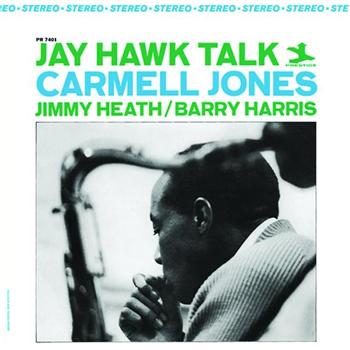
In the spring of ’64, Jones moved east to join Horace Silver’s group. During his brief tenure with the pianist, he played on several cuts on the celebrated Song for My Father album, including the title track.  He also recorded  his best known album, Jay Hawk Talk, for Prestige and played on some well-received discs with Land, Booker Ervin and Charles McPherson. Not surprisingly, Jones was voted Downbeat’s “New Star Trumpeter”.

(From Jay Hawk Talk, Carmell Jones – “Willow Weep for Me”)

Yet, at the height of this apparent success, Jones quit Silver’s band in the summer of ’65 and moved to Germany, where he remained for the next 15 years.

Though this move may have been best personally for the easygoing Jones, it probably hurt him professionally, as he was effectively removed from the U.S. jazz scene until he returned, in virtual anonymity, in 1980. 

He recorded a very good album Carmell Jones Returns, in 1982, but it went virtually unnoticed. He taught music in elementary school and worked on the local Kansas City jazz scene for the remainder of his life, before passing away in 1996, at the age of 60.

I discovered Jones’ music through picking up a used LP copy of Jay Hawk Talk in Greenwich Village record store a few years back. I’ve heard most of his limited discography since then. I find something new to like each time I hear him.  I think you will too.

Recommended Recordings:

CD Review: Sweet Thunder (Duke & Shak) – Delfeayo Marsalis

Posted in CD Reviews on February 6, 2011 by curtjazz

Such Sweet Thunder: Duke & Shak (Troubador Jass Records)

 Purchase From: Amazon.com ; iTunes

 Artist Website: www.dmarsalis.com

With this album, trombonist (and 2011 NEA Jazz Master) Delfeayo Marsalis breaks free of the formidable shadow cast by his more famous older siblings, Branford and Wynton; and he does it in a bold way, by reimagining Duke Ellington’s famed 1957 Shakespearean tribute, Such Sweet Thunder.  As a scholar of the Bard and the Duke and having written a master’s thesis on the connection between Ellington and Shakespeare, Delfeayo has a profound understanding of both legends and it shows in this work.

Again, this is not a moldy regurgitation of the original. Instead of working with a full Ellington sized big band, Mr. Marsalis employs an octet; resulting in a sound that is leaner, but tighter. Delfeayo’s band swings as hard (or I daresay, even harder than the Ellington band, in some instances) but loses nothing in the richness of the sound, which is a testament to Marsalis’ judicious arrangements, which retain an Ellington flavor but consistently avoid slavish recreation.  

The difference grabs you right away on the opener/title track, which is a bit more infectious and up-tempo than the original; riding atop Reginald Veal’s walking bass and a backbeat set by one of the baddest drummers working today, Winard Harper. Big brother Branford contributes a lyrical soprano sax turn that sets up Delfeayo’s muscular Al Grey influenced ‘bone solo and Mulgrew Miller’s piano statement.

The most impressive tracks are the ones where Marsalis expounds on the sections that in Ellington’s original recording were virtual interludes; such as “Sonnet to Hank Cinq”. Marsalis’ version is faithful in spirit to Ellington’s original, but gives a lot more room for the soloists to play, which is great news for us, as Delfeayo, and the saxophone trio of Mark Shim, Mark Gross and Jason Marshall are on fire.

“Sonnet in Search of a Moor” is transformed from a melancholy bass feature into a boppish burnout. It’s led by Delfeayo’s Fuller-esque trombone, Victor “Red” Atkins electrifying piano, Victor Goines red-hot tenor and Jason (little brother) Marsalis’ explosive time keeping. 

The best track, hands down, is “Circle of Fourths”. Originally a brief Paul Gonsalves throwaway, it has been reborn as over nine minutes of breathless modern jazz.   Meters and keys change on a dime as the tension between the rhythm section and Delfeayo’s and Shim’s solos, builds. The horn players want to break “free” but Charnett Moffett (bass) and Jason Marsalis are keeping them with one foot barely on the ground.  Good Stuff!

If you are a staunch keeper of the Ellington tradition, this will probably not be your cup of tea. If you like your Duke with a little spice, you’ll like Delfeayo Marsalis’ Sweet Thunder.  We get great Ellington & Strayhorn compositions, played by some of today’s most creative jazzmen, who present many fresh ideas.  It’s a triumph for Delfeayo Marsalis, who is an inventive arranger, an extremely gifted trombone player and an artist with vision.

JAZZ LIVES ALERT!

Delfeayo Marsalis is now on tour to 36 American cities, with Sweet Thunder: Duke & Shak; a theatrical stage production, featuring actor Kenneth Brown, Jr., the Delfeayo Marsalis Octet (w/ Don Bryon and Winard Harper), plus full stage set and costuming. The show is directed by John Grimsley with a script by Charles E. Gerber.

Upcoming Dates:

  • 02.12.11 – Southern Theatre – Columbus, OH • Buy Tickets
  • 02.14.11 – Toledo Museum of Art Peristyle, Toledo OH
  • 02.17.11 – Knight Theater – Blumenthal-Charlotte, NC • Buy Tickets
  • 02.18.11 – Township Auditorium – Columbia, SC • Buy Tickets
  • 02.20.11 – Plaza Theater – Orlando, FL • Buy Tickets
  • 02.21.11 – Gusman Center – Miami, FL • Buy Tickets

Other stops on the tour include Mobile, AL; St. Louis; Chicago; Boston, New Haven; Detroit; Pittsburgh; New York City; Philadelphia and Baltimore. For information about when the tour is coming to your area, visit the artist website: www.dmarsalis.com

Obscure Trumpet Masters #3 – Eddie Henderson

Posted in Obscure Trumpet Masters with tags on February 5, 2011 by curtjazz

 Eddie Henderson

“That old adage, ‘Physician heal thyself.’ This is what heals me. Playing music. It’s what makes me well. How can I help somebody else if I’m not well?” – Eddie Henderson

Some musicians like to call each other “doctor”, simply as a term of endearment or respect for another’s musical prowess. In the case of Eddie Henderson, the appellation is appropriate on every level.

A practicing physician, psychologist and a jazz musician, who received his first trumpet lesson from Louis Armstrong, and counted Freddie Hubbard and Lee Morgan among family friends; Eddie Henderson’s musical career is fairly unusual in that he achieved some renown in the fusion world before garnering mainstream jazz acclaim. 

(Dr. Eddie Henderson playing Woody Shaw’s “Sweet Love of Mine”)

As Miles Davis was also a family friend (A teenaged Henderson once had the cojones to say to Miles “You don’t play correct.”), it was no surprise that the young Henderson came under Davis’ influence; and in the early ‘70’s that meant jazz-rock-funk fusion.  Henderson played with Herbie Hancock’s Mwandishi band from 1970 – 1973 and recorded his first two discs as a leader, (Realization and Inside Out) backed by that group.  Apart from the powerful fusion of those discs, most of his output as a leader from the 70’s is commercial, albeit well-played.

(Here’s a recent clip of Dr. Henderson on “Up Jumped Spring”)

As the 1990’s brought a more hospitable climate for traditional styles of jazz, Dr. Henderson began to return to straight-ahead playing. Over the last 15+ years, he has garnered some of the critical acclaim that had eluded him in the past.  Generally, his recording group now is a quintet or sextet that includes the outstanding vibraphonist Joe Locke as a second lead voice.  Henderson’s recent music has been as warm, inviting and interesting as anything around today. 

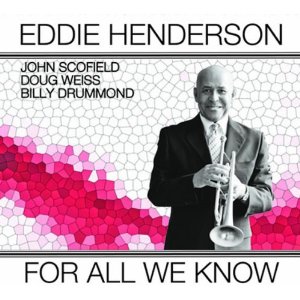
Eddie Henderson is still going strong at age 70. He released a new quartet album late last year, with John Scofield, Doug Weiss and Billy Drummond, titled For All We Know. It’s a laid back but swinging date, highlighted by a take on his old boss Herbie Hancock’s “Cantaloupe Island”.

If you don’t know Dr. Eddie Henderson yet, check these discs out. There’s a lot to like.

Recommended Recordings:

  • Anthology – Vol. 2 (Soul Brother [Import]) Features Realization and Inside Out, his first two solo albums, on one disc. Excellent Fusion! – CD in print, but pricey
  • Flight of Mind (SteepleChase [Import]) – CD in print; mp3 also available
  • Inspirations (Milestone) – CD – OOP, but fairly available;
  • Reemergence (Sharp Nine) – CD in print

Obscure Trumpet Masters #2 – Joe Gordon

Posted in Obscure Trumpet Masters with tags on February 3, 2011 by curtjazz

Joe Gordon (1928 – 1963)

“When Brownie [Clifford Brown] had won the New Star Award in the Downbeat Magazine Critic’s Poll, he told me I should have won it…” – Joe Gordon

Such was the respect that Joe Gordon earned from his contemporaries. 

It’s ironic that Clifford Brown once considered Joe Gordon his better; for Gordon often said that two of his major influences were Dizzy Gillespie and Brown.  Like Clifford Brown, Joe Gordon was a remarkable technician, who was formally trained.  Like Brown, he won the admiration of his musical elders while still in his teens and like Brown, his life was cut tragically short at an early age, due to accidental circumstances.

(Joe Gordon with Harold Land, Wes Montgomery, et al; on the title track from Land’s West Coast Blues! album)

Joe Gordon was born in Boston in 1928. He attended the New England Conservatory and made his bones by sitting in on jam sessions between Boston and Albany, on layovers from his job as a sandwich boy on the railroad.  As jazz greats such as Lionel Hampton, Charlie Mariano, Art Blakey and Charlie Parker came through Beantown, they looked this big toned kid up.  When Clifford Brown stepped down from the trumpet chair in the original Jazz Messengers, guess who took his place? After 6 months and one recording with the Messengers, Gordon was called by Dizzy to join his big band for a tour of the Middle East in 1956. Such was Gordon’s prowess, that he was given a solo on Dizzy’s signature tune, “Night in Tunisia”.

L to R - Joe Gordon, E.V. Perry, Dizzy Gillespie, Carl Warwick, Quincy Jones (photo by Herman Leonard (1955))

After the tour with Diz ended, Gordon moved west to Los Angeles and found that the west coast cats dug him just as much as they had in the east.  He played and recorded on the left coast with Harold Land, Dexter Gordon, Benny Carter, Barney Kessel, Shelly Manne and Thelonious Monk. He also recorded his second and final album as a leader, 1961’s Lookin’ Good!, for Contemporary Records, featuring Jimmy Woods on alto and Dick Whittington on piano, in their recording debuts.  Lookin’ Good! is a strong album. Gordon and Woods are in top form and the tunes, all penned by Gordon, range from very good to the minor classic (“Terra Firma Irma”).  This disc was a promise of many great things to come.

Sadly, it was not to be, as Joe Gordon died in Santa Monica, CA on November 4, 1963, from injuries he sustained in a house fire. The fire was said to be caused by a lit cigarette, which Gordon had dropped on his bed.  He was 35 years old.

Recommended Recordings:

 Lookin’ Good! (Contemporary/OJC) – CD is OOP; mp3 version available from Amazon.com and various sources.

Because Gordon’s discography as a leader consisted of only two albums, the remaining recommendations are, for the most part, from dates he appeared on as a sideman:

Obscure Trumpet Masters #1 – Johnny Coles

Posted in Obscure Trumpet Masters with tags on January 31, 2011 by curtjazz

As I’ve mentioned previously in this space, I derive great pleasure from finding musical buried treasure.

The release of Brian Lynch’s brilliant Unsung Heroes, has caused me to spend a bit of time thinking about and researching outstanding trumpet players who have not garnered the recognition that they deserve.  The reasons for their obscurity range from bad temperament, to bad management, to just plain old bad luck. 

So I’ve decided to devote several blog posts to honoring a few obscure trumpet masters. Some are also lauded on Mr. Lynch’s album and some are not. Some are still working and some unfortunately, are no longer with us; but they are all worth the time and ear of the discriminating jazz fan. 

They will be listed in alphabetical order, one per post.

Johnny Coles (1926 – 1997)


Though he was a very solid technician, Coles wasn’t a flashy high note artist, which may have contributed to his relative obscurity.  He only recorded four albums under his own name during his lifetime but he never lacked for work.  He cut his teeth in the early ‘50’s with the R&B groups of Eddie “Cleanhead” Vinson, Earl Bostic and others.  He then worked with James Moody for a couple of years, before catching on with Gil Evans in 1958, around the time the Evans/Miles Davis partnership was hitting its stride.  Coles can be heard on Porgy and Bess, Sketches of Spain, and Evans masterwork Out of the Cool.  Evans valued Coles in recording and in concert because his sound was very similar to that of Miles.

Here’s a clip of Coles during his brief time with Mingus, along with Jaki Byard and Eric Dolphy, on “Take the A Train”

Coles left Evans in 1964, when he was recruited by Charles Mingus, to be a part of the band for his European Tour, along with Eric Dolphy, Clifford Jordan and Jaki Byard.  However, he fell ill early in the tour and had to return home, never to rejoin Mingus. He continued to work though, landing gigs over the years with Ray Charles, Duke Ellington, Mingus Dynasty and the Basie ghost band, under the leadership of Thad Jones.

He made his debut as a leader, The Warm Sound, in 1961. It was a well-received quartet date with Kenny Drew, Randy Weston, Peck Morrison and Charlie Persip.  His most well-known record, Little Johnny C, was recorded for Blue Note in 1964, featuring Leo Wright, Joe Henderson, Duke Pearson and other notables.  He was still in fine form on his last disc as a leader, 1982’s New Morning, on Criss Cross.

Johnny Coles died of cancer in 1997.

Recommended Recordings: Little Johnny C (Blue Note) – CD is OOP; mp3 version available from Amazon.com and other sources.   The Warm Sound (Jazz Collectors) – CD is available as an import only; mp3 version is available from Amazon and other sources.

Best Jazz Albums of 2010

Posted in The Jazz Continues... with tags on December 30, 2010 by curtjazz


Happy New Year Everyone!


Last year, I was one of the earliest to come out with my “Best Of” jazz list for the year.  This time around, I’ll be one of the latest. This is partially by design and partially due to the other little things that life throws at you.


I’ve also decided to change the title of the list. It will not be called “Best Jazz of 2010”. Due to the myriad ways that artists and promoters can now get their art before the listening public, I know that, as much as I’ve managed to hear over these last 12 months, there is something outstanding out there that has escaped me.  So instead, we’ll call this list “Outstanding Jazz Albums of 2010”. (The title above is for search purposes) This allows for the fact that somewhere, there’s a CD, LP or mp3 file that likely belongs on this list, but somehow I have yet to hear it. Are these all of the best releases of the year? Only time will tell, but they are my pick for what I loved, out of what I got to hear.


The list is split between the top dozen discs, and then another 13 which are also worth a listen or two (or six). That last baker’s dozen includes a 2009 release that I managed not to get around to until last September, when my 10 year-old son randomly handed it to me as we were killing time in a chain music store awaiting our movie show time.  I thought about amending the 2009 listing to add it, but I decided to heed Dr. Emmett L. Brown’s sage advice about messing with the past and leave the ’09 list as is. 


So here are my top 12 Outstanding Jazz Albums of 2010, listed in alphabetical order by title.


 III – Walter Smith III (Criss Cross)

 The third time is definitely the charm for this young tenorman as he has produced his most powerful and fully realized album yet. The group is solid, with top-notch support from Ambrose Akinmusire on trumpet and Jason Moran on piano. The compositions, mostly by Smith are also quite strong. III manages to be classic and thoroughly modern at the same time.


Decisive Steps – Tia Fuller (Mack Avenue) 


 Ms. Fuller is known to most in the pop music world for her role as the saxophonist in mega-star Beyonce’s all woman band.  Outside of that lucrative gig, she has been faithful to her jazz roots and never so much as she is here on Decisive Steps.  With impressive takes on standards (“My Shining Hour”; “I Can’t Get Started”) and boundary stretching originals, like the title track, Ms. Fuller proves that she more than deserves a share of the spotlight.


Home – Aaron Goldberg (Sunnyside) 


 This Harvard man brought the goods on this disc. He’s spent a lot of time with Joshua Redman and many others and it shows in the wealth of ideas that he explores on this disc. With first class support from Ruben Rogers, Eric Harland and Mark Shim, Goldberg has created an outstanding statement. Check out his deconstruction of “Isn’t She Lovely” and breathless originals, like “The Rules”. You’ll feel right at Home.


Live – Geri Allen and Timeline (Motema) 


Live at Smalls – Peter Bernstein Quartet (SmallsLive)


The Next Phase – Willie Jones III (WJ3)


Pathways – Dave Holland (Dare2)


Ten – Jason Moran (Blue Note)


Triple Play – Russell Malone (MaxJazz)


Unsung Heroes Brian Lynch (Hollistic Music Works)


Water – Gregory Porter (Motema)


Yesterday You Said Tomorrow – Christian Scott (Concord Jazz)


Here are an additional thirteen Outstanding Jazz Albums that are definitely worth checking out. Twelve are from 2010 and one is the 2009 disc that I slept on until this past fall:


Boiling Point – Brandon Wright (Posi-Tone)

Clarinetwork-Live at the Village Vanguard – Anat Cohen (Anzic)

The Cycle of Love Maurice Brown (Brown)

Dandelion Clock – Sarah Manning (Posi-Tone)

Free Fall Melissa Aldana (Inner Circle)

Gettin’ Blazed – Jermaine Landsberger (Resonance)

The Groover – Mike LeDonne (Savant)

Handful of Stars – Adam Schroeder (Capri)

Mwaliko – Lionel Loueke (Blue Note)

A New Promise – Sheryl Bailey (MCG Jazz)

Roman Nights – Tom Harrell (HighNote)

Sing! – Fay Claassen (Challenge)

Urbanus – Stefon Harris and Blackout (Concord) – Released in 2009 


Tracks from all of these CDs will be featured on Curt’s Café WebJazz Radio, daily from Noon – 6 p.m. (EST), through January 16, 2011, on our Outstanding Jazz of 2010 special.  Click here to listen now.  We’re also adding fresh tracks from familiar and not so familiar artists, to start the New Year off right. 

Best wishes for a Happy New Year, to all. I hope you can start the year off by going out to hear some good, live jazz.  If not, buy or legally download a jazz album, performed by an artist you aren’t familiar with. There’s plenty of great jazz out there, by living artists who need your support.  Start the New Year off in a spirit of discovery.

Until the next time, the jazz continues.

The Jazzy Soul of Teena Marie

Posted in The Jazz Continues... on December 29, 2010 by curtjazz

Today, I was supposed to post my Outstanding Jazz of 2010 list, but that will have to wait until tomorrow. Right now, I feel compelled to pay tribute to a woman whose music was such an important part of my early adulthood and whose death has affected me more profoundly than I would have expected: Mary Christine Brockert, known to all of us as Teena Marie or more simply, “Lady T”.

Much has been written since her death about Teena Marie’s influences.  As with many R & B singers of our generation, the jazz she heard at home while growing up helped to shape her musical personality.  So my intent here is to briefly introduce jazz fans, who may not be familiar with the lady, to a fabulous artist, who wasn’t a “jazz singer”, but possessed the creativity, daring and spectacular chops, to have been a very fine jazz vocalist, if she had chosen to be.

Teena always counted jazz singers, such as Ella Fitzgerald and especially, Sarah Vaughan (famously named dropped by “T” in the rap break of her hit song “Square Biz”) among her idols. And you could hear those influences come through loud and clear on many of her ballads. None of her jazzier tunes were commercial radio successes, but many became staples of late night 80’s and ‘90’s “Quiet Storm” programming.  Teena demonstrated a natural affinity for scat singing and improvisation that could teach a thing or two to young, aspiring jazz vocalists. She also enlisted the aid of famous jazz musicians on some tracks and often left room for strong instrumental solos.

Here are six of Teena Marie’s best jazzy soul excursions, presented in chronological order:

“Tune in Tomorrow” from Irons in the Fire (Motown 1980)

Irons in the Fire was Teena’s third album and the first time that she tried her hand at producing and arranging. She was more than up to the task.  The album was a gorgeous piece of orchestral soul and this track, written by Teena, was one of many highlights. Check out her scatting:


 Tune in Tomorrow – Teena Marie


“Portuguese Love” from It Must Be Magic (Motown 1981)

Teena also composed this Latin-tinged track, which picked up where “Tune in Tomorrow” left off. Though the single version topped out at #54 on the Billboard charts, the album version heard here became a favorite of late night radio programmers.  It was also covered by Maynard Ferguson on an album a couple of years later. There’s a tasty tenor solo by Daniel LeMelle during the instrumental break. And yes, that is Teena’s on again/off again paramour Rick James joining her for a bit of bilingual pillow talk near the end.


“Casanova Brown” from Robbery (Epic 1983)

Two years and an infamously acrimonious lawsuit with Motown passed between album releases. Though artistically solid, Robbery was a bit of a commercial disappointment. However this torchy ballad, written about (surprise) her tumultuous relationship with Mr. James, outshone everything else on the album and not surprisingly, is one of the most enduring songs in her catalog.


 Casanova Brown – Teena Marie


“Sunny Skies” from Emerald City (Epic 1986) [this version is on Love Songs (Epic 2000)]

The rock influenced Emerald City was a commercial dud that alienated many in Lady T’s R & B loving fan base. Just when all seemed lost, out of nowhere the album closed with this track which was arguably the strongest jazz statement of Teena’s career. It featured Branford Marsalis on tenor, Stanley Clarke on bass and a 4/4 jazz break in the middle that gave Branford room to do some boppish soloing.  (A compilation album from 2000 featured a version of “Sunny Skies” with an extended jazz break and that’s what you hear here.)


“Black Rain” from La Doña (Cash Money 2004)

Fast forward now almost two decades. Teena has had a few more musical highs and lows and she left the scene for a number of years, to give birth to and raise a daughter. She returned with La Doña, which unsurprisingly, had a subtle hip-hop influence. But it was still a Teena Marie album through and through. “Black Rain” with its hip-hop cum jazz vibe, muted trumpet and finger snaps, sounds like it would have fit perfectly on Roy Hargrove’s RH Factor project and that is a high compliment.


  Black Rain – Teena Marie


“Harlem Blues” from Congo Square (Stax 2009)

Congo Square would prove to be the final album released during Teena’s lifetime. Ironically, she said that one of her intentions on this album was to pay tribute to the influences of her youth, including jazz.  Again, several jazz artists such as Terri Lyne Carrington, George Duke, Ray Fuller and Brian Bromberg made guest appearances. This track, which was dedicated to Sarah Vaughan, is not the old W.C. Handy tune, but an original penned by Ms. Marie.  The cool vibe is irresistible and I could easily imagine a 21st Century “Sassy” digging this one.


If these tracks whet your appetite for more, here are a few more “jazzy soul” tracks by Teena Marie that are worth checking out:

  • “Déjà vu (I’ve Been Here Before)” from Wild and Peaceful (Motown 1979) 
  • “Now That I Have You” from Lady T (Motown 1980) 
  • “Young Love” from Irons in the Fire (Motown 1980) 
  • “Irons in the Fire” from Irons in the Fire (Motown 1980)
  • “You Make Love Like Springtime” from It Must Be Magic (Motown 1981)
  • “Baby, I’m Your Fiend” from La Doña (Cash Money 2004)
  • “You Blow Me Away” from Sapphire (Cash Money 2006)
  • “The Rose N’ Thorn” from Congo Square (Stax 2009)


Though she always dabbled around the edges of jazz, sadly, we’ll never know if Teena Marie would have one day taken the next step and recorded a full-fledged jazz album. She was certainly moving in a musical direction to make us think that it was not out of the question.  However, we’ll always have these wonderful selections from her catalog to remind us of what a unique talent she was.

Rest in Peace, Lady “T”.  You’ll never be forgotten.