Archive for freddie hubbard

Unsung Saxophone Masters #2 – Tina Brooks: The Sound of Almost

Posted in saxophonists, The Jazz Continues..., Under The Radar, Unsung Saxophone Masters with tags , , , , on March 5, 2026 by curtjazz

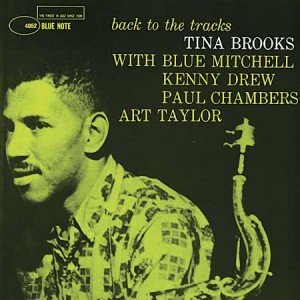
Tina Brooks - Back to the Tracks

Tina Brooks (1932 – 1974)

“I loved Tina. “He had a nice feeling…. He would write shit out on the spot and it would be beautiful. He wrote ‘Gypsy Blue’ for me on the first record, and I loved it. I just loved it. Tina made my first record date wonderful. He wrote and played beautifully. What a soulful, inspiring cat.”Freddie Hubbard

He was small of stature, soft spoken, bullied as a child and saddled with a woman’s name as a nickname from a very early age. But when he picked up that tenor sax… Harold Floyd “Tina” Brooks became a powerful giant.

He recorded just a handful of sessions as a leader for Blue Note Records between 1958 and 1961. Only one of them, True Blue, was released during his lifetime.

There are some musicians whose careers feel unfinished.

And then there are musicians whose recordings feel complete, even if their lives did not.

Tina Brooks belongs to the second category.

Harold Floyd Brooks was born in Fayetteville, North Carolina in 1932. His nickname was a variation on “Teeny”, which alluded to his small size. He grew up primarily in New York City. The sounds of rhythm & blues, church music, and the emerging language of bebop were part of the atmosphere there.

Music was already in the family. His father, David Brooks, sang professionally in vocal groups. This included the famed Ink Spots–style harmony ensembles that were popular in the 1940s. So Brooks grew up around working musicians. Jazz wasn’t a distant art form, it was a trade.

By his late teens, he had taken up the tenor saxophone. He began absorbing the language that dominated the New York scene of the early 1950s. Like many young tenor players of the period, he listened closely to Lester Young. He also paid attention to Dexter Gordon. Additionally, he absorbed the emerging modern vocabulary of Sonny Rollins.

But Brooks was not an imitator. Even early recordings reveal a voice that is inward and deliberate


Apprenticeship Years

Before recording under his own name, Brooks worked the New York club circuit and gained visibility through sideman work.

His first significant recording appearance was with Jimmy Smith. Smith’s revolutionary Hammond B-3 sound was redefining the organ trio format. Brooks appears on Smith’s 1958 Blue Note session The Sermon!, where his tenor sits comfortably inside the groove-oriented, church-inflected atmosphere Smith created.

It was a perfect setting for Brooks. His tone had a quiet blues authority; not flashy, but deeply rooted.

Around the same time, Brooks began working with alto saxophonist Jackie McLean, another rising voice in the Blue Note orbit. Their collaboration on Jackie’s Bag (recorded 1959) showcased Brooks alongside players such as Freddie Hubbard and Paul Chambers. This firmly situated him within the hard-bop movement of the period.

Yet even within these high-level sessions, Brooks rarely behaved like a player trying to steal the spotlight. His solos are thoughtful, measured, and structurally clear.

He sounded like someone thinking while playing.

The Blue Note Leader Dates

Between 1958 and 1961, Brooks recorded several sessions. They were all for Blue Note Records. Brooks worked with producer Alfred Lion and recording engineer Rudy Van Gelder.

These sessions included:

But here is the strange twist that shaped his reputation.

Only one of these albums, True Blue, was released during Brooks’ lifetime.

Tina Brooks did not record again past the age of 29. His other recordings sat in the Blue Note vault for years. They did not appear until the label’s archival reissues in the late 1970s and 1980s. These reissues brought renewed attention to overlooked sessions.

Why were they shelved?

No single explanation exists. Blue Note was recording prolifically at the time. Market decisions affected outcomes. Scheduling priorities interfered. The emergence of newer stars also played a role. Brooks’ personal struggles with health and addiction also complicated his career trajectory.

But the music itself tells a different story.

These are not tentative sessions. They are confident, mature statements from a fully developed modern tenor voice.


The Composer

One of Brooks’ most overlooked strengths was his writing.

Pieces such as:

  • “True Blue”
  • “Good Old Soul”
  • “Minor Move”

are elegantly constructed hard-bop compositions that balance blues feeling with harmonic sophistication.

They sit comfortably alongside the writing of contemporaries like Hank Mobley and Horace Silver. However, Brooks’ tunes often have a slightly more introspective quality. He wrote two tracks that appeared on Freddie Hubbard’s debut album as a leader, Open Sesame.

They feel less like vehicles for blowing and more like small musical architectures.


The Sound

Brooks’ tone is distinctive once you learn to hear it.

It is:

  • Lean rather than lush
  • Focused rather than expansive
  • Expressive without being demonstrative

Where John Coltrane pursued intensity and harmonic expansion, Brooks seemed more interested in clarity and pacing.

His solos unfold patiently. Ideas develop logically. There is very little excess.

You hear intention in every phrase.


The Quiet Fade

By the mid-1960s, Brooks’ health had deteriorated significantly. The combined pressures of the jazz lifestyle and personal struggles gradually removed him from the recording scene.

He died in 1974 at just forty-two years old.

By that time, his recorded legacy was already largely forgotten.

It would take the Blue Note reissue programs decades later for listeners to rediscover the depth of his work.

Today, albums like Back to the Tracks and Minor Move are often talked about with reverence. This is usually reserved for more famous artists.

But during his lifetime, Brooks never experienced that recognition.


Where to Begin (If You’re Listening Tonight)

If you’re discovering Brooks for the first time, start here:

  1. “True Blue” (Title track from True Blue) listen to the construction of his solo. Notice the pacing.
  2. “Good Old Soul” (Also on True Blue) the blues sensibility beneath modern harmony.
  3. “Minor Move” (Title track from Minor Move) lean, direct, unsentimental.

Don’t stream it casually. Sit with it.

Tina Brooks is not background music.
He is a study in understatement.


Why He Belongs in This Series

Jazz history tends to celebrate the revolutionaries.

The language of the music was shaped by musicians. They extended the tradition quietly. They worked thoughtfully and with immense discipline.

Tina Brooks was one of those musicians.

His discography is small.
His voice is unmistakable.

And that is why he belongs among the Unsung Tenor Giants.

Discography (all are on Blue Note Records)

(As a leader/co-leader)

True Blue (1960) with Freddie Hubbard, Duke Jordan, Sam Jones and Art Taylor

Minor Move (1958; Released 1980) with Lee Morgan, Sonny Clark, Doug Watkins and Art Blakey

Back to the Tracks (1960; Released 1998) with Blue Mitchell, Jackie McLean, Kenny Drew, Paul Chambers and Art Taylor

The Waiting Game (1961; Released 1999) with Johnny Coles, Kenny Drew, Wilbur Ware and Philly Joe Jones

Street Singer [co-leader with Jackie McLean] (1960; Released 1980) with Blue Mitchell, Kenny Drew, Paul Chambers, Art Taylor

(As a sideman[Partial])

Blue Lights Volume 1 & 2 [with Kenny Burrell] (1958)

Redd’s Blues [with Freddie Redd] (1961; Released 1998)

House Party [with Jimmy Smith] (1958)

Open Sesame [with Freddie Hubbard] (1960)

Jackie’s Bag [with Jackie McLean] (1961)
CurtJazz Radio’s TOP 5 Tina Brooks Tracks:

  1. “Good Old Soul” (True Blue)
  2. Title Track (The Waiting Game)
  3. Title Track (Back to the Tracks)
  4. Title Track (Minor Move)
  5. “Theme for Doris” (True Blue)

CurtJazz’s Best Jazz Albums of 2011 – The Final List

Posted in Best Jazz Albums of 2011, CD Reviews, The Jazz Continues... with tags , , , , , , , , , , , , , , , , , , , , , , , , on December 13, 2011 by curtjazz

About six months ago, I posted a halftime list of my favorite 2011 jazz recordings heard between January and July.  I promised to be back around now to fill out the list with what I experienced over the last six months.  My original intent was to pare that list down to a final dozen or so, spanning the entire year…

Well, I changed my mind y’all. Instead, we’re going to add another ten to that first list, making it a Top 20.  And, like last year, there was an excellent 2010 disc that I completely missed until 2011. It will be included as well.

As a reminder, here are albums from the July post. You can see/read the entire July post HERE.

So here they are, in alpha order by album title – my favorite jazz discs from the second half of this year:

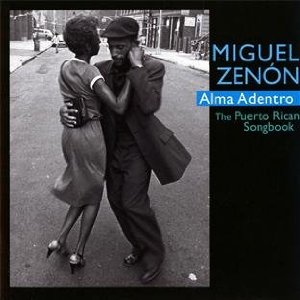
Alma Adentro: The Puerto Rican Songbook – Miguel Zenón (Marsalis Music) – He’s not prone to ostentatious self promotion, but this Guggenheim and MacArthur fellow has quietly become one of the most important saxophonists in jazz today.  Each of his albums has topped the previous one; taking his artistry to a new place and keeping us, the audience, on the edge of our seats. Alma Adentro, is the exploration of the music of five composers, who are unknown in the U.S. but very important in Puerto Rican musical lore. It’s not “Latin Jazz” in the sense that we’ve come to know it, but is outstanding music that broadened my horizons.

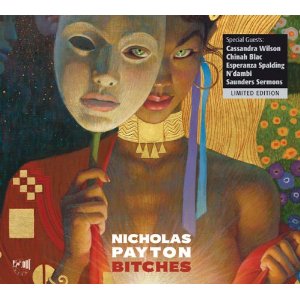
BitchesNicholas Payton (In + Out Records) – Yes, the title did make me wince a little, but the music made me smile, a lot.  This has been an interesting year for Mr. Payton, as his blunt, insightful and often profane musings have made him one of the more controversial and compelling figures in the world of jazz social media.  Not surprisingly, this album has also caused its share of controversy, raising eyebrows in the same way that In a Silent Way, another album with a dream-like vibe, did in 1969.  Payton composed every song, played every instrument and sings on many of the tracks (quite well, I might add), more than holding his own with some top-drawer guests, like Esperanza Spalding and Cassandra Wilson.  If you’re looking for “jazz” of the type that Payton played on his early Verve albums, you won’t find it here. Bitches has more in common with mid-70’s ballad driven R & B and with neo-soul. But as someone who grew up with the former and has developed a keen appreciation for the latter, I really dug this album.

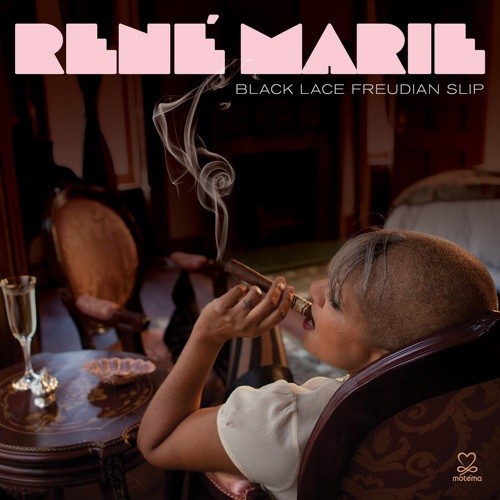
Black Lace Freudian Slip – René Marie (Motema Music)

René Marie was very quiet for a while after her 2008 controversies, but she is back with a vengeance; releasing not one but two outstanding albums in 2011. The first; Voice of My Beautiful Country, (which was on our first “Best of” list) was a tribute to patriotic and traditional standards. Black Lace Freudian Slip is mostly comprised of Marie originals, including the title track, which is every bit as sly and sexy as the title suggests. The two discs may be lyrical opposites but the music on both is outstanding. Don’t try to choose between them, get them both.

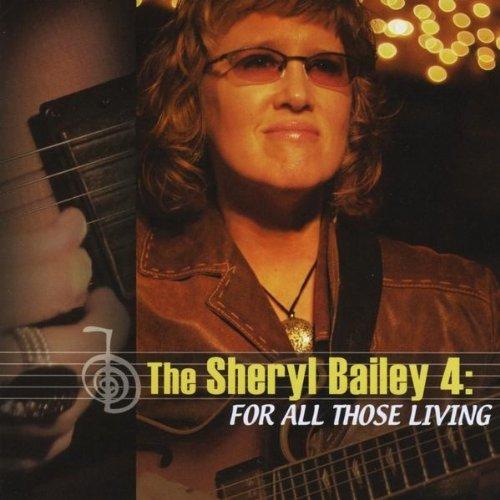
For All Those Living – Sheryl Bailey (Pure Music Records)

Guitarist Sheryl Bailey gets better with every recording. She follows up last year’s impressive big band outing,  A New Promise, with a terrific quartet disc that displays her impressive chops and full-bodied swing to great advantage.  The Emily Remler comparisons are easy to make, but I think that that’s too limiting.  Sheryl Bailey has the potential to outshine her role model, whose untimely death halted her artistic growth. Bump the gender limitations; Ms. Bailey is one of the best jazz guitarists working today, period. This disc also has its heart in the right place as 20% of the proceeds from all sales will be donated to Ronald McDonald House.

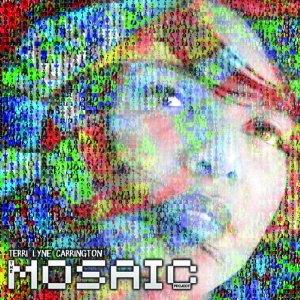
The Mosaic Project – Terri Lyne Carrington (Concord Records)

As I stated in my earlier review of this album, The Mosaic Project is Terri Lyne Carrington’s most completely realized project, by a mile. It also is one of the best jazz works of the year by any artist. Click HERE to see my full post about it.

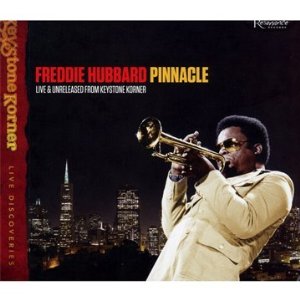
Pinnacle: Live and Unreleased from Keystone Korner – Freddie Hubbard (Resonance Records)

What a find this was by Resonance Records! Hubbard, at the top of his game in 1980 on performances compiled from summer and fall appearances at the legendary San Francisco club.  The version of “The Intrepid Fox” that opens the album, is jaw dropping. What follows is just as good, including the only known recording of Hub playing “Giant Steps”. The title says it all.

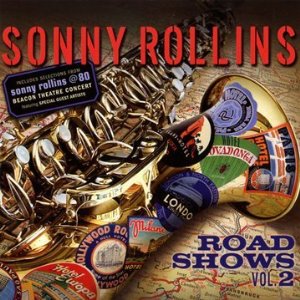
Road Shows Volume 2 – Sonny Rollins (Doxy/EmArcy)

I was one of the few who liked, but didn’t love Road Shows Volume 1; mostly because of the unevenness of the 30 years worth of performances. Volume 2’s tracks by contrast, were all recorded during 2010, most of them during Newk’s already legendary 80th birthday concert, the remaining two a month later in Japan.  Sonny is in very fine form and the guest stars, including Roy Haynes, Roy Hargrove, Jim Hall, Christian McBride and Ornette Coleman, in his first ever public performance with Rollins, all rise to the occasion. Sonny Rollins proves once again, that age ain’t nothin’ but a number.

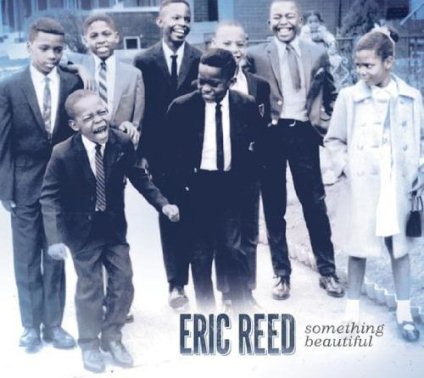
Something Beautiful – Eric Reed (WJ3 Records)

Something Beautiful is Eric Reed doing what he does best; playing in a trio setting. It’s hard to believe that it’s been over twenty years since Reed first debuted with Wynton, but in those years he has grown from teenaged prodigy to one of the best pianists of his generation, with an impeccable melodic sense that accompanies his gospel influenced chord structure.  Something Beautiful consists mostly of songs by others, from Berlin to Brubeck to Billy Joel; all of them sounding as unsullied as if they were being played for the first time.


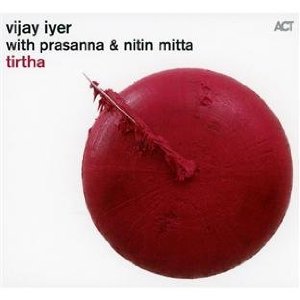
Tirtha – Vijay Iyer (ACT)

Tirtha is the self titled debut of pianist Vijay Iyer’s latest trio, which also includes tabla player Nitin Mitta and guitarist Prasanna.  As expected, the album has a strong South Asian influence, but I feel that slapping a term such as “Indian Jazz” on this music is almost insulting in its limitations.  Their sound is alive and its intricacies grow with every hearing.   Iyer has never been afraid to challenge conventions and he usually creates something fresh in the process. He and his Tirtha band mates have done so here.  In a genre often chided for being stale, Tirtha is a welcome breath of fresh air.


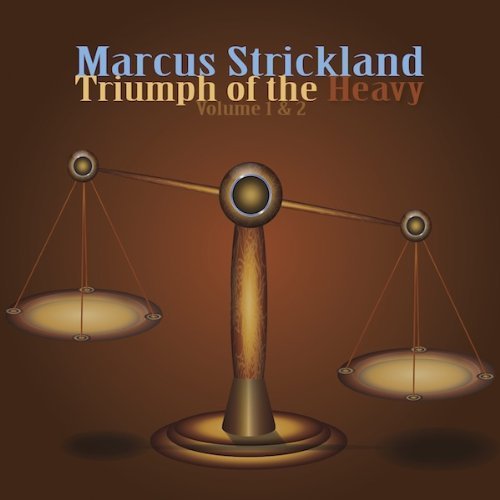
Triumph of the Heavy Volumes 1 & 2 – Marcus Strickland (Strick Music/CDBY)

Strickland is another of those young saxophonists who give me hope for the future whenever I hear him blow.  On this two disc set (gutsy for a relatively unknown artist), he brings the goods on tenor, alto, soprano and clarinet.  Disc 2 is a live trio set with Marcus’ twin brother E.J. on drums and up and coming bassist Ben Williams. They push the boundaries of convention to the limits, with a hard-driving sound that is spare, but never thin.  On Disc 1, recorded eight months later, they add David Bryant, a young Tyner influenced pianist with mad promise, to the mix.  Bryant’s angular harmonies are the main reason I have a slight preference for the studio set but it doesn’t really matter, because neither disc has left heavy rotation in my iPod since I bought them.

And a 2010 disc that I missed…

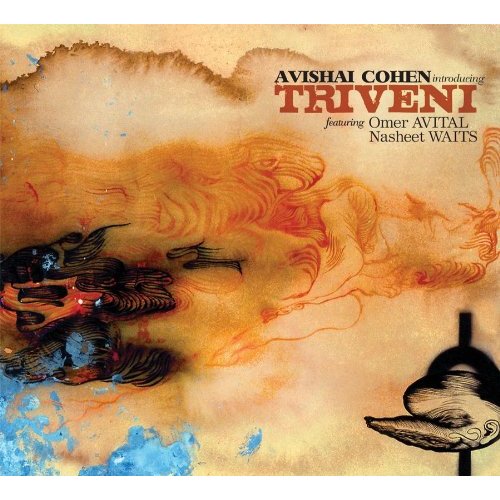
Introducing Triveni – Avishai Cohen (Anzic)

I’m continuing the tradition that I started last year of recognizing an outstanding disc released in the previous year that managed to escape my ears until the current one.  Triveni was released in September 2010. It’s a trio session led by the trumpet playing brother of Anat Cohen, who has garnered renown for her work on sax and clarinet.  Avishai Cohen is one of two Israeli jazzmen working today who share the same name (the other plays bass) and as of now, he’s the lesser known of the two.  This strong outing should do something to change that. Trumpet/bass/drums trio sessions are rare but Cohen is more than up to the task, collaborating with bassist Omer Avital and drummer Nasheet Waits on originals and standards that mine the depths of hard bop, swing, funk with a nice dose of avant-garde as well.  Cohen is not going to bowl you over with flights into the upper register but the impressiveness of his facility and inventiveness in the mid range is worth a dozen high notes. Many thanks to Canadian journalist/pianist Peter Hum for pulling my coat about this one.

Notable Mentions

Here are a few more fine discs from 2011 that are worth a listen or ten. Don’t pass them up if you have a chance:

  • A Boy’s Journey Peter Hum Quintet (self-released) The knowledgeable and witty jazz journalist is also a very fine pianist. An impressive debut recording.
  • Parallel Lives Andrea Wolper (Jazzed Media) – This vocalist grows more impressive with each album.  Her coolly inviting mix of originals with rarely heard standards are a perfect tonic for a tough world. 
  • State of Art – Ben Williams (Concord Jazz) – The Monk Competition winner drops a formidable blend of the new and the traditional on his first disc.  It’s fresh, it’s exciting and I want to hear more.
  • Sweet Thunder (Duke & Shak) – Delfeayo Marsalis (Troubador Jass) – Delfeayo does The Duke proud on this hard-swinging octet version of Such Sweet Thunder. It’s the year’s best album from someone named Marsalis (Read the full review post HERE)
  • When the Heart Emerges Glistening  Ambrose Akinmusire (Blue Note) – A rare case of a much-hyped major label debut living up to expectations. Akinmusire is the real deal; and the greatest thing is that he’s nobody’s clone.

And that’s how things looked this year from my “plush” Charlotte studio/mancave.  Tracks from these albums and more will be heard on Curt’s Café WebJazz Radio, starting on December 27 and continuing on through the month of January.  Your thoughts, comments and criticisms are always welcome and your spam is always deleted.

Thanks for taking the time to read my thoughts this year. I don’t take your support for granted. I hope you’ll stick around for what I expect will be an interesting 2012.

A Happy and Healthy Holiday Season to all of you. 

Until the next time, the jazz continues…