Archive for news

Unsung Saxophone Masters #3 – Hadley Caliman: The Search Continues

Posted in In Memoriam, saxophonists, Unsung Saxophone Masters with tags , , , , on April 14, 2026 by curtjazz

Hadley Caliman (1932 – 2010)

You have been told that you have cancer. Late stage. Your time on earth is now limited.

How do you spend it?
You can sit and wait for the inevitable…

You can work like mad to check things off of your “bucket list”…

Or, you can use that time to ensure that you leave an enduring legacy for future generations who practice your craft.

Hadley Caliman chose the third path.

In the final years of his life, he recorded the most memorable music of his more than fifty-year career

After more than three decades without recording as a leader, Caliman released three albums in just two years:

What listeners did not immediately know was that Caliman had recently been diagnosed with liver cancer.

Rather than slow down, he accelerated.

He practiced daily, performed constantly around the Pacific Northwest, and recorded with a renewed sense of urgency. Even as his health declined, he remained focused on the music. His last concerts took place in August 2010, just weeks before his death at age 78.

It was as if Caliman had decided that the final chapter of his life would also be the most concentrated statement of his artistic voice.


From Oklahoma to Central Avenue

Caliman’s journey began far from the jazz capitals.

He was born in Idabel, Oklahoma in 1932, the son of a white father and Black mother whose interracial marriage faced hostility during the Depression era. Eventually, his father brought him to Los Angeles, where the young Caliman encountered touring big bands. He decided he wanted to play the saxophone.

At Jefferson High School, one of the great incubators of West Coast jazz talent, he studied with Dexter Gordon and became known as “Little Dex.”

The nickname was earned honestly. Gordon’s sound and phrasing left a deep imprint on the young tenor player, and the influence would remain audible throughout Caliman’s career.


The Central Avenue Years

In the 1950s Caliman became part of the legendary Central Avenue jazz scene in Los Angeles, playing alongside musicians such as Gordon, Wardell Gray, Harold Land, and Teddy Edwards.

It was a vibrant but dangerous environment.

Drugs were deeply embedded in the scene, and Caliman later spoke openly about his struggles with addiction and the years he lost to incarceration during that period. Surviving those years would become an essential part of his story.

As Caliman himself once reflected: “I played and shot drugs with some who survived and some who didn’t. The fact that I’m still here is miraculous.”


A Working Musician’s Life

Over the decades that followed, Caliman built an impressive but largely unsung career.

He recorded four solid albums as a leader, between 1971 and 1977, starting with his self-titled debut and concluding with Celebration, featuring the legendary Elvin Jones on drums.

He played in the big band of the great West Coast arranger/bandleader, Gerald Wilson. He performed, recorded, or toured with an extraordinary range of artists, including, Freddie Hubbard, Joe Henderson, Mongo Santamaria and Nancy Wilson.

He appeared on recordings with Santana during the early 1970s, when rock bands were beginning to incorporate jazz improvisers into their sound.

But like many strong tenor players of his generation, Caliman never became a widely recognized leader. His career followed the path of the working jazz musician; club dates, touring, sideman work, and eventually teaching.


The Teacher

For more than two decades, Caliman served on the faculty of Cornish College of the Arts in Seattle, mentoring younger musicians and shaping the Northwest jazz community.

Students remember him as both demanding and generous.

Teaching also had an unexpected benefit: it deepened his own musical thinking. Caliman later remarked that working with students forced him to continue examining his sound and approach to the instrument.


The Sound

Caliman’s tenor voice reflects several strands of the jazz tradition.

You hear:

  • the authority and swing of Dexter Gordon
  • the harmonic daring of Charlie Parker
  • the spiritual searching of John Coltrane

But the combination is uniquely his.

Critics often describe his tone as warm, rounded, and deeply human; a sound shaped by decades of musical experience and personal struggle.

Where some tenor players proclaim ideas with certainty, Caliman’s improvisations often feel exploratory. His lines circle around musical questions, probing for answers in real time.

He sounds less like a lecturer and more like a seeker.


The Final Chapter

When Caliman retired from teaching in the early 2000s, he returned to performing full-time.

The results were remarkable.

His 2008 album Gratitude, recorded shortly after his cancer diagnosis, marked his first recording as a leader in more than 30 years and reintroduced his voice to a wider audience.

It also served as my introduction to Mr. Caliman.

I was unaware of his life challenges at the time. I nonetheless felt cheated, as if I had wasted time by not listening to him sooner. His sound was powerful, yet warm and inviting and he swung with authority. I wanted more.

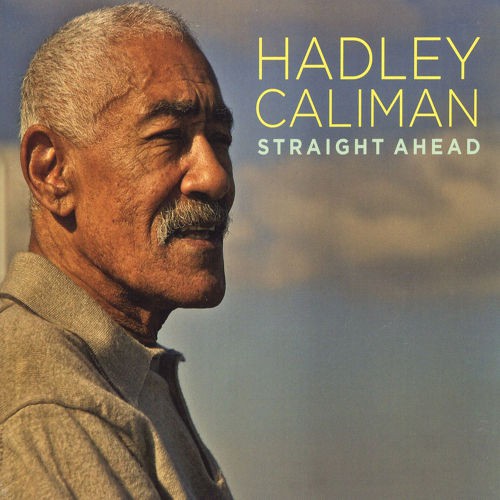
Two more albums quickly followed: Straight Ahead (2009) and Reunion (2010), a collaborative session with Pete Christlieb.

That final album carried special significance. The two musicians had first played together decades earlier in a Los Angeles club band, where a young Christlieb occasionally subbed for another tenor player. Now, more than forty years later, they met again in the studio.

The result is not a cutting contest but a conversation between two seasoned voices in the tenor tradition.

Caliman demonstrated so much vitality and creativity during those performances, that I just knew he had so much more to give.

Sadly, that was not the case.


The Last Performance

Even as his health declined, Caliman continued to perform.

He practiced daily until he became too weak to continue, just one week before his death. His final concerts took place in August 2010 in the Seattle area.

Friends who saw him on stage during those final months recalled that once the music began, he was completely focused.

He gave his all until the very end.

Hadley Caliman passed away on September 8, 2010, at the age of 78.

His passing brought a remarkable creative renaissance to a close, but not before he had made sure his voice would be heard.


Where to Begin Listening

If you’re discovering Hadley Caliman tonight, start here:

  1. “Back for More”Gratitude (2008)
  2. “Cathlamet”Straight Ahead (2009)
  3. “Little Dex”Reunion (2010)

Listen for the warmth in the tone and the restless curiosity in the phrasing. Caliman’s solos rarely rush toward conclusions. They keep asking questions.

Conclusion

Hadley Caliman spent a lifetime searching for his sound. In the final years of his life, he seemed determined to make sure that search was heard. Those last recordings are not simply a comeback; they are a statement. A reminder that growth in this music never stops, that the voice continues to evolve, even in the face of mortality. In the end, Caliman did more than leave a legacy. He left a testimony. And if you listen closely, you can still hear him working things out, one phrase at a time.
Unsung Saxophone Masters #2 – Tina Brooks: The Sound of Almost

Posted in saxophonists, The Jazz Continues..., Under The Radar, Unsung Saxophone Masters with tags , , , , on March 5, 2026 by curtjazz

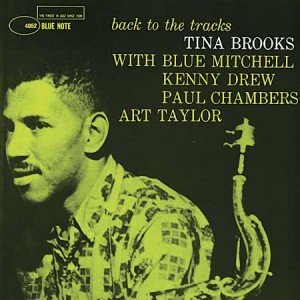
Tina Brooks - Back to the Tracks

Tina Brooks (1932 – 1974)

“I loved Tina. “He had a nice feeling…. He would write shit out on the spot and it would be beautiful. He wrote ‘Gypsy Blue’ for me on the first record, and I loved it. I just loved it. Tina made my first record date wonderful. He wrote and played beautifully. What a soulful, inspiring cat.”Freddie Hubbard

He was small of stature, soft spoken, bullied as a child and saddled with a woman’s name as a nickname from a very early age. But when he picked up that tenor sax… Harold Floyd “Tina” Brooks became a powerful giant.

He recorded just a handful of sessions as a leader for Blue Note Records between 1958 and 1961. Only one of them, True Blue, was released during his lifetime.

There are some musicians whose careers feel unfinished.

And then there are musicians whose recordings feel complete, even if their lives did not.

Tina Brooks belongs to the second category.

Harold Floyd Brooks was born in Fayetteville, North Carolina in 1932. His nickname was a variation on “Teeny”, which alluded to his small size. He grew up primarily in New York City. The sounds of rhythm & blues, church music, and the emerging language of bebop were part of the atmosphere there.

Music was already in the family. His father, David Brooks, sang professionally in vocal groups. This included the famed Ink Spots–style harmony ensembles that were popular in the 1940s. So Brooks grew up around working musicians. Jazz wasn’t a distant art form, it was a trade.

By his late teens, he had taken up the tenor saxophone. He began absorbing the language that dominated the New York scene of the early 1950s. Like many young tenor players of the period, he listened closely to Lester Young. He also paid attention to Dexter Gordon. Additionally, he absorbed the emerging modern vocabulary of Sonny Rollins.

But Brooks was not an imitator. Even early recordings reveal a voice that is inward and deliberate


Apprenticeship Years

Before recording under his own name, Brooks worked the New York club circuit and gained visibility through sideman work.

His first significant recording appearance was with Jimmy Smith. Smith’s revolutionary Hammond B-3 sound was redefining the organ trio format. Brooks appears on Smith’s 1958 Blue Note session The Sermon!, where his tenor sits comfortably inside the groove-oriented, church-inflected atmosphere Smith created.

It was a perfect setting for Brooks. His tone had a quiet blues authority; not flashy, but deeply rooted.

Around the same time, Brooks began working with alto saxophonist Jackie McLean, another rising voice in the Blue Note orbit. Their collaboration on Jackie’s Bag (recorded 1959) showcased Brooks alongside players such as Freddie Hubbard and Paul Chambers. This firmly situated him within the hard-bop movement of the period.

Yet even within these high-level sessions, Brooks rarely behaved like a player trying to steal the spotlight. His solos are thoughtful, measured, and structurally clear.

He sounded like someone thinking while playing.

The Blue Note Leader Dates

Between 1958 and 1961, Brooks recorded several sessions. They were all for Blue Note Records. Brooks worked with producer Alfred Lion and recording engineer Rudy Van Gelder.

These sessions included:

But here is the strange twist that shaped his reputation.

Only one of these albums, True Blue, was released during Brooks’ lifetime.

Tina Brooks did not record again past the age of 29. His other recordings sat in the Blue Note vault for years. They did not appear until the label’s archival reissues in the late 1970s and 1980s. These reissues brought renewed attention to overlooked sessions.

Why were they shelved?

No single explanation exists. Blue Note was recording prolifically at the time. Market decisions affected outcomes. Scheduling priorities interfered. The emergence of newer stars also played a role. Brooks’ personal struggles with health and addiction also complicated his career trajectory.

But the music itself tells a different story.

These are not tentative sessions. They are confident, mature statements from a fully developed modern tenor voice.


The Composer

One of Brooks’ most overlooked strengths was his writing.

Pieces such as:

  • “True Blue”
  • “Good Old Soul”
  • “Minor Move”

are elegantly constructed hard-bop compositions that balance blues feeling with harmonic sophistication.

They sit comfortably alongside the writing of contemporaries like Hank Mobley and Horace Silver. However, Brooks’ tunes often have a slightly more introspective quality. He wrote two tracks that appeared on Freddie Hubbard’s debut album as a leader, Open Sesame.

They feel less like vehicles for blowing and more like small musical architectures.


The Sound

Brooks’ tone is distinctive once you learn to hear it.

It is:

  • Lean rather than lush
  • Focused rather than expansive
  • Expressive without being demonstrative

Where John Coltrane pursued intensity and harmonic expansion, Brooks seemed more interested in clarity and pacing.

His solos unfold patiently. Ideas develop logically. There is very little excess.

You hear intention in every phrase.


The Quiet Fade

By the mid-1960s, Brooks’ health had deteriorated significantly. The combined pressures of the jazz lifestyle and personal struggles gradually removed him from the recording scene.

He died in 1974 at just forty-two years old.

By that time, his recorded legacy was already largely forgotten.

It would take the Blue Note reissue programs decades later for listeners to rediscover the depth of his work.

Today, albums like Back to the Tracks and Minor Move are often talked about with reverence. This is usually reserved for more famous artists.

But during his lifetime, Brooks never experienced that recognition.


Where to Begin (If You’re Listening Tonight)

If you’re discovering Brooks for the first time, start here:

  1. “True Blue” (Title track from True Blue) listen to the construction of his solo. Notice the pacing.
  2. “Good Old Soul” (Also on True Blue) the blues sensibility beneath modern harmony.
  3. “Minor Move” (Title track from Minor Move) lean, direct, unsentimental.

Don’t stream it casually. Sit with it.

Tina Brooks is not background music.
He is a study in understatement.


Why He Belongs in This Series

Jazz history tends to celebrate the revolutionaries.

The language of the music was shaped by musicians. They extended the tradition quietly. They worked thoughtfully and with immense discipline.

Tina Brooks was one of those musicians.

His discography is small.
His voice is unmistakable.

And that is why he belongs among the Unsung Tenor Giants.

Discography (all are on Blue Note Records)

(As a leader/co-leader)

True Blue (1960) with Freddie Hubbard, Duke Jordan, Sam Jones and Art Taylor

Minor Move (1958; Released 1980) with Lee Morgan, Sonny Clark, Doug Watkins and Art Blakey

Back to the Tracks (1960; Released 1998) with Blue Mitchell, Jackie McLean, Kenny Drew, Paul Chambers and Art Taylor

The Waiting Game (1961; Released 1999) with Johnny Coles, Kenny Drew, Wilbur Ware and Philly Joe Jones

Street Singer [co-leader with Jackie McLean] (1960; Released 1980) with Blue Mitchell, Kenny Drew, Paul Chambers, Art Taylor

(As a sideman[Partial])

Blue Lights Volume 1 & 2 [with Kenny Burrell] (1958)

Redd’s Blues [with Freddie Redd] (1961; Released 1998)

House Party [with Jimmy Smith] (1958)

Open Sesame [with Freddie Hubbard] (1960)

Jackie’s Bag [with Jackie McLean] (1961)

CurtJazz Radio’s TOP 5 Tina Brooks Tracks:

  1. “Good Old Soul” (True Blue)
  2. Title Track (The Waiting Game)
  3. Title Track (Back to the Tracks)
  4. Title Track (Minor Move)
  5. “Theme for Doris” (True Blue)