In the three previous posts, I’ve listed and discussed my favorite jazz albums of 2020. Bright musical oases, in this otherwise miserable year.
In this post, we bring all 30 of them together, in one place. In each album title is embedded a link to the album’s page on Amazon. In these extraordinarily difficult times, we encourage you to purchase these albums, if there’s something that you like. Streaming is nice but the financial support that it provides to the artists, is laughable. So we provide the Amazon links as a first alternative. However, many of the artists also have their own websites, through which you can purchase the music directly from them. If you are so inclined, I encourage you to go that route. It can provide maximum remuneration for the artists that you love. We will also feature tracks from each of these albums, throughout January 2021, on CurtJazz Radio. Click HERE to listen now.
We’ve also created another Spotify playlist, featuring selections from a dozen of the 30 albums on the list, to give those of you who have not yet visited the prior posts, an opportunity to sample the artistry represented here. I can’t say it enough. Streaming is nice but buying is better.
Here are my 30 for ’20, in alphabetical order, by artist name:
Thank you all, for reading and listening. Here’s to a great 2021. Hopefully, we’ll be able to get back to live music by the time you read my next “Best Of…” list.
Man, this has been one strange year! (Insert your own “no kidding”, or some variant, here)
Though I was fortunate enough to host a Zoom-based jazz talk show (Conversations with Curtis), thanks to JazzArts Charlotte, I heard less live music, this year than at any time, since my teens. I also somehow managed to hear less recorded music than any year, in recent memory. I feel less comfortable than ever declaring this list to be a “Best Of”, because there is so much out there that I’m still catching up with. So, let’s just say that these are my favorites of what I did hear. These are the albums that I went back to listen to, more than twice, the ones that stayed on the CurtJazz Radio playlist for more than just a few weeks.
There are thirty albums that I want to share with you. To keep the posts to a reasonable size, I have divided them into three groups of ten. For the sake of brevity, I will try not to write more than three sentences about any one album.
Here are the first ten of my favorite 2020 releases, in alphabetical order, by artist name:
Allen releases about one album per year and he also makes about one trip a year to my “Best Of” list. On this enigmatically titled album, Allen continues his searing, powerful explorations guiding his tenor sax through a recommended set of mostly original tunes. It’s insistent, compelling, and absolutely first rate.
The first two outings of pianist/composer/arranger John Beasley’s large ensemble, ostensibly dedicated to the music of Thelonious Monk, made me a respectful admirer. This third volume, which adds compositions by Duke Ellington, Charlie Parker, and Beasley himself to those of Sphere, has made me a full-fledged fan. This set swings harder and takes the energy to the next level and every track is on point. A classic.
For me, this is Lakecia Benjamin’s coming of age album. Her previous albums have hinted at her potential but missed the mark in some way or another. Merging Ms. Benjamin’s millennial energy, creativity, and her wellspring of new ideas, with the canon of John and Alice Coltrane, has given these classics a fresh start that we didn’t realize that they needed, until now.
Peter Bernstein is one of the best and most reliable guitarists working in the world of jazz today. Be it as a first-call sideman or as a leader, Bernstein is a consistent arbiter of taste, intelligence, and swing. On What Comes Next, Mr. Bernstein, once again, does not disappoint, bringing us an outstanding set of first-rate performances.
Stanley Cowell, who was a composer, educator, record-label executive, in addition to being one of the most creative and innovative pianists, in the world of jazz, died on December 18. His work, as a sideman with The Heath Brothers, Charles Tolliver, Max Roach and as a leader, will ensure that legions of jazz fans will continue to talk of and discover his work, for years to come. I’m unsure of whether Live at the Keystone Corner Baltimore, is Mr. Cowell’s final recording. If so, he went out on a triumph. Rest in Power, sir.
I’ve come to expect a certain high-level of artistry from Wayne Escoffery’s recordings. The Humble Warrior is on my “best of” list because he has shown me something completely different in his song selection. Bringing Benjamin Britten’s choral work Missa Brevis in D, into the jazz realm, complete with a dense and challenging arrangement, is one of the most impressive things, from an artistic perspective, that I’ve heard all year.
Though trombonist John Fedchock is one of the best big-band arrangers in the business, I believe that in his small groups, such as this one, is where he really shines. In his small groups, there is a lightness and an attention to detail that his larger charts sometimes miss. His total reinvention of “Star Eyes”, is the standout on the album and one of the best versions of that old warhorse that I’ve ever heard.
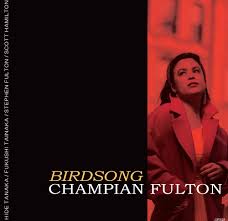
Champian teased the release of this album, when she guested on “Conversations with Curtis”, last spring. The album was not released until August. It was worth the wait. Champian Fulton has grown into one of the finest pianist/vocalists in jazz today. She is a consummate interpreter of a lyric and though she clearly has been influenced by several the greats, she sounds like no one, but herself. Did I also mention that her piano playing can swing you into bad health? This tribute to Bird, flies high.
Nubya Garcia has been building to this moment for a few years now, with two well received and exciting Eps, before Source, her first full length album was released this year. If you’re familiar with her EPs, what is here will not be surprising. The 28-year-old British saxophonist has a sound that is influenced by the soulful ancestors, like Henderson and Turrentine, but rooted in the nascent London jazz scene of today. Downbeat has named Ms. Garcia, one of the 25 performers that could shape jazz for decades…I certainly hope that they’re right.
I was unfamiliar with the work of this 24-year-old piano prodigy, until last January, when she was the victim of some vicious and sexist written attacks by a respected online jazz publication (which later claimed that they were hacked). This made me curious enough to explore her music for myself. I found her work to be surprisingly good. She knows her jazz vernacular, she is a strong soloist, who leaves plenty of room for her sidemen and she is a fine composer. Iron Starlet, her second album as a leader, stands favorably alongside of much of the released work of Ms. Han’s contemporaries and her elders, in 2020. Those who criticize her for reasons that have nothing to do with her music, ought to be ashamed of themselves.
There you have the first ten of my “30 for ’20”. And yes, I did break my three sentence rule, when it was absolutely necessary. I’ve included a Spotify playlist, below, with a track from each of the albums discussed in this article, to give y’all a taste. We will release two more posts, with 11 – 20 and 21 – 30, on the list, on successive days. Thoughts and opinions are welcome, as always, in the comments.
To wrap up our discussion about our favorite jazz albums of 2012, we’ve brought everything mentioned in the three prior posts together into one comprehensive list. The link in each album title will take you to the album’s page on Amazon.com, if you’re interested in buying or downloading it.
Coming from the same musical place as Gretchen Parlato and to a lesser extent, Norah Jones, Ms. McGarry has determinedly carved out her own niche as a vocalist. Her appealing voice and fun way with a lyric made me a fan when I first heard her on her 2007 disc, Target. Now with Girl Talk, she has fulfilled the mature promise that some of her previous works hinted at. Backed by a terrific band which includes the incomparable Gary Versace on organ and piano, her hubby, Keith Ganz on guitars, bassist Reuben Rogers and drummer Clarence Penn, this album is billed as Ms. McGarry’s tribute to some of her vocal role models, which is ironic, because I find this to be her most individual work to date.
Another highly anticipated disc that delivered the goods, Heritage brought together the guitarist from Benin, with his label mate Robert Glasper as producer. This brought about a change in a number of ways – gone was the nylon string acoustic guitar that had so defined Loueke’s sound in the past. In its place were electric guitars and a steel string acoustic. Glasper also brought along his “Experiment” band members, Derek Hodge on bass and Mark Guiliana on drums. The resulting sound added an exciting tension to Loueke’s sound between Loueke’s serene guitar and Yoruba vocalizing and the electric funk elements added by Mr. Glasper and company. That tension produced many compelling musical moments, such as the haunting “Tribal Dance”, which has made it impossible to me to take this disc out of my CD changer.
Courtney Pine first caught the attention of the jazz world with his 1986 release Journey to the Urge Within. It hit right in the midst of the “Young Lions” craze of the ‘80’s/’90’s. The press quickly dubbed Mr. Pine “The New Coltrane”; a daunting title to hang on anyone. Mr. Pine confounded those who labeled him by going off wherever his musical muse took him. Now in 2012, the muse takes the London native to House of Legends, on which he embraces his Jamaican roots more than on any project of his 25 year career. It’s a joyous album, from beginning to end, with Mr. Pine, who appears only soprano, blowing terrific lines over meringue, ska, calypso and mento rhythms. Imagine if Sonny Rollins had taken his calypso flirtations to their fullest extent and you’ll get the idea. This album put a smile on my face.
That Pepper Adams was one of the great baritone saxophone players in jazz is indisputable. However the fact that he was a prolific composer has gone virtually unnoticed. Jazz historian Gary Carner set out to right that wrong in conjunction with Motéma Records. The result is a monumental five-volume set that celebrates Adams, the composer. For Volume 5, Carner worked with poet Barry Wallenstein, who added lyrics to Adams seven ballads. They then engaged Alexis Cole, a marvelous, if underheard vocalist to sing these songs. I Carry Your Heart, the resulting album, is excellent in every way. Adams’ music is beautiful, Wallenstein’s lyrics fit the tunes like a glove and Ms. Cole gives delivers the finest performances that I’ve heard from her to date. The band that backs this session is also outstanding, with special kudos going to Eric Alexander and Pat LaBarbera, who are their usual exceptional selves on the tenor.
I’ve spent much of the last few years lamenting the lack of promising new male jazz vocal talent. I’ve even discussed the issue with Jon Hendricks when I interviewed him a few years back. His answer was quite interesting, but too long to discuss here. Now suddenly, in the last few years, I’ve seen binders full of talented male vocalists make themselves known; Ori Dagan, Sachal Vasandani, José James and Mr. Milton Suggs. Suggs, Chicago born and now NYC based, has perhaps kept the lowest profile of the four, but he has released the most impressive recent album. On Lyrical, Vol. 1, Mr. Suggs wraps his big baritone voice around lyrics that he has written, to some well-known (“Ceora”, “Footprints”) and not so well-known (Roy Hargrove’s “Joy Is Sorrow Unmasked”) compositions. Suggs takes a few risks, such as overdubbing himself as his own background vocalist, which works very well most of the time. But the hits far outweigh the misses. Suggs is an excellent vocalist and a very good lyricist. The bottom line is that I have not stopped listening to this album since it arrived in my mailbox and that’s what sets it apart from the rest.
The legendary pianist Mary Lou Williams would have turned 100 in 2010. There have been a number of tributes to her over the past few years. This one by tenor saxophonist Virginia Mayhew is IMO, the most thorough and the most musically impressive. Ms. Mayhew did exhaustive research. She was given full access to the Mary Lou Williams Collection at the Rutgers Institute of Jazz Studies. She then listened to over 200 of Ms. Williams’ compositions before choosing her favorites and beginning her arrangements. What makes this album so strong is that Ms. Mayhew clearly set out to write modern, energetic arrangements and avoid staid recreations. The music here sounds as exciting as if were written last week, instead of seventy years ago, as is the case in a few instances. Ms. Mayhew has a big expressive tone and she attacks her solos with gusto. She also has recruited a couple of partners who are every bit her equal in trombonist Wycliffe Gordon and guitarist Ed Cherry. Though Mary Lou Williams passed away over thirty years ago, Mayhew and company make her music live.
Wayne Escoffery is one of the busiest tenor saxophonists in New York. Besides his work with Tom Harrell, Ben Riley, Eric Reed and the LCJO, he also still records some fine sets as a leader, of which The Only Son of One, is certainly one of the best. On this album, Mr. Escoffery tells a bit of his own story. He was born in a tough section of London. His mother left his abusive, Jamaican-born father and fled to the U.S. when Wayne, their only child, was eight. They arrived in the States with nothing and got by for many years on their wits and determination. The titles of the songs tell the story of his upbringing, the tough times, his spirituality and how they all shaped Wayne. His playing is passionate and captivating. Though he still shows traces of Joe Henderson and Wayne Shorter in his playing, he has grown to a point his own style is in the forefront and it is quite impressive.
I was listening to Prisoner of Lovefor the first time. About halfway through I muttered to myself “Where did this woman come from? How could I have missed her?” The Queens, NY native seems to have come out of nowhere and she has captured many an ear. Some have compared Marianne Solivan to Geri Southern and Julie London. I can agree with that only in regards to the timbre of her voice, for even on her ballads, Ms. Solivan swings harder than either of those two legendary chanteuses. On this album, produced by trumpeter Jeremy Pelt, Ms. Solivan and Mr. Pelt display excellent judgment by surrounding the singer with some of the best musicians on the East Coast (Peter Bernstein, Christian McBride, Xavier Davis, et al) and selecting a standard repertoire that fits her voice like a glove. Among many highlights are Solivan’s two duets with McBride, a situation that could crush a lesser talent. But on “All or Nothing at All” and “Day Dream”, Ms. Solivan rises to the occasion and not only holds her own, but shines with the confidence of a star, which she very well may be.
In a career that has spanned fifteen solo albums over three decades, Kenny Garrett has been all over the musical map, moving from big band, to hard bop to a stint with Miles, to being a first call sideman and creator of a musical oeuvre that has rarely remained in the same place for too long. It’s no surprise then, that Mr. Garrett has had a considerable number of musical influences. On Seeds from the Underground, he pays homage to those who have planted the musical seeds that have aided his development into one of the most formidable artists of his generation. Mr. Garrett put a lot of himself, artistically and personally, into this album and that effort has paid off with impressive results. Seeds from the Undergroundis the finest album that Kenny Garrett has released in the 21st Century and is one of the best of his career.
Avishai Cohen’s last album as a leader, Introducing Triveni, made our list last year as the album that I had missed in 2010. When I heard that at the same two-day session as Introducing Triveni, enough music for a second album was recorded and that it was going to be released, I was determined not to miss this one. I’m pleased to report that Triveni II is not an album of outtakes. It is every bit as good as its predecessor. Born and raised in Tel-Aviv, Mr. Cohen, the brother of Anat Cohen, has made a name for himself in jazz despite having a well-known sister and having the same name as another Israeli jazz musician, which is why “trumpet” is often included as a part of his name. This session, which again features bassist Omer Avital and drummer Nasheet Waits, is another tour de force, where the trumpeter seems to relish the freedom of having no other melody instrument in the group. It’s a thrilling and creative set, one that I predict many serious young trumpeters will try to emulate.
Though this concludes our top twenty, there is still a bit more ahead. Our next post will include a handful of very good albums that should also be heard, a terrific historical album and our “missed” album from 2011, which this year isn’t so much missed as it is poignantly revisited.
The music from all twenty “Best of” albums and the additional discs, can be heard on our internet station Curt’s Café Noir, starting on December 27, 2012 and continuing through January 2013. As always, agreement and disagreement is welcome in the comments section. I approve them all, except spam and naked self promotion.
Merry Christmas, Happy Hanukkah, Glorious Kwanza and Happy New Year to all – until the next time – The Jazz Continues!






 Curt's Jazz Cafe