“This record is a sterling example of what the music [jazz] lost in the name of its phallocentricity. Vi Redd demonstrates a thoughtful tone and a careful respect for those around her. Her solos are pithy and directly to the point…Quite honestly, there’s really nothing quite like her records.” – From Rob Ferrier’s All Music guide Review of Vi Redd’s Lady SoulLP
Claire Daly, Tineke Postma, Tia Fuller, Virginia Mayhew are just a few of the strong women jazz saxophone players on the scene today. Rewind 40 – 50 years and you’ll find very few names. Elvira “Vi” Redd was one of those few. Now I know that there were many women sax players during the ’40’s – 60’s who were part of the “all girl” big bands and novelty acts. What I’m talking about are women who stepped out there on the front line with the men and recorded as leaders. Vi Redd was a pioneer.
Ms. Redd is the daughter of Alton Redd, who was a New Orleans drummer and the co-founder of the Big Easy’s legendary Clef Club. Vi was born in Los Angeles in 1928. With her father being a major part of the Central Avenue jazz scene, Vi was exposed to many of the greats of jazz from an early age. Young Vi was also blessed with an aunt, Elma Hightower, who was considered one of the foremost L.A. music teachers of her time. Ms. Hightower was instrumental in Vi’s decision to play the saxophone.
Like many sax players of her generation, Ms. Redd’s sound is heavily influenced by Charlie Parker. So, it was no accident that the first of her two albums as a leader was titled Bird Call. Recorded in 1962, it’s a good album, that features Herb Ellis on guitar; Leroy Vinnegar on bass; Carmell Jones on trumpet; Russ Freeman on piano and a young, pre-fusion Roy Ayers on vibes. In addition to her solid work on alto, Ms. Redd also sings on a few numbers, which is not a bad thing, as she is a fine vocalist with a compelling grit to her sound. The tunes penned by producer Leonard Feather are the only selections that miss the mark.
The next year, she recorded her second and apparently, final album, Lady Soul. It’s the more polished of the two albums, with great playing and singing by Ms. Redd and first-rate support from Dave Bailey, Bucky Pizzarelli and Ben Tucker. Unfortunately, Lady Soul has slipped into obscurity and is extremely hard to find.
When one does research on the career of Vi Redd, the term that recurs more than any other is “under-recorded”. How true that is. For though Ms. Redd has played and toured with artists such as Count Basie, Dizzy Gillespie, Dexter Gordon, Sarah Vaughan and Max Roach, she has only two albums to her name and a scant four more with other artists. Notable among these is Now’s The Time; an all female session led by Marian McPartland, in 1977. Throughout the years, she gigged around the Los Angeles area and supported herself as a schoolteacher between engagements. She finally received a bit of long overdue recognition in 2000, when she was honored at “Instrumental Women: Celebrating Women-N-Jazz“, a concert at the Academy of Television Arts and Sciences.
As of this writing, Vi Redd is retired and living in the L.A. area. And as we can see in this heartwarming interview conducted by a family member in 2009, she is still sharp, delightful and energetic.
Recommended Recordings:
Bird Call (United Artists/Solid State) – CD Available [Japanese Import]
“When I saw the trombone I thought how beautiful it looked and knew I just had to have one. No one told me that it was difficult to master. All I knew was that it was pretty and I wanted one.” – Melba Liston
Trombonist/Arranger/Composer Melba Liston was born in Kansas City, MO on January 13, 1926. In her early years, she shuttled back and forth between the and Kansas City, KS, where her grandparents lived. She got her first trombone at seven, when a traveling music store brought instruments to school. By the time she was eight, she was playing solo trombone on local radio shows.
When Melba was eleven, her family moved to Los Angeles. There she was mentored by a local music teacher, who ran a big band made up of neighborhood children. That relationship ended after four years, when Melba decided to join the musicians union, against the teacher’s wishes. Nevertheless, Liston joined the pit band at Los Angeles’ Lincoln Theatre at age sixteen.
When the Lincoln discontinued live shows in 1943, Liston joined the new band being formed by Gerald Wilson. She also recorded in a group with old school pal Dexter Gordon. Melba stayed with Wilson for five years, until his group disbanded. She then joined Dizzy Gillespie’s Big Band, along with Wilson. That lasted about a year, until Dizzy’s band also broke up.
After joining Wilson again in a Bebop band that backed Billie Holiday on an ill-fated tour of the South, Ms. Liston gave up music for a few years. She took a job with the Los Angeles Board of Education. Music, however, was not completely out of her blood, as she continued to compose and arrange on the side. She even tried her hand at acting for a while, landing bit parts in The Prodigal, alongside Lana Turner and in The Ten Commandments, as a harp player.
But the music was never far away from Melba’s heart, so when the State Department asked Diz to form a big band for a Middle East/Asia tour, he coaxed Liston into joining him. Though she rarely soloed during that time, she did a considerable amount of arranging. Including “Stella by Starlight”, “My Reverie” and “Wonder Why”. These arrangements (and more by Melba) were recorded and can be heard on the Birks Workscompilation, on Verve.
Diz wasn’t the only one who dug Melba’s arranging. Quincy Jones, who played trumpet in the Gillespie band at the time, was forming a band to tour Europe. he asked Ms. Liston to join him and she agreed. In 1958, Melba Liston recorded her sole album as a leader; Melba Liston and Her Bones. On this date, Liston and an array of trombonists, including Slide Hampton, Al Grey and Bennie Green, were front and center, with solid support from Kenny Burrell, Ray Bryant, Charlie Persip and others. Co-produced by Leonard Feather, it’s a shame that this fine album drifted into obscurity.
In that same year, Melba met pianist composer Randy Weston. Weston admitted that at the time, he had never met a woman trombonist before. Their meeting sparked a creative partnership that lasted almost 40 years. Weston initially hired Melba to put some meat on the bones of his compositions. They realized quickly that musically, they were two halves of the same coin. Said Weston; “Melba is incredible; she hears what I do and then expands it. She will create a melody that sounds like I created it. She’s just a great, great arranger.” All in all Weston and Liston worked on 10 albums together, including Little Niles, Earth Birth and Volcano Blues.
Melba Liston with Dizzy’s ‘Dream Band’ in 1982 on “Manteca” [Melba solos starting at 3:35]
Besides her work with Weston, Melba continued to freelance, working often with Clark Terry and briefly with Charles Mingus. Upon her return to Los Angeles in the late ’60’s, the pop music world took note of her talents and she arranged sessions for stars including Marvin Gaye and the Supremes.
Ms. Liston was very active until 1986, when she suffered the first of several strokes. She had to give up playing and was confined to a wheelchair, but Melba continued to compose and arrange, until her death in 1999.
Melba Liston – most of her career was spent behind the scenes, but her work was always headliner quality.
Though John Coltrane gets most of the birthday ink today, Ray Charles Robinson was also born on this day, in 1930; four years after Trane.
Both were born in the South, both spent seminal portions of their careers recording for Atlantic Records and both were major influences on countless numbers of artists.
Just think; wouldn’t a Coltrane – Ray Charles record date have been something?
Happy 81st birth anniversary to “The Genius”, Ray Charles.
Here are some great video clips of Brother Ray in his prime, “makin’ it do what it do, baby!”
“I Believe to My Soul” – performed live at the 1960 Newport Jazz Festival
“Let The Good Times Roll” – also from Newport 1960
“What’d I Say” – from the mid ’60’s
Ray blows the alto sax on this clip from a 1963 Brazilian Concert!
“In the Evening, When the Sun Goes Down” – Ray stretches out a bit on the 88’s…
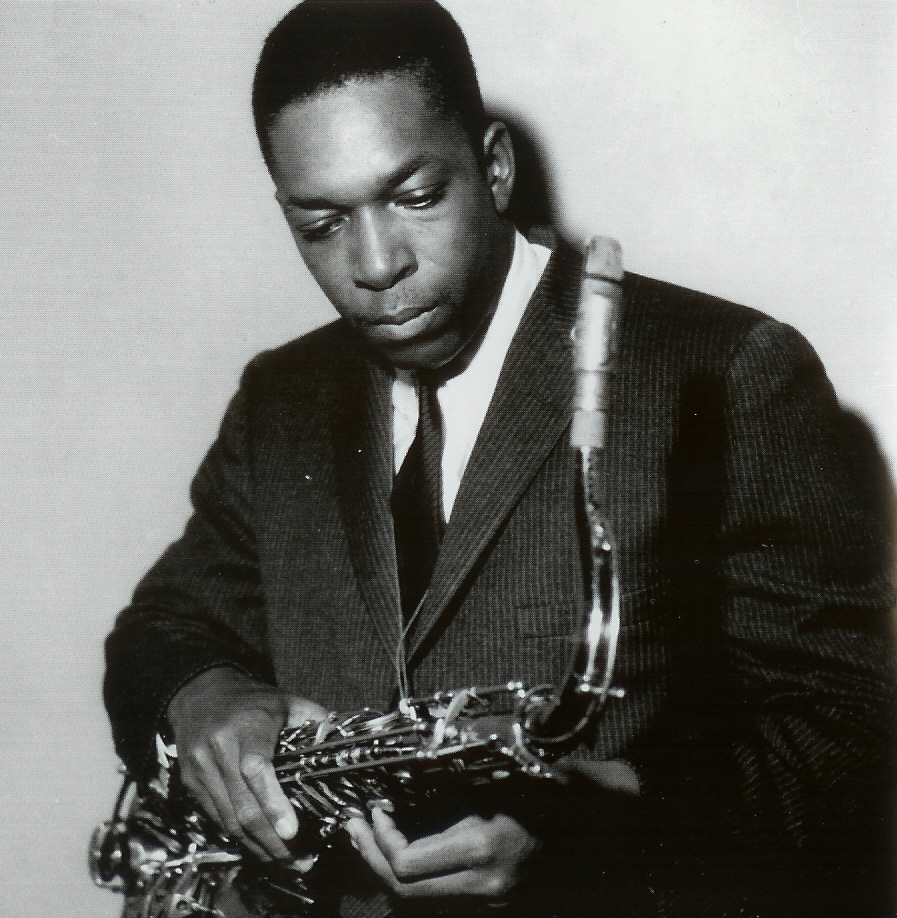
Today, John William Coltrane would have been 85 years old.
His face is on my personal “Mount Rushmore of Jazz”, so I admit to zero objectivity about him.
Like Miles, much has been written about him, but limited video footage exists. So here are a few fine examples of the art of “The Greatest of All Time”. I hope that you dig them as much as I do.
“Afro Blue” from Ralph J. Gleason’s legendary ‘Jazz Casual’ TV series
From the same program, the still haunting “Alabama”
“Impressions”
“My Favorite Things” – 1965 on a cold August night in Belgium
“As Hipp…matured artistically, she had defined her own artistic standards and revolted when pressured to record music she did not like. She also suffered from severe stage fright throughout her career. Thus being the featured artist at a large performance venue was more of a daunting chore for Hipp than a joyful public celebration of her talent.” – All About Jazz
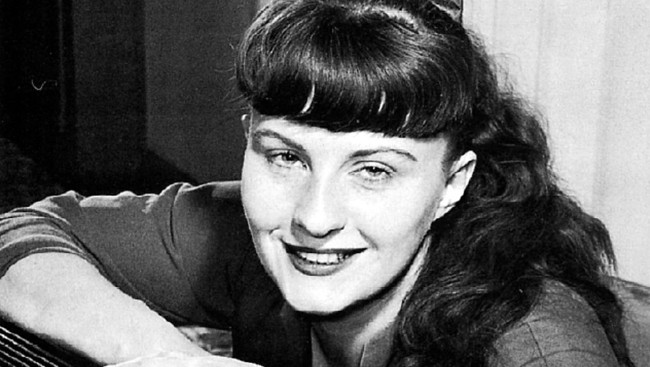
The lore of jazz is filled with stories of musicians of prodigious gifts who appeared on the scene in a starburst and disappeared back to whence they came just as quickly; leaving behind perhaps a few recordings and the often faulty memories of those who worked with them. Pianist Jutta Hipp epitomizes these musicians.
Ms. Hipp was born in Leipzig, Germany in 1925. She learned to play the piano as a child, but in the immediate aftermath of the Second World War she studied painting at the Leipzig Kunstakademie. By this time her interest in jazz had begun. When the Soviets took over what would become East Germany in the late ’40’s, she moved with her family to Munich. There, Jutta began to play piano professionally, starting her own group. In the early 50’s, she joined a group led by saxophonist Hans Koller.
During her early days, Ms. Hipp copped to being influenced by great swing pianists, like Basie, Teddy Wilson and Fats Waller. However, by the time she reached Munich, she had heard Bud Powell and was fully in his thrall. There was also a bit of Lenny Tristano in her attack, although Ms. Hipp always brushed aside those comparisons. Jutta led her own quintet in Frankfurt in 1953-1955 and recorded for several labels, including a session that was later released by Blue Note.
It was now time to come to America. Jutta Hipp arrived in New York in November 1955. Her immigration to the United States was sponsored by jazz critic Leonard Feather who had discovered Hipp while visiting Germany and was “blown away” by her talent. Ms. Hipp played at the famous Hickory House for much of the first half of 1956 and within a few months, she became the first white female as well as the first European instrumentalist ever signed by Blue Note Records. Hipp cut three albums as leader for Blue Note in 1956. The first two of those were live trio albums recorded during her six month stint at the Hickory House, with British bassist Peter Ind and Ed Thigpen, known for his years with Oscar Peterson, on drums. Hipp was by now expressing a fondness for the blues drenched style of Horace Silver, which does show a bit on these first two records.
The most famous of the Blue Note recordings featured the great tenorman Zoot Sims as a co-leader. Sims made a perfect musical partner for Hipp and they sound as if they had played together for years. On this record, the Silver influence had disappeared – in fact she seems to have developed her own ingratiating style, that is mature and swings hard. She followed this recording with a successful appearance at the 1956 Newport Jazz Festival and looked for all the world to be on her way. Unfortunately, the Sims album was Jutta Hipp’s last known recording.
Two things served to scuttle her musical career. First, she suffered from stage fright. Playing in anything other than an intimate venue, before an appreciative crowd left her virtually paralyzed. This made bookings in large rooms and additional appearances at large festivals impossible. Second, she had no interest in recording music that she did not like. Feather tried to get her to record some of his songs in late ’56. Jutta refused, causing a permanent rift in their professional relationship, which, considering Feather’s influence in the jazz scene of the time, was not good for her career.
By 1958, Jutta Hipp had left the jazz world for good. She never married. She remained in New York for the rest of her life; supporting herself as a seamstress at a factory in Queens. She painted scenes of street life in Queens. Hipp also was a fine photographer, who took many shots of her favorite Long Island beaches and of the musicians playing in the NYC and Long Island jazz clubs where she continued to attend concerts when the mood hit her. Such was her loss of contact with the music world, that Blue Note did not know where to send her royalty checks until 2000.
Jutta Hipp died in her Queens apartment on April 7, 2003 of pancreatic cancer. She died without family or friends to help her. Shortly before her death, she had been discharged from the hospital into the care of some neighbors in her apartment building, one of whom was a nurse . She had insufficient funds for a burial or a funeral, and she willed her body to Columbia University, for scientific research.
It was a sad and lonely end for a wonderful musician, whose talent had touched many during her brief period in the spotlight.
1991 was a relatively heady time for the jazz business. In addition to all of the reissues of classics on the still ascendant CD technology, record labels were rushing to sign promising young musicians, in their search for another Wynton.
Among them were five tenor saxophonists, brought together for a one-off album by Antilles Records. None of them were well-known at the time, but they were unquestionably gifted. Their names were Walter Blanding, Jr., James Carter, Herb Harris, Tim Warfield, Jr. and Todd Williams. They were called “The Tough Young Tenors”. The title of the album: Alone Together.
Backed by an all-star rhythm section of Marcus Roberts on piano, Reginald Veal on bass and Ben Riley on drums; these brash youngsters showed that they had the goods. In solos, duos and finally in a five sax free-for-all on Sonny Stitt’s classic “The Eternal Triangle”, this album proved to be more than a blowing session – it was one of the best jazz albums of the year. At the time we knew that these cats were all destined for jazz stardom.
It did not turn out that way.
Though they were all on equal footing fame-wise at the time of the recording, they have met with varying degrees of success in the ensuing 20 years. Here, in alphabetical order, is a look at the fortunes of “The Tough Young Tenors”:
Walter Blanding, Jr.
Though he has only one album to his credit (2000’s The Olive Tree), Blanding has been quite active. He has been a member of Wynton Marsalis’ septet and his other recording credits include Marcus Printup and Eric Reed. He’s currently a member of the Lincoln Center Jazz Orchestra. The great Jimmy Heath said about Blanding in the May 2011 issue of JazzTimes, “I call him ‘Walter Spicy’, ’cause there’s nothing bland about him”.
Carter is without question, the most commercially successful of the Tough Young Tenors and one of the most well-known jazz musicians of his generation. New York Magazine called him “Jazz’s first rock star” (though I still believe that title belongs to Miles Davis). His debut album JC on the Settook the jazz scene by storm in the year after Alone Together. Carter was just getting started. His 14 albums under his own name between 1992 and 2011, have fearlessly covered the jazz spectrum, from standards, to funk, to avant-garde. He has also made guest appearances with many of jazz’s legends, from Hancock to Golson to Wynton. Already this year, James Carter has released a new album, Caribbean Rhapsodyand appeared on his first disc as the newest member of the venerable World Saxophone Quartet, Yes We Can.
What was predicted for all members of the group, Carter has achieved.
Like many most of the members of the group, Harris logged some time with Wynton, highlighted by his appearance on the Tune in Tomorrowsoundtrack. He also appeared on Marcus Roberts’ dynamite Deep in the Shed. However, he has undeservedly languished in obscurity for most of the last 20 years. He has released two competent, if unspectacular albums as a leader:NY Daze & Knight, from 2001 and the contemporary flavored Some Many Second Chancesin 2009.
Mr. Warfield has been the most prolific of the TYTs, next to Carter. In addition to releasing six critically acclaimed albums on Criss Cross Records, (his latest is A Sentimental Journey) he has worked with a veritable who’s who of jazz, including Stefon Harris, Christian McBride, Nicholas Payton, Shirley Scott, Jimmy Smith and Terell Stafford. He is currently an artist in residence at Messiah College in Grantham, PA. He also recently accepted an adjunct professor position on Temple University’s music department faculty.
Todd Williams spent over a decade with Wynton Marsalis following TYT. He appeared on some of Wynton’s classics, such as the Soul Gestures in Southern Blueseries and In This House on This Morning. Williams was also a long time member of the Lincoln Center Jazz Orchestra. The quintessential sideman, Williams has yet to release a jazz album as a leader. Always a man of great faith, Todd decided a few years ago to leave Wynton and the LCJO to concentrate on his duties as minister of music at NYC’s Times Square Church. At the church, he has produced an album of gospel music and spirituals, called Beautiful Things from Above. Within the last 18 months, Todd has been quietly making appearances again on the jazz scene, leading a group in the Hudson Valley area and making a notable appearance with pianist Eli Yamin, at a White House gala.
So we find that 20 years later, these tenors are still on the scene and still pretty “tough”. If you haven’t checked any of them out in a while, now is a good time to get reacquainted.
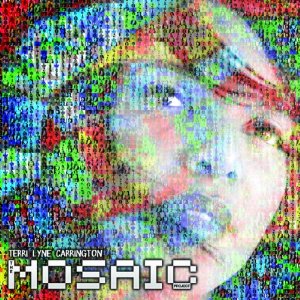
As we’re in the midst of our “Unsung Women of Jazz” series, a post about drummer/composer/producer Terri Lyne Carrington’s new album, The Mosaic Project, feels rather timely. Not because Ms. Carrington is obscure (with an over two decade career that has included gigs with Herbie Hancock, Stan Getz, Wayne Shorter and most visibly, on Arsenio Hall’s late night TV show in the ’90’s, she’s anything but unknown), but because the jazz on this disc is performed by women only.
And what a powerful group of women this is: Dianne Reeves, Dee Dee Bridgewater, Nona Hendryx, Cassandra Wilson, Esperanza Spalding, Helen Sung, Tineke Postma, Geri Allen, Patrice Rushen, Ingrid Jensen, Sheila E. and Gretchen Parlato all make beautiful musical contributions. Though I’ve always enjoyed Ms. Carrington’s work on the drums, I’ve found her albums as a leader to be frustratingly uneven. That is, until now. The Mosaic Project is Terri Lyne Carrington’s strongest album, by a mile. Ms. Carrington’s driving, soulful rhythms are always a perfect fit with the diverse contributions of her guests.
For me the most memorable tracks were “I Got Lost in His Arms”, the Irving Berlin classic, which gains new life wrapped in an R & B groove and Ms. Parlato’s sensuously ethereal vocals; Bernice Johnson Reagon’s “Echo” with a powerful spoken introduction by Angela Davis, Abbey Lincolnesque vocals by Ms. Reeves and a muted trumpet solo from Ms. Jensen; Geri Allen’s “Unconditional Love”, with haunting solos by the composer on piano, Ms.Postma on soprano sax and Ms. Spalding’s wordless vocal line, floating over the top; “Michelle”, the Beatles’ classic, sounds terrific in a post-bop reworking; and “Magic and Music”, a touching tribute written by Ms. Carrington, to the singer Teena Marie, who passed away suddenly last December.
Check out the accompanying videos for a sampling of more. You’ll dig Terri Lyne Carrington and the ladies of her gorgeous “Mosaic”.
Since I was shamefully late with my best of list for 2010, I figured why wait ‘til the last minute this year…
But seriously, there has been some fine jazz released so far in 2011. We’ve had some great releases from reliable veterans as well as some surprises from relative newcomers. Here are a few of the discs that have caught my ear during between January and June. They are listed in alphabetical order, by album title:
Bird Songs – Joe Lovano & Us Five (Blue Note)– Released in early January, this disc got the year off to a strong start. Yes, there are many Charlie Parker tribute albums, but Lovano and the band (James Weidman, Esperanza Spalding, Otis Brown III and Francisco Mela), have managed to find something fresh, new and exciting in these tunes that we have heard more times that we can count. In addition, in the two years since their last disc, their sound has grown more cohesive. If Joe Lovano isn’t the best tenor player of his generation, then he’s definitely in the top two.
Campo Belo– Anthony Wilson (Goat Hill)Recorded in Sao Paulo, Brazil, last September, with three very gifted young Brazilian musicians; Campo Belo counts as one of the most pleasant surprises of the first half of the year. It’s not a Brazilian record in the sense that we have come to know it, and therein lays a great deal of its charm. It never sounds forced or self-conscious; it’s just a bunch of cats that dig each other’s style, sitting down to play. It’s a heady vibe that will grow on you with each listen.
Captain Black Big Band – Orrin Evans (Posi-Tone) – Hold on to your hats on this one. Evans, the Philly bred pianist has dropped on us a band that’s as big, brash and badass as it wants to be. It was born out of Evans’ regular gigging at Chris’ Jazz Café in Philadelphia. The glorious result is 38 musicians, from The Big Apple and The City of Brotherly Love, in various configurations; blowing their hearts out on seven tracks. Soloists include Wayne Escoffery, Tim Warfield, Jaleel Shaw and the great trombonist Frank Lacy. It may not be your father’s big band, but it should be yours.
Good and Bad Memories –Stacy Dillard (Criss Cross) – Though people have pulled my coat about him in the past, I’d somehow managed to sleep on this Michigan native until this album, his fifth as a frontman. It’s definitely my loss. His sound on tenor and soprano is restless, powerful and exciting as all hell. With support from a band that includes Orrin Evans, and guitarist Craig Magnano anchoring a non-traditional front line, Stacy Dillard proves to be a force to be reckoned with, as a player and as a composer. When speaking of Mr. Dillard, Wynton Marsalis eloquently exclaims “This MF can PLAY!” I couldn’t have said it better myself.
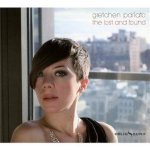
The Lost and Found –Gretchen Parlato (ObliqSound) – Ms. Parlato is another artist who gets better with each successive release. This album is a dreamy mix of gorgeous originals like “Winter Wind”, with inventive takes on jazz classics, like “Juju” and “Blue in Green”, with totally unexpected and effective uses of more recent works, including Mary J. Blige’s “All That I Can Say”. Not everyone digs her style, but I sure do. Gretchen Parlato is one of jazz singing’s best hopes for the future.
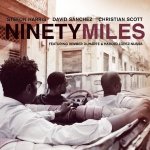
Ninety Miles – Stefon Harris; David Sanchez and Christian Scott (Concord Picante) – One of the most anticipated jazz releases of the first half of the year, lives up to the hype. Harris, Sanchez, Scott and their Cuban sidemen have bridged the political nonsense to create some powerful and enduring music. They are a true collective, as all support each other as powerfully as they solo. Grammys be damned, Ninety Miles is some award worthy Latin Jazz.
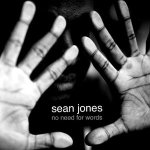
No Need for Words – Sean Jones (Mack Avenue)Trumpeter Sean Jones’ latest, is an album of love songs; not in the traditional romantic sense, but rather it’s about all of the different emotional aspects that visit us when we love, in any way. So, there are songs about a mother’s love, forgiveness for an absent father, spiritual love, physical passion, unhealthy obsession and yes, romance. His writing is very strong and his band is rock solid. On No Need for Words, Jones makes a statement that is personal, powerful and compelling.
This Side of Strayhorn – Terell Stafford (MaxJazz) – The veteran trumpet man flat-out cooks from start to finish on this tribute to the works of one of jazz’s greatest composers. He tackles the well-known (“Lush Life”) and the obscure (“Lana Turner”) parts of the Strayhorn catalog with creativity and gusto. His tone is as good as it has ever been as Stafford flutters, sings and growls his around Strayhorn’s music as if the songs were written just for him. With stalwarts like Tim Warfield and Bruce Barth joining him, they manage to make great tunes even greater.
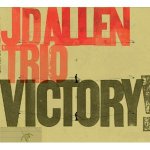
Victory –J.D. Allen (Sunnyside) – In general, I have not been a big fan of sax trios, outside of Sonny Rollins and Joe Henderson. J.D. Allen is one of handful of relative newcomers who are causing me to reconsider. Here’s what made me fall in love: first – Victory is stocked with short, powerful statements. No one track exceeds five minutes in length, leaving less room for the self-indulgent rambling that often plagues trio projects. Second – J.D. Allen is a prodigiously gifted musician; adept at flirting outrageously with the avant-garde without going all the way. Third – a delightful rendition of “Stairway to the Stars”, that appears out of nowhere. Kudos to Gregg August on bass and Rudy Royston on drums, who are just as important to this album’s success.
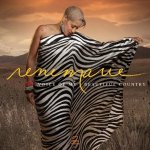
Voice of My Beautiful Country –René Marie (Motema) – By now, most jazz fans are familiar with the incident that birthed the concept for this album. Invited to sing the National Anthem at a 2008 Denver political event, Ms. Marie instead chose to sing the words of “The Star Spangled Banner”, to the melody of “Lift Ev’ry Voice and Sing” (aka “The Black National Anthem”). Though the rendition was stunning, the fallout was immediate and harsh, on all sides of the political and racial spectrum. It nearly derailed Ms. Marie’s promising career. Now in her first full album release since the incident, René Marie proves that she’s back with a vengeance. Voice of My Beautiful Countryis a flat-out artistic triumph; as it covers the spectrum of great American songwriting, from homespun Americana, like “John Henry” to rock classics (“White Rabbit”) to a surprisingly effective medley of “Imagination” and “Just My Imagination” to the unforgettable “Voice of My Beautiful Country Suite”, which includes another “Star Spangled Banner”/”Lift Ev’ry Voice…” mashup. René Marie has been called the natural successor to Nina Simone, Abbey Lincoln and other socially conscious jazz singers. The comparison is fitting.
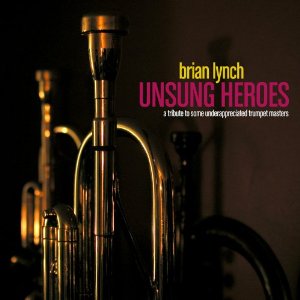
Honorable Mention must go to Brian Lynch’s Unsung Heroes, an album released on CD in 2011, which would be at the top of this list, except for the fact that it appeared on the 2010 year-end list, after it was released late last year in digital form only. Nevertheless, it’s so good that we’ve got to at least mention it again, just in case you’ve missed it.
I also need to remind everyone that this list represents releases that I’ve heard during the first six month of this year. All, some or none of these albums may be on the year-end list, as I hear newer releases, catch up with stuff from the first six months that I haven’t heard yet (such as Branford Marsalis & Joey Calderazzo’s Songs of Mirth and Melancholy, Ben Williams’ State of Artand Vijay Iyer’s Tirtha, all of which are at the top of my very long “to get to” list), or simply change my mind, which is a jazz geek’s prerogative.
I hope that you’ll use this list as an excuse to check out something that you haven’t heard. Agreements, disagreements and additional suggestions are always welcomed.
“It was told that there was a version of this tune that had driven this man to tears, beyond his trivial dogma to a true understanding of the music.” – Jazz critic Eugene Chadbourne discussing Gloria Coleman’s rendition of Blue Bossa (on her Sings and Swings Organ album)
For many, the history of women on the jazz organ begins and ends with Shirley Scott. Though no other woman matched Ms. Scott’s prominence, there were others who deserved a piece of that small spotlight. One such woman was Gloria Coleman.
Ms. Coleman was a New York native, who as a child studied the piano, violin and bass. In fact, she began her career in 1952 as a bassist, playing with pianists in the Philadelphia and Chicago areas. As her interest in the piano and organ grew, her work as a bassist decreased. She got tips from organ legends “Wild Bill” Davis and Jimmy Smith, which helped her develop her foot pedal technique, allowing her to work without a bassist; something Ms. Scott rarely did.
Like Shirley Scott, Gloria Coleman married a well-known tenor saxophonist: in Ms. Coleman’s case it was George Coleman, a strong player in his own right, who gained most fame for being the “transitional tenor” between Coltrane and Shorter in Miles Davis’ quintet. Their union was musically fruitful, as they would work together, on and off, for the rest of Ms. Coleman’s life.
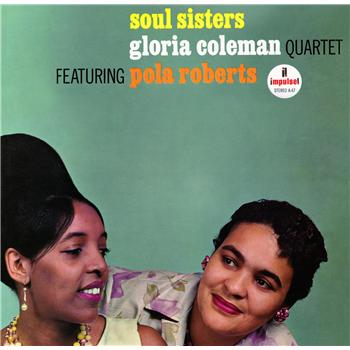
Like most of the women in our series, Gloria Coleman recorded sporadically. Her most well-known recording is her first as a leader; Soul Sisterswhich she made for Impulse in 1963, with Grant Green on guitar, Leo Wright on alto sax and a female drummer named Pola Roberts, who slipped back into obscurity right after this record, in spite of her capable performance. Critics have called Soul Sistersan “underappreciated gem”. It certainly holds its own alongside the work that Scott, Smith, McDuff and others were doing at that time in the soul jazz idiom. Green and Wright sound inspired on their solos and Ms. Coleman’s compositions are catchy. She also recorded a gem of an album in 1971, called Sings and Swings Organ, with trumpeter Ray Copeland, guitarist Ted Dunbar and others.
[From Sings and Swings Organ – Gloria sings “Love Nest”]
Gloria returned the favor to Wright, sitting in on his Soul Talkalbum and composing the minor hit, “State Trooper”. In more recent years, she recorded some memorable sides with Bobbi Humphrey (City Beat), Nat Simpkins (Cookin’ with Some Barbeque) and Hank Crawford (Groove Master).
Her finest album IMO, also proved to be her last. 2008’s Sweet Missywas a sort of family affair, with George Coleman featured on tenor and her son, George Jr. on drums. “Dr.” Lonnie Smith also makes a memorable guest appearance, playing piano alongside Gloria’s organ, on “Put ‘em in a Box, Tie ‘em with a Ribbon”. It’s a very relaxed, but joyous album. The soloists are universally terrific (especially Ms. Coleman, who had grown exponentially over the years) and the band is tight and swinging. Her vocals on the album are frayed but ingratiating with a quality reminiscent of the great Etta Jones.
Gloria Coleman died on February 10, 2010. She left us a musical legacy that is definitely worth exploring.
I’ve been a resident of Charlotte, NC for almost 11 years. I must admit that during most of that time, the choices for mainstream jazz have been at best, limited. Yes, there have been a few establishments that have called themselves “jazz” clubs, but they have mostly offered what we sometimes call “grown folks music”, that is, a mix of radio hit-based R & B instrumentals; vocalists whose time atop the pop charts has passed and competently performed, but unimaginative “smooth” jazz. Economic times being what they are, even those clubs have fallen by the wayside. Though there would be the occasional appearance of a jazz star, they were few and far between.
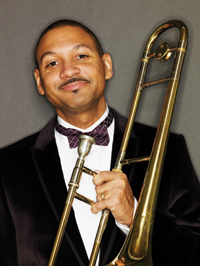
I tell you that to tell you this. To quote Martin Luther King, we straight ahead jazz fans are now “able to hew out of the mountain of despair, a stone of hope”. Within the past 15 months, Charlotte has played host to well-attended concerts by notables such as Regina Carter, Kurt Elling, Kenny Barron, Russell Malone, Esperanza Spalding, Robert Glasper, Branford Marsalis and now another Marsalis brother, Delfeayo; who brought a vibrant quintet to the McGlohon Theater at Spirit Square last week. I’m going to cut to the chase: it was the finest jazz concert I’ve seen since I’ve lived in this city.
The concert was presented by the Jazz Arts Initiative, a new non-profit organization composed of educators, cultural arts patrons, musicians and individuals, all dedicated to the continued development of Charlotte’s arts heritage. Headed by Lonnie Davis, the JAI has shown great potential to succeed where other similar organizations have failed – first because they have already produced tangible results, such as last night’s concert and the ongoing educational programs for elementary and secondary school students; second, because they have shown a willingness to use social media, to an extent that prior organizations have not and finally, because they are funded in part by The Charlotte Arts and Science Council, giving them needed legitimacy with local arts fundraisers.
The evening was kicked off in fine fashion by the JAI All-Star Youth Jazz Ensemble, a promising group of youngsters, all in their teens: Quinn Bannon on drums; Phillip Howe on trumpet; Claire Lucas, bass; Steven Ray (remember that name) on guitar and Alex Sherman, piano. These well-trained, enthusiastic kids delivered solid, swinging takes on Miles’ “Four” and Sam Jones’ “Unit 7”. Their performances bode well for the future of JAI and Charlotte area jazz.
Delfeayo took the stage immediately after the JAI Youth; relaxed, in good humor and ready to swing. Surprisingly, he played no music from his latest, album Sweet Thunder, an Ellington tribute. Instead, he delighted the audience with tunes from the jazz canon and his own compositional catalog. He broke with tradition by kicking the set off, not with a flag-waver but with Strayhorn’s “Intimacy of the Blues”. Marsalis and the quartet, consisting of his longtime pianist Victor “Red” Atkins, John Brown on bass and Charlotte’s own Ocie Davis on drums, had the crowd feeling “intimate” as we hummed, swayed and responded with sundry expressions of approval.
Another regular Marsalis ally, saxophonist Derek Douget and trumpeter Ashlin Parker, a Charlotte native who shows remarkable promise; joined the group for a bouncy romp through the old warhorse “Drum Boogie”. This delight was followed by one of the high points of the evening, Elvin Jones’ “The Lone Warrior”, a tune inspired, as we found out in Delfeayo’s expository comments, by Jones’ father’s refusal to answer his draft notice. Marsalis and Douget and Atkins painted a story of haunting determination in their solos and the ensemble passages. You could envision the proud, resolute Jones père as he marched through his 25 mile journey.
From a previous performance, here’s Delfeayo’s group on an excerpt from “The Lone Warrior”, featuring Mark Gross…
The second half of the show was devoted to numbers penned by Marsalis: the dark, haunting “Lost in the Crescent”, the appropriately whimsical “Br’er Rabbit” (both from Marsalis’ underrated Minions Dominions album). And the compelling set closer, “The Weary Ways of Mary Magdalene” from his debut album Pontius Pilate’s Decision. That tune’s percussive piano vamp grabbed my attention when I first heard it nearly 20 years ago and it still moves me in the same way now.
After the concert was over, Mr. Marsalis returned to the stage for a Q & A session with the audience. In keeping with the relaxed atmosphere that had been established, Marsalis was gracious with his time and expansive with his answers, peppering his responses with interesting anecdotes and raucous humor.
To close the evening, there was one more selection. Victor Atkins returned to join Delfeayo for reminiscence about the beginning of their musical partnership, followed by a duet on “What a Wonderful World”. It was truly a wonderful evening of jazz in Charlotte, one of many we hope to see in the near future here. Kudos to Delfeayo Marsalis and his fine sextet, to the JAI All-Star Youth Ensemble and to Lonnie Davis and The Jazz Arts Initiative; thanks to them, the future of jazz in this city looks very bright, indeed.
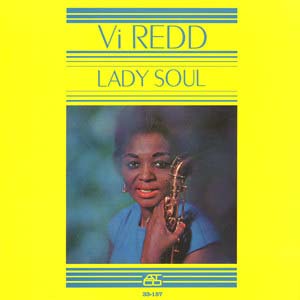 “This record is a sterling example of what the music [jazz] lost in the name of its phallocentricity. Vi Redd demonstrates a thoughtful tone and a careful respect for those around her. Her solos are pithy and directly to the point…Quite honestly, there’s really nothing quite like her records.” – From Rob Ferrier’s All Music guide Review of Vi Redd’s Lady Soul LP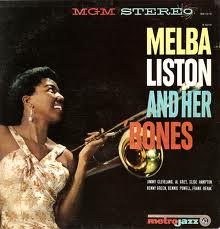




 Curt's Jazz Cafe