Archive for 2011

Obscure Trumpet Masters #9 – Idrees Sulieman

Posted in Obscure Trumpet Masters with tags , , , on March 21, 2011 by curtjazz

Idrees Sulieman (1923 – 2002)
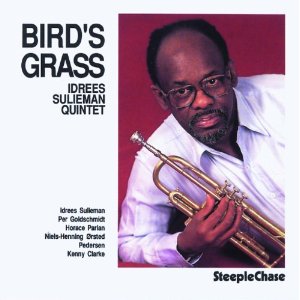
The thing to realize about Idrees is that he went back to the very beginnings of bebop, took part in some of the most interesting hard bop of the ’50s with Coltrane and others, played lead for Tadd Dameron alongside Clifford Brown; he…was still stretching and sounding as modern as anyone in the ’70s, ’80s, and even in the ’90s. – Brian Lynch

“Bell-clear tone, swings hard, creative soloist – Find more of his stuff!!”

Those are the words I scribbled on a scrap of paper about Idrees Sulieman when I first heard him 25 years ago, on an album called The CatsI found that paper about a year ago, inside that LP’s sleeve.  It caused me to go back and start revisiting Mr. Sulieman’s work… I’m still impressed.

Born Leonard Graham in St. Petersburg, FL, in 1923; he changed his name to Idrees Sulieman when he converted to Islam. Sulieman originally wanted to be a sax player, but switched to the trumpet because his father could not afford a saxophone.  (During the ‘60’s, Sulieman again picked up the alto sax and became fairly proficient) Sulieman studied at the Boston Conservatory and gained early experience with the Carolina Cotton Pickers.  He left to join the Earl Hines Big Band in 1943. Bird and Diz were both in the Hines Band then and it had a profound effect on Sulieman. Diz’s play inspired Sulieman to perfect his own style.

During the mid ‘40’s, in addition to Hines, Sulieman logged time with Mary Lou Williams, Cab Calloway and Thelonious Monk. In fact, Sulieman’s played on Monk’s first sides, in 1947. By the mid’50’s, he had found his niche as a top flight bebop sideman. He appeared on Max Roach’s first studio album in 1953 and alongside Gigi Gryce on Mal-1, Mal Waldron’s first disc.

This is “Humph” from Monk’s Genius of Modern Music – Volume 1, which includes some of those ’47 sessions:

Other notable turns as a sideman or co-leader include The Hawk Flies High a Coleman Hawkins session, with Hank Jones, J.J. Johnson, Oscar Pettiford and Papa Jo Jones (Check out “Juicy Fruit” – Sulieman holds a single note for 57 seconds, thanks to circular breathing techniques.);  Interplay for 2 Trumpets and 2 Tenors, along with John Coltrane, Donald Byrd and Bobby Jaspar; Coolin’ with vibraphonist Teddy Charles and Waldron; Three Trumpets with Byrd and Art Farmer and the aforementioned The Cats with Coltrane, Tommy Flanagan, Kenny Burrell, Louis Hayes and Doug Watkins.  Their version of Flanagan’s “Minor Mishap”(below)  is on my list of all-time favorite jazz performances.

The early ‘60’s saw Sulieman moving to Stockholm, where he played with Eric Dolphy, Bud Powell and Don Byas. He cut his first disc as a leader, The Camel, for Swedish Columbia, in 1964. He also returned to big band work, with a decade’s worth of fine recordings with the Clarke-Boland Big Band and the Danish Radio Orchestra, after moving to Copenhagen.

Although Sulieman was on the scene for parts of six decades, his discography as a leader is surprisingly thin.  His three albums for Steeplechase are all available. The best of these is Now Is The Time, from 1976, with Cedar Walton, Sam Jones and Higgins. Though it was almost 20 years after The Cats, Sulieman was as strong and swinging as ever.

Though he performed sparingly during his later years, Sulieman remained a prolific composer.  His estate includes a horde of compositions that were never recorded.  Trumpeter Don Sickler’s publishing company, Second Floor Music, published the tunes but much of it is still unperformed. Brian Lynch has begun to rectify that, by recording four Sulieman works on his recent Unsung Heroes project.

Sulieman died of bladder cancer in his native St. Petersburg on July 23, 2002. He left an impressive and eclectic body of work that should be heard; though it takes a bit of cross referencing to find.

Trust me, he’s worth it.

Recommended Recordings:

Jimmy Heath – “Why Ben Webster Learned the Lyrics”

Posted in Video Vault on March 19, 2011 by curtjazz

I found this video via a tweet a few days ago. I thought it was a great lesson; told in a delightful way by Jimmy Heath who IMHO, is one the five greatest living tenor players. (There’s also a brief, subtle allusion to Johnny Griffin’s seemingly unending peevishness.)

It was recorded earlier this year, as Mr. Heath was sitting for JazzTimes “Before and After” test at the Mid-Atlantic Jazz Festival.

Jimmy Heath is not only a wonderful artist, he is a delight to have around. Hope you enjoy it!

Here’s a bit o’ musical Heath from his rare Picture of Heath album – “For Minors Only”; with Barry Harris – piano; San Jones – bass; Billy Higgins – drums


Melvin Sparks – In Memoriam

Posted in In Memoriam with tags , , , on March 16, 2011 by curtjazz

Melvin Sparks (1946-2011)

I heard earlier today that Melvin Sparks had passed away from heart failure, just days before his 65th birthday. 

Sparks was not well-known, even in jazz circles, so I figured that I would tell y’all a little bit about him.

Sparks was a good guitarist who was most active during the soul-jazz heyday of the late ‘60’s and early ‘70’s.  He was on many of the Prestige Records albums of that time and even on few Blue Note dates.  If you dug Lou Donaldson’s Hot Dog, Lonnie Smith’s Think!, Charles Earland’s Black Talk! or Rusty Bryant’s Soul Liberation, then you’ve probably heard Sparks’ bluesy Grant Green influenced playing. 

He dropped a few projects under his own name during the early ‘70’s as well; all very much within the groovy soul-jazz vein of the era. The best of these were his debut Sparks! with Houston Person and Spark Plug, which featured a young Grover Washington, Jr. on tenor. 

Here’s “The Stinker” from Sparks!

In the so-called “Acid Jazz” era of the ‘90’s, Sparks underwent a bit of a career renaissance.  Sparks! and Spark Plug were compiled on one CD as a part of Prestige’s Legends of Acid Jazz series, which got him some new attention.

Sparks then recorded his first sides as a leader in almost two decades (most for Savant Records) and as the work came again for the other old soul-jazz cats, they gave Sparks a call.  During the ‘90’s and early 2000’s he backed Donaldson and Earland again; as well as Jimmy McGriff, Hank Crawford and relative newcomer Joey DeFrancesco.

He was still going strong until recently, bringing joy to multiple generations with his still nimble playing, as you can see in the clip below.  He was a part of an era of jazz that many people unfortunately, try to forget. But Melvin Sparks should be remembered.

Rest in Peace.

Obscure Trumpet Masters #8 – Louis Smith

Posted in Obscure Trumpet Masters, The Jazz Continues... with tags on March 15, 2011 by curtjazz

Louis Smith

It will not take you long to discern…what it was that [Blue Note Records founder] Alfred Lion found in Louis Smith to give him the same faith he had in Brownie, in Horace Silver and Lee Morgan and all the many others whose careers he has helped. – Leonard Feather


Every one of the cats who has been a part of this series has had an almost Sisyphean encounter with fame. Louis Smith is no exception.

Born in Memphis in 1931, Louis Smith began playing the trumpet as a teenager. He graduated high school with a scholarship to Tennessee State University, where he majored in music. After graduating from Tennessee, Smith continued his studies at the University of Michigan, which afforded him the opportunity to play with Miles, Diz and others as they passed through Ann Arbor.  After a stint in the Army, Smith began teaching high school in Atlanta by day and jamming in the clubs at night, again impressing visiting jazz stars with his Fats Navarro/Clifford Brown influenced style.

The next year, he recorded his debut as a leader, assembling an impressive group, including Duke Jordan, Tommy Flanagan, Art Taylor, Doug Watkins and on alto saxophone, “Buckshot La Funke”, who was more commonly known as Cannonball Adderley. The record label, Tom Wilson’s Transition Records, went out of business before the album could be released. However Alfred Lion, knowing a good thing when he heard it, bought the masters and signed Smith to an exclusive contract. The album was released as Here Comes Louis Smith.

In 1958, Smith appeared again with Burrell on the now classic Blue Lights sessions and on another Blue Note date under his own name, Smithville; with Charlie Rouse, Sonny Clark, Paul Chambers and Taylor. He also briefly joined Horace Silver’s group. There was thought to be no recorded evidence of his time with Silver, until the discovery and release in 2008 of the amazing Live at Newport ’58 album.

At 27, Louis Smith seemed destined for jazz stardom. However, seeking security and stability, Smith abruptly retired from the music business, moved back to Ann Arbor, and taught at the U. of Michigan and in the public school system for the next 20 years.

In 1978 Smith returned to the scene with two albums over the next two years, on Steeplechase: Just Friends and Prancin’Smith was in fine form on these albums, proving that the twenty year absence had not affected his chops – which may have been why he took another eleven year sabbatical before his next recording, Ballads for Lulu, in 1990.  Smith then retired from teaching and got down to some serious recording, making nine more discs, all on Steeplechase, between 1994 and 2004. 

Unfortunately, we are not likely to hear anymore from this should be legend; Louis Smith suffered a stroke in 2005, resulting in aphasia, which has robbed him of the ability to play the trumpet and makes verbal communication very difficult. He is said to be improving, thanks to intensive therapy, including music therapy.  We wish Louis Smith well in his recovery.

On Volume 2 of Unsung Heroes, Brian Lynch dedicates his composition “’Nother Never” to Louis Smith. Once you hear Mr. Smith play, you’ll understand why.

From Unsung Heroes – Vol. 1, here’s the Brian Lynch Sextet playing Louis Smith’s “Wetu”


Recommended Recordings:

Obscure Trumpet Masters #7 – Bobby Shew

Posted in Obscure Trumpet Masters with tags , , , , on March 5, 2011 by curtjazz

Bobby Shew

Don’t be afraid TO TRY!! Better to explore and discover than to keep your head and mind buried in the sand of tradition (and misinformation). – Bobby Shew

The first time I ever heard a CD, Bobby Shew was playing.

I was working at Macy’s in the early 80’s, selling rugs. We were located right next to electronics. The audio guys loved to demonstrate this new “digital technology”. What better way to do it than with Bobby Shew and Chuck Findley’s then new release, Trumpets No End. The stunningly clear sound and the musician’s technical mastery made me a fan of Shew (and CDs) for life.

Bobby Shew is a musician’s musician. Cats on the scene speak highly of him; his name is listed in the trumpet section of countless recordings; he’s still a first call sideman, he is a universally respected clinician and he has also recorded some very impressive work as a leader. But outside of musicians and true jazz cognoscenti, he is unknown.

Born Robert Joratz in Albuquerque, NM in 1941, Bobby Shew began playing the guitar at the age of eight and switched to the trumpet at ten. Paradoxically, for such a renowned educator, Shew is for the most part, self-taught. By the time he was thirteen he was playing at local dances with a number of bands and by fifteen he had put together his own group to play at dances, occasional concerts and in jazz coffee houses. Shew’s professional career began when he was in high school; playing as many as six nights a week in a dinner club.

(In the clip below, Bobby Shew trades licks with himself, using a creation he calls the “Shewhorn”)

A few years later, Shew joined the Tommy Dorsey ghost band, which led to him being asked to play with Woody Herman in 1965.  When Buddy Rich formed his big band the next year, Shew got a call. Many other similar situations followed and Bobby played lead trumpet for a number of pop stars. This brought him to Las Vegas where he became prominent in various hotels and casinos. By this time Bobby was widely known for his strong lead playing rather than as a jazz soloist. So late in 1972 he decided to make a move to the Los Angeles area in order to get re-involved in developing as a jazz player.

Once in LA, Bobby quickly found what he was looking for.  In the years to come he spent time with the groups of Art Pepper, Bud Shank, and Horace Silver, plus numerous big bands such as Louis Bellson, Toshiko Akiyoshi-Lew Tabackin, Oliver Nelson, Terry Gibbs, Benny Goodman and Maynard Ferguson.

Telepathy, Bobby’s 1978 debut as a leader (at the tender age of 37), happened by accident; a quintet album was to be recorded that day and had to be cancelled, due to scheduling conflicts. Shew and pianist Bill Mays suddenly found themselves alone in the studio with the booked time available.  Without a lot of discussion, they chose six standards and created two on the spot improvisations.  The result was a fine duet album. Telepathy has never been released on CD, but if you stumble across a copy of the LP, it is worth picking up.

Having just turned 70 on March 4, Bobby Shew (http://www.bobbyshew.com/) is still very active, mostly on the West Coast jazz scene. If you get a chance to hear him live, check him out; or pick up one of the excellent discs below. You’ll be glad you did.
Recommended Recordings:

Obscure Trumpet Masters #6 – Dizzy Reece

Posted in Obscure Trumpet Masters with tags , on February 24, 2011 by curtjazz

Dizzy Reece

There’s a great trumpeter over in England, a guy who’s got soul and originality and above all, who’s not afraid to blow with fire”. – Miles Davis  (about Dizzy Reece)

You can’t have a conversation about the great trumpet players in jazz without the name “Dizzy” coming into the discussion.  Naturally, when that name is used, almost everyone will assume that you’re referring to the great John Birks Gillespie.

Let me introduce you to another “Dizzy”; Alphonso Son Reece.  The son of a silent films pianist, “Dizzy” Reece was born in Kingston, Jamaica in 1931.  Contrary to what you’d expect, he did not get his nickname because of any similarity between himself and Birks, but because as a young man, he liked to wander the dangerous streets of Kingston late at night, getting into precarious situations.

In an attempt to keep him out of trouble, young Alphonso was sent to Alpha Boys School, a learning institution in Kingston, run by Catholic Nuns.  Established as a school for wayward boys, Alpha developed a reputation also turning out some fine musical talent.  Reece’s first instrument was the baritone horn; and at age 14, he switched to the trumpet.

In 1947 Reece moved to London, seeking more musical opportunities; he found them. He worked regularly in London, Paris, Germany and Holland. He became known as much for his blistering trumpet solos as for his at times, difficult personality.  But this is jazz, not charm school. So while Dizzy’s temperament may have ticked off a few writers and band members along the way, it did not stop him from getting the attention of visiting American jazz stars, such as Sonny Rollins, Thad Jones, Kenny Clarke and Miles Davis.

Blue Note records founder, Alfred Lion, heard about Reece and reached out to British jazz producer Tony Hall, asking Hall to produce Dizzy’s first American sides – for Blue Note – in 1958. The resulting album, Blues in Trinity, was an auspicious debut.   The sidemen were British jazz stars Tubby Hayes on tenor and Terry Shannon on piano, Canadian bassist Lloyd Thompson and visiting Americans Art Taylor on drums and Donald Byrd as a second trumpet.  The music is high quality hard bop, typical for the period.

From Blues in Trinity, Dizzy Reece plays “I Had the Craziest Dream”

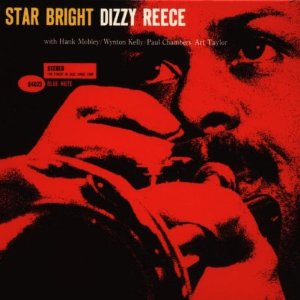
Lion was impressed enough with Blues in Trinity, to ask Reece to come to New York, which he did.  Two more Blue Note albums soon followed: Star Bright, with Hank Mobley, Wynton Kelly and Paul Chambers; and Soundin’ Off with Walter Bishop and Doug Watkins.  A final set of tunes were recorded for Blue Note in 1960, with Stanley Turrentine (in his Blue Note debut), Bobby Timmons, Duke Jordan, Sam Jones and Art Blakey. Those sides inexplicably remained in the vaults until they were released in 1999 as Comin’ On.

Yet, in spite of the hype and the fine recordings, Dizzy Reece did not become a star.  Perhaps it’s because the musical and social environment of New York in the early ‘60’s was extremely competitive and volatile.  Nevertheless, he remained in NYC, where he lives to this day.

His four Blue Note albums were available as part of a now out of print Mosaic Select set. His one recording for Prestige, 1962’s Asia Minor, an excellent date with Cecil Payne, Hank Jones and Ron Carter, is also now OOP but not hard to find.  After Asia Minor, Dizzy Reece would not lead another session until 1970 and he has only recorded three more since then.

His appearances as a sideman are also rare. The most notable ones are on Duke Jordan’s Flight to Jordan; and two albums from 1969: Hank Mobley’s penultimate session, The Flip and on Andrew Hill’s Passing Ships.  His most recent release, Nirvana in 2006, is as its title suggests, a rather mystical affair, steeped in Eastern musical styles.

For whatever reason it happened, Dizzy Reece’s musical obscurity is undeserved.  Check his music out. Then, the next time someone asks if you dig Dizzy, you may say “which one”.

Recommended Recordings:

  • Blues in Trinity (Blue Note)CD (CD-R) in print; mp3 available 
  • Star Bright (Blue Note) – CD OOP; mp3 available
  • Asia Minor (New Jazz/OJC) – CD – OOP, but fairly available; mp3 available
  • Comin’ On (Blue Note) – CD (CD-R) in print

My Dinner with Delfeayo (with “Jam” for Dessert)

Posted in JazzLives! on February 21, 2011 by curtjazz

I sat at my day job desk last Wednesday morning doing, as Prince would say, “Something close to nothing, but different than the day before”, when my cell phone rang. I didn’t immediately recognize the number but I decided to answer anyway.

“Brother Davenport” the pleasant voice on the other end said. “This is Delfeayo Marsalis”.

I was pleasantly surprised. 2011 NEA Jazz Master Delfeayo Marsalis and I had made a Twitter connection a few weeks earlier, in connection with his fine new album Sweet Thunder (Duke and Shak). We had exchanged numbers and chatted about getting together when his tour and stage show made a stop in Charlotte.  I had sincerely welcomed his invitation, but because I’ve been around this business long enough to know how quickly plans can change, I hadn’t been waiting by the phone. 

Delfeayo asked if was available to join him and his band at dinner that evening; and if I could recommend a place to have the meal. At that very moment, the BlackBerry on my hip began to buzz, reminding me of a meeting that I had on the other side of the office, starting in 5 minutes.  I had to quickly take my leave of Mr. Marsalis with a promise to text him back in about an hour with a suggestion for a restaurant that would seat all 15 of us and have some good vegetarian meal options; at 7 pm that evening.

My brain did double duty during that meeting; partly concentrating on the business at hand and partly thinking of a restaurant for tonight’s meal. I settled on Cantina 1511; a trendy, but slightly funky Mexican place. I texted Delfeayo; he confirmed and we were all set, or we were, until about 4:00 when plans changed unavoidably. We then reset for Thursday night at 8:00.

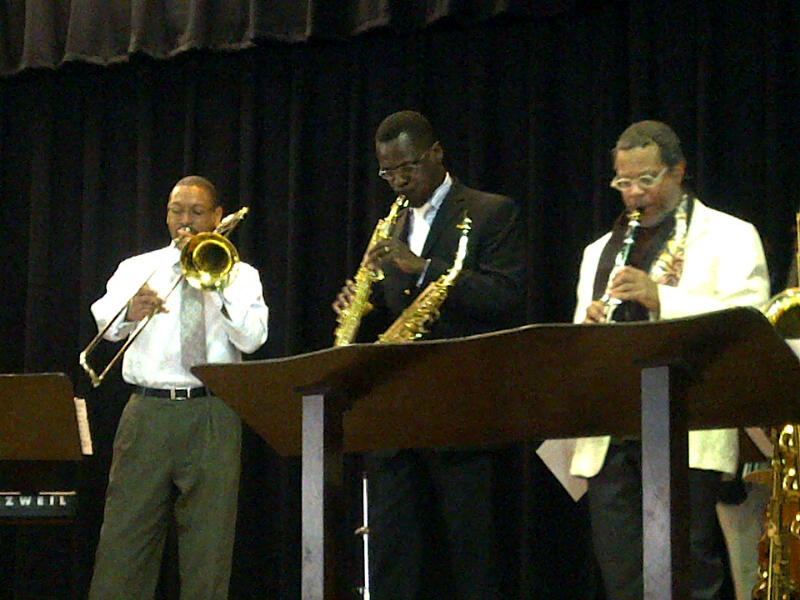
L to R : Delfeayo Marsalis, Mark Gross, Don Byron, during a performance of "Sweet Thunder (Duke and Shak)" - Photo by Michele R. White

Thursday night came and everyone met. Our party consisted of Delfeayo and most of the company of Sweet Thunder, plus two lovely ladies who loved jazz: Michele White of the Jazz Institute of Houston and her cousin Nicole.  Delfeayo greeted me warmly and thanked me for my efforts in support of the tour. We then sat down for a good meal and even better conversation about topics ranging from food, to families to chivalry (or the lack thereof, especially when it comes to a family style meal) and of course, jazz. There were many laughs, a few thought-provoking moments and one  communal groan, when saxophonist Mark “Preacherman” Gross stood up and told a long story, before leading us in a heartfelt toast. 

I thought the evening would end after dinner, but to my pleasant surprise, I was wrong. Delfeayo told me that a friend of one of the band members was playing as part of a piano trio at Sullivan’s Steakhouse, in Charlotte’s South End; and that they were heading over there to jam. Since world-class jazz musicians playing in Charlotte happens about as often as we get snowstorms, I jumped at the invitation to join them.

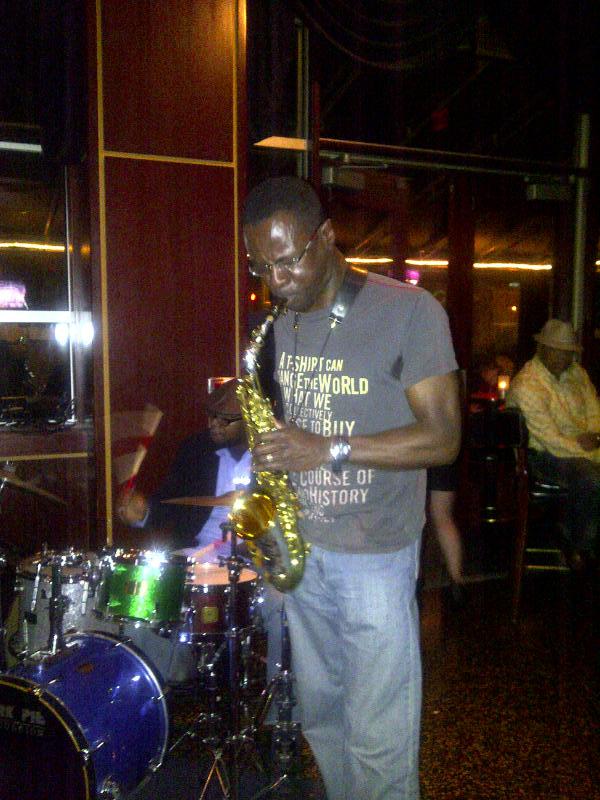
Mark "Preacherman" Gross at Sullivan's in Charlotte, NC 2/17/11 - Photo by Michele R. White

The trio was nestled in a corner of the steakhouse’s floor, by the bar, being ignored by almost every patron, as people sipped their cocktails and made conversation. Delfeayo and company exchanged a few pleasantries with the other musicians as they came in and began to inconspicuously unpack their horns. Only a few took notice as David Bryant slid on to the piano bench, replacing the house pianist.

Quietly, Marsalis counted off and he and Gross broke into the head of “Blue ‘n Boogie”. Soon, they were joined by trumpeter Lynn Grissett (remember that name jazz fans), in a formidable front line. The jaded bar customers and those on the adjacent outside patio began to take note. They were used to a jazz trio here and even an occasional horn player sitting in, but this was different. These cats were clearly not from around here. Delfeayo swung through a lively triple tongued solo, followed by a Bird-like statement from the “Preacherman”.

Nicole and Michele

The buzz was beginning to grow throughout the bar. I saw patrons ask the bustling wait staff about the identity of the guests, only to be answered with polite shrugs. By the time Grissett had finished cutting the air with his bell clear tones, and they wrapped up the number, things had become a bit more crowded.    

By now, bassist Dezron Douglas and Shaena Ryan, a gifted young Duke University grad, who usually plays baritone sax with Delfeayo, but tonight had brought her alto along, were ready for action. The rhythm section struck a few familiar chords and the horns broke into “Watermelon Man”, which brought a few “yeahs” from the growing throng. A few iPhones and other similar devices began to materialize in the hands of those on the perimeter. People knew that whoever these cats were, this was worth recording. I heard one person say to another, “I think that’s Wynton Marsalis” another then corrected him, saying “No. That’s his brother”.

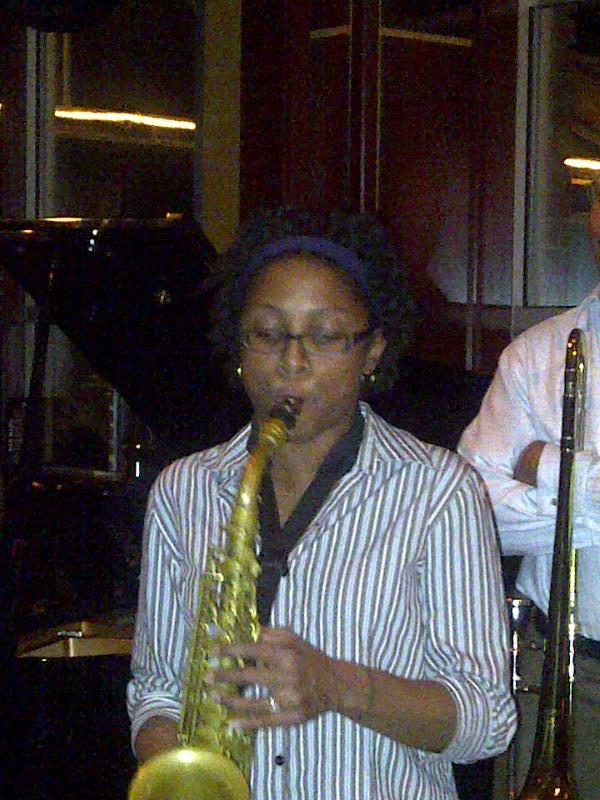
Shaena Ryan at Sullivan’s in Charlotte, NC 2/17/11 – Photo by Michele R. White

Michele, Nicole and I soon found ourselves defending our ground; holding on to the spot of prime viewing space that we had staked out. As “Watermelon Man” came to a rousing conclusion, one satisfied patron shut off his iPhone video and declared “Boy! That was worth the price of admission, by itself!”

Before the crowd died down, Delfeayo’s trombone broke through with a burnished chorus of “It Never Entered My Mind”.  At this point, nothing else going on in Sullivan’s seemed to matter; a full-fledged jazz jam-session had broken out, on a Thursday night, in this upscale steakhouse.

As Delfeayo finished his solo, a well dressed, slightly inebriated gentleman walked right up to Marsalis on the “stage” placed his hand on Delfeayo’s shoulder and began a conversation, as Ms. Ryan soloed a few feet away. The ladies and I chuckled at this “breach of etiquette”, but it was so good to see relaxed jazz like this in Charlotte that for the moment, it seemed entirely appropriate…

Delfeayo Marsalis brings Sweet Thunder a theatrical jazz production featuring actor Kenneth Brown, Jr. and a jazz octet-Marsalis on trombone, Lynn Grissett on trumpet, Shaena Ryan on bari sax, Mark Gross on alto sax, Don Byron on tenor sax, David Bryant on piano, Dezron Douglas on bass, and Winard Harper on drums; plus full stage set and costuming to 36 American cities and towns from January through May, 2011. The show is directed by John Grimsley with a script by Charles E. Gerber. For further information about upcoming dates and locations, visit Mr. Marsalis’ website: http:\\dmarsalis.com

Very sincere thanks to Michele White for the pictures that accompany this article. I realized early that we were witnessing Charlotte jazz history that night, but my camera couldn’t care less and died on me at the start of the jam session. Without Michele’s kindness, I would have no pictures to back up my words.

Review: Unsung Heroes – Brian Lynch

Posted in CD Reviews, The Jazz Continues... on February 19, 2011 by curtjazz

Brian Lynch – Unsung Heroes (Hollistic MusicWorks)

Available From: http://brianlynch.bandcamp.com/cdbaby.com; iTunes; Amazon.com  

Artist Website: http://brianlynchjazz.com

As I’ve reached the halfway mark in my “Obscure Trumpet Masters” series, I felt it was time to talk about the project and the artist that served as part of the inspiration for those posts: Brian Lynch’s Unsung Heroes.

Mr. Lynch has been a part of the mainstream jazz scene for the better part of three decades. He has won acclaim for his work with jazz giants from Horace Silver to Phil Woods to Eddie Palmieri. He was the last in a long and storied line of trumpet players in Art Blakey’s Jazz Messengers.  And he is not only a world-class musician, but a keen student of the history of jazz, especially those who came before him on his instrument. His recordings as a leader have often included lesser known compositions by trumpet giants and some by those whom the spotlight missed.  His 2000 Sharp 9 Records release Tribute to the Trumpet Masters paid homage to greats ranging from Dizzy Gillespie to Lee Morgan to Lynch’s idol, Kenny Dorham.  Unsung Heroes is a natural progression, as respect is paid to, as the title suggests, many jazz trumpet players who have not gotten the recognition that they deserve. 

On this two-disc collection (three, if you include the set of alternate takes), Lynch spotlights the playing and/or writing of Kamau Adilifu (Charles Sullivan), Donald Byrd, Joe Gordon, Howard McGhee, Claudio Roditi, Louis Smith, Idrees Sulieman, Ira Sullivan, Charles Tolliver and Tommy Turrentine [brother of tenor great Stanley].  Unsung Heroes is an impressive effort in every way, from the breadth of jazz trumpet history that it covers, to masterful compositions (especially the never recorded works by Turrentine and Sulieman) to the outstanding musicianship of Mr. Lynch and his band: Vincent Herring on alto; Alex Hoffman on tenor; Rob Schneiderman, piano; David Wong, bass; Pete Van Nostrand, drums and Vicente Rivero on congas.

Lynch’s liner notes provide a great deal of background on the artists and the compositions.  I had been aware of Turrentine and Sulieman’s stellar work as sidemen and their limited discographies as leaders, but I was unaware that each had left a rich body of music; written in their later years, but never performed.  All of it had been under the care of trumpeter/ producer Don Sickler. Eight of these tunes, four by each man, make their recorded debut on this project. All of the performances of these new works are at minimum, very good. Three of them (Turrentine’s “Big Red”; “I Could Never Forget You” and Sulieman’s “Short Steps”) are excellent; as are “Terra Firma Irma”, “Household of Saud” and Lynch’s own “Further Arrivals” and “Marissa’s Mood”.

Unsung Heroes is Brian Lynch’s finest work as a leader. The music is pure mainstream jazz, executed by pros performing at their highest level. Lynch and the other musicians are completely up to the task at hand and they deliver strong ensemble performances and consistently creative solos. 

As of this writing, Unsung Heroes is only available as a high quality digital download, with a fully downloadable booklet, at http://brianlynch.bandcamp.com/ ($9.99 each for Vols. 1 & 2; Vol. 3 [Alt. Takes] is Name Your Price). The CD version is expected sometime in 2011.  Fans of straight-ahead jazz will want this project in your collection, regardless of the format.

Obscure Trumpet Masters #5 – Benny Bailey

Posted in Obscure Trumpet Masters with tags on February 12, 2011 by curtjazz

 Benny Bailey (1925 – 2005)

“His sound is very personal and he completely avoids clichés. Above all, he is thrillingly himself. He is totally uninhibited and will get all kinds of sounds out of his horn to get his message across. He combines fantastic breath control, remarkable range and a flawless technique…” – Quincy Jones on Benny Bailey

I’m breaking the alpha order rule that I set when I started, but what the hell. Benny Bailey deserved to be on this list.

Born in Cleveland in 1925, Benny Bailey started out a pianist and flutist before switching permanently to the trumpet.  Early in his career he gigged with Scatman Crothers (Chico and the Man, The Shining and a bunch of other stuff) before landing a gig in 1947 with Dizzy Gillespie’s legendary bop based big band.  Bailey stayed with Diz for a couple of years before moving on to Lionel Hampton.

In the Hampton band, he met another young trumpet player/composer/arranger named Quincy Jones. “Q” so dug young Bailey’s chops that he was moved to write a bouncy show piece for him. The title was “Meet Benny Bailey”.  It became a staple in Q’s band book (and the books of many others) long after his time with Hampton. Years later Jon Hendricks put lyrics to the tune; the Manhattan Transfer recorded it on their legendary Vocalese album and “Meet Benny Bailey” became a minor classic. Ironically, people know more about the tune than they do about the man in the title (Truth – I’ve met folks who didn’t know that “Benny Bailey” was a real person).

When the Hampton band was passing through Sweden on tour in 1953, Bailey abruptly quit the band and decided to remain in Stockholm. He immediately found work there and spent the next few years shuttling back and forth between Europe and the U.S., before settling in Europe permanently in 1961.

Bailey worked steadily through the years, recording mostly with European groups including notably, the Kenny Clarke/Francy Boland Big Band. He was well-known in Europe, but hardly registered on the American jazz scene, with two notable exceptions.

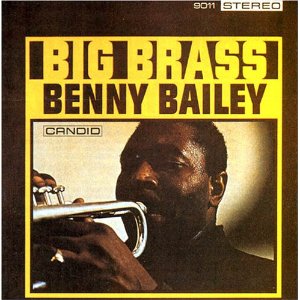
The first was an album he recorded for Candid in 1960, on a trip to the U.S. after finishing a tour with Quincy. It was called Big Brass. Aided by a septet that included Phil Woods, Julius Watkins, Tommy Flanagan and Art Taylor; playing charts by Jones and Oliver Nelson among others, this group laid down some tracks that epitomized cool bop-swing.  Though he would record for another 40+ years, Big Brass is arguably the best date that Bailey recorded under his own name.

The other exception was one of those jazz festival “accidents” that took place in July 1969, at Montreux. Pianist Les McCann was there to perform with his trio and a couple of horn players sat in with them: saxophonist Eddie Harris, who was a regular McCann partner and Benny Bailey, who had never played with McCann before.  Said Bailey: “I didn’t know any of the tunes, and there was no rehearsal: they had to call out the changes for me.” The results, as we now know, were electrifying; as Bailey’s soaring, stabbing and growling solos are indelible parts of that set, the live album that resulted from it: Swiss Movement and of course, two anthems of the soul-jazz canon “Compared to What” and “Cold Duck Time”.

Years later, Bailey admitted that he did not much care for the funky, R&B laced music that they played that night but like it or not, he is known more for that slice of “shotgun wedding” jazz, than he is for anything else he did before or after it.

Bailey kept up his active performing and recording schedule into the 21st Century, putting together a nice Louis Armstrong tribute disc (The Satchmo Legacy) in 2000.

The circumstances surrounding Bailey’s April 2005 death are bizarre, confusing and undeservedly sad.  He died, apparently alone, in his Amsterdam apartment.  He was found on April 14th. He had been dead for as many as ten days. Neighbors knew nothing about him and musician friends had assumed that he was somewhere on tour.  His body lay in a local morgue for another two weeks before a death announcement was placed in a local paper. A Dutch drummer who had remembered Bailey once mentioning a sister in Cleveland, contacted a Cleveland based jazz journalist, who then was able to contact Bailey’s family in the U.S., who saw to it that Bailey received a proper funeral; almost a month after his death.

Would Benny Bailey have received greater acclaim if he had remained in the States? Who knows. What we do know is that he was a master of his instrument who left us some brilliant music to remember him by. Every serious jazz fan should take the opportunity to “Meet Benny Bailey”

Recommended Recordings:

  • Big Brass (Candid) – CD in print; mp3 also available 
  • Grand Slam (Storyville) – w/ Charlie Rouse, Richard Wyands, Sam Jones CD OOP, but available; mp3 also available 
  • I Thought About You (Laika) – CD in print (on demand); mp3 also available
  • The Satchmo Legacy (Enja) – CD in print, mp3 also available;

Obscure Trumpet Masters #4 – Carmell Jones

Posted in Obscure Trumpet Masters with tags on February 8, 2011 by curtjazz

Carmell Jones (1936 – 1996)

“The New York scene was stifling me and I was becoming disenchanted with things in the States.” Carmell Jones

He plays on one of the most famous straight-ahead jazz songs ever recorded, yet today people are more likely to confuse him with a film character played by Dorothy Dandridge, than they are to know the titles of any of his six albums. 

Carmell Jones was a native of Kansas City, KS, who possessed a powerful attack and a clear buoyant tone. This made finding work as a sideman and as a studio musician, after he moved to California in 1960, relatively easy. 

During the early ‘60’s Jones, played or recorded with Bud Shank, Gerald Wilson, Nelson Riddle and many others. He recorded his first album, The Remarkable Carmell Jones, for Pacific Records in 1961, with Harold Land joining him on the front line.  It was an auspicious debut, with Jones, Land and the band swinging hard through a few hard-bop tunes and a couple of standards. Gerald Wilson wrote arrangements for his next two albums: Business Meetin’ and Brass Bag, also for Pacific.

(Carmell Jones plays “Yvette”)

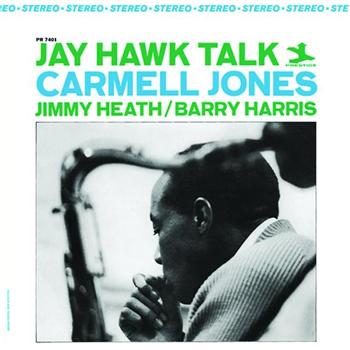
In the spring of ’64, Jones moved east to join Horace Silver’s group. During his brief tenure with the pianist, he played on several cuts on the celebrated Song for My Father album, including the title track.  He also recorded  his best known album, Jay Hawk Talk, for Prestige and played on some well-received discs with Land, Booker Ervin and Charles McPherson. Not surprisingly, Jones was voted Downbeat’s “New Star Trumpeter”.

(From Jay Hawk Talk, Carmell Jones – “Willow Weep for Me”)

Yet, at the height of this apparent success, Jones quit Silver’s band in the summer of ’65 and moved to Germany, where he remained for the next 15 years.

Though this move may have been best personally for the easygoing Jones, it probably hurt him professionally, as he was effectively removed from the U.S. jazz scene until he returned, in virtual anonymity, in 1980. 

He recorded a very good album Carmell Jones Returns, in 1982, but it went virtually unnoticed. He taught music in elementary school and worked on the local Kansas City jazz scene for the remainder of his life, before passing away in 1996, at the age of 60.

I discovered Jones’ music through picking up a used LP copy of Jay Hawk Talk in Greenwich Village record store a few years back. I’ve heard most of his limited discography since then. I find something new to like each time I hear him.  I think you will too.

Recommended Recordings: