I spent many hours in front of the television as a child. Growing up in the New York City area, we had at least a half-dozen stations (a lot for the 1960s) to choose from to keep us entertained. My favorite was Channel 11 (WPIX) because even then, my tastes were a little different from other kids my age. In addition to The Little Rascals, The Three Stooges and Popeye, I also enjoyed when they would drop in cartoons that were not the standard fare.
I remember seeing the animated feature below a number of times, when it was used as filler to get the programmers to their next time slot. It drew me in because the style of animation was different and the black man playing the piano was as cool and elegant as anyone I had ever seen. Even at age seven, I knew he had to be somebody special. He was. He was Duke Ellington. The animated short was called “A Date With The Duke”. The creator was a man named George Pal and the early stop motion technique that he used to create his “Puppetoons” birthed Gumby, Wallace and Gromit, the work of Ray Harryhausen and many others that we know today. Mr. Pal also became quite controversial for his use of stereotypical black characters in some of his other shorts such as the “Jasper” series; which he tried to make amends for with “John Henry” (which was also in the regular filler rotation on Channel 11).
All of this, of course I found out many years later. What I knew then is that I was always happy to see this “cartoon” featuring the elegant Duke Ellington and the cool perfume bottles, performing The Perfume Suite. It planted the seeds for what became a true love and appreciation for the Duke and his art.
I had been looking for it for years and I was happy again to see it pop up on YouTube recently.
I hope you enjoy it as much as I did and still do.
As you may recall, I reluctantly chose to miss last year’s Atlanta Jazz Festival. As much as I wanted to be there, I took the advice of family, friends and doctors to stay close to home a little while longer as I recuperated from cancer surgery. Well, a year has gone by and thank God, I’m feeling GREAT. So the fam and I will be back in Piedmont Park this Memorial Day weekend, attending the best free jazz festival in the country and maybe the world.
A few things will be different this year than in the recent past. The organizers have scrapped the performances on Memorial Day Monday. Instead they are kicking things off in a big way on Friday night with Roberta Gambarini and Roy Hargrove on The Main Stage. Saturday will bring Russell Gunn’s latest group and Christian Scott. On Sunday the wonderful Freddy Cole and the exciting young chanteuse Cyrille Aimee will be performing simultaneously on two different stages (tough choice!) but all will be back at the Main Stage later that evening as the legendary Ahmad Jamal closes out the festival.
Also new this year will be The Locals Stage, which will feature some of the best jazz artists that are working in the ATL. Thankfully, one of my favorite locales, The International Stage, will be going strong on Saturday and Sunday.
All in all, the lineup is strong as usual, with a true international flair. As someone who prefers to check out new and unfamiliar artists in addition to the recognizable, the 2014 AJF has a lot to offer for me and I plan to sample as much as possible.
As we get closer to May, we’ll start with our usual preview reports and video clips. We’ll also drop some “live” videos from the festival and maybe some interviews with the artists. Hopefully we’ll see some of y’all in Piedmont Park Memorial Day Weekend as we make our triumphant return!
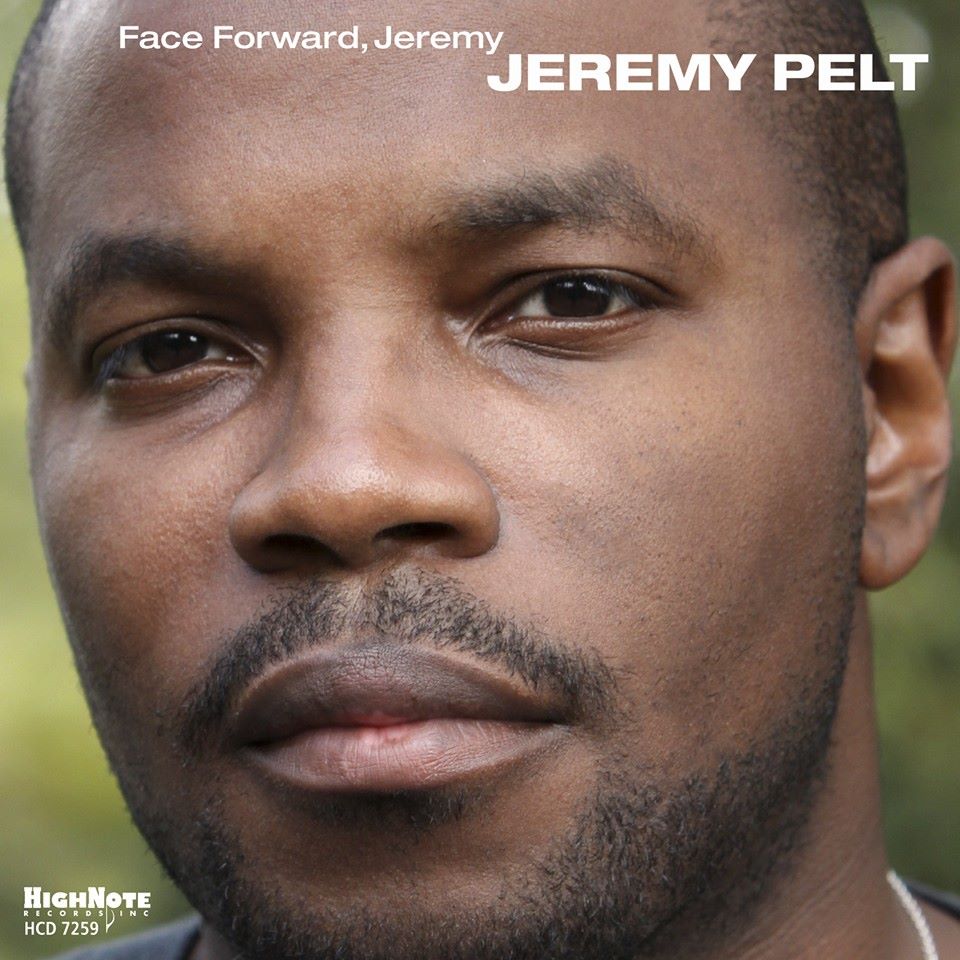
FACE FORWARD, JEREMY – HighNote Records HCD 7259 www.jazzdepot.comHigby Part 1; Stars are Free; Princess Charlie; The Calm Before The Storm; Glimpse; Rastros; In My Grandfather’s Words; The Secret Code; Verse
PERSONNEL: Jeremy Pelt, trumpet; Roxy Coss, soprano saxophone, tenor saxophone, bass clarinet; David Bryant, piano, organ, Fender Rhodes, Wurlitzer; Frank LoCrasto, Fender Rhodes; Chris Smith, acoustic bass, electric bass; Dana Hawkins, drums, drum programming; Fabiana Masili, vocals; Milton Suggs, vocals; Brandee Younger, harp; Jennifer Shaw, cello
By Curtis Davenport
While some of his contemporaries have been grabbing the headlines, Jeremy Pelt has been quietly amassing an impressive and diverse résumé consisting of some of the more compelling jazz performances of this brief century. Though his recorded performances have mostly leaned toward the mainstream, Pelt has of late begun to delve into the fusion side of his persona with musically satisfying results. I always get the sense that Mr. Pelt is seeking; looking to bring a fresh perspective to his projects. As look back at his catalog as a leader, which now stands at a dozen albums, I realized that each of his records was in some way different from the last. And his latest album, Face Forward, Jeremy is no exception.
This album can be considered a sequel of sorts to Pelt’s prior release, the moodily gorgeous Water and Earth. The same musicians appear on both albums and in each case David Bryant’s dreamy Fender Rhodes is a centerpiece; serving as an atmospheric foil for Pelt’s trumpet and Dana Hawkins’ complex rhythmic patterns. Mr. Pelt states that one of his biggest influences for this album was Herbie Hancock’s Mwandishirecordings of the early ‘70’s, which would also explain the prominence of the electronic keyboards. But whereas the group seemed at times to be finding its way on Water and Earth, their performances on Face Forward, Jeremy are more confident. They have played together for a while as a unit and they are certain of what they want this music to sound like.
Among the cuts that I have revisited numerous times are “Stars Are Free”, which brings bassist Chris Smith to the fore for some strong Jaco-like fretwork, supported by guest star Frank LoCrasto’s insistent comping on the Rhodes, which then slides into a fleet fingered solo. “Princess Charlie”, dedicated to Pelt’s two-year old daughter, has a distinct Brazilian influence, a hummable melody line that will stick with you long after the track is done, tasty solos by Mr. Pelt and Roxy Coss on soprano sax and a Flora Purim-like wordless vocal from Fabiana Masili. In fact, I loved both of Ms. Masili’s appearances on the disc, the other being “Rastros”, a brief track of quiet beauty, which in addition to Ms. Masili, is elevated by Jennifer Shaw’s cello and the support of the finest jazz harpist working today, Brandee Younger. “The Calm Before The Storm”, a Coss composition, will grab you, starting with a soulfully compelling bass line (Chris Smith is one bad cat), with Bryant’s Rhodes layered on top, before Pelt and Coss (on tenor) hit us with a sharp melody statement and brief but rich solos. The leader’s showpiece however is “Glimpse” an uptempo romp that gives Pelt plenty of room to blow; and he does, demonstrating that a great trumpet solo doesn’t need flashy pyrotechnics, just an inspired musician with numerous ideas. Ms. Coss follows the leader with a strong tenor statement of her own. I haven’t heard her yet outside of Pelt’s group but I like Roxy Coss. She has already developed her own voice on her horns and she sounds like she is just beginning to put it to excellent use.
Though Jeremy Pelt has found a nice groove with his fusion group and turned out a very good album here, I get the feeling that we’ll hear something different from him next time. I hope so because that kind of restless creativity will help Pelt and those of his generation to keep jazz alive and relevant.
HEROES + MISFITS – Concord Jazz CJA-34353-02 www.concordmusicgroup.comForever Spring; Wake The Neighbors; #TheProtestor; Vices and Virtues; Forget-Er; Wonderlove; Forever Wonder; Drift; First; Ways of Light
PERSONNEL: Kris Bowers, piano, keyboards; Julia Easterlin, vocals; José James, vocals; Chris Turner, vocals; Casey Benjamin, alto saxophone; Kenneth Whalum III, tenor saxophone, Adam Agati, guitar; Burniss Earl Travis II, bass; Jamire Williams, drums
By Curtis Davenport
Those who run around declaring jazz to be “dead” are often purists; those who want to only hear the music as it was performed 50 years ago or more. And while the strains of swing, bop, modal and even free jazz as it was then aren’t as publicly relevant as they once were, there are a lot of exciting young musicians out there who have heard their elders and hold them in high regard but refuse to force the music to stagnate and yes, “die” in that place. They will play jazz as they hear it. For them, jazz doesn’t have to be “pure”, just good and relevant. One of those young musicians is Kris Bowers. His debut album is Heroes + Misfits.
Bowers is a 24-year-old Los Angeles native who was raised on the “old school” R&B (Stevie Wonder, Marvin Gaye, Earth Wind and Fire, etc.) that was favored by his parents. Like many of his age, he was strongly influenced by the hip-hop of the nineties and the first decade of this century. Unlike many of his age, Bowers was also fascinated by the film music composed by John Williams, Danny Elfman, Howard Shore and others. Though he had been taking classical piano lessons since he was very small, he soon turned his attention to jazz instruction. In high school, Bowers discovered and was inspired by, the solo recordings of Oscar Peterson. Moving to New York to attend Julliard, after high school, Bowers began working on the NYC jazz scene while studying at Julliard and taking private lessons with Eric Reed, Fred Hersch and Kenny Barron. While working on his Masters in Jazz Performance and Film Composition at Julliard, in 2011, Kris Bowers entered the prestigious Thelonious Monk International Jazz Piano Competition at the Kennedy Center in Washington, DC. He won the competition, which included among its prizes, a recording contract with Concord Records. Heroes + Misfits was born out of that contract.
I’ll tell you up front, if you pick up Heroes + Misfits expecting to hear Bowers play standards in the style of Peterson, Barron or even Eric Reed and your appreciation for jazz goes no further than there, then you are likely to be disappointed. But remember this; Bowers is 24, he grew up with hip-hop, he has also recorded with Jay-Z and Kanye West and toured with José James. My point is this, what is a “standard” to someone over 50 is not going to be a standard to someone half that age.
So what do you get on Heroes + Misfits? There is excellent musicianship, from Bowers and a quintet of creative, forward thinking young musicians, including saxophonists Casey Benjamin (from Robert Glasper’s Band) and Kenneth Whalum III (Kirk’s nephew), drummer Jamire Williams, guitarist Adam Agati and Burniss Earl Travis II on bass. There are guest vocals from José James and others and there are many inspired compositions and compelling musical moments. What does it sound like? The best comparison would be to say that Heroes + Misfitsis similar to Robert Glasper’s Black Radio but less commercially oriented. The tracks that caught my attention were “#TheProtestor” inspired by Time Magazine naming of The Protestor as its 2011 Person of The Year. Williams and Travis set a contemporary meets jazz beat and Bowers takes a rich, moving solo as he is pushed by a bit of dissonance from Benjamin’s alto. “Forget-Er” the album’s first single features vocalist Julia Easterlin singing a haunting lead line over her own multi-tracked background vocals, before Bowers and the rhythm section enter a with a commanding statement of their own. “Wonderlove”, a track obviously inspired by Stevie Wonder, is strong modern pop/soul with a Stevie Meets Donny Hathaway vocal from Chris Turner and a beat set by Williams that will remain with you after the song ends. Most impressive are the trio of tracks that close the album “Drift”, the closest to a traditional jazz track features the saxophones, with Kenneth Whalum displaying that big tenor sound that clearly runs in his family, “First” is a brief and wistful piano solo, which sets the stage for “Ways of Light”, a melancholy, reflective vocal feature for José James, who every time that I hear him, comes closer to being the definitive male jazz vocalist of his generation.
So is jazz dead? Absolutely not. Is it taking a different and more viable direction for our time, in the hands of visionary young artists such as Kris Bowers, making music like Heroes + Misfits? I say “Yes” and in the end, those who love jazz will be better for it.
HUMAN NATURE – Heads Up Records HUI-34356-02 www.concordmusicgroup.comAnother Part of Me; Billie Jean; Human Nature; Beat It; Who’s Lovin’ You; She’s Out of My Life; Shake Your Body (Down To The Ground); The Way You Make Me Feel; I Can’t Help It; I’ll Be There; Man in the Mirror
PERSONNEL: Rick Braun, trumpet, flugelhorn, valve trombone; Kirk Whalum, tenor saxophone, flute; Norman Brown, guitar; Braylon Lacy, bass guitar; Khari Parker, drums; John Stoddart, keyboards, background vocals; Lenny Castro, percussion; Ralph Lofton, Hammond B-3 organ; Sheléa – vocals
By Curtis Davenport
BWB is a contemporary jazz supergroup, composed of three of the genre’s most celebrated artists – Rick Braun, on trumpet; Kirk Whalum on tenor sax and guitarist Norman Brown. They first came together in 2002 to record Groovin’; an inspired album of “smooth jazz” covers of R&B classics. That album was elevated above most similar fare because of the strong arrangements and the playing of the leaders who were totally invested in the project. The world tour that they embarked on in support of that first album whet everyone’s appetite for more from BWB.
However, over the last eleven years, Braun, Whalum and Brown have been quite busy with their individual careers and projects, so as successful as Groovin’ was; they had not found an opportunity to record a follow-up session until now. Human Nature, their new disc is another cover album, a tribute to the music written by and associated with the late pop legend, Michael Jackson.
Braun came up with the concept and he and his musical partners went through the massive Jackson songbook, stretching back from the Jackson Five through his latter days when he became the self-proclaimed “King of Pop”. Each of the trio picked their favorites and then proceeded to try to put their personal stamp on their selections. The songs chosen include a couple from the old J5 catalog but most of the rest come from Jackson’s most famous trio of albums – Off The Wall, Thriller and Bad. Personally, I would have liked to see them take a crack at some of material from Michael and his brother’s “transitional” period in the mid ‘70’s when they worked with Kenny Gamble and Leon Huff at Sigma Sound Studios in Philadelphia. Much of the material from then would have great jazz potential (“Show You the Way to Go” and “Find Me a Girl” immediately come to mind). Also there was some great material for jazz covers on Dangerous (I still remember Clark Terry’s surprisingly good version of “Remember the Time”). But BWB chose to stick with the hits for the most part and they did come up with some interesting reimaginings.
Most effective of these were “Beat It” which they’ve recast with a driving ska beat, over which each of the principles takes a nice solo turn; “Shake Your Body (Down to the Ground)” which has been given a Latin-pop treatment over which Norman Brown cooks with some of his trademark Benson influenced guitar lines; “Another Part of Me”, which is played pretty straight but it’s such a naturally infectious groove that it couldn’t miss; and then there’s “Billie Jean”, with that iconic bassline. Braun contended in a recent interview that Miles Davis’ “Milestones” could be played over that same bassline. I admit that I scoffed when I first heard that statement. Then BWB goes out and proves it by breaking full on into “Milestones” as they trade fours during the last thirty seconds of “Billie Jean”. I’ll be damned, Braun was right! I wish that they had developed that version of “Milestones” into a full-fledged track. It would’ve been very interesting. Perhaps they will on a future BWB project.
The standout track however is “Who’s Lovin’ You”, a song written by Smokey Robinson, which appeared on the J5’s first album in 1969. It was the “B” side of the group’s first hit, “I Want You Back” but it took on a life of its own, based on Michael’s incredible vocal performance (at age 11, he owned that song like someone 30 years older). It’s a blues drenched tune to begin with and so BWB just take it where it always wanted to go; to an urban juke joint. Braun and Brown have nice, brief solo turns but this one belongs to Whalum and his Texas Tenor. Whalum feels every note and so do we, with Ralph Lofton’s organ pushing him, as his horn “sings” the song the way Michael did over 40 years ago.
Human Nature is solidly produced and well-played. It’s good to have BWB back on the scene as a group. Hopefully they will develop some of the good ideas that were hinted at here, on projects together in the near future.
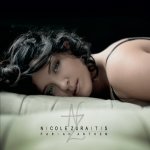
PARIAH ANTHEM – Self Release www.nicolezuraitis.comStinger; Watercolors; Try, Love; Secret; Staring Into The Sun; To The Hive; Dagger; The Bridge; If Only For Today; Pariah Anthem
PERSONNEL: Nicole Zuraitis, vocals, piano; Dan Pugach, drums; Scott Colberg, double bass; Julian Shore, rhodes, organ; Victor Gould, piano; Ilan Bar-Lavi, guitar; Billy Buss trumpet, flugelhorn; Jon Paul, acoustic guitar; Nandini Srikar, vocals
By Curtis Davenport
In my younger days, I used to frequent what we called “Wine and Cheese Cafés”, where you could usually find some very good and reasonably priced wines, a diverse assortment of cheeses and more often than not, an eclectic assortment of some of the best music around, setting the atmosphere. It was generally a mix of soft rock, mellow but funky R&B and tasty contemporary jazz of the type that was popularized by CTI Records. Often, I would hate to leave because the music mix was more intoxicating than any alcoholic beverage being served. Invariably, there would be an artist that captured that perfect mix of the genres and I would ask the waiter “Who is that playing now?” If now was then, I would have certainly asked about the music of Nicole Zuraitis.
Nicole Zuraitis is a young New York based singer/songwriter/keyboardist. The NYU graduate has performed or recorded with Winard Harper, Jane Monheit and Don Braden. Her own music as evidenced on Pariah Anthem, which is her second album, is a well crafted hybrid of rock, jazz and R&B, which fits very well around her impressive voice. And that voice is hard to ignore. On most selections, Ms. Zuraitis hangs out in that corner of the alto range that was once so well occupied by the great Angela Bofill. Then just as soon as you’ve gotten comfortable there, Ms. Zuraitis will suddenly sweep into a glissando through several octaves that places her close to Minnie Riperton territory. I couldn’t help but stop and take notice.
The songs on Pariah Anthem were all written by Zuraitis and many of them are quite good. “Secret” is sweetly soulful, with a swirl of jazz chords and a dreamy rhodes backdrop by Julian Shore. It sounds like a lost track from Ms. Bofill’s Angel of the Night album. “Staring Into the Sun” is a lovely duet between Ms. Zuraitis and Victor Gould’s piano. It gives her a chance to show off her remarkable range to great effect. “To The Hive” starts as an insistent jazz-rock tune that takes an unexpected turn with the addition of a Hindi verse by Indian singer Nandini Srikar. When Srikar and Zuraitis rush toward the coda in an English/ Hindi counterpoint, it is exhilarating. On “Dagger”, Ms. Zuraitis and company drop a nice neo-soul groove, led again by Julian Shore’s rhodes. This cat knows how to pull an atmosphere out of his keyboard. “If Only for Today” is a torchy ballad, performed again as a duet between Ms. Zuraitis and Mr. Gould. They are so good together that I would gladly listen to an evening of them playing duets.
Nicole Zuraitis is a gifted performer and Pariah Anthem is an album that will grow on you with repeated listening as the nuances reveal themselves. It’s music that doesn’t easily categorize itself. And you know what? That’s not a necessarily a bad thing. Keep an eye on Ms. Zuraitis, for I think that she has a bright future ahead of her.
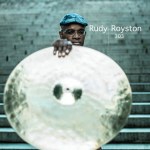
303 – GRE-CD-1035 www.greenleafmusic.comMimi Sunrise; Play on Words; Prayer (for the People); Goodnight Kinyah; Gangs of New York; High and Dry; Miles to Go (Sunset Road); 303; Ave Verum Corpus; Prayer (for the Earth)
Rudy Royston has put in a lot of work over the years on his way to his first set as a leader. Jazz fans have heard him keeping time behind Dave Douglas, Bill Frisell, Tia Fuller, J.D. Allen and others. His versatility has made him a first call drummer for straight-ahead jazz, avant-garde, soul jazz and everything in between. On 303, the first album under his name, Mr. Royston has put together a band of mostly unknown but capable musicians to produce a very forceful debut.
While 303 (named for the area code in Royston’s hometown of Denver) is definitely a jazz album, it’s one that can’t easily be categorized, which isn’t a surprise, considering the breadth of Royston’s experience. Royston is also confident enough to let the music take its time and for the personalities of his colleagues to show through in their solos. You don’t doubt that this is the drummer’s album but we are spared the spectacle of ten minute drum solos or of the drums being mixed way out front in order to prove it. Royston is joined by Sam Harris a strong young pianist who has also recorded with Ambrose Akinmusire and is currently playing with Linda Oh. Yasushi Yakamura and Mimi Jones split the bass duties. They are considered two of the top young bassists on the New York scene with Ms. Jones just having released her critically acclaimed second album, Balance. Jon Irabagon, a darling of the downtown free jazz scene (Mary Halvorson, Other People Do The Killing, etc.) and Nadje Noordhuis, an impressive Australian born trumpet player with a full, warm tone, are the horns and Nir Felder, a guitarist who is new to me but has been quite busy of late with Terri Lyne Carrington, Joey DeFrancesco and Eric Harland, rounds out the band.
Most memorable among the cuts are “Bownze”, a track that Mr. Royston says was inspired by Michael Jackson’s recording of “Rockin’ Robin”. While I didn’t hear any of the King of Pop in this cut, I did really dig Royston’s drum work and the way Irabagon’s staccato tenor punctuated the performance and Harris piano added some sweet chord fills. “Play on Words” is a driving straight-ahead tune on which Felder’s guitar and Irabagon’s tenor really shine, especially as he trades eights with Harris. “Miles to Go (Sunset Road)” is an irresistible laid back groove that rides along on Ms. Jones’ bass and Felder’s guitar, while the horns repeat a hypnotic figure. My only complaint about it is that it ended too quickly, which is too bad because there was an awesome Reggae/Jazz jam about to break out. “Gangs of New York”, which Royston says was inspired by both the Scorsese film and by the hardcore braggadocio of NYC rappers, starts out beautifully, contradicting its stated inspirations. Then, after a gorgeous trumpet solo by Ms. Noordhuis, the piece suddenly turns edgy, with short horn bursts announcing the “war” that is brought on by Felder’s rock tinged guitar. It was not expected but it was quite interesting.
Rudy Royston’s 303 is an impressive debut. It is the work of an artist who is willing to stretch jazz’s conventions as he grows but who is prepared to let others join him on the ride. I hope that Royston continues to work with this group of musicians because I think that they still have a lot more to say as a collective.
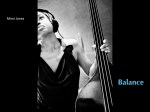
BALANCE – Hot Tone Music HTM 103 www.hottonemusic.comNothing Like You; Traveler; Speedbump; The Incy Wincy Spider; The Spinning Tree; Patriot; Someone Like You; To Be; The Edge of a Circle; Everybody Loves The Sunshine; Junk Funk; Dream
PERSONNEL: Mimi Jones, bass, voice; Ingrid Jensen, trumpet; Camille Thurman, flute, voice; Luis Perdomo, piano, Wurlitzer, rhodes, moog; Enoch Smith, Jr., piano; Mike Hamaya, piano, Wurlitzer, rhodes; Marvin Sewell, guitar, piano; Sean Harkness, guitars; Shirazette Tinnin, drums, percussion; Justin Faulkner, drums; Mala Waldron, vocal
By Curtis Davenport
Attractive young woman…plays a killer jazz bass… sings well…not overly concerned with genre boundaries…
If I were lazy, I would make this review about a comparison between Mimi Jones and a certain Grammy winning artist who also meets all of the above criteria. But I’m not going to do that. This is all about Mimi Jones, because she deserves to be considered solely on her own substantial merits.
Mimi Jones (birth name: Miriam Sullivan) is a New York City native who grew up with a multitude of musical influences; from the Caribbean music of her parent’s birthplaces, to straight-ahead jazz, to ‘70’s R & B to The Doors and Streisand. She originally studied the guitar before enrolling in high school and discovering that the school did not have a guitar program. She then switched to the cello but destiny could not be denied as young Miriam was discovered by a music teacher, spinning a friend’s upright bass and playing the iconic bassline from the Barney Miller TV show. The teacher immediately drafted Miriam into the school’s jazz band and then began to study the instrument that she excels with today. She has learned quickly; studying with bassist Lisle Atkinson and others leading to work with Roy Hargrove, Joshua Redman and Kevin Mahogany and recordings with Tia Fuller, Terri Lyne Carrington and Lizz Wright, among others. In 2009, Ms. Sullivan recorded her debut album as a leader A New Day. She also adopted the alter ego by which she is now professionally known, Mimi Jones. A New Day was, for the most part a contemporary jazz album, with a heavy dose of vocals and a decided R & B influence in most of the performances. On her new album, Balance Ms. Jones leans more in a traditional jazz direction, though there is still a nice dose of the contemporary. Ms. Jones has matured as an artist and composer in the four years between albums and it’s quite evident throughout. While A New Day was good, I found Balance to be much more satisfying for me as a listener.
Ms. Jones has an impressive list of guest stars to help put forth her vision; Ingrid Jensen appears on trumpet on a couple of tracks; Luis Perdomo, a terrific pianist/keyboardist who you should know if you don’t already, also guests as does guitarist Marvin Sewell. Equally if not more impressive is the work of the lesser known musicians who come up strong throughout this date. “Nothing Like You” the Bob Dorough composition jumps out at you from the beginning in an instrumental trio version which allows Ms. Jones to show off her bowed and plucked bass skills. Mr. Perdomo takes it to the next level with a fiery piano solo. “Speedbump”, written by Jones and Perdomo is excellent post-bop with Ms. Jensen blowing hard and sounding like Miles fronting his last great quintet. Perdomo eggs her on while Ms Jones and drummer Justin Faulkner are a powerful rhythm duo. Perdomo’s sudden shifting of gears into 4/4 in the middle is very striking. A very pleasant surprise is an easygoing take on Roy Ayers’ “Everybody Loves The Sunshine” on which Ms. Jones gets some formidable support from two of her Hot Tone label mates, drummer Shirazette Tinnin and Camille Thurman on flute and ethereal soprano vocals. Ms. Tinnin is a very strong percussionist as she proves here and on a couple of other tracks. And Ms. Thurman’s vocal harmonies and scatting set the perfect groove. Though she doesn’t play it here, Ms. Thurman is also a formidable tenor saxophonist, watch out for all three of these young ladies, who are simultaneously releasing new albums. But my favorite track was “Incy Wincy Spider”, the quirkiest take on that old children’s song that I’ve ever heard. It starts with a foreboding and slightly dissonant piano line, followed by Ms. Jones’ haunting vocal. Just when things have turned as dark as possible, the sun comes out and the performance turns bright and swinging on the back of Miki Hayama’s piano, another strong bass solo by Ms. Jones and Tinnin’s perky cymbals. It looks like everything turned out okay for that spider after all.
Mimi Jones is an exciting talent and Balance is a very, very good album. It kept my attention from first note to last, which isn’t an easy thing to do. It is accessible and diverse but I never felt like the musicians were pandering to anyone’s tastes. It is an album that I expect to return to many times throughout this year.
COLTRANE RULES (Tao of a Music Warrior) – OYO Recordings www.garybartz.comAfter the Rain; I Concentrate on You; Dear Lord; To Your Lady; Nita; Dahomey Dance/Tunji; Birdtrane; Vilia/Ole; Pristine; The Song of Loving/Kindness; After the Rain
PERSONNEL: Gary Bartz, soprano saxophone, alto saxophone, bass clarinet, vocals; Barney McAll, piano; James King, bass; Greg Bandy, drums; Andy Bey, vocals; Rene McLean, flute; Makea Keith, vocals; Eric Rose, vocals; Ommas Keith, vocals
By Curtis Davenport
Many times recordings are made, mastered and then shelved. Why? Sometimes it’s because all involved realize how bad the music is and for anyone to hear it would damage an artist’s reputation. Other times the music is good but there are financial squabbles between the artists and the producers/management/record company. And other times the record company goes under and the recording is orphaned. Those are just a few of the many reasons that tapes can stay on the shelf for years. Sometimes this will deprive the listening public of the chance to hear some good music and sometimes keeping an album on the shelf is a great public service. Veteran saxophonist Gary Bartz’s most recent release Coltrane Rules (Tao of a Music Warrior) consists mostly of tracks that were recorded in 2000. Having now heard them, I can now say “what took you so long”.
Though he has never achieved wide acclaim, Gary Bartz has been on the jazz scene since the mid 60’s when he joined the Max Roach / Abbey Lincoln group. His career has been a series of up and downs and he has dabbled in just about every jazz related musical style from bop to modal to free jazz to jazz-rock fusion to funk/disco and then back to his roots. He made his recorded debut as a member of Art Blakey’s Jazz Messengers on Soul Finger and he joined Miles Davis in 1970, right in the middle of Miles’ electric/fusion phase. So when I heard that Mr. Bartz had recorded a Coltrane tribute, I thought that it had possibilities since he, unlike many others making similar projects, was an actual contemporary of Trane’s. It could also, given Bartz’s eclectic history, go in a number of different directions. What would Bartz do? Would he concentrate on the boppish Prestige/Atlantic years, would he use the avant-garde projects of the mid 60’s as a base or would it be a combination of both?
It turns out that Bartz and his quartet at that time chose to concentrate mostly on the mainstream side of Trane, which may disappoint fans of the latter years but it will please many others and probably garner this project a good share of airplay in the jazz radio world. Mr. Bartz was at the top of his game on these 13-year-old recordings, his vinegary tone on alto was strong and his sidemen were swinging like mad, which inspired the leader. He often plays here in the low-end of the alto’s register, which gives him a sound that at times is eerily Coltrane-like. To his credit, Bartz avoided the over familiar Coltrane works for the most part and he even composed a couple of his own works that fit in so easily that I at first thought that they may have been “lost” Trane pieces.
Things start with a bit of the unexpected; an up-tempo, almost 15 minute take of “I Concentrate on You”. Bartz on starting out on alto, sounds great as he throws out inventive solo lines stretching at times to the boundaries of convention, while pianist Barney McAll is deep into a McCoy Tyner bag, comping behind Bartz with Tyner’s patented block chord figures. After McAll solos, Bartz returns on soprano swinging hard right down to the last minute of the piece, where they create a natural fade out. It’s good stuff. This is followed with a pleasant surprise, “Dear Lord” featuring vocals from the great Andy Bey, one of Bartz longtime musical partners. Mr. Bey’s rough-edged but still velvety baritone fits around the lyric perfectly. “Nita” a Coltrane rarity that he originally recorded on Paul Chambers’ Whims of Chambers sessions, is a hard swinging 4/4 flag-waver; as is “Birdtrane” a Bartz composition, with an arrangement reminiscent of “But Not for Me” on the My Favorite Things album. Also quite compelling are two medleys, where Bartz weaves together two similar compositions; one blends “Dahomey Dance” and “Tunji”, the other very effectively combines “Ole” with “Vilia” from the operetta The Merry Widow.
The name of Mr. Bartz’s new record company is OYO, which stands for “Own Your Own” (as well as being the name of a Nigerian tribe). It is through this type of self empowerment that we finally get to hear these first-rate recordings. Let’s hope that Gary Bartz has more like Coltrane Rulesin the vaults.
Well jazz fans, we had our annual 15 minutes of fame (literally) yesterday at the Grammys during the pre-show, which was not broadcast on television but streamed live on the web. The winners in the jazz categories included virtually no surprises. Those that won were either the favorites or highly touted possibilities right behind the favorites.
And the Winners Are:
Best Improvised Jazz Solo – “Orbits”: Wayne Shorter – soloist (From the album Without a Net[Blue Note Records])
The Hall of Fame saxophonist wins with his only nomination from his critically acclaimed return to Blue Note Records.
Best Jazz Vocal Album – Gregory Porter: Liquid Spirit(Blue Note Records)
In a very minor upset, Porter beats out the phenomenal young vocalist Cecile McLorin Salvant to win his first Grammy. I loved Porter’s totally real acceptance speech in which he blurted out “Hey! I got a Grammy!”
Another minor but welcome upset. In her acceptance speech the cool and classy Ms. Carrington noted that she was the first woman in history to win this particular award, which was surprising on one hand and then again, it wasn’t. It’s her second Grammy in the last three years; the other came for The Mosaic Project in 2012.
Best Large Jazz Ensemble Album – Randy Brecker, Wlodek Pawlik Trio & Kalisz Philharmonic: Night in Calisia (Summit Records)
No surprise here at all as Grammy voters went for the safe choice of the only name among the nominees that any of them had even remotely heard of. Mr. Brecker was not at the ceremony, leaving the acceptance chores to his Polish colleagues on the recording who struggled gamely with their English in an endearing but ultimately long-winded speech, which drew the only use of the “musical hook” that I heard while I was watching the pre-show.
Best Latin Jazz Album – Paquito D’Rivera & Trio Corrente: Song for Maura(Sunnyside/Paquito Records)
While this win was not at all unexpected, it was also utterly frustrating. For with all of the genuinely outstanding music nominated in this category, Grammy voters once again went with the most familiar choice. This is far and away not the travesty that last year was in this category but still, this award was given to a good album among some great ones. Mr. D’Rivera was also not in attendance which left the acceptance to the members of Trio Corrente, who looked to be in danger of getting the “musical hook” but didn’t.
And to wrap things up, a few “Random Thoughts” that I scribbled down during the pre-show and the broadcast Grammy Show:
It was great to see Latin Jazz pianist and Grammy nominee Roberto Fonseca being used as a segment presenter on the pre-show.Though English is not his first language, he soldiered on gamely, even when tasked with reading the rambling statement from an award winner who was unable to attend. Frankly, he did a better job that pre-show host Cyndi Lauper, who struggled mightily throughout. She even at one point starkly told the audience. “I F-ck-d Up”, which was true but unnecessary to say. I’m no language prude but it just struck me as a crudely contrived way to try to curry favor in the midst of her obvious difficulties.
It was great to see the wonderful composer/arranger Maria Schneider take home some Grammys for her classical work on Winter Morning Walks. I also loved her impassioned plug of ArtistShare during her acceptance speech. Now if only the jazz world would show her as much love…
I was disappointed that no jazz artists got to perform even during the pre-show. Yet, we saw fine artists of many other genres get to show their stuff. Has it now come to the point that a live jazz performance is not even welcome during the non-broadcast segment of the ceremony?
Daft Punk???
Pharrell’s hat???
Madonna’s outfit???
Taylor Swift’s dancing???
Taylor Swift’s Death Stare at the end of her performance????
Taylor Swift. Period. – Kanye, you did this to us!!!
Jay-Z basically referring to his award as a “sippy cup” for his daughter, was a lame attempt at humor that came off as arrogant. I’ve liked Jay-Z and Beyonce for a long time but they are starting to put me off (not that they care).
Chicago would have been better without Robin Thicke. And I wish that the cats still in the group and Peter Cetera and Danny Seraphine could all patch up their differences and give us at least one more taste of the real Chicago.
Loved Stevie Wonder, Nile Rodgers, Pharrell and Daft Punk’s jam. As a fellow prostate cancer survivor any time I see Nile Rodgers up there doing his thing it is inspirational to me.
That’s all I have to say about that. I’ll have more to say about other things though before the next Grammy season and I thank you for reading.
 I spent many hours in front of the television as a child. Growing up in the New York City area, we had at least a half-dozen stations (a lot for the 1960s) to choose from to keep us entertained. My favorite was Channel 11 (WPIX) because even then, my tastes were a little different from other kids my age. In addition to The Little Rascals, The Three Stooges and Popeye, I also enjoyed when they would drop in cartoons that were not the standard fare.


 Curt's Jazz Cafe