To wrap up 2012, I have a few more discs released this year that were not part of the first twenty, but are worth your time and listening attention. They are:
The 26-year-old grandson of the legendary guitarist Django Reinhardt is a very good guitarist in his own right. Unlike his grandfather, David is focused on Bop and Soul-Jazz. Colombe, his first album released in the U.S., is quite impressive. We’re looking forward to hearing more.
2012’s best historical album was a real find. These are recordings of Wes in 1957-58, in the studio and in Indianapolis clubs, when he was struggling to be heard. These sides prove that he was already near the top of his game. Kudos to Resonance Records, not only for the solid remastering but also for the terrific packaging, which includes great photos and interviews.
Forty years after their landmark duet album, Crystal Silence, and after numerous other collaborations with groups of various sizes, Corea and Burton are back to basics on this album of duets. They are 71 and 69 respectively, but they haven’t lost a step as they alternately challenge and complement each other. There was nothing boring about this reunion.
R&B, Jazz, and Neo-Soul create a gorgeous mosaic on this album by this criminally underheard flutist/vocalist/educator/actress. Monét’s sound on flute is reminiscent of Bobbi Humphrey, but this young lady brings much more to the musical table than her famed predecessor. The music here is way too intelligent and creative to be pigeonholed as “smooth jazz”, so we’ll just call it a thinking person’s groove.
Speaking of gifted ladies who refuse to be pigeonholed, Ms. Spalding terrified many hardcore jazz types with her decidedly pop based new album, her first since her shocking Best New Artist win at the 2011 Grammys®. When you get past all the “jazz forsaking” arguments that have been made, what you have left is an eclectic (Jack DeJohnnette, Joe Lovano and Q-Tip all make guest appearances) and delightful album of great music by a prodigiously gifted young woman who is going to get it done her own way, jazz police be damned. You go girl!
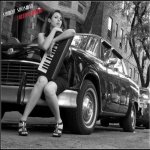
Though she was far from well-known, even in the jazz world, a shockwave went through our little community when it was reported that Shimrit Shoshan had died on August 19, 2012, of cardiac arrest, at age 29. The Israeli born pianist had released her first album in 2011 and it showed that she had a world of promise and nothing but good things ahead of her.
I first became aware of her via an article in Jazz Times, which discussed the variety of worlds that the young woman was involved in to support her budding musical career. Due in large part to her striking good looks, she found work as a backup dancer in music videos and as model/muse for a New York based fashion designer. She also sold gems in the diamond district and taught music to underprivileged kids in Harlem. Her story fascinated me, so I tracked down a copy of her album that same day. I found her playing to very impressive and complex and her solos were challenging; she was no dilettante.
I began to play her album on the station and had some brief correspondence with Ms. Shoshan via Twitter. I kept tabs on her career and I was looking forward to seeing what was next.
Unfortunately, that encouraging beginning turned out to also be a tragically frustrating coda. So we look back at Shimrit Shoshan’s Keep It Movin’. If you are unfamiliar with this disc, check it out. You’re likely to experience the same mixed emotions that I now feel.
That will wrap it up for our Best Jazz of 2012 list. Tracks from all 25 of these albums can be heard daily on Curt’s Café Noir, from noon – 5 pm (ET), daily, starting on December 27, 2012 and continuing into January 2013.
We will also publish another post after this one which will include the names of each album and a link to where they can be purchased. Because if jazz is to survive, we have all got to do our part by buying the music that we love that is made by living artists.
Have a Jazzy New Year. Until the next time, the jazz continues…
Coming from the same musical place as Gretchen Parlato and to a lesser extent, Norah Jones, Ms. McGarry has determinedly carved out her own niche as a vocalist. Her appealing voice and fun way with a lyric made me a fan when I first heard her on her 2007 disc, Target. Now with Girl Talk, she has fulfilled the mature promise that some of her previous works hinted at. Backed by a terrific band which includes the incomparable Gary Versace on organ and piano, her hubby, Keith Ganz on guitars, bassist Reuben Rogers and drummer Clarence Penn, this album is billed as Ms. McGarry’s tribute to some of her vocal role models, which is ironic, because I find this to be her most individual work to date.
Another highly anticipated disc that delivered the goods, Heritage brought together the guitarist from Benin, with his label mate Robert Glasper as producer. This brought about a change in a number of ways – gone was the nylon string acoustic guitar that had so defined Loueke’s sound in the past. In its place were electric guitars and a steel string acoustic. Glasper also brought along his “Experiment” band members, Derek Hodge on bass and Mark Guiliana on drums. The resulting sound added an exciting tension to Loueke’s sound between Loueke’s serene guitar and Yoruba vocalizing and the electric funk elements added by Mr. Glasper and company. That tension produced many compelling musical moments, such as the haunting “Tribal Dance”, which has made it impossible to me to take this disc out of my CD changer.
Courtney Pine first caught the attention of the jazz world with his 1986 release Journey to the Urge Within. It hit right in the midst of the “Young Lions” craze of the ‘80’s/’90’s. The press quickly dubbed Mr. Pine “The New Coltrane”; a daunting title to hang on anyone. Mr. Pine confounded those who labeled him by going off wherever his musical muse took him. Now in 2012, the muse takes the London native to House of Legends, on which he embraces his Jamaican roots more than on any project of his 25 year career. It’s a joyous album, from beginning to end, with Mr. Pine, who appears only soprano, blowing terrific lines over meringue, ska, calypso and mento rhythms. Imagine if Sonny Rollins had taken his calypso flirtations to their fullest extent and you’ll get the idea. This album put a smile on my face.
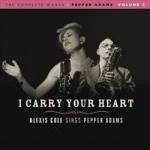
That Pepper Adams was one of the great baritone saxophone players in jazz is indisputable. However the fact that he was a prolific composer has gone virtually unnoticed. Jazz historian Gary Carner set out to right that wrong in conjunction with Motéma Records. The result is a monumental five-volume set that celebrates Adams, the composer. For Volume 5, Carner worked with poet Barry Wallenstein, who added lyrics to Adams seven ballads. They then engaged Alexis Cole, a marvelous, if underheard vocalist to sing these songs. I Carry Your Heart, the resulting album, is excellent in every way. Adams’ music is beautiful, Wallenstein’s lyrics fit the tunes like a glove and Ms. Cole gives delivers the finest performances that I’ve heard from her to date. The band that backs this session is also outstanding, with special kudos going to Eric Alexander and Pat LaBarbera, who are their usual exceptional selves on the tenor.
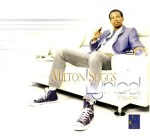
I’ve spent much of the last few years lamenting the lack of promising new male jazz vocal talent. I’ve even discussed the issue with Jon Hendricks when I interviewed him a few years back. His answer was quite interesting, but too long to discuss here. Now suddenly, in the last few years, I’ve seen binders full of talented male vocalists make themselves known; Ori Dagan, Sachal Vasandani, José James and Mr. Milton Suggs. Suggs, Chicago born and now NYC based, has perhaps kept the lowest profile of the four, but he has released the most impressive recent album. On Lyrical, Vol. 1, Mr. Suggs wraps his big baritone voice around lyrics that he has written, to some well-known (“Ceora”, “Footprints”) and not so well-known (Roy Hargrove’s “Joy Is Sorrow Unmasked”) compositions. Suggs takes a few risks, such as overdubbing himself as his own background vocalist, which works very well most of the time. But the hits far outweigh the misses. Suggs is an excellent vocalist and a very good lyricist. The bottom line is that I have not stopped listening to this album since it arrived in my mailbox and that’s what sets it apart from the rest.
The legendary pianist Mary Lou Williams would have turned 100 in 2010. There have been a number of tributes to her over the past few years. This one by tenor saxophonist Virginia Mayhew is IMO, the most thorough and the most musically impressive. Ms. Mayhew did exhaustive research. She was given full access to the Mary Lou Williams Collection at the Rutgers Institute of Jazz Studies. She then listened to over 200 of Ms. Williams’ compositions before choosing her favorites and beginning her arrangements. What makes this album so strong is that Ms. Mayhew clearly set out to write modern, energetic arrangements and avoid staid recreations. The music here sounds as exciting as if were written last week, instead of seventy years ago, as is the case in a few instances. Ms. Mayhew has a big expressive tone and she attacks her solos with gusto. She also has recruited a couple of partners who are every bit her equal in trombonist Wycliffe Gordon and guitarist Ed Cherry. Though Mary Lou Williams passed away over thirty years ago, Mayhew and company make her music live.
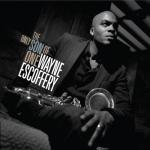
Wayne Escoffery is one of the busiest tenor saxophonists in New York. Besides his work with Tom Harrell, Ben Riley, Eric Reed and the LCJO, he also still records some fine sets as a leader, of which The Only Son of One, is certainly one of the best. On this album, Mr. Escoffery tells a bit of his own story. He was born in a tough section of London. His mother left his abusive, Jamaican-born father and fled to the U.S. when Wayne, their only child, was eight. They arrived in the States with nothing and got by for many years on their wits and determination. The titles of the songs tell the story of his upbringing, the tough times, his spirituality and how they all shaped Wayne. His playing is passionate and captivating. Though he still shows traces of Joe Henderson and Wayne Shorter in his playing, he has grown to a point his own style is in the forefront and it is quite impressive.
I was listening to Prisoner of Lovefor the first time. About halfway through I muttered to myself “Where did this woman come from? How could I have missed her?” The Queens, NY native seems to have come out of nowhere and she has captured many an ear. Some have compared Marianne Solivan to Geri Southern and Julie London. I can agree with that only in regards to the timbre of her voice, for even on her ballads, Ms. Solivan swings harder than either of those two legendary chanteuses. On this album, produced by trumpeter Jeremy Pelt, Ms. Solivan and Mr. Pelt display excellent judgment by surrounding the singer with some of the best musicians on the East Coast (Peter Bernstein, Christian McBride, Xavier Davis, et al) and selecting a standard repertoire that fits her voice like a glove. Among many highlights are Solivan’s two duets with McBride, a situation that could crush a lesser talent. But on “All or Nothing at All” and “Day Dream”, Ms. Solivan rises to the occasion and not only holds her own, but shines with the confidence of a star, which she very well may be.
In a career that has spanned fifteen solo albums over three decades, Kenny Garrett has been all over the musical map, moving from big band, to hard bop to a stint with Miles, to being a first call sideman and creator of a musical oeuvre that has rarely remained in the same place for too long. It’s no surprise then, that Mr. Garrett has had a considerable number of musical influences. On Seeds from the Underground, he pays homage to those who have planted the musical seeds that have aided his development into one of the most formidable artists of his generation. Mr. Garrett put a lot of himself, artistically and personally, into this album and that effort has paid off with impressive results. Seeds from the Undergroundis the finest album that Kenny Garrett has released in the 21st Century and is one of the best of his career.
Avishai Cohen’s last album as a leader, Introducing Triveni, made our list last year as the album that I had missed in 2010. When I heard that at the same two-day session as Introducing Triveni, enough music for a second album was recorded and that it was going to be released, I was determined not to miss this one. I’m pleased to report that Triveni II is not an album of outtakes. It is every bit as good as its predecessor. Born and raised in Tel-Aviv, Mr. Cohen, the brother of Anat Cohen, has made a name for himself in jazz despite having a well-known sister and having the same name as another Israeli jazz musician, which is why “trumpet” is often included as a part of his name. This session, which again features bassist Omer Avital and drummer Nasheet Waits, is another tour de force, where the trumpeter seems to relish the freedom of having no other melody instrument in the group. It’s a thrilling and creative set, one that I predict many serious young trumpeters will try to emulate.
Though this concludes our top twenty, there is still a bit more ahead. Our next post will include a handful of very good albums that should also be heard, a terrific historical album and our “missed” album from 2011, which this year isn’t so much missed as it is poignantly revisited.
The music from all twenty “Best of” albums and the additional discs, can be heard on our internet station Curt’s Café Noir, starting on December 27, 2012 and continuing through January 2013. As always, agreement and disagreement is welcome in the comments section. I approve them all, except spam and naked self promotion.
Merry Christmas, Happy Hanukkah, Glorious Kwanza and Happy New Year to all – until the next time – The Jazz Continues!
In another year in which another uninformed, self-important magazine writer chose to declare it dead, jazz took greater advantage than ever of social media and the internet to declare that writer like, so many who came before him, to be full of hot air. As young artists took advantages of their musical roots and influences, I saw things that made this writer very hopeful about the future of this music: Young people came out in throngs, fist pumping and dancing at Robert Glasper’s Atlanta Jazz Festival appearance. Esperanza Spalding, Tia Fuller and Anat Cohen, released albums that demonstrated the growing power of women instrumentalists. And some veterans proved that they still “got game”.
So here in alphabetical order, are the first ten on my list of my favorite jazz albums that were released in 2012. Since I didn’t get to publish a midterm list this year, there will be another ten coming in the next post, plus a few others that are also worthy of more than several listens.
This is Mr. Iyer’s third appearance on our list in the last four years. The pianist is releasing music on an album per year basis and each year, he manages to top his previous offering with an approach that never covers the same ground twice. On Accelerando, Iyer is back with his trio mates from 2009’s Historicity, bassist Stephan Crump and drummer Marcus Gilmore and as on that now classic album, the trio delivers a mix of intricate original compositions with reworkings of little heard jazz and pop tunes. Each is fired up by Crump and Gilmore’s unshakable rhythms, which are now showing a touch of a hip-hop influence. Anyway it comes at you, Vijay Iyer has done it again and I can’t wait to see what 2013 brings.
Still known mostly for her work as the saxophonist in Beyonce’s touring band, Ms. Fuller has come home again to produce another dynamite straight ahead jazz album. Angelic Warrior leaps out of the gate with the fiery “Royston Rumble” and doesn’t let go until “Ode to Be”, the closing outro. Ms. Fuller has developed into a strong composer, as proven by “Ralphie’s Groove” and “Tailor Made” and she is also an exciting and creative soloist, who makes an uptempo medley of “So In Love” and “All of You” work like a new Rolex. Wake up and take notice jazz world, Tia Fuller is the real deal.
The best new hope for male jazz singers to come along in at least a decade knocked aside any thought of a sophomore jinx on this disc, which also drew some attention in the R&B/Pop idioms. It’s easy to see why. Porter has a voice that is equal parts Donny Hathaway and Al Jarreau and as a writer, he has learned how to write an irresistible hook. Porter has married the best of jazz and soul singing by taking the best of both worlds and bringing them together in beautiful harmony. Don’t miss his towering take on “Work Song”, the melodic “When Did You Learn” and the closer, an a cappella version of “God Bless The Child”.
Be Still is another in a long line of brilliant and original works by Mr. Douglas. This album was born out of the hymns that Douglas’ mother requested him to play at her memorial service. After meeting Aoife O’Donovan, an ethereally voiced young singer, with bluegrass roots, Douglas began to envision an album of these hymns as a kind of folk-jazz music. The result is an album of remarkable intimacy, Ms. O’Donovan, Mr. Douglas and a quartet of up and coming young jazz stars (Jon Irabagon, Matt Mitchell, Linda Oh and Rudy Royston) create works that are starkly beautiful. Be Stillmanages to be reflective, even moody but never maudlin. I’ve always been someone who looks to find God in places that others don’t look. I found Him in the sincerity of the performances on this album.
Black Radio – Robert Glasper Experiment (Blue Note)
This album arrived this spring on the wings of massive hype. And it delivered. Though he has amassed unquestionable credentials in the mainstream realm, Mr. Glasper has strong hip-hop roots, as you might expect from an artist of his age (34). What he has done here is taken what was hinted at on the second half of his last album, Double Booked, to its logical conclusion, with a mixture of jazz, hip-hop, R&B, neo-soul and rock. What we get is something that can’t be pigeonholed into any genre but has reached fans of many ages and musical preferences. With help from guest stars from across the musical universe, Black Radio gives us a peek at where the next generation wants to take what we called jazz. I suggest that we “Old Schoolers” get on board and enjoy the ride.
I’ll be damned! At 81, the artist formerly known as Fritz, a man who Miles Davis called one of his greatest influences, has turned in his finest album in at least four decades. The tracks are mostly from the Great American Songbook or jazz standards, but this is by no means a tired romp through familiar territory. What has happened is the veteran rhythm section of drummer Herlin Riley, bassist Reginald Veal and percussionist Manolo Badrena, light a percussive fire under Mr. Jamal that has clearly inspired his artistry. Their 10 minute deconstruction of “Blue Moon” will compel you to listen to it repeatedly. For a real treat, listen to Black Radio and this album back to back. You’ll realize that the generations are not that far apart at all.
IMO, the finest clarinetist in jazz today, Anat Cohen takes us on a joyously eclectic stylistic tour. Through West Africa, to Brazil to swing to bop, Ms. Cohen covers a tremendous amount of ground. With fine guest spots from the great Paquito D’Rivera (a killer clarinet duet on Artie Shaw’s “Nightmare”) and a fun loving Wycliffe Gordon (on trombone and vocals), this disc did not lose my interest for one second. And for those like me, who are big fans of Ms. Cohen’s tenor sax work, she brings the proceedings to a nice close with a rich version of Abdullah Ibrahim’s “The Wedding”. In Spanish, one of the definitions of Claroscuro is “a contrast of light and shadows”. Now knowing that, I can’t think of a better title for this disc.
Mary Stallings has always been one of those singers who makes you scratch your head and wonder why she isn’t more well known. With a career that spans five decades, a still fabulous and nuanced vocal instrument and now with the great pianist Eric Reed as her musical partner, at 73, it’s not paradoxical to say that Ms. Stallings’ future is brighter than ever. Don’t Look Back is the third album for the Stallings/Reed team and Reed by now compliments her the way that Tommy Flanagan complimented Ella. The selection of somewhat familiar but not overexposed tunes is excellent and the intimate performances from Stallings and Reed’s trio are unhurried and flawlessly executed.
Orrin Evans is not only prolific; he’s damn good as well. Last year he gave us two well received albums (Captain Black Big Band and Freedom) and he’s back now with another extremely strong trio set. Like the aforementioned Tommy Flanagan, Evans is a pianist’s pianist. Whatever he plays flows effortlessly and he never seems to be phoning it in. On Flip The Script, Mr. Evans joins forces with the hard swinging bassist Ben Wolfe and the rock solid drummer Donald Evans to put together a tremendous set. These cats are deep in the pocket from first note to last. Then Evans wraps things up with a wonderful surprise, a solo piano version of the Soul Train theme “The Sound of Philadelphia”, slowed down to “last call at the bar” speed. It’s sweet icing on a beautiful cake.
One of the many beauties of this disc is that the title tells you all that you need to know. For as much as I love Branford Marsalis, some of his recent works had drifted into the realm of blowing great sounding solos over chords, without discernible structure. It sounded impressive but sometimes left me cold. On this disc Branford, his longtime musical partners and new drummer Justin Faulkner are relaxed and having fun, with some great musical foundations to work with – “tunes”, if you will. Branford on soprano and tenor is as impressive as ever (I’ve always considered him to be the most musically exciting of the Marsalis brothers) and he and Joey Calderazzo are by now, one musical mind. To hear them bump their way through Monk’s “Teo” is worth the price of admission all by itself. It’s back to basics and it’s all good.
Again, another ten selections will be included in the next post. They include a few more unheralded singers making their presence known; a couple of formidable British born sax men, with different stylistic approaches and the other half of the first brother-sister duo to make our list.
Posted in Video Vault on December 10, 2012 by curtjazz
As I tweeted a few minutes ago, there are few things in this world that are cooler than John Coltrane playing “My Favorite Things”. For me, the Holidays kicks that up an extra notch.
So for that reason alone, here’s an awesome clip that I found on You Tube of the classic John Coltrane Quartet, playing “My Favorite Things”, live in 1965, not too long before their breakup.
By the way, they’re “smoking” because of the cold, not because they are musically on fire.
“If things had worked out right for [Dupree] he could have been one of the most important trumpet players of our time. There was a certain grandeur he was able to capture. . . He had a unique, fresh quality—something different.”– Harold Land on Dupree Bolton
There are Obscure Trumpet Masters…and then there’s Dupree Bolton. To say that a shroud of mystery has always surrounded Bolton would be an understatment. Bolton never led an actual recording session under his own name. He appeared, seemingly from nowhere in California in 1959 and set the West Coast jazz world abuzz with his performance as a sideman. He then disappeared just as quickly and reappeared a few years later, again as a sideman, displaying mind-blowing chops. He was then gone again, never to officially record again for the remainder of his life.
Who was Dupree Bolton, where did he come from and where did he go? The information will forever remain sketchy, at best. The most that we know comes from the indefatigable work of the noted jazz historian and writer, Ted Gioia, who, with a great deal of effort, managed to track down Bolton, in person, during his later years. The facts in this post come in large part, from Mr. Gioia’s moving two-part article about his encounters with Mr. Bolton, titled In Search of Dupree Bolton. Clicking on the title will take you to Gioia’s article.
So what do we know about Dupree Bolton? He was born in Oklahoma City on March 3, 1929. His father was an accomplished musician who was reportedly one of the great Charlie Christian’s early influences. His father supplemented a meager musical income by working in the defense industry, which led the family to move to Southern California. Though his father wanted him to play the violin, young Dupree became enthralled with the trumpet in school. His father reluctantly agreed to buy him one.
Young Bolton quickly mastered the trumpet and by his early teens, he was good enough to play professionally. He lied about his age, ran away from home and joined Jay McShann’s band in 1944, just before his 15th birthday. Life on the road caused Bolton to be introduced to drugs at this young age. He was first arrested for dealing and possession on the day before his 17th birthday. He was incarcerated until he was 21. He returned home to Los Angeles upon his release, shedding and picking up the occasional gig.
He idolized the great bop trumpeter Fats Navarro and like his idol, Bolton was by now an incredibly gifted musician with a heavy heroin habit. He was arrested again in 1951, this time for forgery and did a four-year bid in Soledad. During that time he continued to practice his horn, concentrating on the mechanics, sometimes for 12 – 14 hours a day. Bolton was released in 1956, but almost immediately went back to jail on another forgery conviction, for another three-year stint, which meant more practice time. By the time he emerged in 1959, Dupree was a full-fledged trumpet monster.
He started hitting the L.A. clubs, blowing cats off the stand at the jams. Harold Land and Elmo Hope were getting ready to make a recording featuring, Hope’s tricky charts, so they needed a trumpet player who could not only blow like mad but was an excellent reader as well. They had heard about Bolton and went down to a club in Watts to hear him in person. Land and Hope knew that their search was over. The album became known as The Fox, after Hope’s blazingly fast, intricate composition. The then unknown Bolton enters at around 1:40 and takes the listener on a ride of amazing speed and precision. He hits all of the marks technically without dropping a single beat and with boundless creativity. The only personal experience I can compare it to is a ride on The Incredible Hulk coaster at Universal Studios.
Based on his performances on The Fox, the jazz world wanted to know about Bolton, who he was, where he had come from. But Bolton remained famously reticent in the face of his new-found fame. When John Tynan attempted to interview Bolton for Downbeat, Dupree gave him a one sentence interview “When I was fourteen, I ran away from home.”
Bolton would not have much time to enjoy his fame, as we was arrested again shortly after the release of The Fox and sent to San Quentin, where he remained until 1962. Upon his release, saxophonist Curtis Amy tracked Bolton down to work with him on what would become Katanga! , Amy’s most famous album. Again, Bolton steals the damn show, displaying incredible fire, especially on the title track, which he wrote. A few weeks later, Bolton joined Amy in a session band put together by arranger Onzy Matthews to back Lou Rawls. These would be Dupree Bolton’s last commercial recordings. He did a couple of television appearances with Amy after the release of Katanga! (some of which you see with this post), but a short time later, Bolton was arrested again and sent back to San Quentin, where he continued to be housed on and off, for drug and forgery related offenses, for the better part of the next two and a half decades.
Dupree Bolton was released from prison for the last time, around 1983. Though he had practiced on and off during his various incarcerations, he had become by then a forgotten figure in jazz. He played briefly with Bobby Hutcherson during one of his releases, in 1967. Bolton also played with a prison band, while imprisoned near Tulsa in 1980, the results of which were recorded, but summarily dismissed by Bolton in his later years. In 1982, he played with Dexter Gordon in Oklahoma City, but that was all that was heard from Bolton, until Ted Gioia tracked him down in 1989.
Mr. Gioia spent some fleeting time with Bolton in 1989 after going to great lengths to track Bolton down in the San Francisco area, where Bolton had finally settled after his last release from prison. As usual, Bolton kept a low profile; he was still occasionally seen playing on the Bay Area streets; not nearly the firebrand that he once was, but showing brief flashes of excellence which let band mates and passersby know, that this was no ordinary cat.
Dupree Bolton died of cardiac arrest on June 5, 1993. He was 64 years old. Thanks to Ted Gioia, we know more than we would have about Bolton, but we will never escape the longing for what might have been.
Recommended Recordings:
Fireball (Uptown Jazz) – CD in print; mp3 available [This is a compilation of the audio tracks from a 1962 television appearance with Curtis Amy, plus two studio one offs from the same era and the two tracks recorded in prison in 1980. It’s the only recording released under Bolton’s name]
Okay Jazz Family here are the 2013 Grammy Nominees in the Jazz categories:
Best Improvised Jazz Solo
Cross Roads
Ravi Coltrane, soloist
Track from: Spirit Fiction
[Blue Note]
Hot House
Gary Burton & Chick Corea, soloists
Track from: Hot House
[Concord Jazz]
Alice In Wonderland
Chick Corea, soloist
Track from: Further Explorations (Chick Corea, Eddie Gomez & Paul Motian)
[Concord Jazz]
J. Mac
Kenny Garrett, soloist
Track from: Seeds From The Underground
[Mack Avenue Records]
Ode
Brad Mehldau, soloist
Track from: Ode (Brad Mehldau Trio)
[Nonesuch]
Best Jazz Vocal Album
Soul Shadows
Denise Donatelli
[Savant Records]
1619 Broadway: The Brill Building Project
Kurt Elling
[Concord Jazz]
Live
Al Jarreau (And The Metropole Orkest)
[Concord]
The Book Of Chet
Luciana Souza
[Sunnyside Records]
Radio Music Society
Esperanza Spalding
[Heads Up International
Best Jazz Instrumental Album
Further Explorations
Chick Corea, Eddie Gomez & Paul Motian
[Concord Jazz]
Hot House
Chick Corea & Gary Burton
[Concord Jazz]
Seeds From The Underground
Kenny Garrett
[Mack Avenue Records]
Blue Moon
Ahmad Jamal
[Jazz Village]
Unity Band
Pat Metheny Unity Band
[Nonesuch]
Best Large Jazz Ensemble Album
Centennial: Newly Discovered Works Of Gil Evans
Gil Evans Project
[ArtistShare]
For The Moment
Bob Mintzer Big Band
[MCG Jazz]
Dear Diz (Every Day I Think Of You)
Arturo Sandoval
[Concord Jazz]
Best Latin Jazz Album
Flamenco Sketches
Chano Domínguez
[Blue Note]
¡Ritmo!
The Clare Fischer Latin Jazz Big Band
[Clare Fischer Productions/Clavo Records]
Multiverse
Bobby Sanabria Big Band
[Jazzheads]
Duos III
Luciana Souza
[Sunnyside Records]
New Cuban Express
Manuel Valera New Cuban Express
[Mavo Records]
And in addition to those listed above:
Robert Glasper’s genre busting album Black Radio (Blue Note) received two nominations in the R & B categories – R & B Album of the Year and “Best R & B Performance (It’s Gonna Be Alright (F.T.B.) – featuring Ledisi
Gregory Porter was nominated for Best Traditional R & B performance for “Real Good Hands” from his Be Good album (Motema)
Congratulations to all who were nominated. More info and opinions on the nominees later. By the way, it’s good to see the Latin Jazz award back where it belongs.
Dave Brubeck passed away today, one day before his 92nd Birthday.
For a time, Mr Brubeck was one of the most popular jazz musicians in the world. At the same time, he was one of the most critically reviled jazz musicians around. Time heals all wounds and by the time of his death today, love and admiration was pouring in from serious and casual jazz fans alike.
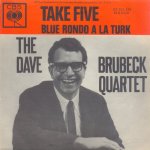
A great deal of his fame stems from “Take Five”, a song first performed in 1959 by his legendary quartet (Paul Desmond, Eugene Wright, Joe Morello and Brubeck). The 45 was the first jazz single to sell a million copies. Though Brubeck was a prolific composer, he did not in fact, write “Take Five”. It was written by Mr. Desmond.
Many critics sniffed back then, at Mr. Brubeck’s music, saying that it was stiff, bombastic and worst of all, unswinging. Though the criticisms rankled at Brubeck, he kept on going, achieving great public popularity, especially on college campuses, in the late ’50’s and early ’60’s.
I admit that when I was new to jazz, I let the opinions of others keep me from digging Brubeck’s music for a while. However, as I became a big fan of Paul Desmond’s solo work, I made my way back to the source.
I grew to like Brubeck the musician and love Brubeck the composer. His compositions, such as “The Duke”, In Your Own Sweet Way” and “Blue Rondo a la Turk” are stunning in not only for their beauty, but for the complexities that they reveal upon repeated listenings.
Those unfamiliar with Mr. Brubeck’s work should start with the most famous album, Time Out. It’s a virtual greatest hits package and it captures the essence of the famous Brubeck sound. At Carnegie Hall includes some of the same selections as Time Out, but they are so much better in the live setting. A personal favorite is The Real Ambassadors, Brubeck’s “protest opera”, which was only performed once, at the 1962 Monterrey Jazz Festival. The music was by Mr. Brubeck and the lyrics by Brubeck and his wife, Iola. The studio album was recorded in 1961 with a “cast” of Louis Armstrong, Lambert, Hendricks & Ross and Carmen McRae and Brubeck. There are several moments of sheer brilliance including Satchmo’s still haunting vocal on “They Say I Look Like God” and his duet with McRae on “You Swing Baby”, which is “The Duke” with added lyrics. And finally an album that I just remembered since I started writing this post; Brubeck and Rushing a meeting of the Brubeck Quartet and the legendary Basie vocalist. It sounds like a train wreck on paper, but I’ll be damned if they don’t all find common ground and pull it off beautifully!
I wrote more than I intended to here. I wanted to let the videos speak for themselves, as I’m sure they will when you watch them. In any case, Rest In Peace to a true jazz giant – Dave Brubeck.
“Richard Williams was a strong soloist with a big sound and a wide range, so it seems odd that his career did not go much further…He seemed poised for stardom when he recorded his one album as a leader… but there were no encores.”– Scott Yanow in Trumpet Kings
When I completed the first ten in the Obscure Trumpet Masters series last year, I always intended to return to it to make a few additions when necessary. Though it took me a bit longer than intended, I’m back with the first of a few more great jazz trumpeters who somehow escaped public acclaim.
Though he had a common sounding name, Richard Gene Williams’ trumpet sound was anything but common. Williams was born in Galveston, TX. He started on the tenor sax in high school before turning to the trumpet. He earned a degree in music from Wiley College, an HBCU in Marshall, TX. After graduating from Wiley, Williams served in the US Air Force from 1952 – 1956. Upon his discharge he joined Lionel Hampton’s Big Band for a European Tour. Once the tour ended, Williams earned his Master’s Degree at the Manhattan School of Music and then hit the bricks to try his luck on the tough NYC Jazz Scene.
He met with some success in New York. Williams was hired in 1959 by Charles Mingus for the band that the bass legend was forming for the Newport Festival that year. He appeared on some of Mingus’ greatest recordings, including Mingus Ah Um; Mingus Dynastyand The Black Saint and the Sinner Lady. Williams would continue to work sporadically with Mingus over the years. Another very fruitful relationship began in 1960, when Williams was hired by Gigi Gryce. You’ll hear Richard on Gryce’s classics, Rat Race Bluesand The Hap’nin’s, where Williams solos unforgettably, on one of Gryce’s best known compositions, “Minority”.
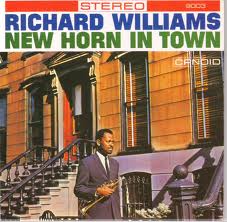
It was also 1960 when Richard Williams recorded his first and only album as a leader New Horn in Town, for Candid Records, with support from the fine altoist, Leo Wright, his Gryce band mate Richard Wyands on piano, Reggie Workman on bass and Bobby Thomas on drums. It was (and still is) a terrific album, with strong solos and great writing from Williams and first-rate support from Wright, Wyands and the others. In spite of the quality of the playing and the “thumbs up” from the critics, New Horn in Town went nowhere and Williams never helmed another date.
This does not mean that Williams lacked for work. Because he was musically educated and technically proficient, he remained quite busy over the years, landing in the trumpet sections of the bands of Duke Ellington, Gil Evans, Oliver Nelson and Thad Jones-Mel Lewis, among others. He also did some work in the classical field and in Broadway show pits, most notably for The Wiz. During his later years, Richard Williams led his own group on a European Tour and joined the Mingus tribute group Mingus Dynasty.
Richard Gene Williams succumbed to Renal Cancer in 1985, at just 54 years old. Though he inexplicably never led another session after New Horn in Town, we can can still enjoy his stellar work on that record and his impressive works as a sideman.
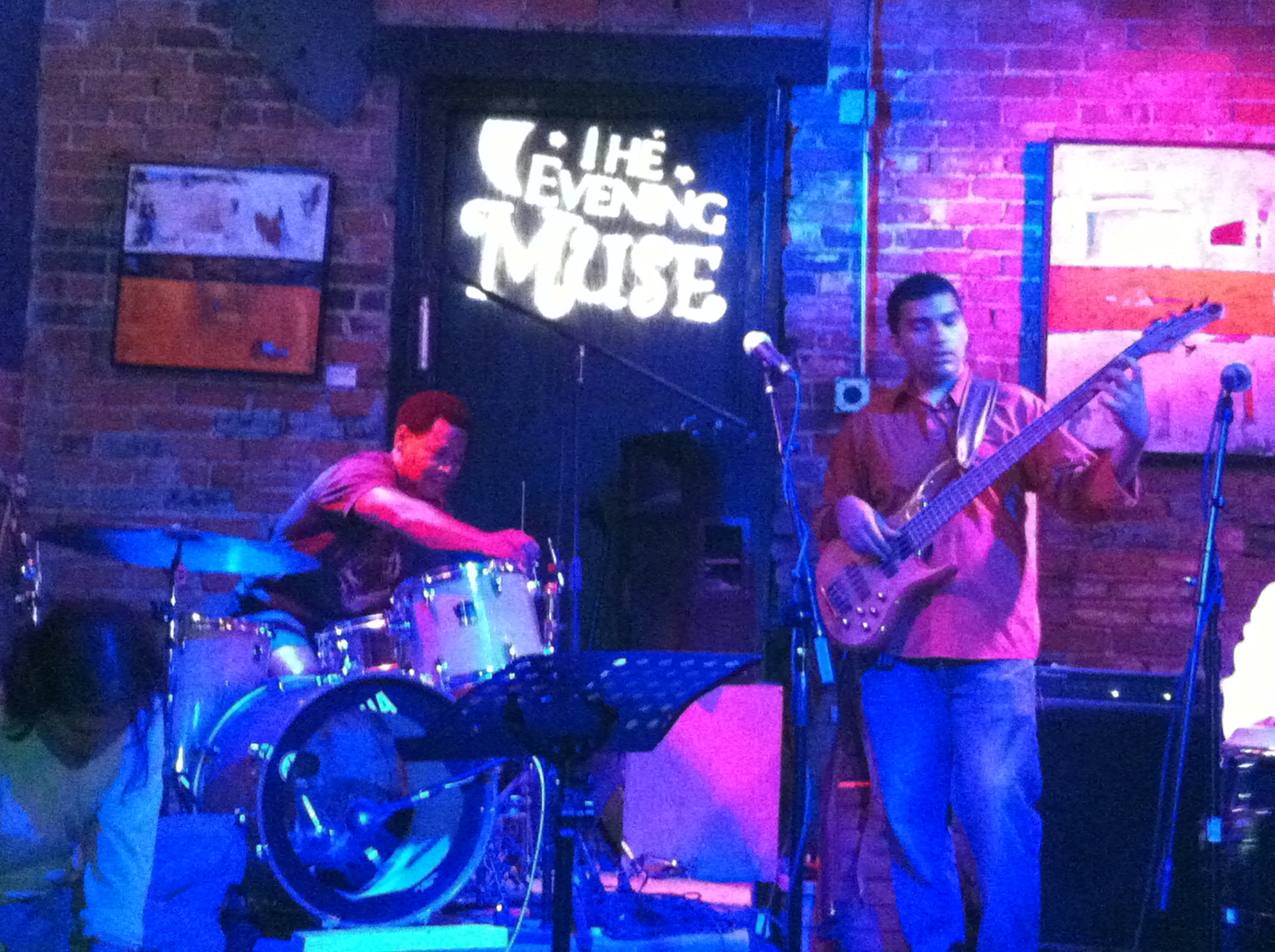
In New York, Chicago, Philly or San Francisco, this night would have probably passed without notice. But in Charlotte, NC, where jazz jams occur on a basis closer to quarterly than nightly, this was an event of note…Ocie Davis, the veteran drummer, who makes his home base in Charlotte, was in town for a few days in early June, so he put out the word that there would be a jam session, featuring his group, “The Queen’s Collective” at 10 pm on Wednesday, June 6, at The Evening Muse, a funky little bar in the NoDa section of town, with a decidedly bohemian atmosphere.
These NoDa jams used to be regular weekly occurrences, but with Mr. Davis on the road quite a bit lately, they had pretty much died out…So when the word of this mid-week gathering went out via Facebook, Charlotte’s small but faithful jazz community was abuzz. I knew that my butt would be draggin’ when I got to work on Thursday morning, but hell, it was going to be worth it!
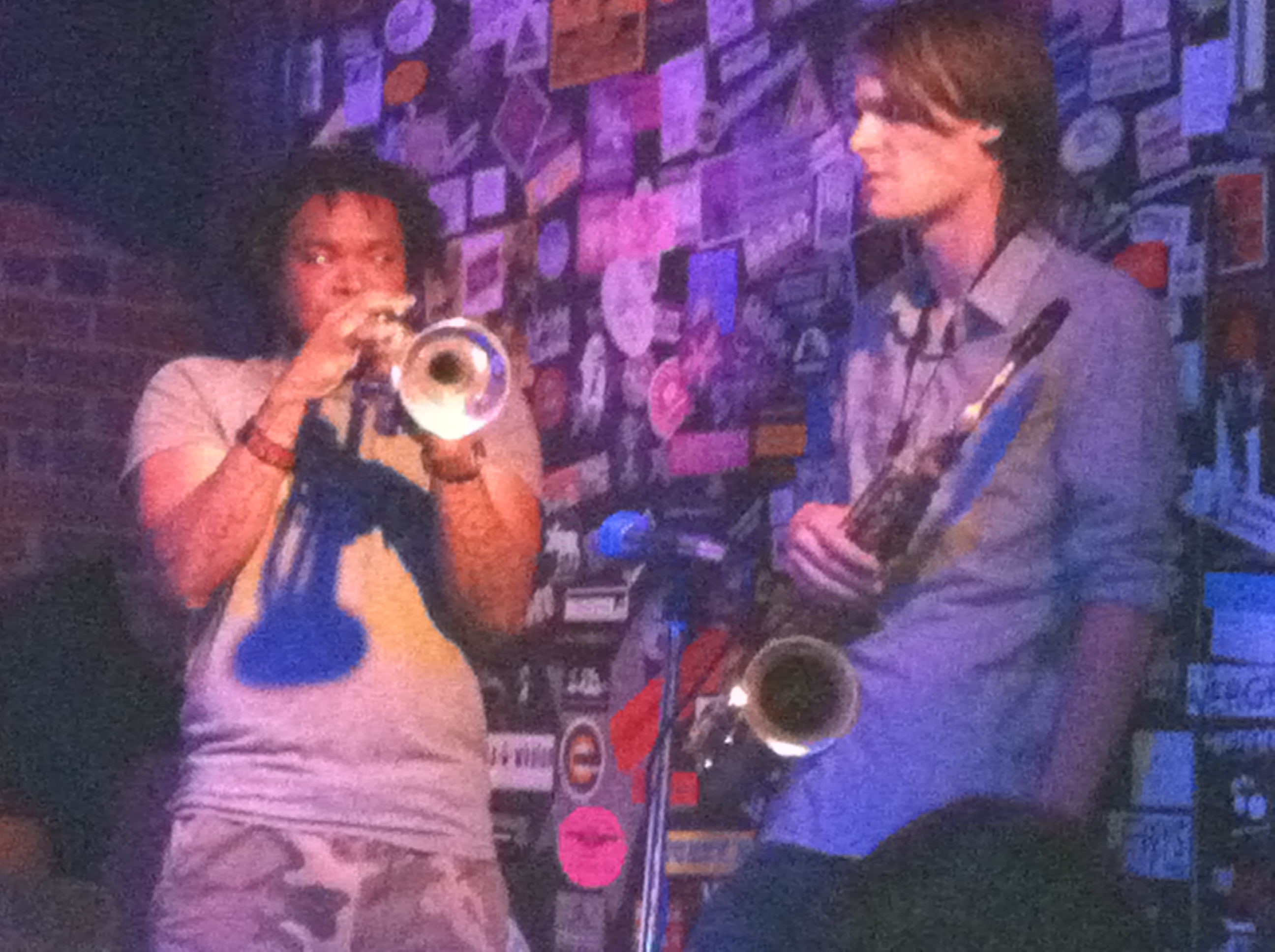
Eleazar Shafer (trumpet) and Zach Wheeler (sax) at the Queen’s Collective Jam on 6/6/12
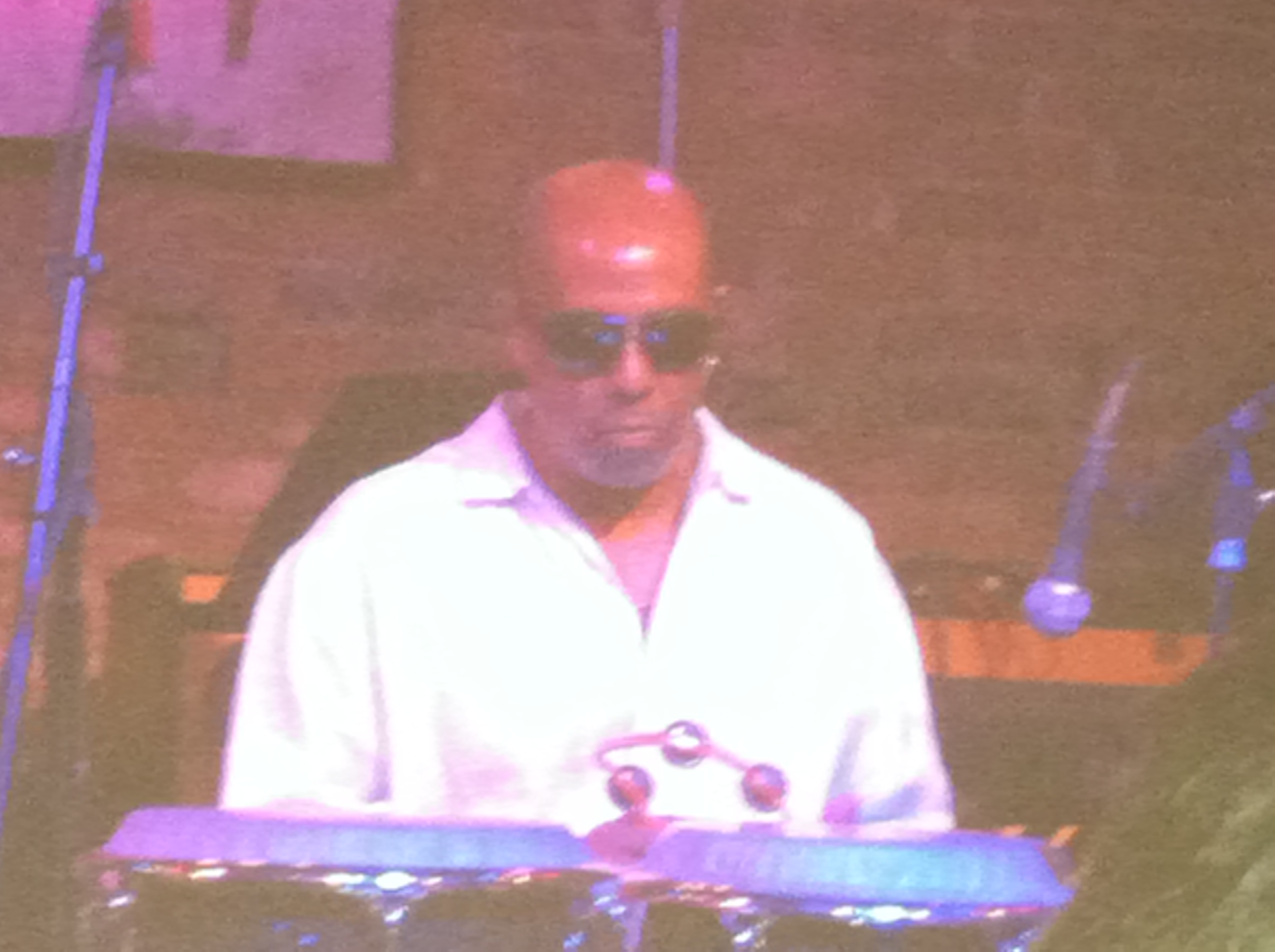
I arrived a little before 10 and found a spot at the back of the club. The weekly Open Mic night was still going on and it would continue well past its scheduled conclusion time. By 10:30 those of us who had come to hear jazz were quietly getting a bit restless waiting for the game gaggle of college aged kids to relinquish the stage. When they finally did, at around 10:40, Ocie and crew went quickly to work getting things set up for the session. He was joined by Queen’s Collective veterans, guitarist Troy Conn, Tim Singh on bass and percussionist Robert Beasley. Conn is a UNC-Charlotte grad with fleet fingers, a gorgeous full tone and a touch of a CTI era GB influence. Mr. Singh is a young bassist who shows a world of promise. Mr. Beasley is a veteran percussionist, versed in many styles. He is also without a doubt the coolest cat in the band, who with his shaved head and dark shades, resembles Roy Haynes’ younger Doppelganger.
Percussionist Robert Beasley at the Evening Muse on 6/6/12.
The collective kicked things off with a gritty untitled blues that featured Mr. Conn’s dirty guitar work. This was followed by a cool take on Joe Henderson’s “Recordame”. Conn and Singh set the table with their strong solos, followed by Davis and Beasley feeding off of each other in lockstep and showing the kids how it’s done.
Next was Trane’s “Impressions”; a ballsy move for any group that features a guitarist as we all have the sound of Wes Montgomery’s classic version from Smokin’ at the Half Note etched in our memories. But as you’ll see in this clip, young Troy Conn is up to the task.
With the crowd now warmed up Ocie called for “Cissy Strut” – a staple for any percussionist with Bayou roots. Things then got even better when Mr. Davis summoned to the stand Eleazar Shafer, a 26 year-old Charlotte native who is now based in NYC, with a lot of Hubbard in his horn and in his attitude. You’ve got to like a cat who takes the stage wearing a t-shirt that reads “I Am Awesome”; you’ve got to love him when he can back it up. Suffices to say, we love “Shafe”.
Davis then decided to take a break and relinquished the drum chair to Jacob Cavell. Another promising youngster, Zach Wheeler grabbed his alto sax and they then dove into one of my favorite Coltrane tunes, “Equinox”, with fine results.
There was much still to come as more musicians arrived, fully ready to go on all night long. Unfortunately however, I wasn’t, as I knew that I had to get out of there if I was to stand any chance of being even semi-coherent at work later that day. So regretfully, I had to cut out a little before 1 – missing in the process some great music and some fine new talent but feeling hopeful for the future of jazz in The Queen City.
A while back I was roaming around Manifest Records here in Charlotte and I came across a couple of used CDs by a lady named Paula West. I had seen them in the bins for a few months but had always passed them by.
On this day, there was a BOGO Sale; so to fill out my order, I decided to pick up the two CDs by Ms. West – Temptation and Restless.
I was floored by the richness of her voice, her masterful phrasing and her song choices, which were a nice mixture of the familiar and the refreshingly different. I became an instant fan and I kicked myself for letting those two discs languish in those bins for as long as I did.
Though she has come East on occasion, Paula West is based in the Bay Area and is relatively unknown outside of San Francisco. Hopefully that will change soon.
A few weeks back while listening to her most recent disc, Live at Jazz Standard, I impulsively tweeted that “Paula West was the best jazz singer that you’ve probably never heard”. I got a surprising number of retweets and agreements, so it’s nice to see that the lady does have a growing fan base.
But don’t take my word for it. See and hear for yourself. You can thank me later.
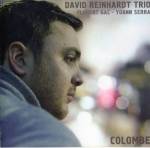 The 26-year-old grandson of the legendary guitarist Django Reinhardt is a very good guitarist in his own right. Unlike his grandfather, David is focused on Bop and Soul-Jazz. Colombe, his first album released in the U.S., is quite impressive. We’re looking forward to hearing more.
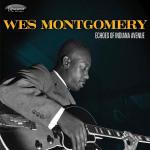 Echoes of Indiana Avenue – Wes Montgomery (Resonance)
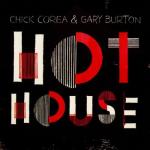 Hot House – Chick Corea and Gary Burton (Concord)
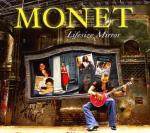 R&B, Jazz, and Neo-Soul create a gorgeous mosaic on this album by this criminally underheard flutist/vocalist/educator/actress. Monét’s sound on flute is reminiscent of Bobbi Humphrey, but this young lady brings much more to the musical table than her famed predecessor. The music here is way too intelligent and creative to be pigeonholed as “smooth jazz”, so we’ll just call it a thinking person’s groove.
 Speaking of gifted ladies who refuse to be pigeonholed, Ms. Spalding terrified many hardcore jazz types with her decidedly pop based new album, her first since her shocking Best New Artist win at the 2011 Grammys®. When you get past all the “jazz forsaking” arguments that have been made, what you have left is an eclectic (Jack DeJohnnette, Joe Lovano and Q-Tip all make guest appearances) and delightful album of great music by a prodigiously gifted young woman who is going to get it done her own way, jazz police be damned. You go girl!
 Though she was far from well-known, even in the jazz world, a shockwave went through our little community when it was reported that Shimrit Shoshan had died on August 19, 2012, of cardiac arrest, at age 29. The Israeli born pianist had released her first album in 2011 and it showed that she had a world of promise and nothing but good things ahead of her.







 Curt's Jazz Cafe