My Favorite Jazz Albums of the Year: 30 for ’20 (Part 2 of 3)

Posted in Best Jazz Albums of 2020 with tags , , , , , , , , , , , , on December 28, 2020 by curtjazz

Our second set of ten discs, includes a brilliant final musical statement from a true jazz great, a trumpet master, who is still creating incredible music, in his eighth decade; an exciting South African pianist, who is setting the jazz world aflame and a sparkling tribute to some legendary ancestors by a few modern masters. Let’s dig in.

Once again, the albums are in alphabetical order, by artist name.  We will also try hard again, to adhere to the three-sentence rule (but don’t bet on it!).

  • Jeff Hamilton Trio: Catch Me If You Can (Capri)
    • Jeff Hamilton is a drummer of impeccable swing and unerring sensibility. He is one of those cats who elevates any of his bandmates by his mere presence behind the kit; not that his mates in this trio, bassist Jon Hamar and pianist Tamir Hendelman, need any help. On this sublime date, which includes a nice mix of originals and standards that have not worn out their welcome, the Hamilton trio produces an album fondly reminiscent of the Oscar Peterson trio, in their prime days. That group also had a master of taste on the skins, the late, great Ed Thigpen. An album absolutely worth your time.
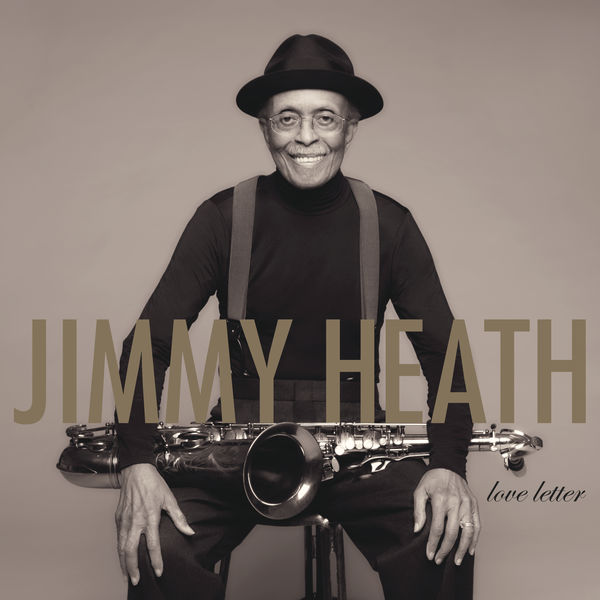
  • Jimmy Heath: Love Letter (Verve)
    • Jimmy Heath, a saxophonist whose stellar career included being on the stand with virtually every jazz great, from Charlie Parker through today’s up and coming stars, who learned at his feet, passed away last January, at age 93. He left us, as a final gift, Love Letter, an achingly beautiful album of ballads that he worked on, until just weeks before his death. With guest appearances by Wynton Marsalis, Cecile McLorin Salvant and Gregory Porter and a stellar group of sidemen, that included Kenny Barron on piano, Russell Malone on guitar and the wonderful and woefully under recorded Monte Croft, on vibes, this a fitting valedictory, to a jazz life, well-lived.
  • Eddie Henderson: Shuffle and Deal (Smoke Sessions)
    • Dr. Eddie Henderson turned 80 years old, last October. From the way he looks on the cover of Shuffle and Deal and the way he sounds on the music inside, it is clear, that the good doctor, has found the Fountain of Youth. His trumpet attack is as blistering and energetic as it was when he was first heard, in Herbie Hancock’s Mwandishi band, in the early ‘70’s. With Kenny Barron and “Big Chief” Donald Harrison, alongside him as composers and bandmates, Dr. Henderson, has produced his second straight brilliant album for Smoke Sessions records. Age ain’t nothing but a number, doctor. Keep going for as long as you’ve got masterful music, in your soul.  
  • Theo Hill: Reality Check (PosiTone)
    • Reality Check is pianist Theo Hill’s third album for PosiTone Records. While the prior two were good piano trio dates, Mr. Hill’s decision to expand to a quartet, with rising star vibraphonist Joel Ross, may have been what was needed to move the group from good to great. The instrumentation will draw natural comparisons, to the MJQ but the young members of this group are far more forward thinking and dare I say, modern, in their approach. And when Mr. Hill switches to Rhodes, he elevates this fine group, even higher.  
  • Christopher Hollyday: Dialogue (Self Release)
    • Christopher Hollyday’s comeback, has been one of the feel-good stories in jazz, in the last few years. Signed by Novus/RCA, as part of the jazz young-lions craze of the early ‘90’s, while still in his teens, the young alto saxophonist was earnest but frankly, not yet ready for prime-time. When his career foundered in 1993, Mr. Hollyday returned to teaching and studying, becoming a highly respected educator in San Diego. He made his first record in 25 years, in 2018, the critically acclaimed Telepathy. This year, he followed up with Dialogue, every bit as good as its immediate predecessor. Itcrackles with the energy and self-assurance of a gifted, mature artist. Christopher Hollyday is back and better than ever. Hopefully, this time, it is to stay.
  • Nduduzo Makhathini: Modes of Communication: Letters from The Underworld (Blue Note)
    • From the moment that I first heard Nduduzo Makhathini’s Blue Note debut, I knew that I had some homework to do. A pianist, Mr. Makhathini has been a force on the South African jazz scene for several years. Influenced by Americans such as McCoy Tyner and Andrew Hill, as well as by his countrymen, Abdullah Ibrahim and Bheki Mseleku, he has taken the essence of his homeland’s music and melded it with American jazz, in a way that I’ve heard others attempt but no other has succeeded on such a high artistic level. His was one of the truly fresh and exciting voices that I heard in jazz this year and I look forward to hearing more.
  • Jason Marsalis: Live (Basin Street)
    • Since switching to the vibraphone from the drums, a few years back, it has been fascinating to watch the musical growth of the youngest musical Marsalis brother. On this set, recorded live three years ago, at the famed Little Gems Saloon, Marsalis is more relaxed and in the pocket, than I’ve ever heard him on this instrument. Maybe it’s because he is working with his regular working group or perhaps it is because the set consists of all Jason Marsalis originals. Whatever the reason, he has stepped up his vibraphone artistry, to the next level and this is a very high-quality album.  
  • Christian McBride Big Band: For Jimmy, Wes, and Oliver (Mack Avenue)
    • If you’re like me and a fan of the two classic recordings that Jimmy Smith and Wes Montgomery made in 1966, you know every note of those gems by heart. And like me, when you heard of this project, you wondered what could McBride’s Big Band bring to the table, on a tribute to those albums (and their arranger, Oliver Nelson), that could be fresh and new. For starters, organist Joey DeFrancesco and guitarist Mark Whitfield, are both season veterans, who greatly admire the legends that they are standing in for but smart (and gifted) enough, not to be reduced to imitation. Second, the song selection includes only four tracks from the original two albums and finally, the arrangers only used Oliver Nelson’s charts on the tunes not on the Jimmy and Wes originals. The result is one hell of a good album. Jimmy, Wes, and Oliver would be pleased.
  • Ron Miles: Rainbow Sign (Blue Note)
    • Cornetist Ron Miles’ prior album I Am a Man, brought him near universal acclaim, in the world of jazz and an opportunity to record for Blue Note Records. While Rainbow Sign employs the same musicians as its predecessor, for me, the writing went much deeper and the arrangements were denser. A couple of the songs even swung, in a relatively traditional sense. Mr. Miles composed the music for this album, while caring for his ailing father, up until the time of dad’s passing. That difficult situation may have infused Miles’ writing process. Whether it did or not, the music here, is the best of Ron Miles’ career.
  • Farnell Newton: Rippin’ and Runnin’ (PosiTone)
    • On his second album for Marc Free’s PosiTone Records, trumpeter Farnell Newton has a decidedly groovier sound, precipitated by the presence of organist Brian Charrette. But this is not an all-out Earland/McDuff soul-jazz fest. In fact, this date sounds to these ears, like a more soulful version of Unity, the classic Larry Young album. Charrette is kept grounded by the hard driving but traditional drumming of the great Rudy Royston, while Newton and saxophonist Brandon Wright are flying high. The tension between the conventional and the greasy is palpable, throughout the project and it is what makes the music special.

A reminder, if you are interested in purchasing any of the music that we discuss in these posts, clicking on the album title, will take you to the album’s page on Amazon.com. There is also a Spotify playlist below, which includes a track from each of the albums discussed here, for you to sample. But please don’t just stream. During these tough times, these musicians can use your support more than ever, so if you like it, buy it.

Our next post will feature the final ten of our 30 for ’20. It will be up, tomorrow.

 Thoughts and opinions are welcome, as always, in the comments.
My Favorite Jazz Albums of the Year: 30 for ’20 (Part 1 of 3)

Posted in Best Jazz Albums of 2020, CD Reviews with tags , , , , , , , , , , , , , , , , on December 26, 2020 by curtjazz

Man, this has been one strange year! (Insert your own “no kidding”, or some variant, here)

Though I was fortunate enough to host a Zoom-based jazz talk show (Conversations with Curtis), thanks to JazzArts Charlotte, I heard less live music, this year than at any time, since my teens. I also somehow managed to hear less recorded music than any year, in recent memory. I feel less comfortable than ever declaring this list to be a “Best Of”, because there is so much out there that I’m still catching up with. So, let’s just say that these are my favorites of what I did hear. These are the albums that I went back to listen to, more than twice, the ones that stayed on the CurtJazz Radio playlist for more than just a few weeks.

There are thirty albums that I want to share with you. To keep the posts to a reasonable size, I have divided them into three groups of ten. For the sake of brevity, I will try not to write more than three sentences about any one album.

Here are the first ten of my favorite 2020 releases, in alphabetical order, by artist name:

  • J.D. Allen: Toys/Die Dreaming (Savant)
    • Allen releases about one album per year and he also makes about one trip a year to my “Best Of” list. On this enigmatically titled album, Allen continues his searing, powerful explorations guiding his tenor sax through a recommended set of mostly original tunes. It’s insistent, compelling, and absolutely first rate.
  • John Beasley: MONKestra Plays Beasley (Mack Avenue)
    • The first two outings of pianist/composer/arranger John Beasley’s large ensemble, ostensibly dedicated to the music of Thelonious Monk, made me a respectful admirer. This third volume, which adds compositions by Duke Ellington, Charlie Parker, and Beasley himself to those of Sphere, has made me a full-fledged fan. This set swings harder and takes the energy to the next level and every track is on point. A classic.
  • Lakecia Benjamin: Pursuance: The Coltranes (Ropeadope)
    • For me, this is Lakecia Benjamin’s coming of age album. Her previous albums have hinted at her potential but missed the mark in some way or another. Merging Ms. Benjamin’s millennial energy, creativity, and her wellspring of new ideas, with the canon of John and Alice Coltrane, has given these classics a fresh start that we didn’t realize that they needed, until now.
  • Peter Bernstein: What Comes Next (Smoke Sessions)
    • Peter Bernstein is one of the best and most reliable guitarists working in the world of jazz today. Be it as a first-call sideman or as a leader, Bernstein is a consistent arbiter of taste, intelligence, and swing. On What Comes Next, Mr. Bernstein, once again, does not disappoint, bringing us an outstanding set of first-rate performances.
  • Stanley Cowell: Live at Keystone Korner Baltimore (SteepleChase)
    • Stanley Cowell, who was a composer, educator, record-label executive, in addition to being one of the most creative and innovative pianists, in the world of jazz, died on December 18. His work, as a sideman with The Heath Brothers, Charles Tolliver, Max Roach and as a leader, will ensure that legions of jazz fans will continue to talk of and discover his work, for years to come. I’m unsure of whether Live at the Keystone Corner Baltimore, is Mr. Cowell’s final recording. If so, he went out on a triumph. Rest in Power, sir.
  • Wayne Escoffery: The Humble Warrior (Smoke Sessions)
    • I’ve come to expect a certain high-level of artistry from Wayne Escoffery’s recordings. The Humble Warrior is on my “best of” list because he has shown me something completely different in his song selection. Bringing Benjamin Britten’s choral work Missa Brevis in D, into the jazz realm, complete with a dense and challenging arrangement, is one of the most impressive things, from an artistic perspective, that I’ve heard all year.
  • John Fedchock NY Sextet: Into the Shadows (Summit)
    • Though trombonist John Fedchock is one of the best big-band arrangers in the business, I believe that in his small groups, such as this one, is where he really shines. In his small groups, there is a lightness and an attention to detail that his larger charts sometimes miss. His total reinvention of “Star Eyes”, is the standout on the album and one of the best versions of that old warhorse that I’ve ever heard.
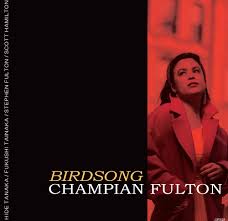
  • Champian Fulton: Birdsong (Self-Release)
    • Champian teased the release of this album, when she guested on “Conversations with Curtis”, last spring. The album was not released until August. It was worth the wait. Champian Fulton has grown into one of the finest pianist/vocalists in jazz today. She is a consummate interpreter of a lyric and though she clearly has been influenced by several the greats, she sounds like no one, but herself. Did I also mention that her piano playing can swing you into bad health? This tribute to Bird, flies high.
  • Nubya Garcia: Source (Concord)
    • Nubya Garcia has been building to this moment for a few years now, with two well received and exciting Eps, before Source, her first full length album was released this year. If you’re familiar with her EPs, what is here will not be surprising. The 28-year-old British saxophonist has a sound that is influenced by the soulful ancestors, like Henderson and Turrentine, but rooted in the nascent London jazz scene of today. Downbeat has named Ms. Garcia, one of the 25 performers that could shape jazz for decades…I certainly hope that they’re right.
  • Connie Han: Iron Starlet (Mack Avenue)
    • I was unfamiliar with the work of this 24-year-old piano prodigy, until last January, when she was the victim of some vicious and sexist written attacks by a respected online jazz publication (which later claimed that they were hacked). This made me curious enough to explore her music for myself. I found her work to be surprisingly good. She knows her jazz vernacular, she is a strong soloist, who leaves plenty of room for her sidemen and she is a fine composer. Iron Starlet, her second album as a leader, stands favorably alongside of much of the released work of Ms. Han’s contemporaries and her elders, in 2020. Those who criticize her for reasons that have nothing to do with her music, ought to be ashamed of themselves.

There you have the first ten of my “30 for ’20”. And yes, I did break my three sentence rule, when it was absolutely necessary. I’ve included a Spotify playlist, below, with a track from each of the albums discussed in this article, to give y’all a taste. We will release two more posts, with 11 – 20 and 21 – 30, on the list, on successive days. Thoughts and opinions are welcome, as always, in the comments.
Keep Calm and Clave On – An Afro-Cuban Jazz Primer – Part 3

Posted in afro-cuban jazz, Jazz Arts Charlotte, Jazz in Charlotte, Under The Radar with tags , , , , , , , , , , , on April 24, 2019 by curtjazz

The clave (/ˈklɑːveɪ, kleɪv/; Spanish: [ˈklaβe]) – a rhythmic pattern used as a tool for temporal organization in Afro-Cuban music. It is present in a variety of genres such as Abakuá music, rumba, conga, son, mambo, salsa, songo, timba and Afro-Cuban jazz. The five-stroke clave pattern represents the structural core of many Afro-Cuban rhythms
(From Wikipedia)

Got it now? The clave, is the heartbeat of great Afro-Cuban music. You can fill your stage with world class musicians but without the clave, you’ve got nothing. You can bring in all the explanations you want but you’ve got to have the heartbeat.

I’m going to stop trying to describe it now because I am woefully unqualified to do so. Percussionist Dafnis Prieto, is very qualified and I’ll let him do so, briefly, in the clip below:

Also more than qualified; clave wise; are Orquesta K’Che; one of the best Latin Jazz bands in the Carolinas. They will be with us in JazzArts Charlotte’s THE JAZZ ROOM on April 24 & 25, as we pay tribute to The Music of Cuba. A sample of their remarkable artistry is below:

So come out and join us THE JAZZ ROOM this weekend. And before or after the show, check out the history of the music by checking out the last five of our Afro-Cuban Jazz pioneers:

  • Chano Pozo (1915 – 1948) Luciano Pozo González contributions to the development of Afro-Cuban Jazz during his short life are incalculable. A dark-skinned Cuban, who was a devotee of the Santería religion, he scuffled his entire life to survive. His talents as a drummer were discovered at a very early age. However, the bandleaders, who admired his work, would not hire him, because of his skin color. He immigrated to the U.S., in 1947, in search of a better life. Dizzy Gillespie wanted to add Cuban percussion to his big band. His friend, Mario Bauzá suggested his newly arrived friend, Pozo. The rest is history. Diz and Chano’s collaboration lasted only 14 months but during that time Chano’s innovative style on the congas, melded with the sound of Dizzy’s brash bop based big band, to create a sound like nothing jazz had ever heard before. This was the beginning “Cubop”. It was a thrill for audiences to see the muscular, shirtless, Chano; strutting around the stage, chanting in Yoruba as his rhythm drove the band. He and Gillespie collaborated on writing the standards, “Tin Tin Deo” and “Manteca”. They also created an unforgettable version of “Cubana Be; Cubana Bop”. Sadly, their amazing collaboration was cut short, as Chano Pozo was shot dead, in a Harlem bar argument at age 33.
  • Arsenio Rodríguez (1911 – 1970) – A musician, composer and bandleader, Rodríguez played the tres (Cuban guitar), as well as the conga. Born in Cuba and blinded at the age of seven, when kicked in the head by a mule, Rodríguez was considered a master of the son Cubano, son montuno and rumba. He also established the modern Cuban conjunto, adding piano, horns and congas to the traditional Cuban sextet or septet. This format became the standard for most Afro-Cuban music that was not being performed by a big band. Several of his former musicians, including pianist Rubén Gonzalez, saw a late career revival, due to the Buena Vista Social Club album and film, which drew heavily on Rodríguez’s style. Rodríguez was a prolific composer, who wrote over 200 songs. He was unable to musically transition, when interest in the mambo waned, by the mid-60’s. He died of pneumonia in Los Angeles, in 1970.
  • Mongo Santamaría (1917 – 2003) Influential Cuban conga player, bandleader and composer who pioneered the marriage between Afro-Cuban rhythms and R&B. He heard Herbie Hancock play “Watermelon Man”, while Herbie was working as a fill-in pianist in Mongo’s band. He got Herbie’s permission to record it, it became a smash pop hit and thereby helped spawn the boogaloo (bugalú) craze.  His most famous composition, “Afro Blue,” became a jazz standard in and was recorded by John Coltrane and Cal Tjader, among many others. Mongo is a legend in jazz, Afro-Cuban, R&B and pop music. Arguably, he is the musician with the widest influence in this grouping.
  • Carlos “Patato” Valdés (1926 – 2007) Once called “The greatest conguero alive”, by Tito Puente, Patato invented (and patented) the tuneable conga drum. Traditional nail-head conga drums used nails to secure the skin to the wooden drum, which could be ‘tuned’ somewhat by using a candle or Sterno under the head of the drum. A visonary, Patato had long been experimenting with securing the skin to the drum-head with a metal ring which could be adjusted with a square box wrench, allowing a conga player to tune his instrument as would a violinist or pianist. After emigrating to the U.S. from Cuba in 1954, Patato’s first album in the US was Kenny Dorham’s classic Afro-Cuban. During his illustrious career, he worked with virtually every legend of Afro-Cuban and jazz music, including Art Blakey, Tito Puente, Mongo Santamaría; Willie Bobo; Grant Green and many more.
  • Chucho Valdés (1941 –    ) Arguably the greatest Cuban pianist ever,  Jesús Valdés Rodríguez, is a true living legend. The son of Bebo Valdés, who was also a pianist (1918 – 2013) as well as the leader of the orchestra at Havana’s famed Tropicana club; Chucho has been instrumental in the spread of the influence of Afro-Cuban Jazz, into the 21st Century. Chucho first garnered attention outside of Cuba, when he formed Irakere, in 1973, with some of his bandmates from Orquesta Cubana de Música Moderna, a Cuban big band. Irakere blended Afro-Cuban, jazz and influences from modern rock, funk and pop, into their sound. Though some of the early members of Irakere, such as Paquito D’Rivera and Arturo Sandoval, defected to the U.S., Valdés remained in his homeland. However, as tensions between the U.S. and Cuba began to thaw in the 90’s, Chucho became a frequent presence in the U.S., for recordings and concerts. He has won six Grammy Awards and although he yielded the piano/director chair of Irakere to his son, Chuchito, he continues to work and garner acclaim, with his current band, the Afro-Cuban Messengers.

Hope to see you in THE JAZZ ROOM this weekend. For additional info, visit the JazzArts Charlotte website TheJazzArts.org

Hasta la próxima, el jazz continúa …

Don’t Call it “Salsa” – An Afro Cuban Jazz Primer – Part 2

Posted in afro-cuban jazz, Jazz Arts Charlotte, Jazz in Charlotte with tags , , , , , , , , , , , , , , , , , , on April 16, 2019 by curtjazz

Cuba has produced a rich catalog of musical styles, especially since the beginning of the 20th Century. We will briefly describe some of these styles, shortly. However, one thing that you should not do, is refer to these styles as “Salsa”.

The reason was explained by Afro-Cuban jazz legend, Mario Bauzá, during a 1992 television interview. Said Bauzá: “After the [Cuban] Revolution…they started calling everything ‘Salsa’. That’s why I don’t like it. Because ‘Salsa’ don’t mean nothing. There’s no rhythm that you can say is a ‘Salsa’ rhythm…Any Cuban music, they called ‘Salsa'”.

Ever since I heard those strong words from Dr. Bauzá, I have tried very hard, to avoid using that term, except when speaking of what I like on my tortilla chips (though I have occasionally slipped). So before we get to five more great names in Afro-Cuban Jazz, let’s briefly describe some of the more well-known Cuban musical styles:

Cha-Cha-Cha – A style that developed out of the Danzon-Mambo, in the 1950’s. According to Enrique Jorrín, one of the acknowledged creators of the style, he noticed that most of the dancers had some trouble following the highly syncopated rhythms of one of his compositions. He then simplified the musical texture, using as little syncopation as possible. When the dance was coupled to the rhythm of the music, it became evident that the dancer’s feet were making a peculiar sound as they grazed the floor on three successive beats. “Cha-cha-cha”, described this sound.

Benny Moré,

Descarga – An improvised jam session consisting of variations on Cuban music themes, primarily son montuno, but also guajira, bolero, guaracha and rumba. The genre is strongly influenced by jazz and it was developed in Havana, during the 1950s.

Guaguancó – A subgenre of Cuban rumba, combining percussion, voices, and dance. There are two main styles: Havana and Matanzas.

Mambo – a genre of Cuban dance music pioneered in the late 1930s and later popularized in the big band style by Pérez Prado. It originated as a syncopated form of the danzón, known as danzón-mambo. By the late 1940s and early 1950s, mambo had become a “dance craze” in the United States. Mambo continued to enjoy some degree of popularity into the 1960s and new derivative styles appeared, such as dengue.

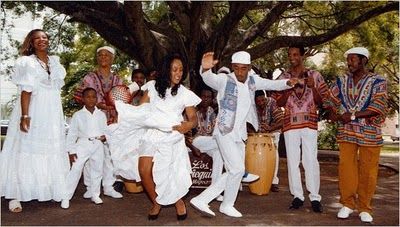
Rumba – a secular genre of Cuban music involving dance, percussion, and song. It originated in the northern regions of Cuba, mainly in urban Havana and Matanzas, during the late 19th century. It is based on African music and dance traditions. Traditionally performed by poor workers of African descent in streets and solares (courtyards), rumba remains one of Cuba’s most characteristic forms of music and dance. Vocal improvisation, elaborate dancing and poly-rhythmic drumming are the key components of all rumba styles.

Son Cubano – a genre of music and dance that originated in the highlands of eastern Cuba during the late 19th century. It is a genre that blends elements of Spanish and African origin. Among its fundamental Hispanic components are the vocal style, lyrical meter and the primacy of the “tres”, derived from the Spanish guitar. Its characteristic clave rhythm, call and response structure and percussion section are all rooted in traditions of Bantu origin.

Machito and his Afro-Cubans

We’re going to stop at six styles, with the full knowledge that we are leaving out others, such as Bolero, Charanga, Guaracha, Montuno, etc. To keep this post from becoming book length, we had to quit while we were ahead. Feel free to continue the research on your own. And whatever you do, don’t call it “Salsa”

Here are five more names, in our list of fifteen notable pioneers of Afro-Cuban music, along with a currently available, representative album, to use as an introduction to their music.

  • Graciela (1915 – 2010) – Graciela Pérez Gutiérrez, was a female vocalist, who like Celia Cruz, insistently made her way in that male dominated field.  Graciela was known for her big voice and risqué stage presence. She first came to prominence in the big band led by her adoptive brother Frank “Machito” Grillo. She emigrated to New York in 1943 to help Mario Bauzá front Machito’s band after Machito was drafted during WWII. Upon her brother’s return, Machito, Bauzá and Graciela were a force that dominated the Palladium, for the next twenty years, until the legendary ballroom shut down.
  • Irakere (1973 – present) – The legendary Cuban band, that was an incubator for living legends such as Paquito D’Rivera; Arturo Sandoval and Chucho Valdés. Irakere, was founded at the height of the cold-war tensions, in 1973, and out of it grew musical ideas that influenced jazz, Cuban pop, rock dance and Afro-Cuban music. Despite jazz being literally outlawed in Cuba, at the time when the group came into being, Valdés (the musical director), Sandoval and D’Rivera found creative ways to bring the jazz that influenced them, into their performances and get around their government censors. In doing so, they discovered some remarkable new ideas.
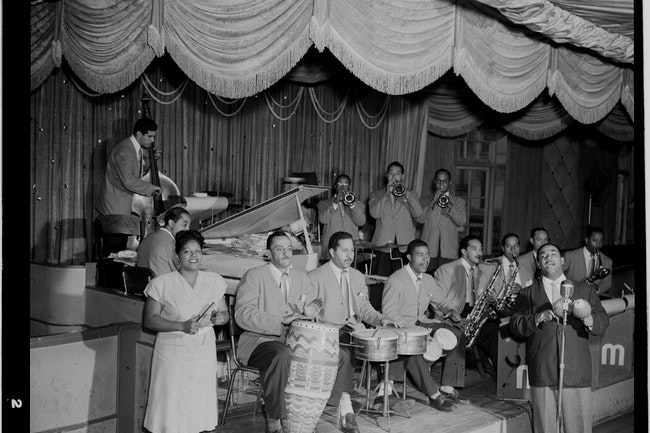
  • Machito (1908 – 1984) – “Machito” was the nickname given to Francisco Raúl Gutiérrez Grillo, a bandleader, who played a major role, along with Dizzy Gillespie and Mario Bauzá, in the development of Cubop and other Afro-Cuban jazz styles. Under Bauzá’s musical direction, and with his younger sister Graciela, on vocals, Machito’s big band, the Afro Cuban’s, became extremely influential. Jazz greats such as Gillespie, Charlie Parker and Stan Kenton, all listed Machito’s band as a musical inspiration.  George Shearing pointed to Machito as someone who helped him understand what “Latin music was about”. A teenaged Tito Puente made some of his first recordings, with Machito and a young Willie Bobo, acted as a roadie for Machito, just to be near the band, in the hopes of eventually getting to play; he did, which gave Bobo his start.
  • Benny Moré (1919 – 1963) – Bartolomé Maximiliano (Benny) Moré, possessed one of the most beautiful and expressive voices to ever grace Afro-Cuban music. Known as “El Bárbaro del Ritmo” (The Master of Rhythm), Moré was considered a master of numerous Cuban musical styles, including mambo, son, guaracha, son montuno, bolero and cha cha cha. From 1953, until his death, he led one of the most popular big bands in Cuba, “La Banda Gigante”. Although he could not read music, Moré would compose and arrange music by singing each part to his arrangers. He had become extremely popular, throughout Mexico, the Caribbean region and even in the U.S. (he sang at the 1957 Oscars), by the late 1950’s. Had he chosen to leave during the Cuban Revolution, his fame would have likely increased. However, Benny Moré chose to remain among what he called, “mi gente” (my people). An alcoholic, he died of cirrhosis of the liver in 1963.
  • Chico O’Farrill (1921 – 2001) – Arturo “Chico” O’Farrill was born in Havana to an Irish father and German mother. He rejected his family’s desire that he go into the family law practice. Instead, Chico gravitated to the jazz that he loved. His family was scandalized by Arturo’s desire to hang out with the local black musicians but Arturo would not be dissuaded. A Julliard educated trumpet player, he had done some arranging and composing for among others, Stan Kenton, Count Basie and Benny Goodman, who gave O’Farrill his nickname, because he had trouble pronouncing “Arturo”. An acolyte of Dizzy Gillespie, O’Farrill was there at the beginning of “Cubop”, along with Diz, Bauzá and Machito. His conservatory training caused O’Farrill to fully voice the Cuban rhythms, while also providing robust big band charts as well. His “Afro-Cuban Jazz Suite”, for Machito’s Orchestra, featuring Charlie Parker, stands as one of the great Afro-Cuban jazz works of all time.
Chico O’Farrill (Trumpet; Dark Suit)

In the third and final part of this primer, we will touch on five more great Cuban musicians with many more rare video clips.

In or near Charlotte and want to hear some great Afro-Cuban Jazz, live? Then join us in Jazz Arts Charlotte’s THE JAZZ ROOM, on Friday and Saturday, April 26 & 27; as we will be en fuego, with the authentic sounds of Cuba. For tickets and info, visit the Jazz Arts Charlotte Website www.thejazzarts.com.

Hasta la próxima, el jazz continúa …

Ricky Ricardo Ain’t Real – An Afro-Cuban Jazz Primer – Part 1

Posted in afro-cuban jazz, Jazz Arts Charlotte, Jazz in Charlotte with tags , , , , , , , on April 14, 2019 by curtjazz

April is Jazz Appreciation Month. So let’s show love to one of the most vibrant of jazz styles – Afro-Cuban. Some have called it “Latin Jazz”. However, the originators of the style, such as Mario Bauzá, usually bristled at the generic and watered-down sound of that term.

Another thing that caused many Cuban musicians anguish was the fact that Desi Arnaz, the Cuban born actor and conguero was the face and voice of their music, outside of the island, for many years. This was due, of course, to I Love Lucy, the iconic TV show that Arnaz starred in, throughout the 1950’s, with his then-wife Lucille Ball. Arnaz’s character, Ricky Ricardo, was also a Cuban conguero and the version of Cuban music that he played had been heavily watered down, to make it palatable for a mass audience. The general take on Arnaz, from his fellow Cuban musicians was that he was competent on his instrument, but above all, he was a thief and a sellout. Or, in today’s lingo, a cultural appropriator. Arnaz, a white Cuban, from a wealthy family, had taken the Afro-Cuban ritualistic styles that he had observed in his youth; brought them into his music, without attribution and then sanded off the rough edges. In fact, Arnaz/Ricardo’s signature song “Babalú” was based on music that came from an Afro Cuban religious ritual, in worship of the Santerían deity “Babalú Ayé”, a spirit associated with disease and healing; which has its own origins in the West African Yoruba religion. This is about as far away from Lucy, Fred and Ethel as you can get. Ricky Ricardo ain’t real, people. Everything that we will talk of, from this point forward, is.

Cachao

So, let’s pay homage to some of the musicians who are the true masters of the genre. We’ll start with a listing of some who were the real influencers and pioneers of Afro-Cuban jazz styles. I’m holding this list to fifteen names, (divided into three posts) with a great deal of difficulty. Yes, I understand the list will be far from comprehensive and that I will leave out many remarkable contributors. But my main objective is to provide a starting point for those who want to learn more, about Afro-Cuban music. All the musicians and groups here are Cubano, with one obvious exception.

Our first five names, in alphabetical order

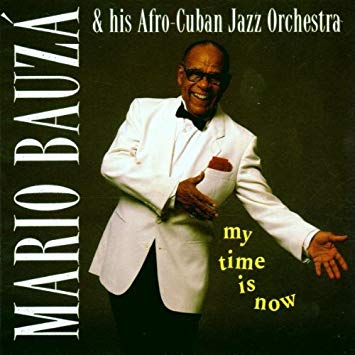
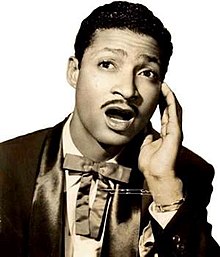
  • Mario Bauzá (1911 – 1993)– Considered one of the fathers of the Afro-Cuban Jazz Style, he was a trumpeter, arranger, composer and bandleader.  Bauzá was the first to explore fusing jazz arranging techniques with authentic Afro-Cuban rhythms on a consistent basis. While a trumpet player with Chick Webb, Bauzá first met Dizzy Gillespie and he also recommended Ella Fitzgerald to Webb, helping to give Ella her start. His composition “Tanga” is considered one of the first great tunes of the jazz and Cuban mixture known as “Cubop”
  • Buena Vista Social Club (1996 – present) – Originally a popular black club in the pre-Castro, segregated Havana, the name came to represent an ensemble of veteran Cuban musicians, who had been organized by American guitarist Ry Cooder, to revive interest in the music of pre-revolutionary Cuba, in 1996. The album that the group recorded under that name, became wildly successful, as did an accompanying documentary, reviving the late-in-life careers of the musicians, many of whom had retired or had been forgotten.  Among the groups’ members were Compay Segundo, Rubén González, Ibrahim Ferrer and Omara Portuondo.
  • Cachao (1918 – 2008) – The nickname of bassist Israel López Valdés, by which he was widely known. He is recognized as the co-creator of the Mambo. He was also considered a master of the Cuban style jam session, known as descargas. Cachao is considered to be one of the greatest bassists of all time, in any genre.
  • Celia Cruz (1925 – 2003)– The most popular Latin vocalist of the 20th century and an unequivocal musical legend. Defecting to the U.S. during the Cuban revolution, Ms. Cruz became an unstoppable force in a genre dominated by men. She earned twenty-three Gold albums during her career; there is a high school in the Bronx named after her and she has been honored with a U.S. Postage Stamp.
  • Dizzy Gillespie (1917 – 1993) – The only non-Cuban on this list, Diz is here as the bridge between Afro-Cuban music and straight-ahead jazz. He met Mario Bauzá, when both were playing trumpet in Chick Webb’s band; the two became lifelong friends. Bauzá introduced Gillespie to a young conguero named Chano Pozo. Diz was floored by Pozo musical ideas and immediately invited Pozo to join his band. Gillespie, Pozo and Bauzá worked on this stylistic fusion that they called “Cubop”, honing it in NY clubs such as the Palladium and the Apollo Theater. “Manteca” and “Tin-Tin Deo”, which Diz co-wrote with Chano, are considered Afro-Cuban jazz classics.

In Part II of this series, we will define the major categories within the Afro-Cuban Jazz style and identify five more innovators, who you should be familiar with.

In or near Charlotte and want to hear some great Afro-Cuban Jazz, live? Then join us in Jazz Arts Charlotte’s THE JAZZ ROOM, on Friday and Saturday, April 26 & 27; as Johnny Conga and Orlando Fiol, will setting the stage on FIRE, with the authentic sounds of Cuba. For tickets and info, visit the Jazz Arts Charlotte Website www.thejazzarts.com.

Hasta la próxima, el jazz continúa …

Album Reviews – A Sack Full of Sax

Posted in CD Reviews, curtjazz radio, Uncategorized, Who's New in Jazz with tags , , , , , , on March 11, 2019 by curtjazz

Our first review post of the year, features four new albums from veteran saxophonists who should all, be better known than they are. Start to right that wrong, by picking up these projects, which are all recommended.

Chris Greene Quartet – Playspace (Single Malt)

The native of Evanston, IL has spent most of his career close to home, which means the Chicago jazz scene. Readers of this blog are aware of my fondness for his sound, indicated by multiple appearances of Mr. Greene’s albums on my year end “Best of” lists. On his twelfth album as a leader, Greene gives us more of what his best qualities – that full bodied, gritty, tenor attack and a surprisingly rich tone, when he switches to soprano.  Playspace finds Greene and the CGQ in a deeper soul jazz vein than usual, and I loved every minute of it. “The Crossover Appeal/Uno Mas”, locks into the pocket and doesn’t let go, with Marc Piane’s electric bass setting the stage and Greene getting into a sweaty sax duel with guest star Marquel Jordan. A Latin reading of Wayne Shorter’s “Speak No Evil”, is surprisingly effective, with drummer Steve Corley taking center stage with a relentless groove and a killer solo. “Blues for Dr. Fear”, which appeared in a studio version, on 2017’s Boundary Issues, is back and funkier than ever, with Damian Espinosa’s cool keys weaving around Greene’s tough tenor. Playspace is another winning album from one of the true working groups in jazz today. Looks like we’re not going to get them out of the Windy City, y’all, so we’ll have to make the trip there, to experience in person, what we hear on this disc.

Nick Hempton – Night Owl (Triple Distilled)

Nick Hempton, who has called New York home since 2004, announces his intention from the first notes of this album. This a truly greasy session, influenced by the organ dates led by Stanley Turrentine, Lou Donaldson, Sonny Stitt and so many of their brethren, in the dives and after-hours clubs of the Big Apple, since the 50’s. He has assembled the perfect cast for the date: Peter Bernstein on guitar, Kyle Kohler on organ, and Fukushi Tainaka on drums. These cats have all logged many hours, backing up similar dates and they inspire Mr. Hempton to lay down the most soulful playing that I’ve ever heard from him. Most of the tracks are Hempton originals but they perfectly capture that long-ago vibe. Mr. Hempton switches between the alto and the tenor without missing a beat and is equally effective on each horn. The standout tracks are the Latin-tinged “I Remember Milady’s”, with Hempton getting a nice assist from Bernstein; “After You’ve Gone”, with Hempton’s alto, recalling ‘Sweet Lou’, during his Blue Note heyday and Koehler evincing a Big John Patton influence; and the nasty title track, which sounds like a lost track from one of those classic Jimmy Smith; Stanley Turrentine; Kenny Burrell dates. Buy this album, pour a glass of your favorite libation and put on your best “funky face”, because Night Owl is the real deal. 

Ralph Moore – Three Score (WJ3)

Hard to believe but it’s true. Three Score is Ralph Moore’s first album as a leader in nearly 25 years. He hadn’t left the scene during that time; Moore spent the better part of the last twenty years, on the West Coast, playing in Jay Leno’s Tonight Show band. He also was a sideman for Oscar Peterson, Roy Hargrove, Ray Brown, Tom Harrell and many other jazz greats; so, he was here; he just wasn’t leading any dates. He has returned with a stellar album, on the best boutique label in jazz – Willie Jones III’s WJ3. Joined by Eric Reed on piano, Gerald Cannon on bass and Jones on drums, Mr. Moore’s sound, which for me, always landed in the niche between John Coltrane and Joe Henderson, is as captivating as ever. The band of top tier pros doesn’t miss a beat and the compositions, mostly by Moore and Reed, are uniformly excellent. If you’re going to skip around, you must first check out “Another Time”, a Reed original, which opens the proceedings and throws down the hard bop gauntlet; the infectious, toe tapping (and too brief) “Donny” and the reflective title track, which features Mr. Moore’s finest solo on the date. But don’t sleep on the rest of the disc because it’s all choice. Ralph Moore is back, y’all and Three Score is one of the best albums that I’ve heard so far, in 2019.

Justin Robinson – At First Light (WJ3)

Justin Robinson spent most of the last 15 years, alongside the late, great Roy Hargrove on some of the trumpet master’s finest live shows and recordings. His work with Hargrove, often overshadowed the impressive music that Mr. Robinson released as a leader. At First Light, is his first album in five years and his second for WJ3 Records. He is backed by a solid group of young cats, that he has worked with over the years, with Hargrove and in other settings; Sharp Radway on piano, Ameen Saleem on bass and Jeremy Clemons on drums. Mr. Robinson lists Jackie McLean among his influences and it shows in his sound, as do elements of Bobby Watson. His tone is in your face and hard swinging. Robinson composed six of the project’s eight tunes and there are many standouts: “Lamentations for R and D” starts with a mournful, wandering theme, which leads unexpectedly to a light bossa beat, while Robinson, sticks with the mood that he set in the opening. It’s compelling, and Radway and Clemons are especially good here. The beautiful “Love Thy Father”, allows Robinson to fully access his melodic side. There’s also “Cool Blues”, the Charlie Parker classic, that seems to be a rite of passage for alto players. Mr. Robinson’s take is a very good one, true to the structure of Bird but adding his own flourishes during his solos. It is Parker meets JMac meets Robinson and I liked it a lot. At First Light is another fine release from WJ3 Records. We don’t hear from them often but when we do, it’s consistently first-rate.

There’s a lot more that’s new and good out there, to tell you about. We’ll be dropping more reviews shortly. In the meantime, you can hear tracks from these albums and more on CurtJazz Radio, on Live 365. We’re always on and always FREE.

Until then, the jazz (and BAM) continues…

“Juan’s an ‘Old Problem'” (Duke fires Mingus)

Posted in Jazz in Charlotte, JazzLives!, The Jazz Continues... with tags , , , , , , , , on March 2, 2019 by curtjazz

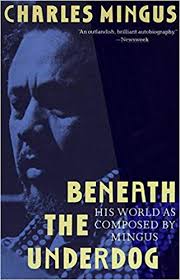
For those of you who weren’t with us in Charlotte on February 22-23, 2019; well, you missed some amazing jazz, as Neil Caine honored Charles Mingus. I was fortunate enough to be the MC for the weekend and in that capacity, tell a few stories related to one of the greatest bass players in the history of jazz. Due to time constraints, I only made passing mention to one of my favorites – one from Mingus’ fascinating autobiography, Beneath the Underdog. I did promise to post the story in full, because it is a classic.

Charles Mingus idolized Duke Ellington from his youth. He always considered the Duke to be one of his greatest musical influences. So it had to be a thrill for Mingus, when, in 1953, he was hired to fill the bass chair in the Ellington Orchestra. It was a short-lived honor, however, as Mingus, who was known for his irascibility, almost as much as his prowess on the bass, almost immediately butted heads with Ellington’s famed valve trombonist, Juan Tizol (the composer of “Caravan”).

The “disagreement” was so heated, that Ellington, who almost never terminated anyone from his band, felt that someone had to go and that someone, was Charles Mingus.

Mingus gives an account of his firing, in his autobiography. Over the ensuing years, some have questioned the veracity of parts, or all, of Mingus’ version of the facts but it is so entertaining and, for those who knew Ellington, so plausible, that it has become the accepted account. Below is that story. Please note that Mingus wrote much of the book in the second person, and we will not make any revisions to his preference:

Tizol wants you to play a solo he’s written where bowing is required. You raise the solo an octave, where the bass isn’t too muddy. He doesn’t like that and he comes to the room under the stage where you’re practicing at intermission and comments that you’re like the rest of the niggers in the band, you can’t read. You ask Juan how he’s different from the other niggers and he states that one of the ways he’s different is that he is white. So you run his ass upstairs. You leave the rehearsal room, proceed toward the stage with your bass and take your place and at the moment Duke brings down the baton for “A-Train” and the curtain of the Apollo Theatre goes up, a yelling, whooping Tizol rushes out and lunges at you with a bolo knife. The rest you remember mostly from Duke’s own words in his dressing room as he changes after the show.

“Now, Charles,” he says, looking amused, putting Cartier links into the cuffs of his beautiful handmade shirt, “you could have forewarned me—you left me out of the act entirely! At least you could have let me cue in a few chords as you ran through that Nijinsky routine. I congratulate you on your performance, but why didn’t you and Juan inform me about the adagio you planned so that we could score it? I must say I never saw a large man so agile—I never saw anybody make such tremendous leaps! The gambado over the piano carrying your bass was colossal. When you exited after that I thought, ‘That man’s really afraid of Juan’s knife and at the speed he’s going he’s probably home in bed by now.’ But no, back you came through the same door with your bass still intact. For a moment I was hopeful you’d decided to sit down and play but instead you slashed Juan’s chair in two with a fire axe! Really, Charles, that’s destructive. Everybody knows Juan has a knife but nobody ever took it seriously—he likes to pull it out and show it to people, you understand. So I’m afraid, Charles—I’ve never fired anybody—you’ll have to quit my band. I don’t need any new problems. Juan’s an old problem, I can cope with that, but you seem to have a whole bag of new tricks. I must ask you to be kind enough to give me your notice, Mingus.”

The charming way he says it, it’s like he’s paying you a compliment. Feeling honored, you shake hands and resign.

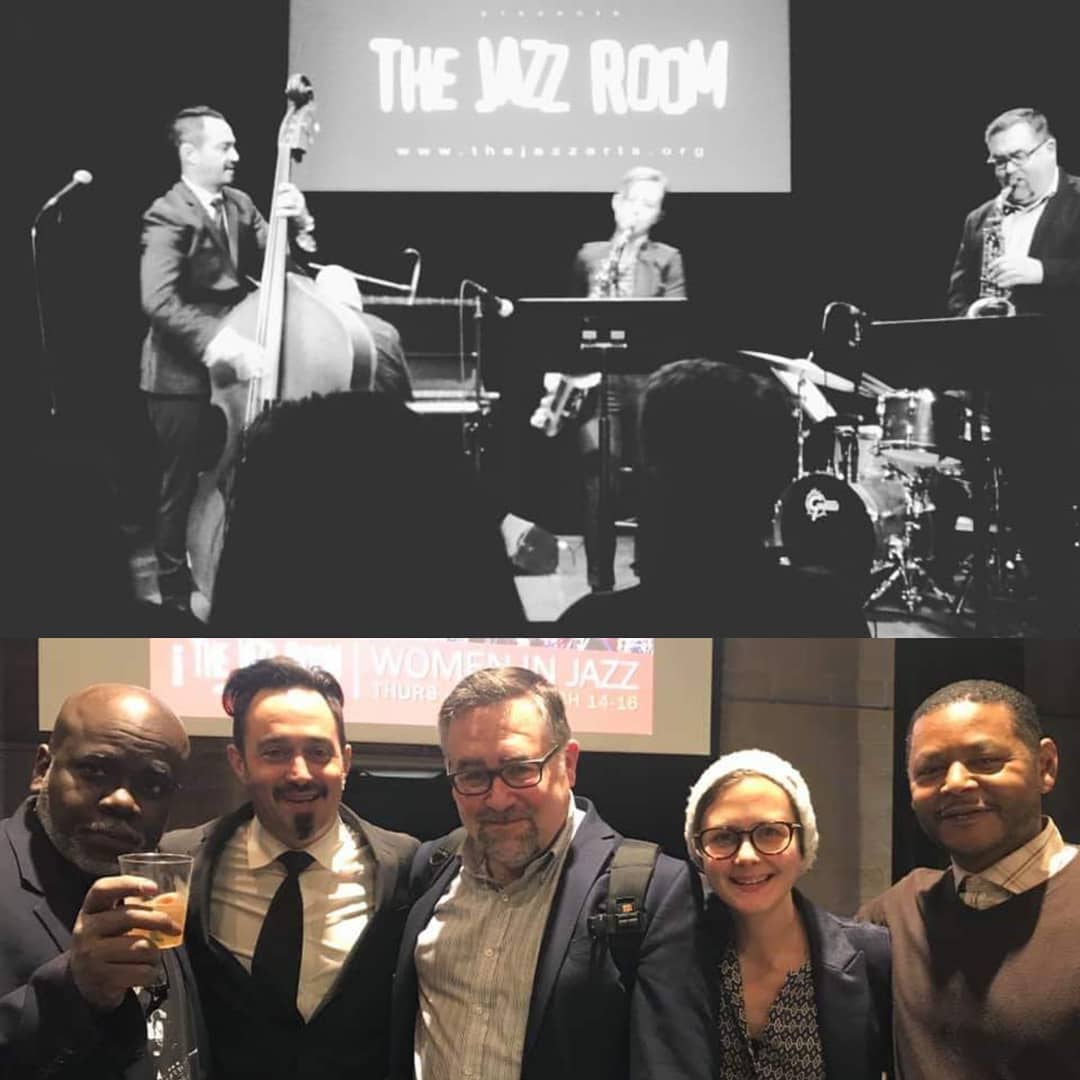
[Bottom photo; L to R] Your humble blogger; Neal Caine; Will Campbell; Annalise Stalls; Ocie Davis; (not pictured – Orlando Fiol)

And that’s the way it happened, according to Charles Mingus. And who are we, to doubt him. Thanks again to the fantastic musicians, who made Mingus proud, through their efforts in The Jazz Room last weekend: Annalise Stalls; Will Campbell; Orlando Fiol; Ocie Davis and of course, Neal Caine.

Until the next time, the jazz continues.

Who’s Hazel Scott? (Unsung Women of Jazz #11)

Posted in Unsung Women of Jazz, Video Vault with tags , , , , , , on February 20, 2019 by curtjazz

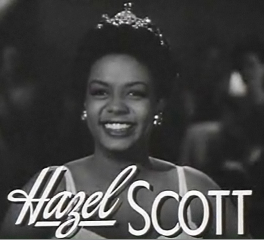
I must admit, it did my jazzy little heart good to hear Alicia Keys give a shout out to Hazel Scott during her impressive dual piano stint on the 61st Grammy Awards. As soon as she sat down between the two keyboards, I thought of Ms. Scott and her scene in the 1943 film The Heat’s On which clearly was Ms. Keys’ inspiration.

“The Heat’s On” [Dual piano comes in the last 1:30]

I’ve been an admirer of Ms. Scott’s for many years. Both for her piano prowess (though she usually only played one at a time) and for her willingness to take a stand for herself, as a black woman, even though it cost her considerably in her career, at a time when women would generally not do such a thing.

I first became aware of Hazel Scott, when as a teenager, I was causally watching the TV soap opera “One Life to Live”, with my mother, who was a huge fan. There was a wedding scene on the show between the two major black characters, Ed (played by the magnificent Al Freeman, Jr.) and Carla (Ellen Holly). Black love was very rare on television in that day, so it caught my eye. When this regal looking woman sat at the piano to play and sing, my mom says to our neighbor, who had stopped by to watch, “That’s Hazel Scott, ain’t it?” The neighbor watched closely for a few seconds and said “Yeah, that sure is. I haven’t seen her in a long time!”. I was struck by their excitement over this woman, so I asked. “Who’s Hazel Scott?”. My mom’s brief explanation (I was interrupting her “stories” – a cardinal sin), was that Hazel Scott was a singer, who used to be married to Adam Clayton Powell. I decided not to push it, lest I be banished.

“I Dood It”, with Red Skelton

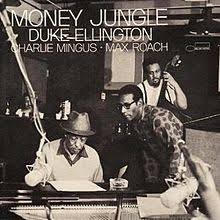
I filed the info away, until I got to college a few years later and a real interest in jazz had taken hold. Here again, was the name Hazel Scott, accompanied by a striking album cover photo. The album was called Relaxed Piano Moods. She was leading a session, with Charles Mingus on bass and Max Roach on drums. By then, I knew Mingus and Roach pretty well. I figured if they were on this date, she must have something to say… Yes, she did. She was classically trained with a jazz style influenced by James P. Johnson’s stride and Ellington’s swing. The bop based backing of Mingus and Roach was a little new to her but she held her own. Relaxed Piano Moods is a good album.

So, who is Hazel Scott? She was born in Trinidad, in 1920. Her family moved to Harlem, when she was four. She was a piano prodigy, who was accepted to Julliard at age eight. By age fifteen she was opening for Count Basie and hosting her own radio show. By age eighteen, her classical and jazz hybrid piano style was packing them in at New York’s first integrated nightclub, Cafe Society.

By WWII, her talent, vivacious personality and beauty, had caught the attention of Hollywood. She was invited out West for screen tests and lit up the screen. But Ms. Hazel Scott knew her worth and her power. She was a civil rights activist from the beginning and the pianist/actress, by now in her early twenties, flatly refused any film role that she felt would cast her in a degrading light. She would not play a maid. She had riders in her film contracts, which gave her final approval, over her screen appearances and costumes. On the music circuit, her swinging classics, had made Hazel a national sensation, pulling in what would be in 2019, over $1,100,000 a year, for her club work alone.

In Hollywood, she was also quite popular. Her roles were never large, she usually was singing and playing piano but she was always gorgeous, dignified and elegant – a nascent feminist and an early model of black pride. In addition to The Heat’s On, with Mae West, she appeared in I Dood It, directed by Vicente Minelli; with Red Skelton; Rhapsody in Blue, with Robert Alda and Something to Shout About, with Don Ameche, among other films. Her Hollywood career came to an abrupt end, after a falling out with the all-powerful Columbia Pictures president, Harry Cohn, over a costume that she felt was stereotypical and demeaning. Cohn wanted black women, seeing their husbands off to war, to be dressed in dirty clothes with messy hair, while their white counterparts were dressed to the nines. Scott stood her ground, on behalf of herself and the rest of the black “war brides”. The production was shut down for three days. Ms. Scott won the battle, but Cohn vowed that she would not work again in Hollywood for the rest of his life. A vow that he kept.

With Charles Mingus on bass

She was also a staunch anti-segregationist. At a time when black entertainers were expected to perform in clubs that would not welcome them as patrons, or if so, they were shunted off into separate parts of the venue, Hazel Scott would have no part of it. She would not perform in any club that did not have integrated seating. She told Time Magazine “Why would anyone come to hear me, a Negro and refuse to sit beside someone just like me?” She was literally escorted out of the city of Austin, TX, by Texas Rangers, for refusing to play in front of a segregated audience. She and her traveling companion, were refused service at a restaurant in Pasco, WA, in 1949, because of the color of their skin. Scott successfully sued the restaurant, which caused challenges to discrimination laws throughout the state and changes to Washington State laws within a few years.

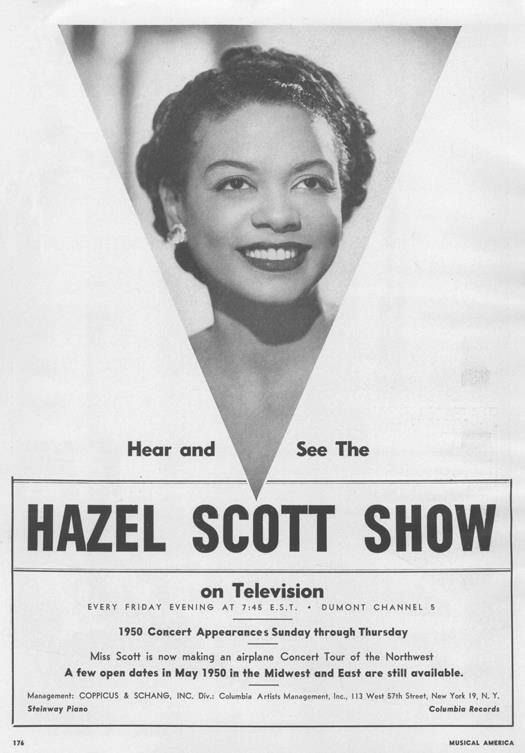
The year was 1950. The new medium of television was in its infancy. A lot of work in the early days was being done in New York. By now, Scott was married, to the legendary flamboyant minister and congressman, from Harlem, Adam Clayton Powell, Jr. She was also mother to a young son, Adam III. Staying close to home was a better option. The fledgling DuMont network offered Hazel her own show. When in premiered, in July 1950, The Hazel Scott Show, became the first network TV show, to be hosted by a black woman. Her show aired Monday, Wednesday and Friday, from 7:45 pm – 8 pm (they had 15 minute shows in those days). It was a musical program, that featured her and her guests performing various musical numbers. It received positive reviews and it looked like a hit that was set for a long run. However, the early days of television were hampered by a rampant “Red Scare”, in which artists were accused of being Communist Party members. Ms. Scott, was not then and never was a Communist. However, her no-nonsense manner and her controversial husband, along with her color, made her a prime target of the red baiters. Her name appeared in the rag, “Red Channels”. She voluntarily appeared before the House Un-American Activities Committee in mid-September 1950, and vehemently denied Communist Party membership. It didn’t matter. The sponsors ran for the hills and The Hazel Scott Show was cancelled on September 29, 1950.

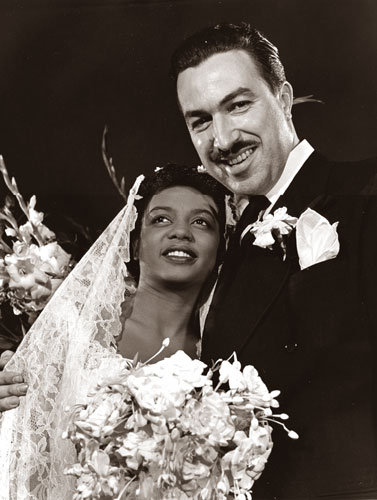
Hazel Scott and Adam Clayton Powell, Jr.

By the late 50’s the Red Scare had affected Ms. Scott’s career. Her marriage to Powell, was also crumbling, due in large part to his philandering. To escape marital troubles, racism and political stupidity, Ms. Scott moved to Paris, in 1958. She then divorced Adam Clayton Powell in 1960 and married Swiss comedian Ezio Bedin, in 1961. They divorced amicably a few years later. By 1967, Scott, struggled to make a living in Europe, despite speaking seven languages. The passage of the Civil Rights Act, also meant that life had, legally, improved in the U.S. It was time for Hazel Scott, and her son, to go home.

Hazel Scott worked sporadically, over the last 15 years of her life, including the two episode OLTL gig, that I mentioned earlier. Sadly, she passed away from cancer, in October 1981. She was 61 years old.

If a simple shout out from Alicia Keys, will lead to a renaissance for this brilliant, overlooked, American artist and pioneer, I am all for it. Not too many of her recordings are currently in print but I will list a few below. There was also a definitive biography, written by Karen Chilton, in 2008.

Hazel Scott – Partial Discography

Relaxed Piano Moods (with Mingus and Roach) [OJC]- her best album. Short in playing time but worthwhile. Get it while it’s still available.

‘Round Midnight [Fresh Sound] – An after hours style, easy listening album.

Hazel Scott 1946-47 [Classics] – a nice overview of her style, combining short classical solos and swing jazz pieces. Recording quality is spotty. OOP and hard to find.

The Book

Hazel Scott: The Pioneering Journey of a Jazz Pianist, from Cafe Society to Hollywood to HUAC – by Karen Chilton; September 2008; University of Michigan Press

2019 Jazz Grammys Overview: Best Jazz Instrumental Album

Posted in 2019 Grammys with tags , , , , , , , , , , , on February 9, 2019 by curtjazz

BEST JAZZ INSTRUMENTAL ALBUM

In the second of the two biggest jazz categories, we have a race between a great saxophonist who is finally earning a little recognition; two of the finest pianists working today; a respected veteran who is still getting it done and a true legend, admired and respected by all.

The nominees are:

DIAMOND CUT
Tia Fuller

The crackle from the moment her alto enters…twenty seconds into the first tune (“In the Trenches”), I had that feeling that this album was going to be a great one. Ms. Tia Fuller has been on the scene for over a decade. She has paid the bills for a while, working with Beyonce’s road band, but whenever she steps into the studio under her own name, she is an unapologetic jazz player. She hadn’t released a project in six years, prior to Diamond Cut. She has been missed. This project is different in many ways, from her previous four albums; for one thing, it is produced by the amazing Terri Lyne Carrington. For another, there’s no piano. Guitarist Adam Rogers handles the chordal duties. And, there are two different bass/drum duos, splitting the work; James Genus and Bill Stewart are one set and the other two, you may have heard of: Dave Holland and Jack DeJohnette. As for Ms. Fuller’s sound, clearly, the Berklee professor was ready to take everyone to school. She masters what she needs to be in that moment; she is at turns, gritty, soulful and even a bit on the outside. Diamond Cut is a very strong album and Ms. Fuller deserves her first Grammy nomination for it. However, this category also features someone who has been making great music since before Tia was born. Most likely, it will be his night.


LIVE IN EUROPE
Fred Hersch Trio

This Fred Hersch album has been nominated for two Grammys. The odds of Hersch winning either are fairly long, despite the fact that it is another excellent disc, from one of the finest pianists of our time. What is the problem? Part of it may be timing; Mr. Hersch seems to often run up against a hot project that has caught the attention of the jazz public and media. When this happens, other master musicians, like Hersch, get lost in the noise. Another issue may be his steady excellence. Hersch is not flashy. Even though he wrote an interesting and well received autobiography in 2017, and he has had some fascinating life issues over the past few years, he still generally, flies under the radar. Fred Hersch is so uniformly good, that he is taken for granted. He has been nominated for 14 Grammys. Hopefully, the voters will wise up soon. This year, I don’t think it will be in this category.


SEYMOUR READS THE CONSTITUTION!
Brad Mehldau Trio

The story behind this album’s title, is as interesting as it should be. Apparently, Mr. Mehldau has a dream, in which the late, Oscar winning actor, Seymour Phillip Hoffman, was reading the U.S. Constitution. The tune that Mehldau heard, accompanying Hoffman’s voice, became the inspiration for the title track. Despite the odd title, Seymour Reads the Constitution!, is the most accessible album that I’ve heard from Brad Mehldau, in quite a while. The trio swings hard through a collection of originals, standards, minor jazz classics and Beach Boys tunes (yes, you heard right), with gusto and without condescension. Like Hersch, Mehldau is double nominated for this album (his 9th, without a win, so far). It’s fine work but he’s likely to run into a “Shorter” wall here. In the Best Instrumental Solo category, however, he’s got a good shot.


STILL DREAMING
Joshua Redman, Ron Miles, Scott Colley & Brian Blade

I can’t believe that the saxophone wunderkind of the 90’s, Joshua Redman, has just turned 50. I can believe that he is still evolving and getting stronger at his craft, more than 25 years after he first floored us jazzheads with his debut album. Though he is the son of a famed avant-gardist, his early years were deeply in the tradition (as I’m sure Warner Bros. wanted it). On this latest album, which garnered his seventh nomination, he pays tribute to his dad, Dewey, and Old and New Dreams, a group that Dewey played in, from the mid 70’s through the mid 80’s. That group, which also included legends Charlie Haden and Don Cherry, itself paid homage to their mentor, the patron saint of avant-garde jazz, Ornette Coleman. Still Dreaming is excellent, start to finish – terrific compositions and it stretches the boundaries of form, without completely breaking them. It is similar to Christian McBride’s New Jawn album, also from last year. I confess that I only gave this album a passing listen upon its release, but now that I’ve returned to it, I truly dig it, a lot. Perhaps it should have been on my Best of 2018 list. However, we are talking Grammy here, folks. Redman has never won one. He is a respected veteran and his star has stretched outside of the insular jazz world at times, over the past quarter century. But, due to the presence of our next nominee, I’m afraid that his wait is likely to extend beyond this weekend.


EMANON
The Wayne Shorter Quartet

Wayne Shorter is a true musical legend. He one of the greatest jazz saxophonists and composers of our time. In addition to his work as a leader, he has been an integral part of three of the greatest groups in jazz history. He has created transcendent musical art in every decade since the early 1960s. He has been nominated for a Grammy 21 times and has, so far, won 10, including a Lifetime Achievement Award, in 2015. He is also now 85 years old. So no one would blame Wayne Shorter, if he were to simply sit back, at this point and collect all of the accolades that are due to him, no one would be upset. So what does he do? He creates a symphonic masterpiece and releases it, in an epic three CD (God only knows how many LP) set, that includes a graphic novel. These new and challenging compositions are performed by a symphony orchestra and then live, by his current working quartet! Emanon is a brilliant work of musical art (I confess that I have not yet seen the graphic novel). I hope that Mr. Shorter has more in him and keeps sharing it with us, for at least another 20 years. If, as some have said, this is his final work, then it is a towering valedictory. Will he win this Grammy? Ummm, Yeah.

As for the opinions and unscientific predictions:

Should have been nominated:

Origami Harvest – Ambrose Akinmusire; Both Directions at Once (The Lost Album) – John Coltrane; The Future is Female – Roxy Coss

Who should win: Wayne Shorter

Who will win: Wayne Shorter

I would not be disappointed to see them win: Tia Fuller

2019 Jazz Grammys Overview: Best Jazz Vocal Album

Posted in 2019 Grammys with tags , , , , , , , , , , , on February 7, 2019 by curtjazz

BEST JAZZ VOCAL ALBUM

An eclectic group in this category, this year. It includes two past winners, who must be considered the favorites. There is also a veteran performer, a member of a legendary musical family, who is still seeking his first Grammy in a career that has spanned over half a century.

The nominees are:

MY MOOD IS YOU
Freddy Cole

Truth be told, I am rooting like mad for Freddy Cole to win this Grammy. But realistically, I don’t think that it will happen. Though he has done some very fine work over his 55-year career as a recording artist, he has, like it or not, always been in the massive shadow of his legendary older brother. At 87, this is his fourth Grammy nomination, all of them since 2000. Why don’t I think he will win, even though he is clearly a sentimental favorite? In the jazz categories, Grammy has never been that sentimental, unless you are a virtual household name (Miles; Herbie; Chick; Rollins, etc.). And Mr. Cole is undeservedly still relatively obscure, outside of the jazz world. A lot of the voters are not going to know him. Musically, My Mood is You is very good but not great. At this point, the slight gravel in his baritone voice (which in his early days, was eerily like his brother’s), has become more pronounced. He will now often talk his way around phrases that he used to glide through. Still, he gives every young jazz and pop singer a master class in phrasing and interpretation, especially on the ballads. The poignant, “I’ll Always Leave the Door a Little Open”, ranks among the top 10 recorded performances, ever. Grammy, I want you to prove me wrong and give this award to Freddy Cole.


THE QUESTIONS
Kurt Elling

Kurt Elling has been nominated for 13 Grammys, winning in this category, in 2009, for his excellent Hartman/Coltrane tribute album.  I admired his work on The Questions, an album with a reflective, pop-rock undertone, on which he reimagines tunes by Peter Gabriel, Paul Simon, Bob Dylan and Jaco Pastorius, among others. There is impressive solo work by Branford Marsalis, who also co-produced and by the rising trumpet star, Marquis Hill. Again, this was an album, that personally, I admired but didn’t love. It is very well played and earnestly delivered, but I missed Elling’s casual swing and the wry humor that he brings to most of his work. This was by design and an artist of his stature is more than entitled to move outside of the box, when he chooses. Given his past win and his strong name recognition, he has solid chance of picking up Grammy number two on Sunday. I can see only one nominee beating him out.


THE SUBJECT TONIGHT IS LOVE
Kate McGarry With Keith Ganz & Gary Versace

This Kate McGarry’s second Grammy nomination. The first was ten years ago, in this same category. I’ve been a fan of Ms. McGarry and her easy going jazz/coffeehouse sound, since reviewing her 2007 album, The Target for Jazz Inside Magazine. This album, which was recorded with the backing of Keith Ganz on guitar/bass and Gary Versace on organ/accordion is beautifully intimate, as is quite appropriate on a work that deals with love, in all of its phases and forms. There is nothing sappy about the love songs here; this is a bright and fun work. Will it win a Grammy? Probably not. Even in the jazz world, indie projects rarely win the trophy, even if they are nominated, which is very unfortunate. So I absolutely suggest that you add this project to your collection but don’t expect to see them picking up the award.


IF YOU REALLY WANT
Raul Midón With the Metropole Orkest Conducted By Vince Mendoza

On this album, his second in a row to be nominated, Raul Midón steps fully into the pop-jazz territory that was owned by the late Al Jarreau, for the last 25 years of his illustrious career. He sounds like Jarreau, phrases like him and now, he has even recorded an album with Metropole Orkest, the Dutch powerhouse aggregation, that backed Jarreau on his last Grammy winning album, in 2012. Mr. Midón and this band were made for each other. Their big brassy sound wraps around his joyous tenor, like a glove. With a little more promotional push, this album will be a huge seller in the contemporary jazz market. It is filled with infectious hooks, punchy brass and Midón’s soaring vocals and “Al Con Salsa” scatting. However, in spite of all of that, I think Raul will go home empty handed, for the second year in a row. There is too much strong and better known competition. But this cat is going to hit paydirt soon, trust and believe.


THE WINDOW
Cécile McLorin Salvant

The defending champ in this category. Every one of her major label releases has been nominated for this award and the last two of them (For One to Love and Dreams and Daggers), have gone home winners. She is one of the most popular traditional jazz singers on the scene today, she has strong name recognition, she is a prodigiously gifted vocalist and you know what else? This album is damn good. For the most part, it’s just Ms. McLorin Salvant and the piano of Sullivan Fortner, having glorious conversations. Some were recorded in the studio and some in jazz’s cathedral; the Village Vanguard. She covers everyone, from Stevie Wonder to Bessie Smith to Leonard Bernstein and beyond. But stay until the end, because McLorin Salvant and Fortner are joined by the marvelous Melissa Aldana, on tenor saxophone, for a stunning version of Jimmy Rowles’ jazz classic “The Peacocks”. Yeah. If she doesn’t make it 3 out of 4, it will be a pretty big upset.

The comments and unscientific predictions:

Should have been nominated (and I feel very strongly about it): The Genius of Eddie Jefferson – Alan Harris; Some of That Sunshine – Karrin Allyson; Unbroken – Tiffany Austin

Should Win: Cécile McLorin Salvant

Will Win: Cécile McLorin Salvant

I Will Be Thrilled if They Do Win: Freddy Cole