Archive for music

Unsung Saxophone Masters #2 – Tina Brooks: The Sound of Almost

Posted in saxophonists, The Jazz Continues..., Under The Radar, Unsung Saxophone Masters with tags , , , , on March 5, 2026 by curtjazz

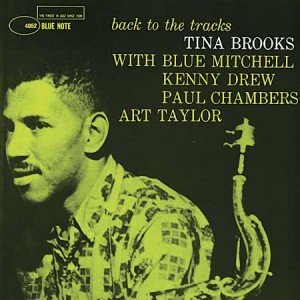
Tina Brooks - Back to the Tracks

Tina Brooks (1932 – 1974)

“I loved Tina. “He had a nice feeling…. He would write shit out on the spot and it would be beautiful. He wrote ‘Gypsy Blue’ for me on the first record, and I loved it. I just loved it. Tina made my first record date wonderful. He wrote and played beautifully. What a soulful, inspiring cat.”Freddie Hubbard

He was small of stature, soft spoken, bullied as a child and saddled with a woman’s name as a nickname from a very early age. But when he picked up that tenor sax… Harold Floyd “Tina” Brooks became a powerful giant.

He recorded just a handful of sessions as a leader for Blue Note Records between 1958 and 1961. Only one of them, True Blue, was released during his lifetime.

There are some musicians whose careers feel unfinished.

And then there are musicians whose recordings feel complete, even if their lives did not.

Tina Brooks belongs to the second category.

Harold Floyd Brooks was born in Fayetteville, North Carolina in 1932. His nickname was a variation on “Teeny”, which alluded to his small size. He grew up primarily in New York City. The sounds of rhythm & blues, church music, and the emerging language of bebop were part of the atmosphere there.

Music was already in the family. His father, David Brooks, sang professionally in vocal groups. This included the famed Ink Spots–style harmony ensembles that were popular in the 1940s. So Brooks grew up around working musicians. Jazz wasn’t a distant art form, it was a trade.

By his late teens, he had taken up the tenor saxophone. He began absorbing the language that dominated the New York scene of the early 1950s. Like many young tenor players of the period, he listened closely to Lester Young. He also paid attention to Dexter Gordon. Additionally, he absorbed the emerging modern vocabulary of Sonny Rollins.

But Brooks was not an imitator. Even early recordings reveal a voice that is inward and deliberate


Apprenticeship Years

Before recording under his own name, Brooks worked the New York club circuit and gained visibility through sideman work.

His first significant recording appearance was with Jimmy Smith. Smith’s revolutionary Hammond B-3 sound was redefining the organ trio format. Brooks appears on Smith’s 1958 Blue Note session The Sermon!, where his tenor sits comfortably inside the groove-oriented, church-inflected atmosphere Smith created.

It was a perfect setting for Brooks. His tone had a quiet blues authority; not flashy, but deeply rooted.

Around the same time, Brooks began working with alto saxophonist Jackie McLean, another rising voice in the Blue Note orbit. Their collaboration on Jackie’s Bag (recorded 1959) showcased Brooks alongside players such as Freddie Hubbard and Paul Chambers. This firmly situated him within the hard-bop movement of the period.

Yet even within these high-level sessions, Brooks rarely behaved like a player trying to steal the spotlight. His solos are thoughtful, measured, and structurally clear.

He sounded like someone thinking while playing.

The Blue Note Leader Dates

Between 1958 and 1961, Brooks recorded several sessions. They were all for Blue Note Records. Brooks worked with producer Alfred Lion and recording engineer Rudy Van Gelder.

These sessions included:

But here is the strange twist that shaped his reputation.

Only one of these albums, True Blue, was released during Brooks’ lifetime.

Tina Brooks did not record again past the age of 29. His other recordings sat in the Blue Note vault for years. They did not appear until the label’s archival reissues in the late 1970s and 1980s. These reissues brought renewed attention to overlooked sessions.

Why were they shelved?

No single explanation exists. Blue Note was recording prolifically at the time. Market decisions affected outcomes. Scheduling priorities interfered. The emergence of newer stars also played a role. Brooks’ personal struggles with health and addiction also complicated his career trajectory.

But the music itself tells a different story.

These are not tentative sessions. They are confident, mature statements from a fully developed modern tenor voice.


The Composer

One of Brooks’ most overlooked strengths was his writing.

Pieces such as:

  • “True Blue”
  • “Good Old Soul”
  • “Minor Move”

are elegantly constructed hard-bop compositions that balance blues feeling with harmonic sophistication.

They sit comfortably alongside the writing of contemporaries like Hank Mobley and Horace Silver. However, Brooks’ tunes often have a slightly more introspective quality. He wrote two tracks that appeared on Freddie Hubbard’s debut album as a leader, Open Sesame.

They feel less like vehicles for blowing and more like small musical architectures.


The Sound

Brooks’ tone is distinctive once you learn to hear it.

It is:

  • Lean rather than lush
  • Focused rather than expansive
  • Expressive without being demonstrative

Where John Coltrane pursued intensity and harmonic expansion, Brooks seemed more interested in clarity and pacing.

His solos unfold patiently. Ideas develop logically. There is very little excess.

You hear intention in every phrase.


The Quiet Fade

By the mid-1960s, Brooks’ health had deteriorated significantly. The combined pressures of the jazz lifestyle and personal struggles gradually removed him from the recording scene.

He died in 1974 at just forty-two years old.

By that time, his recorded legacy was already largely forgotten.

It would take the Blue Note reissue programs decades later for listeners to rediscover the depth of his work.

Today, albums like Back to the Tracks and Minor Move are often talked about with reverence. This is usually reserved for more famous artists.

But during his lifetime, Brooks never experienced that recognition.


Where to Begin (If You’re Listening Tonight)

If you’re discovering Brooks for the first time, start here:

  1. “True Blue” (Title track from True Blue) listen to the construction of his solo. Notice the pacing.
  2. “Good Old Soul” (Also on True Blue) the blues sensibility beneath modern harmony.
  3. “Minor Move” (Title track from Minor Move) lean, direct, unsentimental.

Don’t stream it casually. Sit with it.

Tina Brooks is not background music.
He is a study in understatement.


Why He Belongs in This Series

Jazz history tends to celebrate the revolutionaries.

The language of the music was shaped by musicians. They extended the tradition quietly. They worked thoughtfully and with immense discipline.

Tina Brooks was one of those musicians.

His discography is small.
His voice is unmistakable.

And that is why he belongs among the Unsung Tenor Giants.

Discography (all are on Blue Note Records)

(As a leader/co-leader)

True Blue (1960) with Freddie Hubbard, Duke Jordan, Sam Jones and Art Taylor

Minor Move (1958; Released 1980) with Lee Morgan, Sonny Clark, Doug Watkins and Art Blakey

Back to the Tracks (1960; Released 1998) with Blue Mitchell, Jackie McLean, Kenny Drew, Paul Chambers and Art Taylor

The Waiting Game (1961; Released 1999) with Johnny Coles, Kenny Drew, Wilbur Ware and Philly Joe Jones

Street Singer [co-leader with Jackie McLean] (1960; Released 1980) with Blue Mitchell, Kenny Drew, Paul Chambers, Art Taylor

(As a sideman[Partial])

Blue Lights Volume 1 & 2 [with Kenny Burrell] (1958)

Redd’s Blues [with Freddie Redd] (1961; Released 1998)

House Party [with Jimmy Smith] (1958)

Open Sesame [with Freddie Hubbard] (1960)

Jackie’s Bag [with Jackie McLean] (1961)
CurtJazz Radio’s TOP 5 Tina Brooks Tracks:

  1. “Good Old Soul” (True Blue)
  2. Title Track (The Waiting Game)
  3. Title Track (Back to the Tracks)
  4. Title Track (Minor Move)
  5. “Theme for Doris” (True Blue)

Reviving Unsung Tenor Saxophone Masters

Posted in saxophonists, Under The Radar, Unsung Saxophone Masters with tags , , , , on March 3, 2026 by curtjazz

THE RETURN

Fourteen years ago, I began a series here at CurtJazz.com called Unsung Saxophone Masters.

I wrote one entry.

Then life, radio, teaching, and a thousand other beautiful distractions carried me in different directions. The series quietly sat there; unfinished, like an unresolved cadence.

But some music waits.

The tenor saxophone, perhaps more than any other instrument in jazz, carries stories. These stories deserve to be told again. They especially include the stories of those who stood just outside the spotlight. As we revive this series, we will start with the tenor players.

When we think of the great jazz tenors, certain names come instantly to mind: Coltrane. Rollins. Webster. Getz. Shorter. Giants, all of them.

But jazz history, and jazz listening, is far richer than its headline names.

This series is about the masters who:

  • Recorded brilliantly but briefly
  • Worked steadily but without myth
  • Influenced deeply but quietly
  • Never quite became the brand

These are not “minor” players. They are musicians of consequence whose legacies deserve deliberate attention.

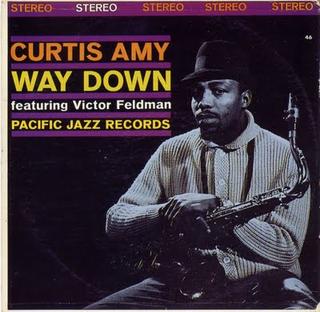
Back in 2012, I began with Curtis Amy. He was a West Coast tenor with Texas roots. He had a preacher’s warmth in his tone and a sense of spiritual grounding. This often gets overlooked in discussions of Los Angeles jazz.

https://upload.wikimedia.org/wikipedia/en/9/96/Way_Down_%28album%29.jpg

Amy was never marketed as a movement leader. He was never canonized. But listen closely to Way Down or his sideman work, and you hear authority. Depth. Patience.

He was not unsung because he lacked substance.
He was unsung because history can be selective.

And so, we return.

In the coming installments, we will revisit voices such as:

  • Tina Brooks — the brilliant Blue Note modernist whose recorded legacy is heartbreakingly small
  • J.R. Montrose — harmonically bold, often mislabeled as “West Coast cool”
  • Harold Land — steady, searching, and perpetually underrated
  • And others whose work shaped the sound of modern jazz without always shaping its marketing

This will not be a nostalgia project.

It will be a listening project.

Each post will explore:

  • The sound
  • The context
  • The sideman work
  • The overlooked sessions
  • The emotional center of the player

Because jazz history is not only written by the most visible.

It is carried in tone.

If you’ve followed CurtJazz Radio for any length of time, you already know that we program beyond the obvious. This series simply gives that philosophy a written home again.

The tenor saxophone remains the storytelling horn of modern jazz.

The posts in this series will appear once a week.

Let’s listen to the stories we missed.

I’m not going to leave you musically empty handed. Here’s a sampling of some excellent tenor work on that greatest of tenor jam tunes: “The Eternal Triangle”. Featured are three modern cats. They all deserve wider recognition. They are Eric Alexander, Ralph Lalama and Tad Shull with the great organist Mel Rhyne. . Let this tide you over until our next post in the series, which will feature Harold “Tina” Brooks.

Best Jazz Albums I Heard in 2016

Posted in Best Jazz Albums of 2016, Uncategorized with tags , , , , , , , , , , , , , , , , , , , , , , , , , , , , , , , , , , , , , , , , on January 3, 2017 by curtjazz

melissa-morganLet’s start with a confession: I got to hear fewer jazz albums this year than in any year in the past two decades. Which is a shame, because there was a TON of worthwhile music released during the year. My crazy schedule in 2016 often limited me to snippets or tracks from discs that I vowed to get back to, but never did.  So, here’s my list of the best albums that I actually got to hear during the year. Also, there’s a track from an extremely promising young artist, who needs to put more on the market, ASAP; a couple of outstanding 2015 releases that didn’t catch my ear until 2016; and finally, a few of the many fine 2016 releases that I plan to catch up with in January:
ALBUM ARTIST LABEL
ArtScience Robert Glasper Blue Note
Back Home Melissa Aldana Wommusic
Beginning of a Memory Matt Wilson Palmetto
Book of Intuition Kenny Barron Trio Impulse
Chasing After the Wind Gregory Tardy Steeplechase
Convergence Warren Wolf Mack Avenue
Days Like This Melissa Morgan CD Baby
Do Your Dance Kenny Garrett Mack Avenue
Feet in the Mud Mimi Jones Hot Tone
In Movement DeJohnette, Coltrane and Garrison ECM
Jersey Cat Freddie Hendrix Sunnyside
Live at Maxwell’s DE3 Sunnyside
Nihil Novi Marcus Strickland Revive/Blue Note
Notes from New York Bill Charlap Impulse
Once and Future Brian Charette Posi-Tone
Perfection Murray, Allen and Carrington Motema
Presented by the Side Door Jazz Club Black Art Jazz Collective Sunnyside
Restless Idealism Roxy Coss Origin
Soul Tree Ed Cherry Posi-Tone
The Sound of Red Rene Marie Motema
Stranger Days Adam O’Farrill Sunnyside
Take Me to the Alley Gregory Porter Blue Note
TriAngular III Ralph Peterson Trio Onyx/Truth Revolution
The Way We Play Marquis Hill Concord
Written in The Rocks Renee Rosnes Smoke Sessions

2016’s most compelling single in search of an album:

  • “Chicken Day” – Harvey Cummings II

Two 2015 albums (heard in 2016) that deserved to be on last year’s list:

  • Back to the City – Amos Hoffman (CD Baby)
  • Some Morning – Kim Nazarian (CD Baby)

Probably excellent 2016 albums that I look forward to hearing as soon as possible:

ALBUM ARTIST LABEL
#KnowingIsHalfTheBattle Orrin Evans Smoke Sessions
Away With You Mary Halvorson Octet Firehouse 12
Day Breaks Norah Jones Blue Note
Habana Dreams Pedrito Martinez Group Motema
Harlem on My Mind Catherine Russell Jazz Village
Inner Spectrum of Variables Tyshawn Sorey Pi
Madera Latino Brian Lynch Hollistic Music Works
San Jose Suite Etienne Charles Culture Shock
Something Gold, Something Blue Tom Harrell High Note
Upward Spiral Branford Marsalis Okeh


JAZZ LIVES!!! 10/20/16 – Trumpet Tribute (featuring Kenny Dorham)

Posted in Charlotte Community Rado, Jazz in Charlotte, Obscure Trumpet Masters, Who's New in Jazz with tags , , , , , , , , , , on October 19, 2016 by curtjazz

JAZZ LIVES!!! with CurtJazz – Thursday, October 20: Trumpet Tribute – featuring Kenny Dorham

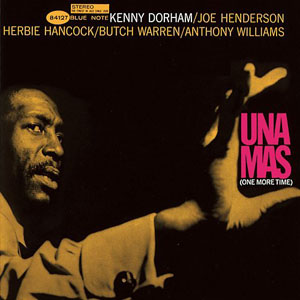
kennydorham_unamasOn this week’s edition of JAZZ LIVES!!! with CurtJazz, it will be all about the trumpets.
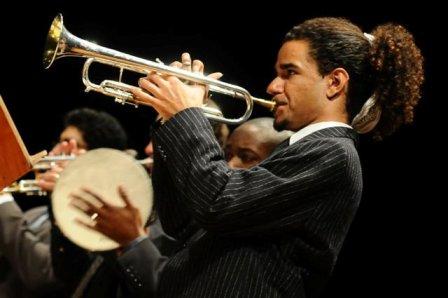
With the birthdays of Roy Hargrove, Wynton Marsalis and Dizzy Gillespie all taking place this week, plus the Grammy winning jazz trumpeter Ashlin Parker, paying tribute to the underappreciated trumpet master Kenny Dorham, in The Jazz Arts Initiative’s JAZZ ROOM this Friday and Saturday, it is a perfect time for a Trumpet Tribute, from 6 pm – 9 pm, Thursday on CharlotteCommunityRadio (CLTCRadio).

He was a trumpet player of exceptional gifts; a composer of jazz classics, such as “Blue Bossa” and a better than average vocalist. Nevertheless, McKinley Howard “Kenny” Dorham (1924-1972), often gets lost among the glut of trumpet stars of the 1950’s and 60’s. He was a member of Art Blakey’s original Jazz Messengers and he replaced Clifford Brown in Max Roach’s group after Brownie’s tragic death. Dorham’s recordings as a leader are some of the most enduring of the era, including Afro Cuban, Quiet Kenny, ‘Round About Midnight at the Café Bohemia and Una Mas. He also made memorable music as a sideman, especially with his frequent musical partner, tenor saxophonist Joe Henderson. Together, they made three classic Blue Note albums over a two year period, under Henderson’s name: Page One; Our Thing and In ‘n Out.

ashlin-parker

Ashlin Parker

Charlotte native Ashlin Parker plays with large and small ensembles nationally and internationally. His solos have been described at various times as being lyrical or fiery, with throaty growls or “brilliant vibrato,” and with lightning staccato runs or “superb legato” phrasing.  When part of a front-line, Ashlin can bring energy, bite, and zest to a performance through engaging in “fine counterpoint duets” or spirited trading with other horn players.  His newest ensemble, the Trumpet Mafia, is considered “an immensely talented band.”

Ashlin shared in the 2009 Grammy Award for Best Large Jazz Ensemble for the New Orleans Jazz Orchestra’s album, Book One.  Following Book One, Ashlin has recorded with numerous artists, including Ellis Marsalis, Harold Battiste, Dmitry Mospan, James Partridge, Terence Blanchard and Jason Marsalis. Ashlin has been teaching various aspects of jazz, including improvisation, theory, repertoire, arranging, and performance preparation in private lessons, courses, summer institutes, jazz camps, and master classes for more than ten years.  He has been leading the jazz trumpet studio in the Music Department at the University of New Orleans since January 2011.

Be sure to join me on JAZZ LIVES!!! with CurtJazz, as we honor the musical legacy of Kenny Dorham and play the music of Wynton Marsalis, Dizzy Gillespie, Roy Hargrove and  Ashlin Parker; Thursday, October 20; from 6 pm – 9 pm (EDT); on CLTCRadio.

Don’t miss Ashlin Parker as he pays tribute to Kenny Dorham, in the Jazz Arts Initiative’s THE JAZZ ROOM. Friday, October 21, at 6 pm & 8:15 pm and Saturday, October 22, at 7 pm and 9:15 pm. For ticket information, visit www.thejazzarts.org

JAZZ LIVES!!! with CurtJazz, airs LIVE every Thursday from 6:00pm to 9:00pm via CharlotteCommunityRadio.orgCLTCRadio.org OR use the Mixlr app where you can listen and chat with our hosts and guests alike.

Instagram: thejazzarts ashlinparker curtjazz

Twitter:  @thejazzarts  @curtjazz

Facebook: JazzArtsInitiative AshlinParker CurtJazzRadio

2013 Jazz Grammy® Preview #6 – Jazz in “Exile”

Posted in 2013 Grammys with tags , , , , , , on February 6, 2013 by curtjazz

For our penultimate (I know that I said this would be the last one, but there will be one more after this) look at jazz artists nominated for Grammys in 2013, we will look at three categories in the R&B field that feature one artist who is generally considered to be a jazz musician. These albums/performances got no love from the Jazz Grammy nominating committee but those in the R & B area had the good taste to recognize them.

Best R&B Performance

“Thank You” – Estelle (from All of Me [Home School/Atlantic])

“Gonna Be Alright (F.T.B.) – Robert Glasper Experiment Featuring Ledisi (from Black Radio [Blue Note])

This is one of two nominations for Glasper’s much discussed Black Radio album. The heralded young jazz pianist let his R&B and hip hop influences show all over the disc. I for one found it exciting and refreshing (see CurtJazz’s Best Jazz Albums of 2012). Many other jazz traditionalists scoffed at it. On this track Glasper featured Ledisi, an R&B vocal powerhouse, who has also shown a past appreciation for jazzy things. If the track sounds familiar it’s because this is a vocal version of “F.T.B.”, which is a track on Mr. Glasper’s 2007 album In My Element. The lyrics and the stronger beat are a nice touch. Glasper is up against some tough competition here but to my ears “Gonna Be Alright” compares favorably with the other nominees… I wish him the best.

“I Want You” – Luke James [Mercury]

“Adorn” – Miguel [RCA/Bystorm Entertainment]

“Climax” – Usher (from Looking 4 Myself [RCA])

Best Traditional R&B Performance

(“Grown Folks Music”… Now we’re back in my wheelhouse! Therefore, I will drop a few comments)

“Lately” – Anita Baker [Blue Note]

Good to hear from Anita. Sounds like something from her classic ‘80’s period. Looking forward to the rest of the album.

“Love on Top” – Beyoncé (from 4 [Columbia])

Catchy tune by Mrs. Carter – great beat; irresistible hook.

“Wrong Side of a Love Song” – Melanie Fiona (from The MF Life [SRC])

My goodness! This girl can SANG! A memorable retro torch song.

“Real Good Hands” – Gregory Porter (from Be Good [Motéma])

Jazz vocalist Gregory Porter’s sophomore album was every bit as good as his debut.It was one of our Best of 2012.  But again, it was criminally ignored in the Jazz Vocal Grammy category. At least he did get a nod from the R&B voters for this soulful track. The cut is a winner but Porter is up against some real stiff competition. It’s a Grammy night long shot.

“If Only You Knew” – SWV (from I Missed Us [Mass Appeal/E1 Music])

SWV (Sisters With Voices). It’s good to hear this trio of NYC natives reunited. They sound as good as ever and they demonstrate excellent taste with their cover of this Philly Soul classic made famous by Patti Labelle.

Best R&B Album

Black Radio – Robert Glasper Experiment (Blue Note)

This nomination speaks volumes. The jazz world isn’t open minded enough to consider this work of art but the supposedly shallow, profit minded world of R&B is. I’ll say it again; I view this album as breaking needed new ground in a 21st century direction for jazz. But I admit to being in the minority. There are some fine albums in this category that are more along the lines of mainstream R&B, so a win here by Mr. Glasper isn’t probable but it is definitely possible.

Back to Love – Anthony Hamilton (RCA)

Write Me Back – R. Kelly (RCA)

Beautiful Surprise – Tamia (Plus 1)

Open Invitation – Tyrese (Voltron Recordz) 

You can hear tracks from Robert Glasper, Gregory Porter and other Grammy nominated jazz artists and albums on Curt’s Café Noir, our 24/7 web radio station,through February 10. We feature these tracks daily, from 4 pm – 6 pm on “The Grammy Show”. Click here to listen.

Our last post (we mean it this time!) about the 2013 Grammys will feature the nominees for “Best Instrumental Composition”, a category which happens this year to feature all jazz artists.

Until then, the jazz continues…

2013 Jazz Grammy Nominees

Posted in 2013 Grammys with tags , , , , , , on December 5, 2012 by curtjazz

Okay Jazz Family here are the 2013 Grammy Nominees in the Jazz categories:

Best Improvised Jazz Solo

 
Cross Roads
Ravi Coltrane, soloist
Track from: Spirit Fiction
[Blue Note]

Hot House

Gary Burton & Chick Corea, soloists
Track from: Hot House
[Concord Jazz]

Alice In Wonderland

Chick Corea, soloist
Track from: Further Explorations (Chick Corea, Eddie Gomez & Paul Motian)
[Concord Jazz]

J. Mac

Kenny Garrett, soloist
Track from: Seeds From The Underground
[Mack Avenue Records]

Ode

Brad Mehldau, soloist
Track from: Ode (Brad Mehldau Trio)
[Nonesuch]
 

Best Jazz Vocal Album

Soul Shadows
Denise Donatelli
[Savant Records]

1619 Broadway: The Brill Building Project

Kurt Elling
[Concord Jazz]

Live

Al Jarreau (And The Metropole Orkest)
[Concord]

The Book Of Chet

Luciana Souza
[Sunnyside Records]

Radio Music Society

Esperanza Spalding
[Heads Up International


Best Jazz Instrumental Album

Further Explorations
Chick Corea, Eddie Gomez & Paul Motian
[Concord Jazz]

Hot House

Chick Corea & Gary Burton
[Concord Jazz]

Seeds From The Underground

Kenny Garrett
[Mack Avenue Records]

Blue Moon

Ahmad Jamal
[Jazz Village]

Unity Band

Pat Metheny Unity Band
[Nonesuch]
 

Best Large Jazz Ensemble Album

Centennial: Newly Discovered Works Of Gil Evans
Gil Evans Project
[ArtistShare]

For The Moment

Bob Mintzer Big Band
[MCG Jazz]

Dear Diz (Every Day I Think Of You)

Arturo Sandoval
[Concord Jazz]
 

Best Latin Jazz Album

Flamenco Sketches
Chano Domínguez
[Blue Note]

¡Ritmo!

The Clare Fischer Latin Jazz Big Band
[Clare Fischer Productions/Clavo Records]

Multiverse

Bobby Sanabria Big Band
[Jazzheads]

Duos III

Luciana Souza
[Sunnyside Records]

New Cuban Express

Manuel Valera New Cuban Express
[Mavo Records]
 
And in addition to those listed above:
  • Robert Glasper’s genre busting album Black Radio (Blue Note) received two nominations in the R & B categories – R & B Album of the Year and “Best R & B Performance (It’s Gonna Be Alright (F.T.B.) – featuring Ledisi
  • Gregory Porter was nominated for Best Traditional R & B performance for “Real Good Hands” from his Be Good album (Motema)
 
Congratulations to all who were nominated. More info and opinions on the nominees later. By the way, it’s good to see the Latin Jazz award back where it belongs.